How to Find Grants for Nonprofits: Free Ways and Paid Tools Compared
How to find grants for nonprofits: the free ways (Grants.gov, state portals, 990-PF filings, library access to Candid, community foundations), what a paid database adds, and a weekly search routine.
In this article (16)
- Quick Answer: Where Do Nonprofits Find Grants?
- Free Ways to Find Grants for Nonprofits
- How to Search Grants.gov Without Drowning in Results
- Agency Portals and Award Databases Beyond Grants.gov
- The State and Local Layer: One Portal Per State
- How to Research a Foundation Using Form 990-PF
- Community Foundations and Local Funders
- Corporate Giving Programs
- Subscription Databases: When They Are Worth It
- How to Find Grants Without Paying for Software
- What AI Grant Matching Can and Cannot Do
- How to Find Grants for Nonprofits Every Week
- Screen for Eligibility Before You Write Anything
- Related Guides
- FAQ
- Start With Your State Portal This Week
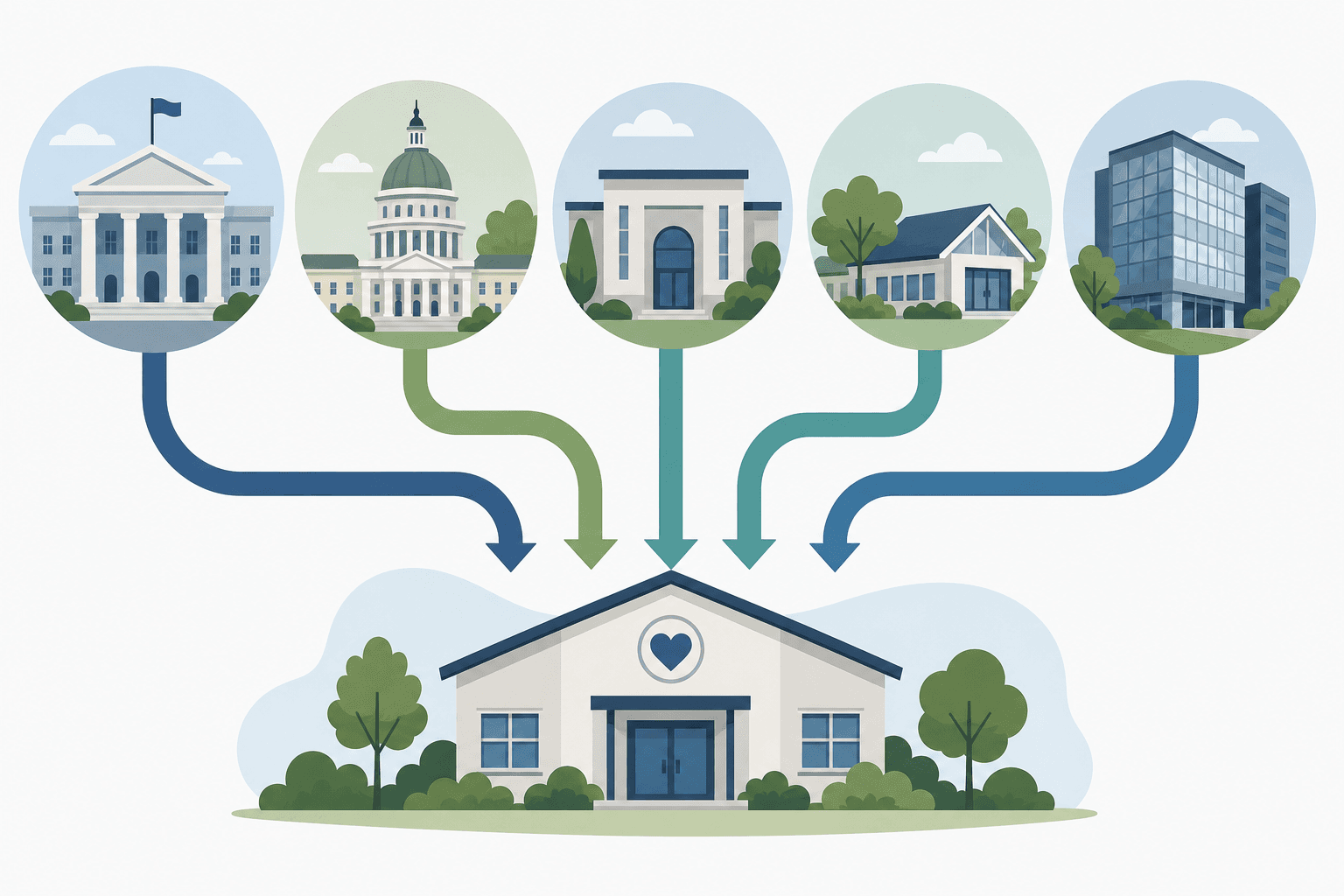
Ask a nonprofit where it looks for grants and the answer is often one website. Someone scans results that mostly do not apply, decides there is nothing out there, and stops. The problem is coverage. Anyone working out how to find grants for nonprofits hits the same structure: the money sits in five separate places, each searched a different way, and only one has a national search box.
Every one of those places can be searched for free. A paid database saves research time by gathering them into one search, but most of what it holds traces back to those same public sources, so the right order is to learn the free routes first and pay only when time, not access, is what limits you.
Quick Answer: Where Do Nonprofits Find Grants?
Nonprofits find grants in five places, all free to search: Grants.gov for federal programs, each state's grant portal, private foundations' Form 990-PF tax returns, community foundations, and company giving pages. Paid databases add search, alerts and contact data on top of largely the same public sources, so what they mainly buy is time.
Free Ways to Find Grants for Nonprofits
The free ways to find grants for nonprofits are the original sources themselves: the federal portal, the state portals, the IRS filings of foundations, local funders' own sites, and free access to Candid's database at partner libraries. The table sets out where each kind of money is published and the free route to it.
Sources: Grants.gov (September 2026); IRS Form 990-PF (2025 form) and Instructions for Schedule I; Candid help centre and pricing page (September 2026).
Three facts make the free routes workable. Grants.gov is free, requires no subscription, and is the single federal portal for discretionary federal funding opportunities, carrying no foundation or state-only grants (Grants.gov, September 2026). A private foundation must make its annual returns available for public inspection, and the IRS lets anyone view exempt organization returns free of charge on Tax Exempt Organization Search (IRS, Instructions for Form 990-PF, 2025). Candid offers "free, in-person access to GuideStar and Foundation Directory at any of Candid's partner locations," and said in July 2026 that it offers free access "through over 2,180 locations across the United States," with Candid search available on site (Candid, July 2026).
The library route has limits. Partner access is commonly on site only, and one public library states its Candid access is "limited to in the library only" (Hedberg Public Library, July 2026). One commenter also reported that "a lot of places have been dropping Candid over the past year or two" (Reddit thread 1p511oo, read September 2026), so call ahead. The guide to libraries with foundation directory access covers how to find a location, and the free 990 search guide covers the IRS and ProPublica tools in detail.
Two more free routes are not databases at all. Commenters in two threads suggested asking current funders for referrals and working the board for introductions (Reddit thread 1r8eviy and Reddit thread 1pzk4ub, read September 2026). One thread also suggested checking who sponsors peer organizations' events and reading those companies' giving pages (Reddit thread 1r8eviy, read September 2026).
How to Search Grants.gov Without Drowning in Results
Grants.gov is the free federal portal for discretionary federal funding opportunities, and it does not list state, county, city, or foundation money (Grants.gov, September 2026). Its search screen filters by opportunity status (Forecasted, Posted, Closed, Archived), funding instrument type, eligibility, category and agency, and an "Export Detailed Data" button pulls the results into a spreadsheet (Grants.gov, Search Grants, September 2026).

Search by assistance listing number. Each federal program has its own Assistance Listing number, and the Grants.gov search accepts it: The instructions of CDMRP, a federal medical research program, for example, tell applicants to enter Assistance Listing number 12.420 on the Grants.gov Search Grants page (CDMRP General Application Instructions, FY26). Keyword search returns whatever text a program officer happened to write; a listing-number search returns every posting tied to one program.
Set opportunity status to Forecasted as well as Posted. A Grants.gov forecast "alerts applicants to a funding opportunity that is planned but that has not yet an official, posted Funding Opportunity Announcement (FOA)," and "it is not guaranteed that a grant forecast will become an FOA" (Grants.gov Online Help, September 2026). A forecast is early warning, not a promise.
Subscribe rather than re-search. Grants.gov sends notifications of new postings and of updates to opportunities you follow, which CDMRP advises applicants to use for "official notifications of new funding opportunity postings and updates" (CDMRP General Application Instructions, FY26). An update notice is how a changed deadline reaches you.
Know the posting window. Under 2 CFR 200.204(b), a federal agency "should make all funding opportunities available for application for at least 60 calendar days," and "no funding opportunity should be available for less than 30 calendar days unless the Federal agency determines that exigent circumstances justify this" (eCFR 2 CFR 200.204, current as of September 2026). A team that needs more than 30 days to produce a federal proposal cannot rely on a monthly check.
Register before you need to. An organization must be registered as an entity in SAM.gov before anyone can start applying in Grants.gov (Grants.gov, September 2026). The Federal Service Desk's quick start guide says there is no charge to register or keep the registration, that it must be renewed every 365 days to stay active, and that you should "Allow at least ten business days after you submit your registration for it to become active in SAM.gov" (Federal Service Desk quick start guide, read October 2026).
Notices also name people to ask. NIH, for one, lists its scientific and program contacts in Section VII of every notice of funding opportunity and strongly encourages applicants to reach out (NIH, September 2026). The federal grants guide to Grants.gov covers registration and submission mechanics.
Agency Portals and Award Databases Beyond Grants.gov
Federal agencies run their own notice pages and award databases, and three of them answer questions a Grants.gov record does not.
- NIH. The NIH Guide for Grants and Contracts is "NIH's official source for notices of grant policies, guidelines, and other information," published daily (NIH, page updated October 23, 2024). NIH RePORTER searches NIH-funded research projects from 1985, plus projects funded by CDC, AHRQ, HRSA, ACF and the VA; it covers funded awards, not applications (NIH RePORT FAQs, read October 2026).
- SBIR.gov. The SBIR and STTR programs are funded through 11 participating federal agencies, and the site has a topics and solicitations search and award data (SBIR.gov, read October 2026). Applicants must be for-profit companies; a nonprofit research institution takes part as the formal partner an STTR award requires (SBIR.gov, read October 2026).
- USAspending.gov. Treasury calls it "the official source for spending data for the United States government" (Treasury Bureau of the Fiscal Service, April 2025). Agencies report grants and other financial assistance awards within two weeks of issuance, with the recipient, its location and the assistance listing (USAspending.gov, About the Data, November 19, 2025).
The award records show who a program has already funded and where, which tells you whether organizations like yours win it.
The State and Local Layer: One Portal Per State
State and local grant money is published on each state's own grant portal, and it is the hardest layer to search because the portals share no index. A search on one state's portal returns nothing from another, and Grants.gov carries no state-only grants (Grants.gov, September 2026).
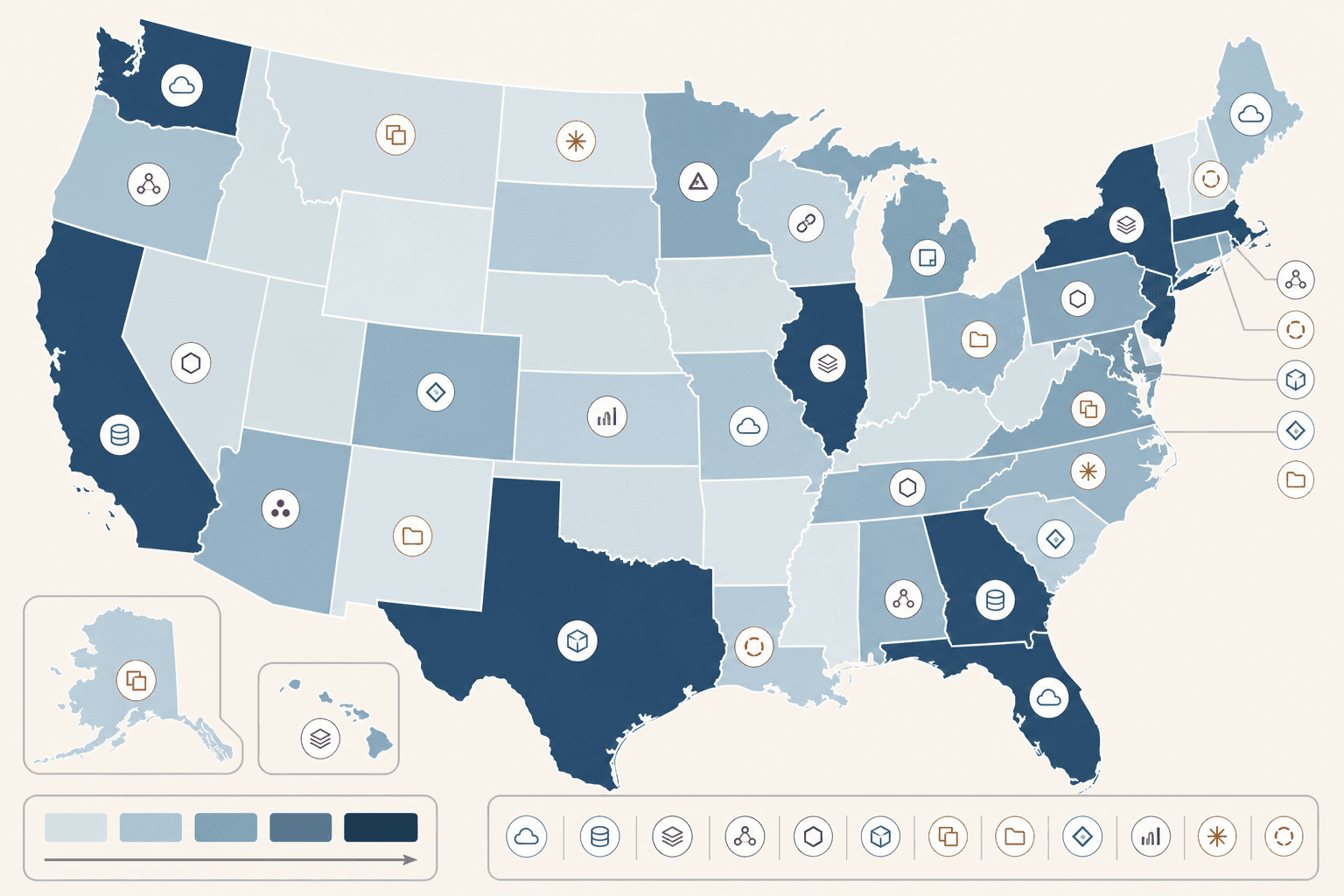
The portals do not share a format either. Each has its own field names, filter logic, and idea of what a deadline is, so a saved search in one cannot be copied to the next.
Your own state portal is probably the highest-yield search you are not running. A Pennsylvania organization scanning only Grants.gov is missing state and county programs, the gap the Pennsylvania grants for nonprofits breakdown covers. Bookmark your state's portal, turn on its email alerts if it has any, and check it on the same schedule you check Grants.gov. State agencies that pass federal money through to local organizations also post those competitions on their own pages, so add the agencies that fund your field to the list. Neighborhood and housing programs such as CDBG and HOME are one example, and the community development grant proposal sample shows how a nonprofit takes part in a CDBG round run by its city or county.
How to Research a Foundation Using Form 990-PF
Form 990-PF is the annual return every private foundation must file with the IRS: "All private foundations, including nonexempt trusts treated as private foundations, must annually file Form 990-PF" (IRS, June 2026). It lists the grants the foundation actually paid, to whom, and for what purpose, so it shows what a foundation did, not what its website says it cares about.
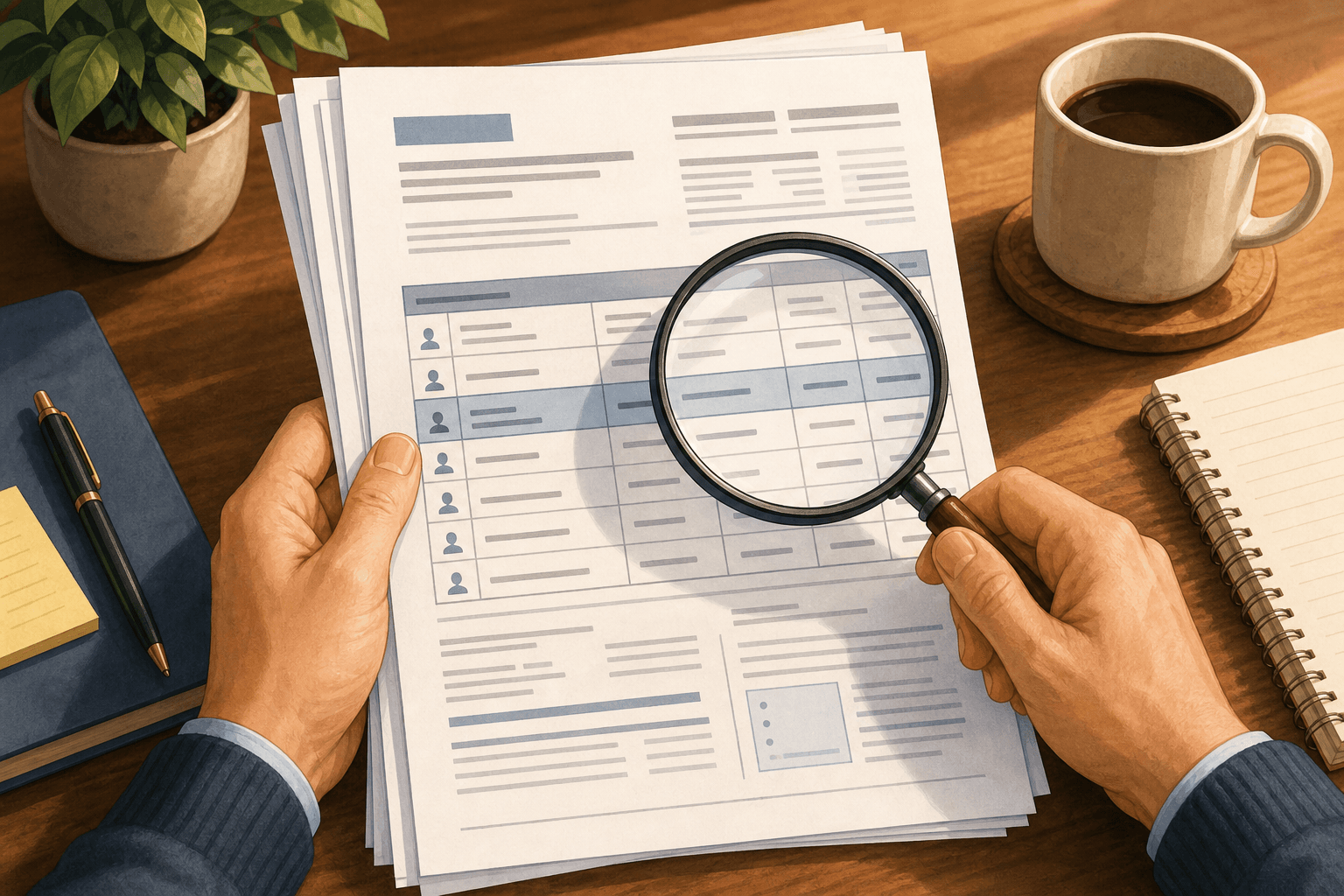
The grant list lives in Part XIV, Supplementary Information, on the 2021 and later forms (it was Part XV on the 2020 and earlier forms). Line 3 is headed "Grants and Contributions Paid During the Year or Approved for Future Payment," split into "a Paid during the year" and "b Approved for future payment," and each row carries the recipient's name and address, any relationship to a foundation manager, the recipient's foundation status, the purpose, and the amount (IRS, 2025 Form 990-PF). Line 2 is easy to skip and worth reading. A foundation that "only makes contributions to preselected charitable organizations and does not accept unsolicited requests for funds" checks a box there; every other foundation completes items 2a to 2d: who applications go to, the form they should take, any submission deadlines, and any restrictions on awards (IRS, 2025 Form 990-PF).
The money also has to move. The form computes a minimum investment return of "5% (0.05)" of the foundation's net non-charitable-use assets (IRS, 2025 Form 990-PF, Part IX), and section 4942 imposes an "excise tax of 30 percent" on undistributed income not paid out by the first day of the second tax year after it was earned (IRS, June 2026). A private foundation has to distribute money every year; what stays open is where it goes.
Work through the return in this order:
- Find the most recent return. IRS Tax Exempt Organization Search is free and searches Form 990 series returns, and you can look a foundation up by EIN or by its legal name (IRS, September 2026). ProPublica's Nonprofit Explorer is also free, covers private foundations that file Form 990-PF, and can "search the full text of filings" (ProPublica, read October 2026).
- Go straight to Part XIV and read the grants paid list. Skip the mission statement.
- Note the smallest grant and the typical grant, not the largest. The largest is often a long relationship a newcomer cannot displace.
- Look at recipient addresses. If every grantee sits in three counties, geography is a hard filter whatever the website says.
- Read the purpose column. "General operating support" there signals a funder that will pay for something other than a new program.
- Read line 2. If the foundation does not accept unsolicited requests, believe it.
- Pull the prior year and compare. A recipient appearing three years running is a renewal. A one-time grant to an organization your size is an open door.
The filings run behind. Form 990-PF is due by the 15th day of the 5th month after the end of the foundation's accounting period, May 15 for a calendar-year filer, with an automatic six-month extension available on Form 8868 (IRS, June 2026). Grantmakers.io warns that "'New' grants that appear in Grantee Search results were likely actually funded 9-18+ months before first appearing in results" (Grantmakers.io, September 2026), so read the list as a pattern, not a current budget.
Example: Example Literacy Center (composite), a small nonprofit, finds a family foundation in its metro with about $40 million in non-charitable-use assets, which puts its minimum payout near $2 million. The website says "education." Part XIV shows 31 grants, 24 of them between $10,000 and $35,000, all inside two counties, eleven described as general operating support. That reframes the ask from a $150,000 program request to a $25,000 operating request.
Illustrative figures, not data from a real organization.
Community Foundations and Local Funders
Community foundations pool donor funds to make grants inside a defined geographic area, and they are the local funder to check first. They are public charities, so they file Form 990 instead of Form 990-PF and never appear in a database built only from 990-PF filings (Grantmakers.io, September 2026).
Their grant lists live in Schedule I of Form 990, which reports grants to domestic organizations and governments, one line for each recipient "that received more than $5,000 aggregate of grants or assistance from the organization during the tax year" (IRS, Instructions for Schedule I). Reading it works like reading Part XIV of a 990-PF, and smaller grants below that line will not appear.
Search "community foundation" with your county, metro area, and state, then check the local funders that rarely appear in any database:
- United Way chapters.
- County and municipal grant programs funded by federal pass-through dollars.
- Local arts and human services commissions.
- Regional health foundations created when a nonprofit hospital was sold.
- Bank and credit union community reinvestment programs.
Local awards are also where a track record starts. Candid's readiness guidance says foundations want to see an established track record of effective programs and that a grant is "difficult (though not impossible)" for a brand-new organization (Candid, March 2024). Whether a new organization must wait a set number of years is the subject of how many years before a nonprofit can get grants, and the local funders listed above are where to build the record in the meantime.
Corporate Giving Programs
Corporate giving splits into two structures, and only one leaves a public paper trail. A corporate foundation is a private foundation and files Form 990-PF, so its grants paid list is public and readable like a family foundation's. A direct corporate giving program runs out of the company's operating budget, files no foundation return, and publishes only what the company chooses to.
Discovery there is not database work:
- Read the company's community or social impact page for focus areas and application windows.
- Identify the local decision maker. Some programs run through individual stores: Walmart's Spark Good Local Grants, for example, are awarded through individual Walmart U.S. stores, Sam's Clubs and distribution centers, from $250 to $5,000 (Walmart.org, read September 2026).
- Ask about in-kind and volunteer support as well as cash.
- Check whether the company runs an employee matching gift program, and whether any donors work there.
- Separate sponsorship from grantmaking. Sponsorship comes from a marketing budget and expects visible recognition.
Subscription Databases: When They Are Worth It
A paid grant database saves research hours; most of the funding data under it is public. The 990-derived grant history under most foundation databases is the same free IRS data, and what the paid tools sell is cleaning, search, contacts and workflow on top of it. Candid says it does "not just rely on IRS data; we clean the data, make it discoverable, enrich it with data collected directly from organizations" (Candid, About us, read September 2026).
Prices from each vendor's pricing page, read September 2026 (Instrumentl's and GrantStation's read October 2026), and TechSoup Support, updated September 14, 2026; Candid's figures are its nonprofit-discounted path.
A subscription pays for itself when research time caps how many applications you submit, or when several staff need the same prospect list. It does not when one person writes two proposals a year. Start with the free layer, and read the comparisons of GrantStation and Candid pricing or the free foundation directory guide before you buy. The best grant finder for nonprofits comparison sets free and paid finders side by side.
How to Find Grants Without Paying for Software
You can find grants without paying for software by running the free sources on a fixed schedule and keeping one log of what you found. The free stack is Grants.gov saved searches, your state portal's alerts, IRS Tax Exempt Organization Search or ProPublica for foundation filings, Grantmakers.io for 990-PF grant history, and Candid at a partner library when you need its database.
Grantmakers.io describes itself as "Built from public 990s. Forever free," but it covers Form 990-PF only, so community foundations are missing, and it throttles heavy use with an hourly search limit (Grantmakers.io, September 2026). One commenter called it "a good tool for playing around" but "not a replacement for the subscription databases" (Reddit thread 1sewng0, read September 2026). Candid's own free tier gives one full profile view a month, which is enough to check a single funder but not to build a prospect list (Candid pricing page, September 2026).
What the free route costs you is time and a tracker. A shared spreadsheet with one row per candidate, its deadline, its amount and your verdict does the job until more than one person is searching.
What AI Grant Matching Can and Cannot Do
AI matching ranks opportunities by similarity to your organization's profile, which is useful for triage and unreliable as a decision. Its limits come from the data it ranks: a record with no category or no award amount is easy to rank wrongly or filter out.
What AI does well:
- Reading a long notice of funding opportunity and pulling out eligibility, deadline, match requirement, and page limits, the job a NOFO summarizer does.
- Ranking a long list so a person reads the strongest twenty instead of every posting.
- Matching on meaning, which catches programs keyword search misses.
What it does not do:
- Know your audit history, your fiscal sponsor arrangement, your indirect cost rate, or whether your board will approve a match.
- Reliably state a deadline. Deadlines change after posting, and generated text goes stale.
- Replace the source notice. Open every shortlisted opportunity at the funder's own URL before drafting.
One commenter who tried prospecting products complained that they "spit out foundations that I already know about, foundations who have already funded us, or opportunities that don't actually exist" (Reddit thread 1pzk4ub, read September 2026). The comment does not say whether those products used AI, but the failure is the one to test any matching tool for. Use ranking to decide what to read, and the funder's document to decide what to write. Paid tools that sell AI matching deserve the same caution; our review of Kindora covers one such platform, including its AI credit limits and one user's report of matched funders that do not give in their area.
How to Find Grants for Nonprofits Every Week
The most reliable way to find grants for nonprofits is a short weekly routine, not an occasional research binge. Under 2 CFR 200.204(b) an agency should keep a federal opportunity open for at least 60 calendar days, but it may be as short as 30 (eCFR, current as of September 2026), so a binge every few months misses whatever opened and closed in between.
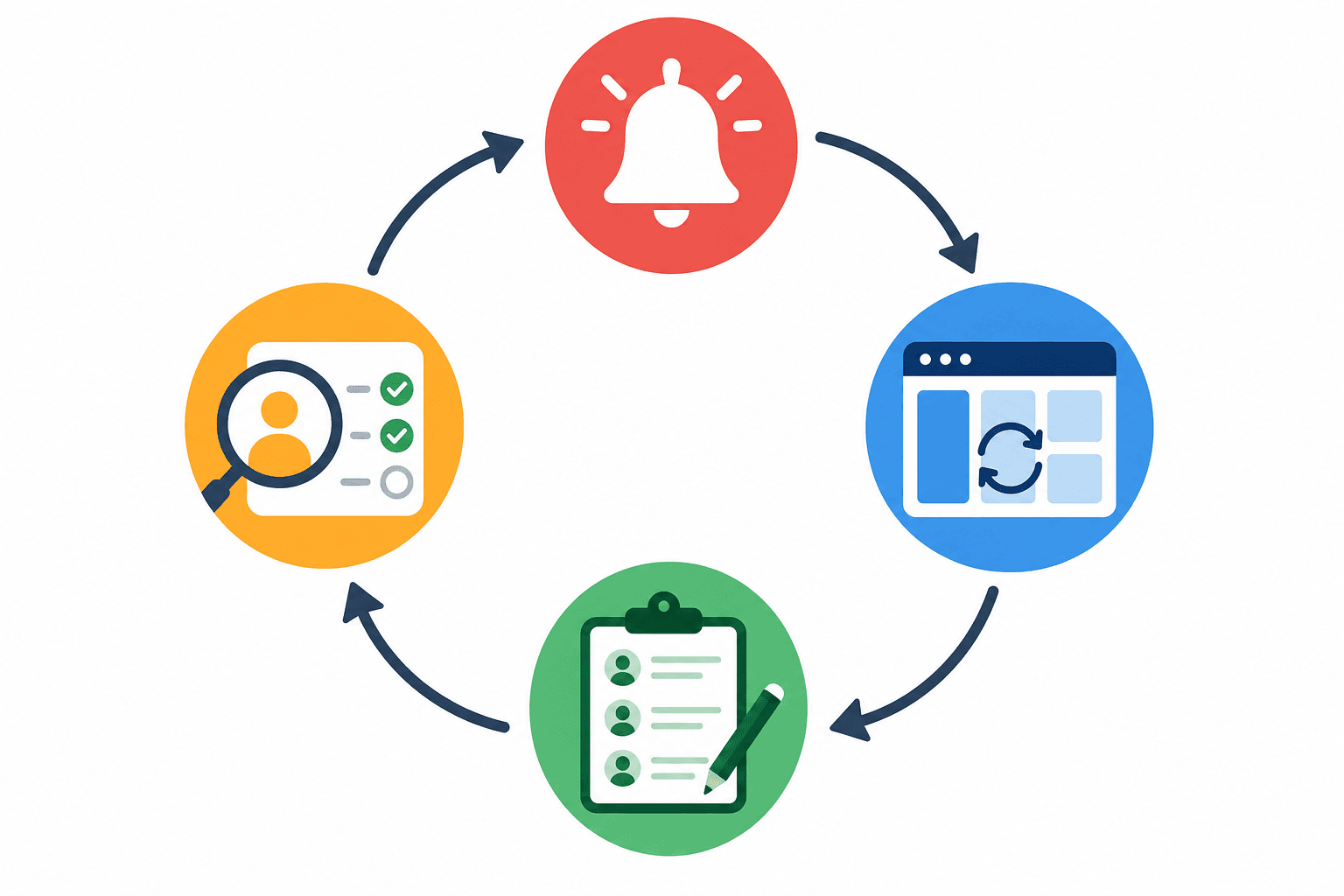
Log every candidate in one place, rejections included, so nobody researches the same dead end twice. Give the routine one owner with a recurring calendar block, because shared responsibility here means unassigned.
GrantCue makes one of the grant search tools a nonprofit can choose, and it puts two of these sources in one place: live federal and state grant listings drawn from Grants.gov and state portals, and a public directory of more than 10,000 private foundations built from IRS 990-PF filings, with a filter for foundations that indicate they accept applications (grantcue.com, October 2026). The foundation directory is public, and GrantCue's Free plan includes search across its federal and state listings with saved searches and email alerts, up to 10 tracked grants on a pipeline board and a calendar feed for deadlines (GrantCue pricing page, October 2026). The 990-PF reading above still decides whether a foundation fits.
A weekly search rhythm also keeps the broader nonprofit funding models conversation honest, because the pipeline shows how much of next year depends on grants.
Screen for Eligibility Before You Write Anything
Eligibility screening turns a long list into a short one, and it belongs before drafting. The most expensive proposal is one from an organization that was never eligible. For a foundation, the recipient addresses in its 990-PF grant list, step 4 above, are the quickest geographic check.
Grants.gov's search has an eligibility filter, and each notice's eligibility section names the applicant types it accepts. Grants.gov is also no source of personal financial help: "Federal agencies do not publish personal financial assistance opportunities on Grants.gov" (Grants.gov, September 2026). Match your entity type to the notice, then run this gate. Any "no" in the first four rows stops the process.
Do not assume cost sharing is required, and do not assume it is not; read the notice. Organizations without their own tax-exempt status have a narrower field, covered in the guide to finding grants without an EIN and in the one on grants for nonprofits without 501(c)(3) status.
Record the verdict either way. A rejected opportunity with a one-line reason is reusable research; one with no note gets re-litigated next year. A go/no-go framework for deciding whether to apply turns that verdict into a score.
Related Guides
Guides for narrower searches and the next step after you find a funder:
- Small local grants to build a track record: where small nonprofits find nearby awards, and how one finished project leads to larger grants.
- Grants for new nonprofits in their first year: what a first-year organization can apply for, including arts grants from New York foundations found through their 990-PF filings.
- Capacity building grants for small nonprofits: what these grants pay for, how published programs screen applicants, and how to find one near you.
- RFP-only foundations and how to get invited: how invitation-only funders choose whom to invite, and which channels stay open.
- Grant newsletters to subscribe to: free email lists such as Grants.gov alerts, the NIH Guide and state portal emails, and what each one sends.
- Grants for conservation nonprofits: how to search Grants.gov, state programs and 990-PF filings for conservation work, and the match and capacity checks funders use.
- Grants for youth agriculture programs: USDA and Extension routes, state agriculture grants, and FFA and SARE programs.
- Grant funding statistics for 2026: August 2026 catalog data in which state and local portals held $11.5 billion in open grants against $9.5 billion on Grants.gov.
- U.S. grant funding snapshot for July 2026: how much grant money was open that month and how many deadlines fell within 30 days.
- Foundation grant budget vs federal grant budget: the cost rules, indirect rates and reporting that separate the two budgets once you know which funder you are writing for.
FAQ
How Do I Find Grants for My Nonprofit for Free?
Create a free Grants.gov account and save searches, turn on your state grant portal's alerts, and read foundation Form 990-PF filings through IRS Tax Exempt Organization Search, ProPublica Nonprofit Explorer or Grantmakers.io, all free. For Candid's database, use a free registered account or full access at a partner library on site. Keep one log of every candidate and verdict, and check the sources weekly.
What Is the Best Website to Find Grants for Nonprofits?
No single site covers all five funding sources. Grants.gov is the free federal portal and carries no foundation or state-only grants, each state publishes its own grants on its own portal, and private foundation giving appears in Form 990-PF tax returns, not in any official listing. The best setup is a short list of sites checked on a schedule, not one site.
How Do I Find Grants Available in My State?
Go directly to your state's official grant portal, which is separate from Grants.gov, and turn on its email alerts if it has any. State portals share no index, so a search on one returns nothing from another. Add the state agencies that fund your field, since they post pass-through competitions on their own pages.
How Can I See What a Foundation Has Funded Before?
Read Part XIV of the foundation's Form 990-PF (Part XV on 2020 and earlier forms), which lists each grant paid with the recipient's name and address, the purpose, and the amount. Retrieve the filing free through IRS Tax Exempt Organization Search or ProPublica Nonprofit Explorer. Items 2a to 2d say where and how to apply, unless the foundation checked the box for preselected recipients only.
Do I Need a 501(c)(3) to Apply for Grants?
Not always, but most foundation money assumes it. A private foundation's grant to an organization that is not a public charity is a taxable expenditure unless the foundation exercises expenditure responsibility, a defined set of extra procedures (IRS, June 2026). Fiscal sponsorship is the usual route for a project without its own status, and some government programs accept other entity types named in the notice.
How Many Grants Should a Small Nonprofit Apply For?
Match the number to your capacity to deliver and report, not to a target count. Every award creates reporting obligations for its full period, and a weak application to a poorly matched funder costs the same writing time as a strong one. Screen each candidate with the eligibility gate first, then apply to every opportunity that passes and that your team can finish well.
Start With Your State Portal This Week
Pick the gap that costs you the most. For many nonprofits that is the state layer, because it needs a separate site visit to see any of it. Open your state's portal, find five open opportunities, run them through the eight-row gate, and log the verdicts. Then turn on Grants.gov saved-search emails and put the weekly block on someone's calendar.
If checking portals one at a time is the part that keeps slipping, start with a discovery search across federal and state sources, or browse open grant opportunities to see what is live.