How to Find Grants for Nonprofits Without 501(c)(3) Status
How groups without exempt status can still get funded through fiscal sponsors, what expenditure responsibility asks of funders, and the filing path to status.

Last updated: October 2026
If you are trying to find grants for nonprofits without 501c3 status, the search looks different from a standard foundation search. A private foundation can fund a group that is not a public charity only if it exercises expenditure responsibility for the grant (IRS, page last reviewed June 28, 2026). For private foundation money, the other route runs through a public charity that acts as your fiscal sponsor.
Fiscal sponsorship is the practical route for a new group, expenditure responsibility is one a willing funder can offer, and IRS recognition ends the need for either. Each route has its own costs and timeline, and you can file for recognition while you apply through a sponsor.
Quick Answer: How Do You Find Grants Without 501(c)(3) Status?
Find a fiscal sponsor first: an exempt organization that receives the grant and oversees how it is spent. Then search foundation and local grants that accept applications through a sponsor. A private foundation can also fund a group that is not a public charity directly, but only if it exercises expenditure responsibility for the grant.
Find Grants for Nonprofits Without 501c3 IRS Status Through a Fiscal Sponsor
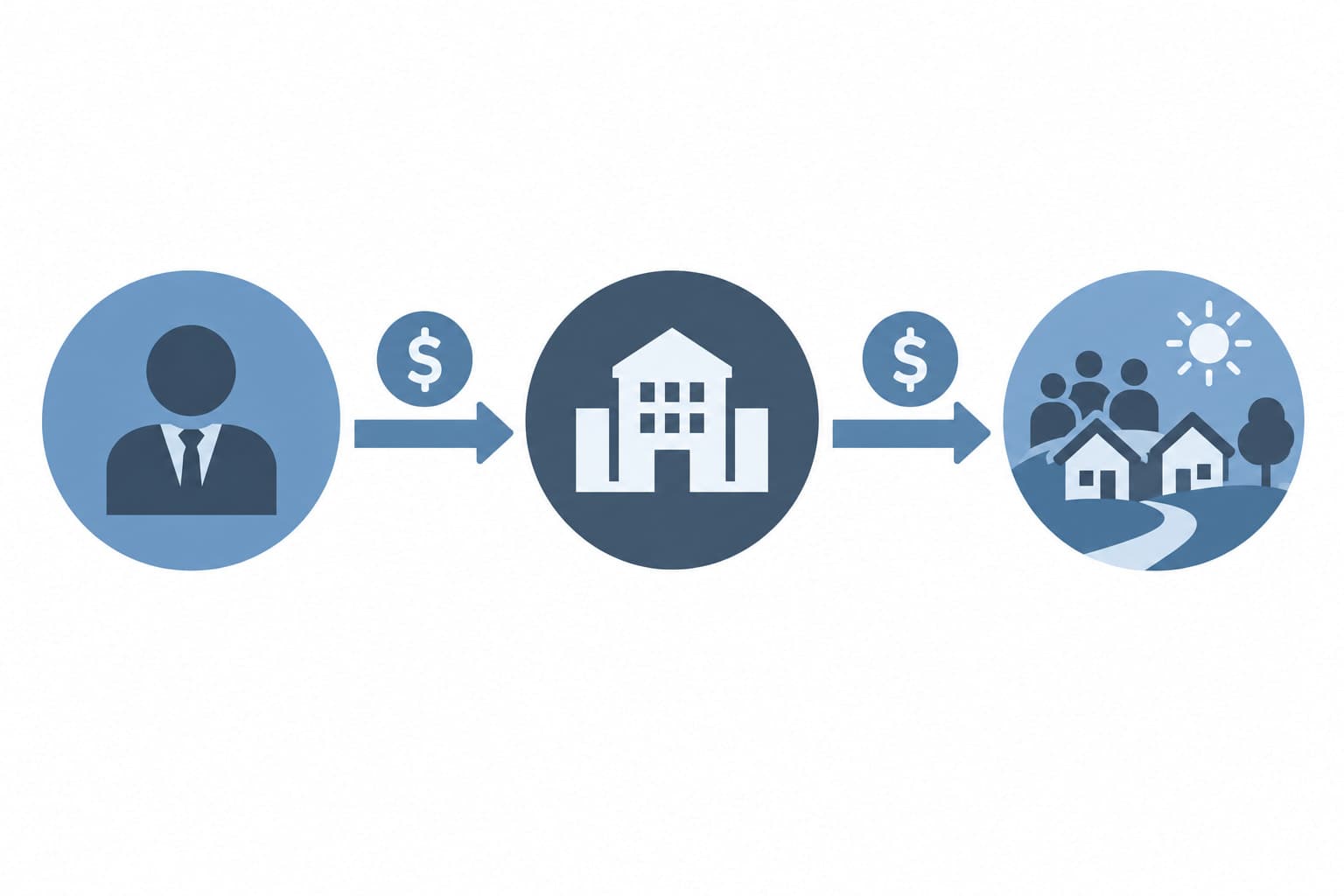
Fiscal sponsorship is an arrangement that lets a project without recognition receive grants through an exempt organization that holds the funds and answers for how they are used. The sponsor is the grantee of record. Your project does the work under its oversight. When the relationship is set up correctly, it satisfies IRS requirements as long as the fiscal sponsor maintains the right to decide, at its own discretion, how it will use contributions (National Council of Nonprofits, read September 2026).
In practice the vast majority of fiscally sponsored projects use either Comprehensive Fiscal Sponsorship or a Pre-Approved Grant Relationship (National Network of Fiscal Sponsors, read September 2026). The two models differ on who employs staff, who holds liability, and how money moves. Confirm the model before you approach funders.
| Feature | Comprehensive Model A | Pre-Approved Grant Model C |
|---|---|---|
| Legal home | Project is a program of the sponsor | Project stays a separate entity |
| Employees and liability | Sponsor holds employment and activity responsibility | Project manages its own reporting and liability |
| Grant flow | Award paid to sponsor as grantee of record | Award paid to sponsor, used for ends in the proposal |
| Back office | Payroll and compliance run through the sponsor | Project runs operations, sponsor assures proper use |
| Best fit | New effort with no staff or systems yet | Operating group waiting on recognition |
The key element to avoid is a pass through or conduit arrangement, and the fiscal sponsor must exercise variance power or independent discretion and control for the relationship to pass IRS muster (National Network of Fiscal Sponsors, read September 2026). A sponsor that simply forwards checks without review puts both sides at risk. Ask how it approves spending and who signs the grant agreement.
Fees are part of the plan. Fiscal sponsor fees are generally somewhere between 5% and 10% of all funds held on behalf of the sponsored group (Propel Nonprofits, read September 2026). Put that fee in every project budget from the start.
To find a sponsor, start with arts councils and community foundations in your county, then widen to national sponsors in your field. Confirm the fee, payment schedule, and exit terms before you apply.
Screening Funders From Their Filings
You can run a serious search without paid databases by working funder filings, public portals, and local lists in a fixed weekly routine. Start with the Supplementary Information part of Form 990-PF, which asks a private foundation to check here if the foundation only makes contributions to preselected charitable organizations and does not accept unsolicited requests for funds (IRS, 2025 Form 990-PF). A foundation that does not check that box must complete items on the person to whom applications should be addressed, the form applications should take, any submission deadlines, and any restrictions or limitations on awards (IRS, 2025 Form 990-PF).
That checkbox trims a list fast. Candid found that of the 112,733 U.S. private foundations that filed Forms 990-PF for fiscal year end 2023, 71% checked the preselected-only box, which narrowly interpreted means only 29% (fewer than 33,000 foundations) are open to considering new grantees (Candid, October 1, 2025). Candid also notes that checking the box does not necessarily reflect a firmly fixed policy, as foundation staff may still consider unsolicited requests (Candid, October 1, 2025). Use the box as a screen, not a verdict.
A separate Candid survey of 522 private and community foundations put willingness higher, with 55% saying they were willing to accept unsolicited proposals (Candid, October 1, 2025). The form tells you what the foundation filed. The guidelines page tells you what staff will actually read.
A commenter on Reddit said the hardest part is not necessarily applying but finding the grant that wants a project like yours (Reddit thread 1lgaq91, read September 2026). Pull recent 990-PF filings for foundations in your county. Read the application policy block, then read the grant list for recipients that look like you. Our full grant search guide covers the wider search.
Candid lists the routes that closed foundations still leave open: an introduction form on the website, letters of inquiry from which they invite full applications, specific program areas or limited periods when they open, a preliminary conversation to save them time on ineligible proposals, and community foundations passing a request to a donor advised fund donor (Candid, October 1, 2025). Aim your free search at those openings.
If this will be your first application, our beginner's guide to a first proposal covers the writing itself. Send fewer, better targeted notes.

Find Grants for Nonprofits Without Funding and Without a Track Record
Candid asks three questions before you seek a foundation grant: are you a 501(c)(3) organization as defined by the IRS, do you have a track record, and do you have capable leadership and an effective board (Candid, March 25, 2024). Candid adds that foundations want to see you have been operating for a while with an established track record of effective programs, and that it is difficult (though not impossible) for a brand-new organization to get a grant (Candid, March 25, 2024).
Readiness here is practical, not legal. No law sets a minimum age for grantseeking. What funders ask for is evidence you can deliver: a program that already runs at small scale, records that prove it, and a board that meets and decides.
On Reddit, commenters in two threads told grantseekers they were really not ready to apply for most grants, including one who described being 0 for 10 on recent applications (Reddit threads 1w5jaaq and 1p511oo, read September 2026). One commenter set the bar at three years, an established donor base, audited financials, and solid outcomes (Reddit thread 1w5jaaq, read September 2026). Treat those as opinions from a forum, not as rules.
Start with what you can document now. GrantStation's Grant Readiness Checklist lists these organizational documents: IRS nonprofit designation letter, EIN, Form 990, audit or financial review, bylaws, mission statement, board list, articles of incorporation, organizational chart, governance and operational policies, and annual report (GrantStation, posted December 2023). If you do not have an item a funder requests, always connect with them before you submit an application to ensure you are in compliance with their requirements (GrantStation, posted December 2023).
Groups without prior funding should chase small, local, and specific first, and read eligibility before anything else. Walmart Spark Good Local Grants award local cash grants ranging from $250 to $5,000 through individual Walmart U.S. stores, Sam's Clubs and Distribution Centers (Walmart.org, read September 2026). They accept 501(c)(3) public charities, government entities, K-12 and higher-education institutions, and faith-based organizations with a community-benefit project, while excluding 501(c)(4), (c)(6) and (c)(19) organizations (Walmart.org, read September 2026). On its own, a group without 501(c)(3) status fits that list only as a government entity, a school, or a faith-based organization.
A commenter on Reddit described the compounding effect of a first award: the more grants you get, the easier it is to get grants, and the first one legitimizes the organization (Reddit thread 1w5jaaq, read September 2026). A small sponsored award with clean reports becomes the track record paragraph in the next application.
Candid also warns that most grants, especially first time grants, are restricted to program expenses, and that general operating or unrestricted grants are largely the exception, rather than the rule (Candid, March 25, 2024). Ask for program support with a clear budget.
Foundation Grants Made Under Expenditure Responsibility
Expenditure responsibility is a compliance path that lets a private foundation fund a group that is not a public charity without making a taxable expenditure. A private foundation grant to an organization is a taxable expenditure unless the recipient is a public charity or the foundation exercises expenditure responsibility with respect to the grant (IRS, page last reviewed June 28, 2026).
Under the tax code, expenditure responsibility means exerting all reasonable efforts and establishing adequate procedures to see that the grant is spent solely for the purpose for which made, to obtain full and complete reports from the grantee on how the funds are spent, and to make full and detailed reports with respect to such expenditures to the Secretary (26 U.S.C. 4945(h), read September 2026).
Before making such a grant a private foundation should conduct a limited pre grant inquiry covering matters such as the identity, prior history and experience of the grantee organization and its managers (IRS, page dated March 19, 2026).
For each such grant the foundation must obtain a written commitment signed by an officer, director or trustee of the grantee agreeing to repay unused funds, submit full annual reports, and make books and records available to the grantor (IRS, page dated March 19, 2026).
The inquiry, the oversight and the reports to the IRS fall on the funder; your side is the signed commitment and full annual reports. When you ask, state that you lack recognition, state whether you have a sponsor as an alternative, and ask whether the foundation ever uses these procedures for early stage work. The letter of intent example shows how to keep that opening to the length funders prefer.
Do not confuse this path with fiscal sponsorship. Sponsorship puts an exempt grantee of record between the funder and the work. Expenditure responsibility keeps you as the grantee and puts extra duties on the funder.
Federal awards do not work this way. An organization must register as an entity with SAM.gov before anyone can start applying in Grants.gov, and must name an E-Business Point of Contact (Grants.gov, read September 2026). If you choose to get only a Unique Entity ID without completing a SAM.gov registration, you cannot apply directly for federal awards (SAM.gov, read September 2026).
Find Grants for Nonprofits Without Money for Fees and Filings
Money is tight at this stage, so separate what is free from what costs a fee. An EIN is free from the IRS and an approved online application issues it immediately, so never pay a website that charges for one (IRS, read September 2026).
Submitting a SAM.gov registration and getting a Unique Entity ID are both free (SAM.gov, read September 2026). Allow at least ten business days after you submit a registration for it to become active (Federal Service Desk, 2.4 Quick Start Guide for Grant Registrations, read September 2026). Registration must be renewed every 365 days to stay active (SAM.gov, read September 2026), and Grants.gov warns that unverified information "could take weeks or months" (Grants.gov, read September 2026).
Exemption itself carries fees. The user fee for Form 1023 is $600 and the user fee for Form 1023-EZ is $275, both paid through Pay.gov when the application is filed (IRS, page dated June 28, 2026).
| Item | What the source states | Source and date |
|---|---|---|
| Form 1023 fee | $600, paid through Pay.gov | IRS, page dated June 28, 2026 |
| Form 1023-EZ fee | $275, paid through Pay.gov | IRS, page dated June 28, 2026 |
| 1023-EZ asset screen | Stop if total assets exceed $250,000 fair market value | IRS Form 1023-EZ eligibility worksheet, read September 2026 |
| 1023-EZ receipts screen | Stop if gross receipts exceeded $50,000 in any of the past 3 years or are projected to exceed $50,000 in any of the next 3 years | IRS Form 1023-EZ eligibility worksheet, read September 2026 |
| EIN and SAM registration | Both free, EIN issued immediately online, allow at least ten business days for SAM activation | IRS and SAM.gov, read September 2026; Federal Service Desk, 2.4 Quick Start Guide for Grant Registrations, read September 2026 |
The short form is not open to everyone. Only certain organizations may use Form 1023-EZ: if you answer Yes to any question on the Eligibility Worksheet you are not eligible and must apply on Form 1023 (IRS, Instructions for Form 1023-EZ, Rev. January 2025).
A narrow group never needs to file at all. Churches, integrated auxiliaries of churches, and any organization with gross receipts normally not more than $5,000 in each taxable year are not required to file an exemption application at all (IRS, Instructions for Form 1023-EZ, Rev. January 2025). Candid still notes you will need to show potential funders your IRS letter of determination (Candid, March 25, 2024).
If cash is the barrier, sequence the spending. Get the free numbers first, secure a sponsor with a clear fee, and file for recognition once the budget and record support it. Review common rejection reasons before you submit.

Find Grants for Nonprofits Without 501c3 Status While You Pursue Recognition
The filing path runs alongside sponsored applications, not after them. The IRS states it issues 80% of Form 1023-EZ application determinations within 22 days, and 80% of Form 1023 application determinations within 191 days (IRS, page dated January 26, 2026). The agency says it receives over 115,000 applications for tax-exempt status and other determinations each year and processes them in the order received (IRS, page dated January 26, 2026). File when ready, then keep applying through the sponsor while the application pends.
Timing of the effective date matters. Generally, if you file Form 1023 within 27 months after the end of the month in which you were legally formed and the IRS approves it, the effective date of exempt status is your legal date of formation (IRS, Instructions for Form 1023, Rev. December 2024). An organization that files after that deadline may be recognized as tax exempt only from the date of the application (IRS, page dated June 28, 2026). Mark that month on your calendar at formation.
Stay compliant while you wait. Failure to file a required return or notice for three consecutive years results in automatic revocation of tax-exempt status (IRS, Instructions for Form 1023-EZ, Rev. January 2025).
A group working through a sponsor still needs one place for its short list. GrantCue combines live federal, state and foundation grant listings with AI summaries of funding notices, and its free personal tier keeps up to 10 active opportunities and their deadlines in a kanban-style pipeline at no cost (grantcue.com, September 2026). Browse local and state grant listings, check each one's eligibility against what the sponsor can receive, and keep the short list there while the determination letter is pending.
FAQ
Can you find grants for nonprofits without 501c3 IRS status?
Yes, mainly through a fiscal sponsor that serves as grantee of record, or through a private foundation willing to make the grant under expenditure responsibility procedures. Without status, a private foundation's direct grant to you is a taxable expenditure unless it takes on those duties, so plan to raise the first grants under sponsorship while you pursue recognition.
How do you find grants for nonprofits without a business?
Start as a sponsored project instead of as an independent applicant. Secure a sponsor agreement, then search local foundations and community funds for programs that accept applications through a sponsor. Keep separate books from day one so any funder's due diligence and your later exemption filing both have records to review.
Can a Fiscal Sponsor Apply to Any Foundation?
Only where the funder accepts applications through a sponsor, so read the guidelines first. The sponsor is the grantee of record, and the arrangement satisfies IRS requirements only while the sponsor keeps the right to decide, at its own discretion, how it will use contributions (National Council of Nonprofits, read September 2026).
Can you find grants for nonprofits without funding?
Yes, but target small program grants first and document delivery carefully. Funders expect a track record, capable leadership, and an effective board. A small sponsored pilot with clean reports becomes the proof paragraph for the next request. Ask for program support with a clear budget.
How do you find grants for nonprofits without money?
Take the free steps first: an EIN direct from the IRS and, if you plan to seek federal awards, a free SAM.gov registration. A sponsor is not free: Propel Nonprofits states that fees are generally between 5% and 10% of all funds held on behalf of the group (read September 2026). Include that fee in proposals. File for exemption when receipts, assets, and records support the form you plan to use.
What to Do Next If You Still Lack the Determination Letter
Pick one sponsor, one small program request, and one filing decision this month. Sign the sponsorship agreement after reading the fee, payment, and exit terms. Submit a program application the sponsor can receive, with the sponsor fee shown as a line. Start the exemption worksheet in parallel and calendar the 27-month formation window (IRS, Instructions for Form 1023, Rev. December 2024). A group with a sponsor, a clean first report, and an application on file looks fundable even before the letter arrives. A directory of private foundations with an accepting-applications filter is a quick first screen for the next short list.