Grants for New Nonprofits in Their First Year, Including Arts Grants From New York Foundations
Grants for new nonprofits in their first year: what is open, how to qualify, how to find funders in your state, including arts grants from New York foundations, and what funders check first.

In this article (10)
- Quick Answer: Can a First-Year Nonprofit Get Grants?
- Grants for New Nonprofits in Their First Year: What Is Realistically Open
- Do You Need 501(c)(3) Status to Apply for Grants in Your First Year?
- How to Find Grants for Nonprofits in New York or Any State
- Arts Grants From New York Foundations: How to Find Them
- Documents Funders Check on a First-Time Applicant
- Writing Your First Letter of Inquiry
- After Your First Declines: Feedback and the Next Submission
- FAQ
- Where a First-Year Nonprofit Should Start
A search for grants for new nonprofits in their first year turns up generic advice and almost nothing that tells you whether an organization of your age qualifies today. Fewer programs are open to a first-year applicant than to an established one, and the open ones ask for documents you may not have yet. The same method answers narrower searches, such as arts grants from New York foundations, where state and field rule a funder in or out before your age does.
Funders ask for your IRS letter of determination, your governance documents and a project budget (Candid, March 25, 2024; GrantStation, posted December 2023). Published eligibility screens rule applications out before a reviewer sees a word, so read the screen before you draft.
Quick Answer: Can a First-Year Nonprofit Get Grants?
Yes. No law or IRS rule sets a minimum age for grants, but Candid says it is "difficult (though not impossible)" for a brand-new organization to get a grant (Candid, March 25, 2024). A first-year nonprofit can pursue local grants whose eligibility turns on service area and entity type, programs with no operating-history rule, and funding through a fiscal sponsor.
Grants for New Nonprofits in Their First Year: What Is Realistically Open
Local grants with published eligibility, programs that screen on staffing or service area, and foundations whose guidelines set no operating-history rule are what a first-year nonprofit can realistically pursue. Candid states that foundations want to see that you have been operating for a while with an established track record of effective programs, and that "it's difficult (though not impossible) for a brand-new organization" to get a grant (Candid, March 25, 2024).
Candid's readiness test asks three questions before you seek a foundation grant: are you a 501(c)(3) organization as defined by the IRS, do you have a track record, and do you have capable leadership and an effective board (Candid, March 25, 2024). Aim the application at program money, because Candid advises that most grants, especially first-time grants, are restricted to program expenses (Candid, March 25, 2024).
Candid found that of the 112,733 U.S. private foundations that filed Forms 990-PF for fiscal year end 2023, 71% checked the preselected-only box, which narrowly interpreted means only 29%, fewer than 33,000 foundations, are open to considering new grantees (Candid, October 1, 2025). Candid notes the box "doesn't necessarily reflect a firmly fixed policy, as foundation staff may still consider unsolicited requests," and its 2025 Foundation Giving Forecast Survey of 522 private and community foundations put willingness to accept unsolicited proposals at 55% (Candid, October 1, 2025).
The door is not locked. Candid lists what those foundations still leave open: an introduction form on the website, letters of inquiry from which they invite full applications, specific program areas or limited periods when they open, a preliminary conversation to save time on ineligible proposals, and community foundations passing a request to a donor-advised fund donor (Candid, October 1, 2025).
Capacity-building rules vary the most. The Community Foundation's Rocco Legacy Endowment Capacity-Building Grants require an applicant to have at least three years as an established functioning entity (The Community Foundation, page dated May 12, 2026), which is one program's rule and not a sector standard (the question of how many years before a nonprofit can get grants has its own answer), while the Chesapeake Bay Trust FY27 Capacity Building RFP requires at least one full-time staff member (35 or more hours per week) or a dedicated volunteer contributing at least 35 hours per week, and an active board of directors (Chesapeake Bay Trust, RFP released April 27, 2026).
Do You Need 501(c)(3) Status to Apply for Grants in Your First Year?
Most private foundation money requires public charity status or a fiscal sponsor. A private foundation's grants to organizations are taxable expenditures unless the recipients are public charities or the foundation exercises expenditure responsibility with respect to the grant (IRS, "Grants to organizations," page last reviewed June 28, 2026). Expenditure responsibility is a defined compliance burden in which the foundation must exert all reasonable efforts and establish adequate procedures to see that the grant is spent solely for the purpose for which made, to obtain full and complete reports from you on how the funds are spent, and to make full and detailed reports about those expenditures to the Secretary (26 U.S.C. 4945(h), read September 2026).
Two dates matter more than the fees. Generally, if you file Form 1023 within 27 months after the end of the month in which you were legally formed and the IRS approves it, the effective date of exempt status is your legal date of formation (IRS, Instructions for Form 1023, Rev. December 2024). File after that window and the organization may be recognized as tax-exempt only from the date of the application (IRS, "Application filed late," page dated June 28, 2026).
Fiscal sponsorship is an arrangement in which an existing public charity accepts grant money on behalf of a project it has agreed to carry. The National Network of Fiscal Sponsors states that in practice the vast majority of fiscally sponsored projects use either Comprehensive Fiscal Sponsorship (Model A) or a Pre-Approved Grant Relationship (Model C) (National Network of Fiscal Sponsors, read September 2026). In Model A the project becomes a program of the sponsor, which keeps all legal and fiduciary responsibility including for employees and activities; in Model C the project stays a separate entity responsible for its own tax reporting and liability (National Network of Fiscal Sponsors, read September 2026). Propel Nonprofits states fiscal sponsor fees are generally somewhere between 5% and 10% of all funds held on behalf of the sponsored group (Propel Nonprofits, read September 2026). The guide to finding grants without 501(c)(3) status covers the other routes open while your IRS determination is pending.
How to Find Grants for Nonprofits in New York or Any State
Filter a live directory by geography and eligibility, then read the funder's own Form 990-PF (IRS, 2025 Form 990-PF) to see who it funds and how it wants to be contacted.
Our walkthrough of the grant search itself covers the method, and the free foundation directory roundup covers where to run it without paying. For geography, work from live grant listings and a state-by-state list of private foundations.
Read the filing before you write. On the 2025 Form 990-PF, Part XIV item 2 asks a foundation to check a box if it only makes contributions to preselected charitable organizations and does not accept unsolicited requests for funds (IRS, 2025 Form 990-PF). When that box is left empty, items 2a through 2d disclose the person to whom applications should be addressed, the form applications should take, any submission deadlines, and any restrictions on awards such as geographic areas, charitable fields or kinds of institutions (IRS, 2025 Form 990-PF).
Larger foundations are somewhat more open, not less. Candid identified 1,744 private foundations with assets above $100 million, of which 38% accepted unsolicited requests, 9 percentage points higher than private foundations overall (Candid, October 1, 2025). An independent analysis of IRS 990-PF electronic filings found 27,218 of 131,545 foundations answering the preselected-only question said they accept unsolicited requests, which is 21%, and that 8,971 of those also paid at least 5 grants totaling $100K or more in a filed year of 2022 or later (Civly, read September 2026).
Arts Grants From New York Foundations: How to Find Them
Arts grants from New York foundations are found the same way as any other foundation money, with two extra filters: the state and the field. Read geography first: commenters in three Reddit threads said "the biggest issue with finding new opportunities is geographic alignment" (Reddit threads 1r8eviy, 1vb5ctu and 1sewng0, read September 2026). New York is also a large state for nonprofits, with 134,872 in ProPublica's state table on September 22, 2026, the third-largest count (ProPublica Nonprofit Explorer, read September 2026).
Build the starting list from filings, not from memory. ProPublica's free API can filter organizations by state and by NTEE major group (ProPublica, Nonprofit Explorer API v2, read September 2026), and a foundation directory with an accepting-applications filter narrows that list to funders that say they take applications.
Then check each funder's arts focus in its own Form 990-PF. Part XIV line 3 lists every grant with the recipient's name and address and a "Purpose of grant or contribution" column (IRS, 2025 Form 990-PF), so a run of museum, theater or music recipients shows an arts program area more plainly than a mission statement does. Part VI-A line 8a lists the states to which the foundation reports or is registered, and Part XIV item 2d names any restrictions by geographic area or charitable field (IRS, 2025 Form 990-PF).
Last, read the funder's current guidelines page and confirm whether a letter of inquiry is accepted before drafting, because the filing describes a year that has already closed.
Documents Funders Check on a First-Time Applicant
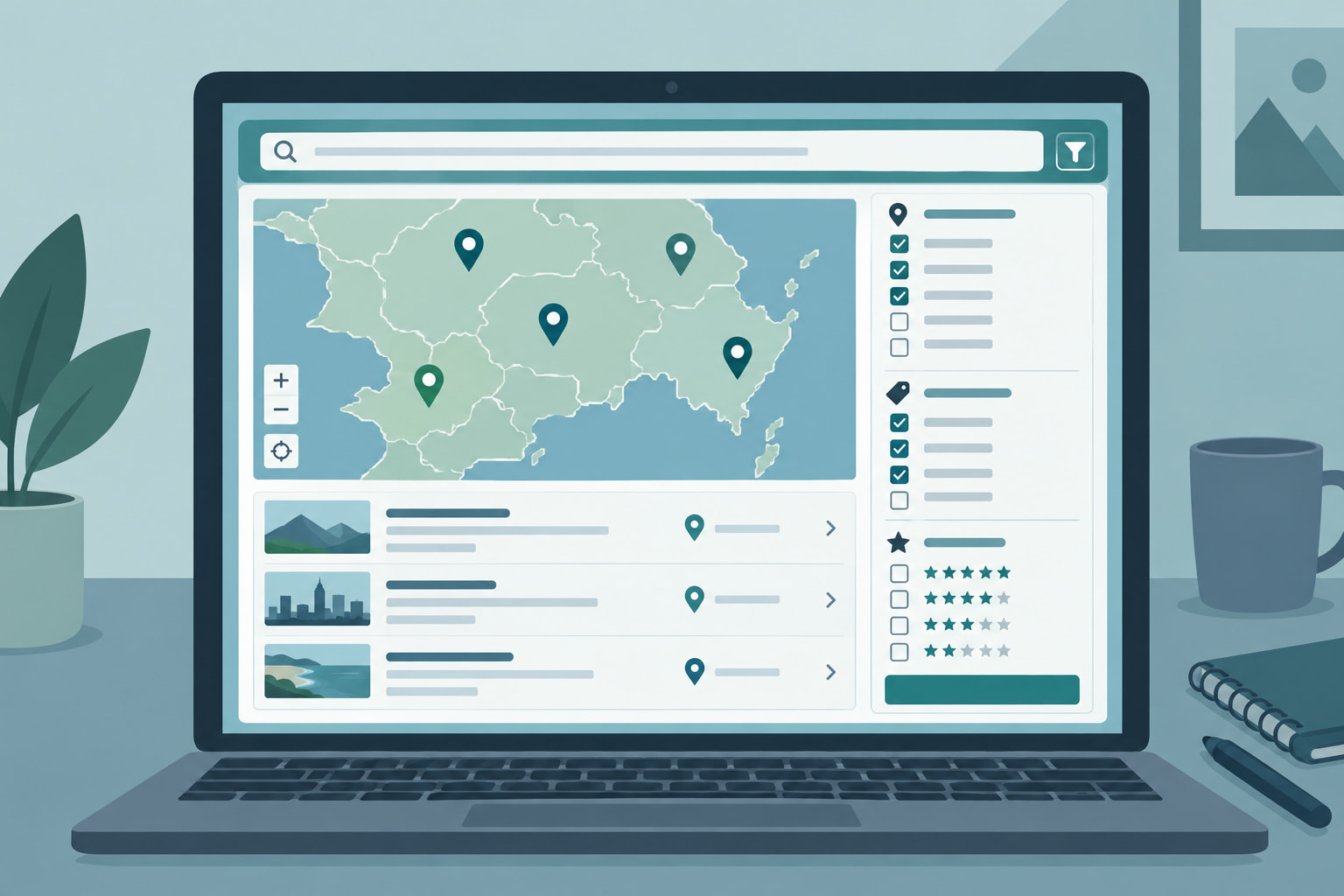
A first-year nonprofit is ready to apply when it can hand over its IRS determination letter, its governance documents, a project budget and a plain account of results. GrantStation's published Grant Readiness Checklist lists the documents in two groups (GrantStation, Grant Readiness Checklist, posted December 2023).
You will not have every item in year one. GrantStation's checklist advises that if you do not have an item a funder requests, "always connect with them before you submit an application to ensure you are in compliance with their requirements" (GrantStation, posted December 2023). Candid frames readiness as a transparency test: "Would you be comfortable inviting a funder for a site visit? Are your staff and board ready to speak with a foundation representative about the organization's priorities?" (Candid, March 25, 2024). Candid also notes you will need to show potential funders your IRS letter of determination, and that many potential funders will consult your Candid profile during due diligence (Candid, March 25, 2024).
If federal money is the target, register early. Submitting a SAM.gov registration and getting a Unique Entity ID are both free, registration must be renewed every 365 days to stay active, and a Unique Entity ID without a completed registration cannot apply directly for federal awards (SAM.gov, Entity Registration, read September 2026). Allow at least ten business days after you submit the registration for it to become active (Federal Service Desk, 2.4 Quick Start Guide for Grant Registrations, read September 2026). Grants.gov warns that unverified information "could take weeks or months" (Grants.gov, Applicant Registration, read September 2026).
Writing Your First Letter of Inquiry
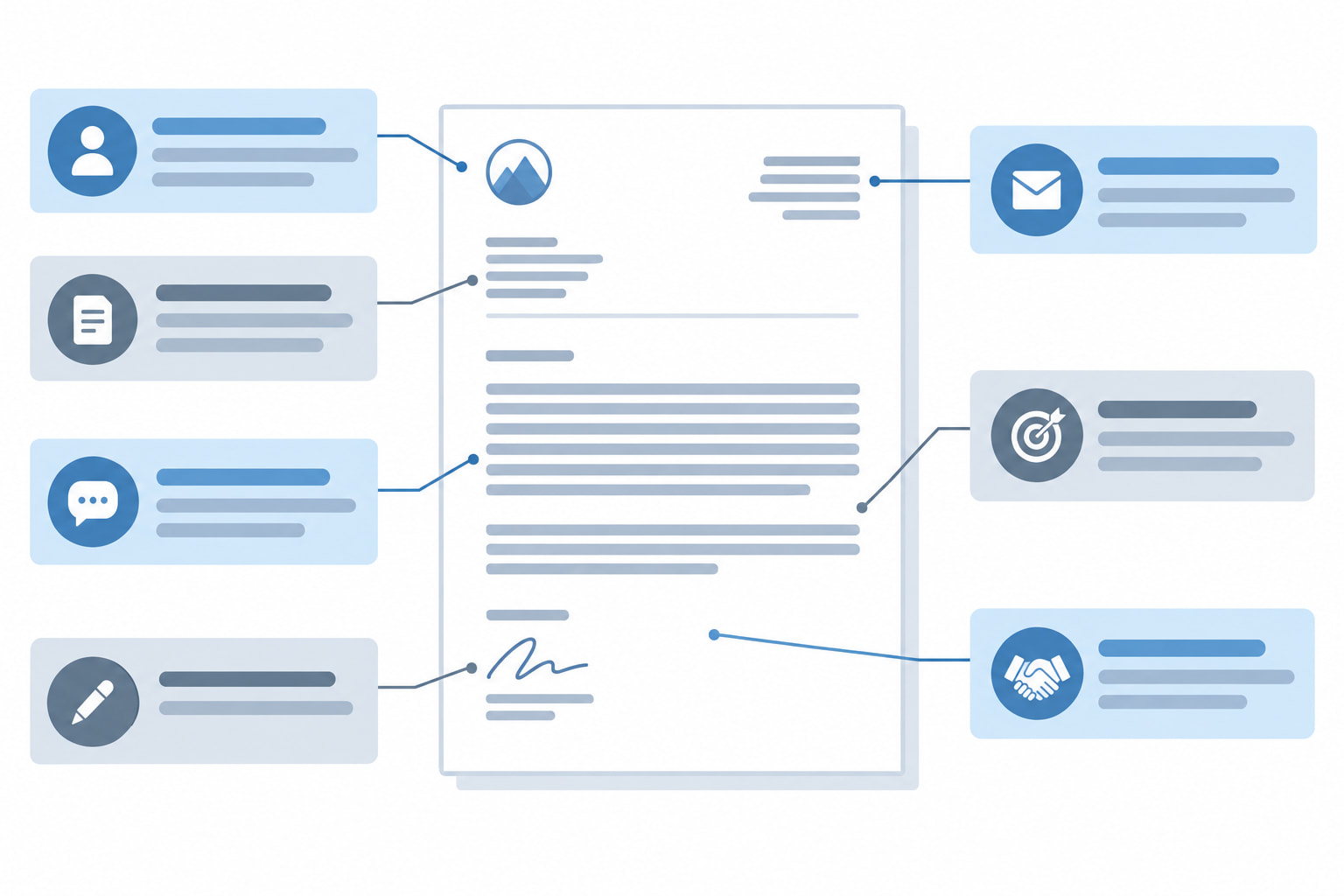
A letter of inquiry is a short document that introduces the organization and asks whether a full proposal would be welcome. Northwestern University's foundation relations office states that the first contact with a foundation is often a brief one- to three-page letter of inquiry, which many foundations accept on a rolling basis (Northwestern University Foundation Relations, read September 2026).
The Ahmanson Foundation asks for a narrative of 1 to 3 pages maximum, states "Please do not send full proposals at the LOI stage," and requires the organization's IRS-recognized name, EIN, current-year operating budget and the top five recent foundation or corporate grants received in the last two fiscal years (The Ahmanson Foundation, read September 2026). That last line is the hardest one for a first-year applicant, and the honest answer when you have none is a single sentence instead of a blank. Our sample letter of intent shows the shape.
Before sending any letter, check what the funder publishes about first contact, because the right first step differs:
After Your First Declines: Feedback and the Next Submission
Expect silence about half the time, ask once anyway, and fix the next submission with whatever comes back. The Center for Effective Philanthropy reported that across the funders that surveyed their declined applicants through CEP's Declined Applicant Perception Report, "only about 50 percent of those declined applicants receive any sort of feedback from the foundation" (Center for Effective Philanthropy, September 6, 2016).
Ask once, in writing, with one specific question. For written feedback on a proposal that already lost, The Unfunded List is a 501(c)(3) founded in 2015 whose volunteer evaluators review grant proposals that were already submitted to a funder but did not win funding and deliver a multi-perspective written feedback report (The Unfunded List, read September 2026). It charges a one-time $100 administrative fee on a first submission, after which authors who fully participate may submit future proposals at no charge, and submission deadlines typically fall in March and September (The Unfunded List, read September 2026).
Volume is part of the answer. In GrantStation's 2026 State of Grantseeking Report, organizations submitting one application had a 64.5% award rate, compared with 99.4% for those submitting more than 30 applications (GrantStation, 2026 State of Grantseeking Report, 2025 data). Those are per-organization figures from a self-selected sample of organizations already pursuing grants, and GrantStation says the survey "was not scientifically conducted" (GrantStation, methodology, read September 2026), so treat them as a reason to keep submitting, not as your odds on any single application.
The next submission starts with a better-matched funder. GrantCue's public directory of more than 10,000 private foundation profiles, built from IRS 990-PF filings, keeps a separate list of foundations whose latest filing publishes how to apply, with a typical grant size filter whose smallest band is "Up to $50,000"; fit scoring comes with every plan, Free included (grantcue.com, October 2026). Start the next list from foundations that say they accept applications and read each one's guidelines for age, geography and field.
FAQ
Can a New Nonprofit Get a Grant in Its First Year?
Yes. No law or IRS rule sets a minimum age, and some programs publish eligibility with no operating-history condition, such as Walmart's Spark Good Local Grants of $250 to $5,000, which turn on service area, entity type and verification by Deed (Walmart.org, read September 2026). Candid still calls a grant "difficult (though not impossible)" for a brand-new organization, so ask for program expenses, which is what most first-time grants fund (Candid, March 25, 2024).
Should a New Nonprofit Use a Fiscal Sponsor?
It is the practical route while your own exemption is pending or not yet filed. The National Council of Nonprofits states that using a fiscal sponsor satisfies IRS requirements as long as the sponsor maintains the right to decide, at its own discretion, how it will use contributions (National Council of Nonprofits, read September 2026). Propel Nonprofits states that fiscal sponsor fees are generally somewhere between 5% and 10% of all funds held on behalf of the sponsored group (Propel Nonprofits, read September 2026).
How Do I Find Grants for Nonprofits in New York State?
Filter a live directory by state, field and eligibility, then read each funder's Form 990-PF application-information block for its stated position on unsolicited requests and its geographic restrictions (IRS, 2025 Form 990-PF). Commenters in three Reddit threads said "the biggest issue with finding new opportunities is geographic alignment" (Reddit threads 1r8eviy, 1vb5ctu and 1sewng0, read September 2026), and listed board introductions and current-funder referrals as workarounds (Reddit threads 1r8eviy and 1pzk4ub, read September 2026).
How Long Does SAM.gov Registration Take?
Before applying, allow at least ten business days after submitting a SAM.gov registration for it to become active (Federal Service Desk, 2.4 Quick Start Guide for Grant Registrations, read September 2026). Submitting the registration and getting a Unique Entity ID are both free, and SAM.gov states that registration must be renewed every 365 days to stay active (SAM.gov, Entity Registration, read September 2026). A Unique Entity ID without a completed registration cannot apply directly for federal awards (SAM.gov, Entity Registration, read September 2026).
How Do You Write a Letter of Inquiry With No Grant History?
Keep it inside the funder's page limit and answer every required item honestly. The Ahmanson Foundation, for example, asks for a narrative of 1 to 3 pages maximum and the top five recent foundation or corporate grants received in the last two fiscal years (The Ahmanson Foundation, read September 2026). With no grants to list, say so in one sentence and show the results you do have, with dates and counts.
What Do Funders Ask to See From a First-Year Nonprofit?
GrantStation's checklist names an IRS nonprofit designation letter, EIN, IRS Form 990, audit or financial review, bylaws, mission statement, board list, articles of incorporation, organizational chart, governance and operational policies, and an annual report, alongside proposal documents such as need data, outcomes, an evaluation plan, a project budget and a sustainability plan (GrantStation, Grant Readiness Checklist, posted December 2023). Candid adds that many potential funders will consult your Candid profile during due diligence (Candid, March 25, 2024).
Where a First-Year Nonprofit Should Start
Get an EIN if you do not have one, then file the exemption application inside the 27-month window, since status approved on a timely Form 1023 generally reaches back to your date of formation (IRS, Instructions for Form 1023, Rev. December 2024). While the application is pending, assemble the readiness documents and pick one funding route whose published eligibility you already meet.
Send a single letter of inquiry to a funder whose Form 990-PF leaves the preselected-only box unchecked and lists how to apply (IRS, 2025 Form 990-PF), and record what you sent and what came back, with the date. That dated file is what makes the second cycle faster.