RFP-Only Foundations: How to Get Invited
Learn how RFP-only foundations choose who to invite, which contact channels stay open, and the practical record keeping and outreach steps that put your nonprofit on the list.

In this article (9)
- Quick Answer: How Do You Get Invited by RFP-Only Foundations?
- What RFP-Only Means for Grantseekers
- Why Foundations Use Invitation-Only Giving
- How Foundations Find Organizations to Invite
- How to Get Invited by RFP-Only Foundations
- What to Send When a Funder Accepts an Introduction
- How to Stay Visible While You Wait for an Invitation
- FAQ
- Your Next Steps Toward an Invitation
You found a foundation that funds exactly what you do, then read the line that stops the search cold. The grants page says the foundation reviews proposals by invitation only. With RFP-only foundations, how to get invited becomes the whole question, because there is no apply button and no deadline on the calendar.
An RFP-only foundation is a funder that asks only invited organizations to apply. Its invitations come from staff research and, at some funders, from short inquiries sent through the channel the funder names.
Quick Answer: How Do You Get Invited by RFP-Only Foundations?
RFP-only giving means a foundation invites each applicant instead of reviewing open applications. Its staff find invitees through their own research and, at some funders, through brief inquiries sent the way the funder specifies. Your work is to become easy to find and vet, use only the channel the funder names, and keep your records current.
What RFP-Only Means for Grantseekers
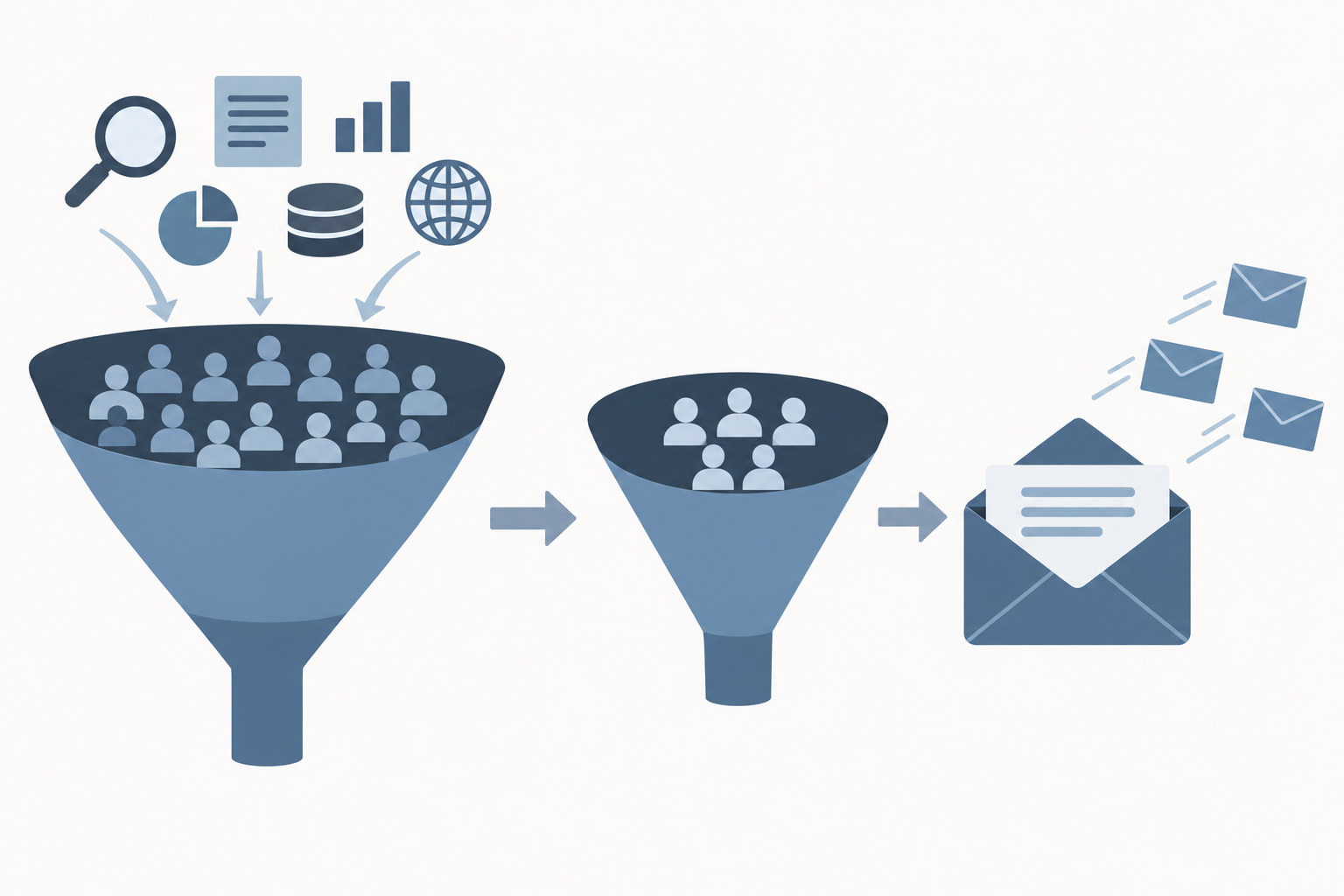
An RFP-only process is a selection method that starts with the funder. Staff define a program goal, research fitting organizations, and send a request for proposals to a short list. Your proposal answers a direct ask, with a scope and due date the funder sets. That shape suits funders with small teams, because it keeps the applicant pool narrow and the review load known.
The federal return asks every private foundation whether it gives only to preselected organizations, and most say yes: Candid found that 71% of the 112,733 U.S. private foundations filing Forms 990-PF for fiscal year end 2023 checked that box, which narrowly interpreted leaves 29% (fewer than 33,000 foundations) open to considering new grantees, though Candid notes the box "doesn't necessarily reflect a firmly fixed policy, as foundation staff may still consider unsolicited requests" (Candid, October 1, 2025).
So the box states the default posture, not the full story. Candid lists the routes that closed foundations still leave open: an introduction form on the website, letters of inquiry from which they invite full applications, specific program areas or limited periods when they open, a preliminary conversation to "save them time on ineligible proposals," and community foundations passing a request to a donor-advised fund donor (Candid, October 1, 2025). Find which door a given funder leaves open, then use it as described.
Why Foundations Use Invitation-Only Giving
Inside Philanthropy notes that invitation-only practice "reflects limitations on a funder's time and resources more than it reflects on their funding generosity" (Inside Philanthropy, September 8, 2026). A small team can review a narrow invited pool with care. It cannot give the same care to a large open pool. The invitation list is how the funder protects review quality.
The Ford Foundation states: "We do not accept unsolicited grant proposals by mail, email or phone," and that the majority of its grants are identified by the foundation (Ford Foundation, read September 2026). The Weingart Foundation states it uses an invitation-only process "in order to reduce the burden on applicants and expedite funds," and that while it does not accept unsolicited requests it welcomes communication with nonprofits and invites contact with a program officer (Weingart Foundation, read September 2026). The Helmsley Charitable Trust does not accept unsolicited grant requests, occasionally issues Requests for Proposals with a specific scope, and asks prospective grantees to complete a pre-proposal as the first step (Helmsley Charitable Trust, page dated August 20, 2022).
The Gordon and Betty Moore Foundation does not accept unsolicited grant proposals but invites a brief, roughly 100-word email inquiry, and commits to reviewing only inquiries that adhere to that word guideline (Gordon and Betty Moore Foundation, read September 2026). The W. Clement and Jessie V. Stone Foundation states that its staff ordinarily contacts nonprofits of interest for a preliminary conversation, and that "If the Foundation begins to accept unsolicited proposals, we will post that information to this website" (W. Clement and Jessie V. Stone Foundation, read September 2026).
The UNFI Foundation awards grants by invitation only on a nomination-based system and states that due to its small staff size it is unable to schedule introductory meetings (UNFI Foundation, read September 2026). The T.D. Jakes Foundation states its grants are invitation-only but that organizations may submit an information inquiry, while noting that "submitting an inquiry does not guarantee an invitation to apply or a follow-up meeting" (T.D. Jakes Foundation, read September 2026). Each funder names its own channel, and some set a length limit. A phone call to a funder that asks for email, or a full proposal sent where only a short note was invited, signals that you did not read the instructions.
How Foundations Find Organizations to Invite
Foundations find invitees through their own research, so the practical question is how your organization becomes one that staff already know. A commenter on Reddit described the core frustration with prospect lists as "having a long list of prospects that you can't actually get in touch with because they don't want you to contact them" (Reddit thread 1pzk4ub, read September 2026).
Prior contact matters. In the William Penn Foundation's 2025 CEP Grantee and Applicant Perception Report, half of declined applicants reported having contact with Foundation staff prior to applying, compared to 85 percent of grantees (Center for Effective Philanthropy and William Penn Foundation, 2025 survey, report posted July 2026). Contact does not promise money. It puts your name in the set of organizations staff already know when they build an invitation list.
Referrals are the other path grant writers describe. Commenters on Reddit listed the workarounds for getting in front of closed funders as asking current funders for referrals and funder briefings, and working the board for introductions (Reddit threads 1r8eviy and 1pzk4ub, read September 2026). Commenters in three threads also said that "a proposal shouldn't be the first time a funder hears about your organization" (Reddit threads 1vf8jxw, 1r8eviy and 1pzk4ub, read September 2026).
Readiness shapes who survives that first look. Candid's grant-readiness guidance asks three questions before you seek a foundation grant: are you a 501(c)(3) organization as defined by the IRS, do you have a track record, and do you have capable leadership and an effective board (Candid, March 25, 2024). Candid states that foundations want to see that you have been operating for a while with an established track record of effective programs, and that "it's difficult (though not impossible) for a brand-new organization" to get a grant (Candid, March 25, 2024). For building that base list of possible funders, start with how to find grants for nonprofits before you sort by invitation status.
How to Get Invited by RFP-Only Foundations
Getting invited is a campaign with five parts: research the funder, become easy for its staff to vet, work the referral path, make the permitted contact, and follow up with patience. Research goes past the grants page. Read strategy statements and grant lists. Note the fields, geographies, and organization sizes it favors. Write the exact contact rule at the top of your research note.
Then make your organization easy to vet. Candid notes you will need to show potential funders your IRS letter of determination, and that many potential funders will consult your Candid profile during due diligence (Candid, March 25, 2024). Keep that profile and your website current, and keep a one page summary of mission, service area, and top outcomes ready to send. The GrantStation published Grant Readiness Checklist lists the organizational documents to hold ready: IRS nonprofit designation letter, EIN, IRS Form 990, audit or financial review, bylaws, mission statement, board of directors list, articles of incorporation, organizational chart, governance policies and procedures, operational policies and procedures, and annual report (GrantStation, posted December 2023).
Next, work the referral path. Ask a current funder whether they would introduce you or mention your work to a peer funder. Ask board members who they know at the target foundation and whether a brief introduction is appropriate. Attend the briefings the funder holds for the field.
Finally, make the permitted contact. If the page invites email, send a short note that names the alignment in two sentences and asks whether a brief inquiry would be welcome. If the page offers an introduction form, fill it with care and stop there. If the page says no meetings, do not request one. Track every touch in one place with the date, the channel, and the response. Once a funder invites a proposal, our proposal drafting guide covers the rest.

Source: contact routes from Candid (October 1, 2025), readiness items from Candid (March 25, 2024) and GrantStation (posted December 2023), referral paths as reported on Reddit (Reddit threads 1r8eviy and 1pzk4ub, read September 2026).
What to Send When a Funder Accepts an Introduction
When a funder accepts introductions, the document is often a letter of inquiry, not a proposal. Northwestern University's foundation relations office states that the first contact with a foundation is often a brief one- to three-page letter of inquiry, which many foundations accept on a rolling basis (Northwestern University Foundation Relations, read September 2026). The Institute for Advanced Study's LOI guidance describes a letter of inquiry as a condensed version of a full proposal, usually two to three pages and sometimes as little as one page (Institute for Advanced Study, read September 2026).
Read the funder's LOI page before you write a word. The Ahmanson Foundation's LOI instructions ask for a narrative of 1 to 3 pages maximum, state "Please do not send full proposals at the LOI stage," and require the organization's IRS-recognized name, EIN, current-year operating budget and the top five recent foundation or corporate grants received in the last two fiscal years (The Ahmanson Foundation, read September 2026). Answer those items in that order.
Open with the project, the population, and the geography in two sentences. State the fit with the funder's published priorities in one sentence. Give two or three outcome statements with the measures you use. Close with a direct request for guidance on whether a full application would be welcome. Our letter of intent example and template shows the same short structure with fill-in sections.
Two errors are easy to avoid. The first is sending a full proposal where a short letter was requested, which the Ahmanson Foundation asks you not to do. The second is vague outcomes. A commenter on Reddit diagnosed rejections as "no crystal clear outcomes that are linked confidently to the org's capacity and track record" (Reddit thread 1vf8jxw, read September 2026). Name the outcome, name the measure, and name the time frame in plain terms.
Source: inquiry examples from Gordon and Betty Moore Foundation (read September 2026), Northwestern University Foundation Relations (read September 2026), Institute for Advanced Study (read September 2026), The Ahmanson Foundation (read September 2026), and Helmsley Charitable Trust (page dated August 20, 2022).
How to Stay Visible While You Wait for an Invitation
Waiting is active work with a quarterly routine. Update the public profile, post program results with plain counts and measures, send a short update to current funders, and log every funder touch with dates. When staff research the field six months from now, they should find a current record, not a silent website.
Use that routine to deepen the referral network too. Share credit with partners, show up at funder briefings, and serve on field panels where program staff attend. Keep board members briefed on the three or four invitation-only funders you most want to meet, so they can make an introduction when the moment arises. One polite update per quarter beats a burst of cold messages before a deadline.
That record has to live somewhere a colleague can read it. GrantCue keeps funder touches as tasks, notes and dates on a kanban-style pipeline on every plan, and its directory of more than 10,000 private foundation profiles, built from IRS 990-PF public filings, can be filtered by whether a foundation indicates it accepts applications (grantcue.com, September 2026). The directory's application filter separates invitation-only funders from open ones.

FAQ
How do you get invited to apply for an RFP-only foundation?
Become easy to find and easy to vet, then use the exact channel the funder names. Keep your public profile and financial pages current, ask current funders and board members for brief introductions, and send only what the grants page invites, whether that is a short email, a form, or a letter of inquiry. Log each touch and wait before checking back.
What does RFP-only mean?
RFP-only means the foundation sends its request for proposals to organizations it selects, instead of scoring open applications from anyone who applies. Staff set the program scope, build a short list through their own research, and invite those groups to submit. Each invitation carries its own guidelines, scope, and due date.
Do invitation-only funders ever read short inquiries?
Some do, and the grants page settles it for a given funder. The Gordon and Betty Moore Foundation reviews brief email inquiries of roughly 100 words, and the T.D. Jakes Foundation accepts an information inquiry while warning it does not guarantee an invitation (Gordon and Betty Moore Foundation; T.D. Jakes Foundation; both read September 2026). Others, such as the UNFI Foundation, state that they cannot schedule introductory meetings (UNFI Foundation, read September 2026). Follow the stated rule exactly.
Can you call a program officer at an invitation-only foundation?
Call only when the funder invites calls. Some funders welcome a conversation with a program officer, some ask for email first, and some cap inquiries at a short length. The grants page, the inquiry form, and the RFP itself are the authority. A call placed against stated instructions hurts more than it helps.
How do you find RFP-only foundations that fit your mission?
Start from strategy fit, then filter by invitation status. Read program statements, grant lists, geographies, and size preferences. Build a narrow list of funders whose past grants match your population and methods. Track each funder's stated contact channel in the same record so outreach stays consistent across quarters.
How long does it take to get invited?
No published source puts a number on it, because each funder invites on its own schedule. The W. Clement and Jessie V. Stone Foundation, for example, says only that its staff ordinarily contacts nonprofits of interest and that it will post any change to accepting unsolicited proposals on its website (read September 2026). Plan for a long horizon, and use the interval to keep records current and ties with current funders warm.
Your Next Steps Toward an Invitation
Pick five invitation-only funders whose past grants match your work. For each one, write down the stated contact rule, the program fit in two sentences, and the two people most likely to know the staff. Bring your public profile and core documents up to date this week, working from the GrantStation list; the guide to 501(c)(3) grants and online applications covers the application stage that follows an invitation. Then make one permitted contact per funder and return to program work.