Kindora Review for Nonprofits
A neutral Kindora review for nonprofits: what the platform does, what each plan costs, how AI credits work, where its 990-based data stops, and what users report.

Last updated: October 2026
This Kindora review for nonprofits works from Kindora's published pricing and comparison pages and a few labeled Reddit reports, with no hands-on testing claimed. For a small grant team, the choice comes down to three things Kindora publishes: plan caps, AI credits and the data source.
One caution frames the whole review. Kindora says its funder profiles and grant records are built on IRS 990 data (Kindora comparison page, read September 2026), so its reach and its blind spots follow from what those filings contain. The same public data sits under most foundation databases on the market (Instrumentl help center, updated June 18, 2026; Candid, About us, page dated February 18, 2025).
Quick Answer: Is Kindora Worth It for Nonprofit Grant Research?
Kindora is an AI-assisted funder research and pipeline platform with a permanent free tier and paid plans from $25/month to $199/month (Kindora pricing page, read September 2026). It suits small grant teams that watch a short list of foundations. Teams that need government or corporate funders must search outside any 990-based tool (Instrumentl help center, read September 2026).
What Kindora Is and Who It Is For
Kindora is an AI-assisted funder research and pipeline platform sold in three views, for nonprofits, consultants and funders, with self-serve checkout priced per organization (Kindora pricing page, read September 2026). It is built for a small grant team that wants funder search, AI help and application tracking in one subscription.
Kindora states that it carries "206,000+ funder profiles" and "6.8M+ grant records" built on IRS 990 data (Kindora comparison page, read September 2026). Those counts are the vendor's own claim and were not independently verified for this review.
The seat counts show who the buyer is. Paid plans run from 2 seats plus 2 guests at Starter to 8 seats plus unlimited guests at Pro (Kindora pricing page, read September 2026), which points to a development team of 2 to 8 people, not a whole department.
Two kinds of organization get value here. The first is a team that already knows roughly which funders it wants and needs somewhere to watch them and track asks. The second is a consultant running several small clients, since the product is sold in a consultant view (Kindora pricing page, read September 2026).
Teams that rely on government or corporate funders get less from it, since those funders are not required to file Form 990s and so sit outside 990-derived data (Instrumentl help center, read September 2026).

Kindora Plans and Pricing: A Review for Nonprofits
Kindora sells four tiers priced per organization, from a free plan to $199/month (Kindora pricing page, read September 2026). Annual billing "saves 17%" on every paid tier (Kindora pricing page, read September 2026).
| Plan | Price | Funders watched | AI credits per month | Seats and guests | Programs |
|---|---|---|---|---|---|
| Explore | Free | 10 at a time | 5 (plus a 270-credit welcome bonus) | 1 user plus 1 guest | 1 |
| Starter | $25/month or $250/year | 25 | 250 | 2 seats plus 2 guests | 3 |
| Growth | $49/month or $490/year | 75 | 500 | 3 seats plus 3 guests | 5 |
| Pro | $199/month or $1,990/year | Unlimited | 2,000 | 8 seats plus unlimited guests | 10 |
Source: Kindora pricing page, read September 2026.
The free Explore tier is a permanent plan, not a timed trial, and its browse-only access with 10 watched funders is enough to judge match quality before any spend (Kindora pricing page, read September 2026).
The largest jump on the pricing page sits between Growth and Pro. Growth at $49/month caps watched funders at 75 and seats at 3 plus 3 guests, while Pro at $199/month removes the funder cap and adds collaboration tools and real-time alerts (Kindora pricing page, read September 2026).
Starter includes pipeline with basic exports and Growth upgrades that to advanced exports (Kindora pricing page, read September 2026). Export rights decide whether a research tool stops at research. A tool that cannot hand back a spreadsheet pushes the real tracking into a second system.
A team that expects to run more than one funding cycle gains from the yearly rate; a team still testing fit should stay monthly.
For scale, Instrumentl Discover costs $299/month paid upfront annually for up to 3 users (Instrumentl pricing page, read September 2026) and Candid Premium lists a nonprofit-discounted "Starting price $1,199 billed annually" (Candid pricing page, read September 2026). Kindora's monthly rates run below Instrumentl Discover, while Kindora Pro at $1,990 a year runs above that Candid starting price (Kindora pricing page, read September 2026), and the products differ in what they include.
Kindora AI Credits and Watched-Funder Limits
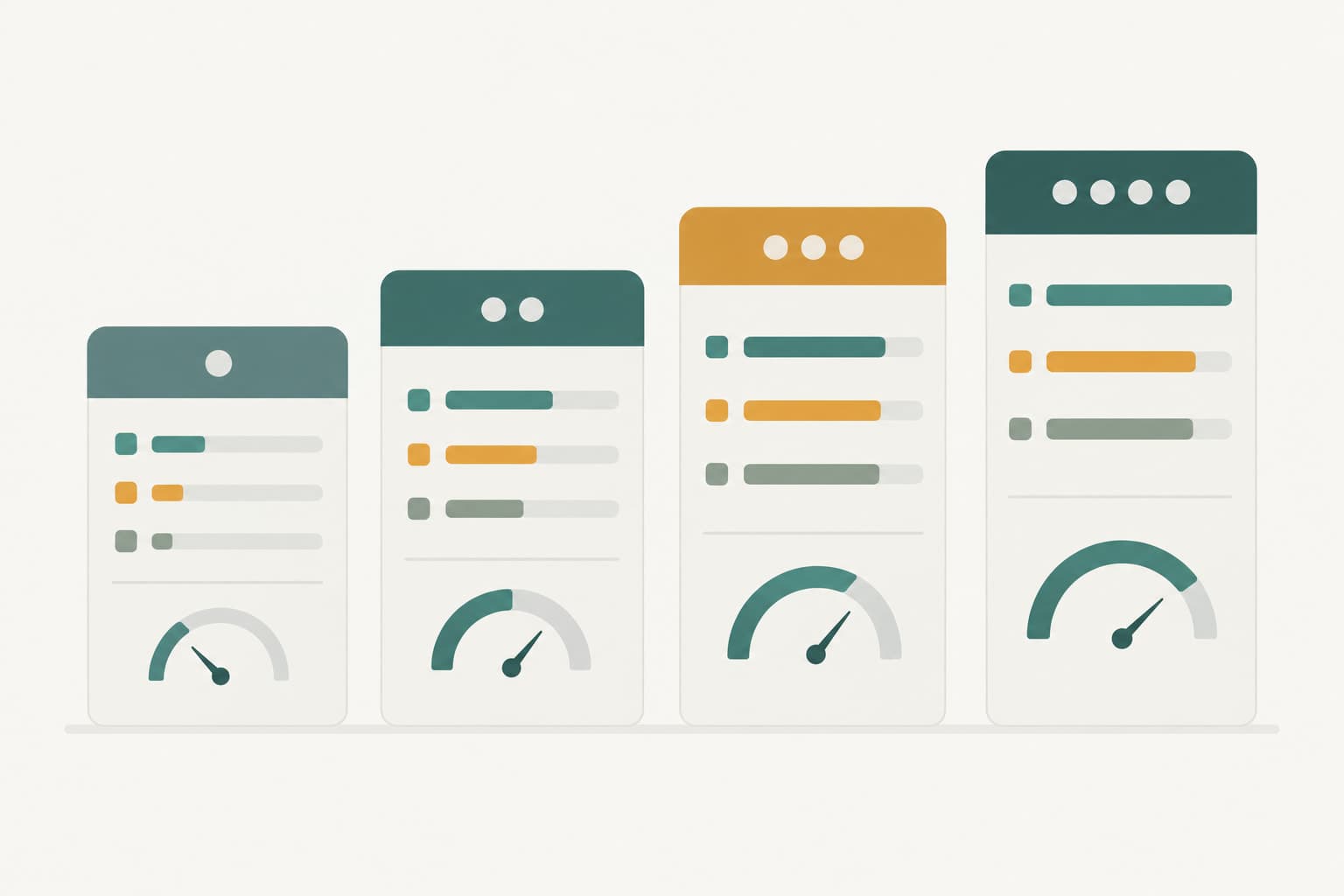
Kindora meters AI usage in credits and caps how many funders a plan can watch at once (Kindora pricing page, read September 2026). Those two limits decide what a plan is worth in practice.
Credit allowances run from 5 a month on Explore to 2,000 a month on Pro (Kindora pricing page, read September 2026). When an allowance runs out, top-up packs cost "10¢ per credit at the 100-credit pack rate, down to 6.5¢ in larger packs" (Kindora pricing page, read September 2026). Metering applies on every tier, so an unlimited funder list still carries a finite AI budget (Kindora pricing page, read September 2026).
Watched funders are the second ceiling. Explore holds 10 at a time, Starter 25, Growth 75, and Pro removes the cap (Kindora pricing page, read September 2026). A 25-funder watch list can fill quickly once several programs each carry their own prospects, and at that point the cap, not your strategy, decides which funders stay watched.
Before paying, count two things: the funders you would watch in a normal month and the AI tasks you would run against them. If the watch list exceeds 75, Growth cannot hold it and Pro is the only tier that can (Kindora pricing page, read September 2026).
One Reddit commenter warned that "the cheap tiers cap records and attachments and you will hit the ceiling" (Reddit thread 1vydvxu, read September 2026). The remark covers budget tiers in general and is one person's experience, so treat it as a question to test, not a measurement of any product.
What Kindora's Funder Data Covers
Kindora says its funder data is built on IRS 990 data (Kindora comparison page, read September 2026). Government and corporate funders are not required to file Form 990s, so they sit outside every 990-derived set (Instrumentl help center, read September 2026).
The IRS publishes the full Form 990 series of tax-exempt organization filings as free bulk XML downloads, and the data set files are updated monthly (IRS, Tax Exempt Organization Search bulk data downloads, read September 2026). Two competitors say they work from that same data: Instrumentl states that it "receives this data directly from the IRS" (Instrumentl help center, updated June 18, 2026), and Candid says it does more than rely on IRS data, since "we clean the data, make it discoverable, enrich it with data collected directly from organizations" (Candid, About us, page dated February 18, 2025). What a paid funder database sells is the cleaning, the search and the workflow, not exclusive access to the filings.
Freshness follows the IRS release schedule. Instrumentl states that it retrieves 990 information "within a week of filings becoming publicly available" (Instrumentl help center, updated June 18, 2026), so the newest grant history in any of these tools trails the filing cycle.
| Funder type | Covered by 990-based data? | Reason |
|---|---|---|
| Private foundations filing Form 990-PF | Yes | Their 990 grant lists are the data foundation databases parse (GrantLedger home page, read September 2026) |
| Government funders | No | Not required to file Form 990s (Instrumentl help center, read September 2026) |
| Corporate funders | No | Not required to file Form 990s (Instrumentl help center, read September 2026) |
| Foundations that file on paper | Gaps | A filing that is not e-filed produces no structured data (Instrumentl help center, updated June 18, 2026) |
Sources as marked in each row (GrantLedger home page, read September 2026; Instrumentl help center, read September 2026 and updated June 18, 2026).
The raw filings stay free. ProPublica's Nonprofit Explorer is a free tool to "Browse millions of annual returns filed by tax-exempt organizations" (ProPublica Nonprofit Explorer, updated August 20, 2026), and commenters on Reddit named it as the free 990 fallback across four threads (Reddit threads 1wiivcd, 1wcw9yl, 1ur2eou and 1sewng0, read September 2026).
The cheapest comparison point is free: our rundown of free foundation search tools covers tools built from the same public filings at no cost, which is the right starting check before any purchase.
What Users Report About Kindora
The public record on Kindora is thin. No Capterra or G2 listing carrying a rating and a review count for Kindora was located in this review's September 2026 source check, so there is no score to report, and one user report about the product turned up.
That report is about match quality. A commenter who tested Kindora reported that it "Gave me hits for organizations that don't fund in our area" (Reddit thread 1vb5ctu, read September 2026). The remark cannot be checked against a vendor page and it is one person's experience, so it is not a product limitation on record. It is a reason to test geographic fit on the free tier.
The same complaint is common across the category. Across three Reddit threads, commenters named geographic alignment as "the biggest issue with finding new opportunities" (Reddit threads 1r8eviy, 1vb5ctu and 1sewng0, read September 2026). A match list that returns funders outside your service area is work, not prospects.
A second complaint, about matching services in general, is repetition. One commenter said of them that "they spit out foundations that I already know about, foundations who have already funded us, or opportunities that don't actually exist" (Reddit thread 1pzk4ub, read September 2026). Run any matcher against funders you already know and count how many of its results it spends on them.
A wider caution covers new AI prospecting tools. A moderator of a grants subreddit described the field as "an exhausting number of AI-powered prospecting solutions, just a wrapper for Chat GPT and a lame, barely populated database" (Reddit thread 1vb5ctu, read September 2026). The comment addresses new entrants as a group. Kindora publishes its data counts (Kindora comparison page, read September 2026) and its full price list (Kindora pricing page, read September 2026).
Where Kindora Fits in a Grant Research Workflow
A funder-first database is a research tool that returns grantmaker profiles, and an opportunity-first database returns open funding opportunities (Peak Proposals, Choosing a Grant Database Based on Your Needs and Budget, January 28, 2021). Kindora describes itself as a funder-research and pipeline platform (Kindora pricing page, read September 2026), which puts it on the funder-first side with a pipeline attached.
The workflow it supports runs in three moves: build a watch list, track each ask, export the results (Kindora pricing page, read September 2026). Pair any funder-first tool with free sources for the parts it does not cover. Grants.gov is free to search with no subscription and carries federal funding opportunities only (Grants.gov home page, read September 2026), and our grant prospecting walkthrough covers the wider search.
Commenters on Reddit describe a common workaround: find grants in a paid platform and track them in a separate spreadsheet (Reddit threads 1wiivcd and 1ubd86x, read September 2026). Kindora's paid tiers put a pipeline next to the research (Kindora pricing page, read September 2026), so both jobs can sit in one tool, and our guide to grant pipeline dashboards covers what a pipeline must hold whatever the tool.
A 2026 trade guide describes this market as three jobs that vendors bundle and split: finding funders worth applying to, tracking applications and compliance after the money arrives, and reviewing applications from other people (Business-Software.com, Grant Management Software for Nonprofits in 2026, September 3, 2026). Kindora's published feature list covers the first job and the application-tracking part of the second (Kindora pricing page, read September 2026).
GrantCue is one option to weigh on the same three jobs. It combines live federal, state and foundation grant listings with a kanban pipeline and an ICS deadline feed on every plan, Free included, while AI fit scoring and post-award budget versus actuals start on the Team plan at $109 a month (grantcue.com, September 2026). Set GrantCue's feature list by plan against Kindora's published list on the same criteria.
FAQ
Is Kindora free for nonprofits?
Yes, at the Explore tier. Explore is free with 1 user plus 1 guest, 10 funders watched at a time, 1 program, browse-only access and 5 AI credits a month plus a 270-credit welcome bonus (Kindora pricing page, read September 2026). The tier is permanent and is not a timed trial, so a small team can keep a short watch list at no cost.
How much does Kindora cost?
Kindora's paid tiers are Starter at $25/month or $250/year, Growth at $49/month or $490/year, and Pro at $199/month or $1,990/year (Kindora pricing page, read September 2026). Annual billing "saves 17%", and top-up AI credits cost "10¢ per credit at the 100-credit pack rate, down to 6.5¢ in larger packs" (Kindora pricing page, read September 2026). Plans are priced per organization.
What is Kindora used for?
Kindora is used for funder research and application tracking. A team watches grantmaker profiles, spends AI credits on AI-assisted research, and on paid tiers keeps each ask in a pipeline with exports (Kindora pricing page, read September 2026). It is sold in three views, for nonprofits, consultants and funders, with self-serve checkout priced per organization (Kindora pricing page, read September 2026).
Does Kindora use IRS 990 data?
Yes, by its own account. Kindora states that its "206,000+ funder profiles" and "6.8M+ grant records" are built on IRS 990 data (Kindora comparison page, read September 2026). Instrumentl says it draws on the same IRS filings (Instrumentl help center, updated June 18, 2026), and government and corporate funders sit outside the set because they are not required to file Form 990s (Instrumentl help center, read September 2026).
Does Kindora require an annual contract?
No, by Kindora's own statement: "No annual contract required on any plan" (Kindora comparison page, read September 2026). Billing is monthly or yearly per organization, and annual billing "saves 17%" (Kindora pricing page, read September 2026). That differs from an annual-membership tool: GrantStation states "we are set up only to accept payment in full for a membership" (GrantStation FAQ, read September 2026).
How does Kindora compare to other grant databases?
Kindora is a low-priced funder-first tool with a pipeline attached. Its paid tiers run from $25/month to $199/month (Kindora pricing page, read September 2026), against Instrumentl Discover at $299/month paid upfront annually (Instrumentl pricing page, read September 2026) and Candid Premium at a listed nonprofit-discounted "Starting price $1,199 billed annually" (Candid pricing page, read September 2026). Price is one criterion: also weigh data source, plan caps and export rights.
Run the Free Tier Before You Pay for Kindora
The Explore tier answers most purchase questions at no cost. It gives browse-only access and a watch list of 10 funders (Kindora pricing page, read September 2026), which is enough to judge match quality before any spend; the pipeline itself starts on Starter.
Three checks settle the decision. Count how many matched funders actually fund in your service area, since geographic fit produced the one user report found for this review (Reddit thread 1vb5ctu, read September 2026). Count the funders you would watch in a normal month and set that against the caps of 10, 25, 75 and unlimited (Kindora pricing page, read September 2026). Then run a search whose answer you already know and compare the results with what a free filing search returns.
Read the export column before choosing a tier: Starter carries basic exports and Growth advanced exports (Kindora pricing page, read September 2026). Our wider grant management software buyer's guide covers what a system must do once a match turns into an application.