Small Local Grants to Build a Track Record
A practical guide to small local grants for new nonprofits: where nearby awards come from, what funders ask before a first yes, and how one finished project becomes a track record.
In this article (10)
- Quick Answer: How Do Small Local Grants Build a Track Record?
- Using Small Local Grants to Build a Track Record
- How to Find Local Grants for Nonprofits
- How Small Nonprofit Organizations Get Ready for a First Grant
- Local Corporate Grants Open to Nonprofits, Not Small Businesses
- How Small Nonprofits in Pennsylvania Find Local Grants
- How a Small Nonprofit Manages the First Award
- Turning One Small Win Into the Next Application
- FAQ
- Start With One Nearby Application You Can Finish
Small local grants to build a track record are a practical first step from a new nonprofit with no history to an applicant that funders take seriously. Candid states that foundations want to see that you have been operating for a while with an established track record of effective programs, and that "it's difficult (though not impossible) for a brand-new organization" to get a grant (Candid, March 25, 2024).
What a first award buys is proof: a finished project, a report filed on time, and a funder who can confirm both. Size matters less than finishing.
Quick Answer: How Do Small Local Grants Build a Track Record?
Small local grants build a track record because they give a new nonprofit a finished project, a final report filed on time, and a funder willing to serve as a reference. Start with nearby community and corporate storefront programs, complete one small award cleanly, then cite that result in each later application.
Using Small Local Grants to Build a Track Record
A track record is a history that shows a funder you completed work you promised to do. Small local grants work because each one adds a line to that history at a cost a new organization can carry. A completed project, a report filed on time, and a funder who answers a reference call outweigh any promise in a proposal.
One commenter on Reddit described the compounding effect of a first award: "the more grants you get, the easier it is to get grants, the first one legitimizes your org" (Reddit thread 1w5jaaq, read September 2026). For another commenter in that thread, the readiness bar was that "three years, an established donor base, audited financials, and solid outcomes are key" (Reddit thread 1w5jaaq, read September 2026). Few new groups meet that bar on day one, so a modest nearby award bridges the gap between starting out and looking fundable.
Candid's grant-readiness guidance asks three questions before you seek a foundation grant: are you a 501(c)(3) organization as defined by the IRS, do you have a track record, and do you have capable leadership and an effective board (Candid, March 25, 2024). The second question is the one a first small grant answers directly. Plan the first project as a defined piece of program work with a clear end date and a budget tied to that work alone.
Volume data points toward repeated small attempts. In GrantStation's 2026 State of Grantseeking Report, based on 1,354 organizations that pursued grant funding in 2025, organizations submitting one application had a 64.5% award rate, compared with 99.4% for those submitting more than 30 applications (GrantStation, 2026 report with 2025 data). The survey does not isolate new groups, so read it only as a direction: more applications went with more awards, and each finished award lets the next application cite results instead of plans. The survey was not scientifically conducted, as respondents are a nonrandom self-selected sample affiliated with GrantStation and its partners (GrantStation methodology, read September 2026).
How to Find Local Grants for Nonprofits
Local awards come from community foundations, corporate storefront programs, and private foundations that give near your address. Filter every search by place first. A perfect program fit means nothing outside the funder's service area, and commenters in three Reddit threads said "the biggest issue with finding new opportunities is geographic alignment" (Reddit threads 1r8eviy, 1vb5ctu and 1sewng0, read September 2026).
A free first screen is the Supplementary Information part of Form 990-PF (IRS, 2025 Form 990-PF). The 2025 Form 990-PF, Part XIV item 2, asks a private foundation to "Check here if the foundation only makes contributions to preselected charitable organizations and does not accept unsolicited requests for funds" (IRS, 2025 Form 990-PF). A foundation that leaves that box unchecked must then name the person applications go to, the form they take, deadlines, and limits such as geography or field (IRS, 2025 Form 990-PF). Our wider grant search guide covers the rest.
Expect most doors to look closed on paper and some to open anyway. Candid found that of the 112,733 U.S. private foundations that filed Forms 990-PF for fiscal year end 2023, 71% checked the preselected-only box, which narrowly interpreted means only 29% (fewer than 33,000 foundations) are open to considering new grantees (Candid, October 1, 2025). Candid notes that checking the box does not necessarily reflect a firmly fixed policy, as foundation staff may still consider unsolicited requests (Candid, October 1, 2025). Candid lists the routes closed foundations still leave open: an introduction form on the website, letters of inquiry from which they invite full applications, specific program areas or limited periods when they open, a preliminary conversation, and community foundations passing a request to a donor-advised fund donor (Candid, October 1, 2025). Candid's 2025 Foundation Giving Forecast Survey of 522 private and community foundations found 55% willing to accept unsolicited proposals, including 56% of private foundations and 48% of community foundations (Candid, October 1, 2025). Build a local list from private foundation profiles built from filings, confirm each entry against the filing, then write only where the door is open.
An independent analysis of IRS 990-PF electronic filings found 27,218 of 131,545 foundations answering the preselected-only question said they accept unsolicited requests, which is 21%, and that 8,971 of those also paid at least 5 grants totaling $100K or more in a filed year of 2022 or later (Civly, read September 2026). The practical pool is open foundations that also make grants regularly, so check both the box and the grant list. Northwestern University's foundation relations office states that the first contact is often a brief one- to three-page letter of inquiry, which many foundations accept on a rolling basis (Northwestern University Foundation Relations, read September 2026).
How Small Nonprofit Organizations Get Ready for a First Grant
A small nonprofit organization wins its first grant by looking ready before it applies. Candid frames the readiness test as a transparency test: would you be comfortable inviting a funder for a site visit, and are your staff and board ready to speak with a foundation representative about the organization's priorities (Candid, March 25, 2024). If the answer is yes, much of the paperwork funders ask for probably exists already, in a drawer or a shared drive.
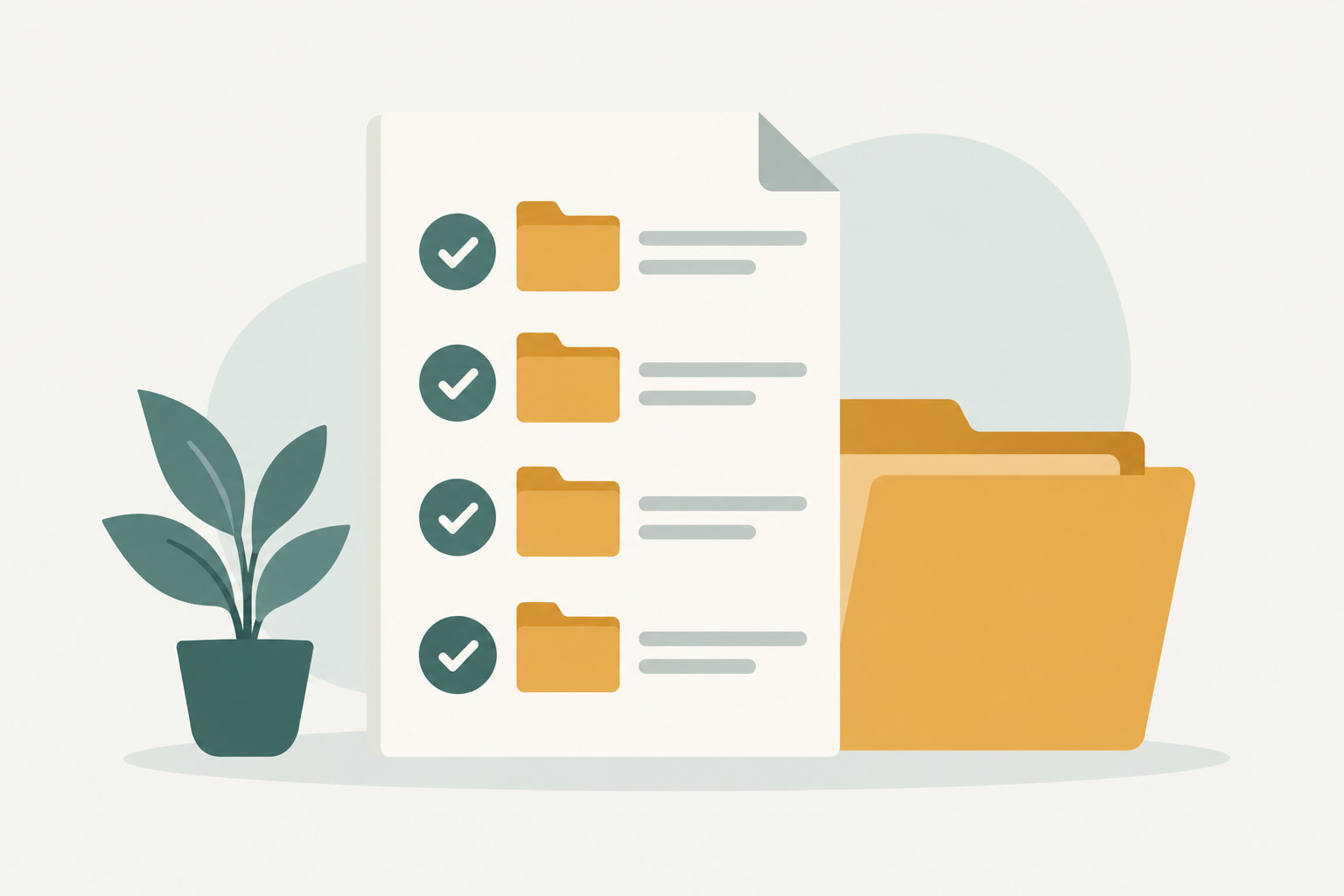
GrantStation's published Grant Readiness Checklist lists these organizational documents: IRS nonprofit designation letter, EIN, IRS Form 990, audit or financial review, bylaws, mission statement, board of directors list, articles of incorporation, organizational chart, governance policies and procedures, operational policies and procedures, and annual report (GrantStation, posted December 2023). Its proposal development list adds need data by geographic area and by target population, project outcomes and indicators, approach, partners, timeline, organizational background and capacity, resumes of key staff, job descriptions, evaluation plan, project budget, and sustainability plan (GrantStation, posted December 2023). Candid notes you will need to show potential funders your IRS letter of determination, and that many potential funders will consult your Candid profile during due diligence (Candid, March 25, 2024).
Assemble the core file once and reuse it for every application; the beginner's guide to writing a first grant picks up from there with the narrative.
Sources: GrantStation Grant Readiness Checklist, posted December 2023; Candid, March 25, 2024.
The EIN underpins the file. An EIN is free from the IRS, the online application is completed in one session, and an approved application issues the EIN immediately online (IRS, read September 2026). The IRS warns that you never have to pay a fee for an EIN (IRS, read September 2026). If an item is missing, GrantStation's checklist advises that you always connect with the funder before you submit an application to ensure you are in compliance with their requirements (GrantStation, posted December 2023).
Local Corporate Grants Open to Nonprofits, Not Small Businesses
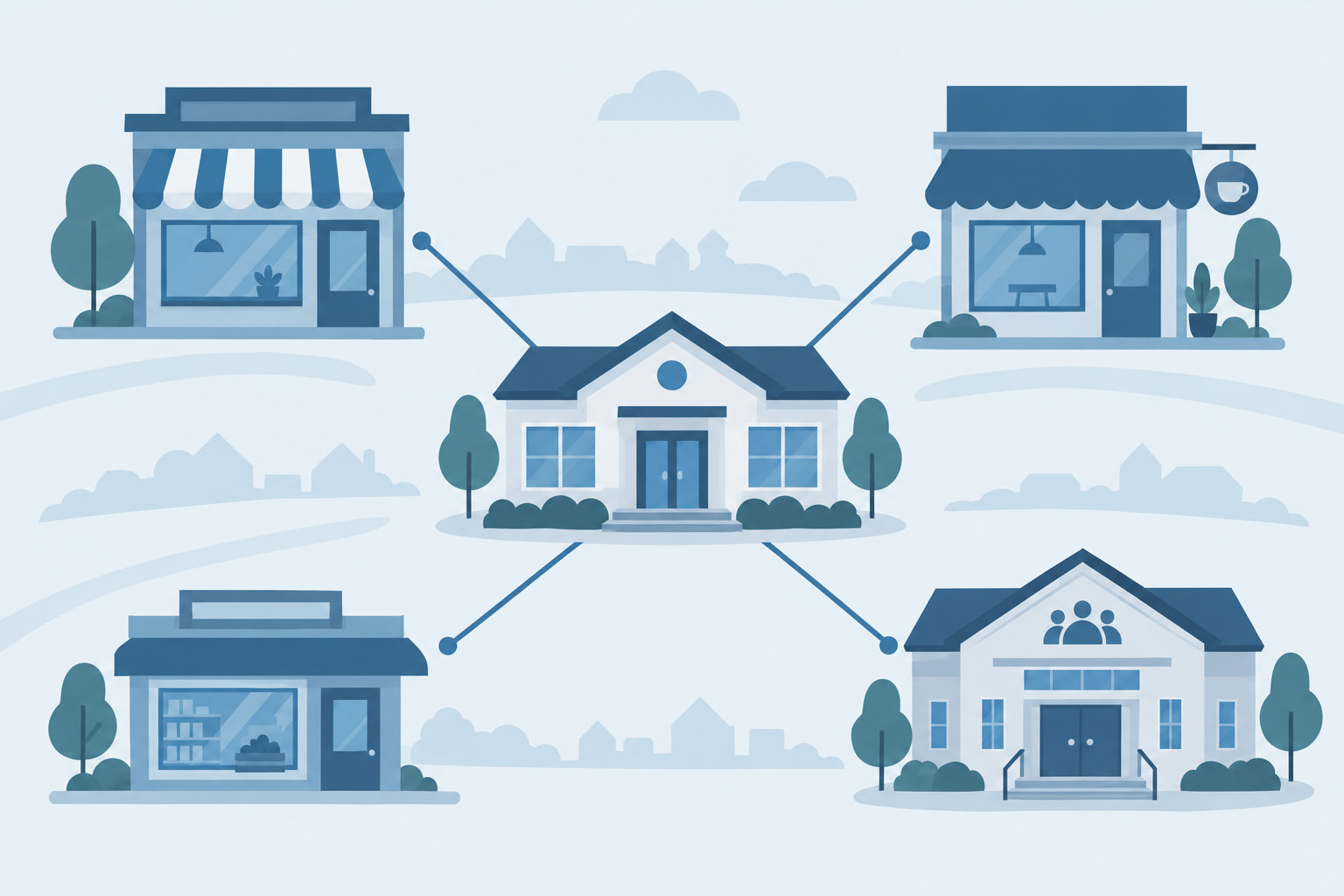
Store-level corporate programs are a clear example of small local money with published rules. Walmart's Spark Good Local Grants award local cash grants ranging from $250 to $5,000 through individual Walmart U.S. stores, Sam's Clubs and Distribution Centers (Walmart.org, read September 2026). Spark Good Local Grants are awarded through an open application process, with three FY27 cycles published as Feb 1 to April 15, May 1 to July 15, and Aug 1 to Nov 30, and a maximum of 25 applications in pending or approved status per organization at any time (Walmart.org, read September 2026).
Eligibility is local by design. Spark Good Local Grants require the organization to serve the same service area that the facility it is requesting funding from serves, and accept 501(c)(3) public charities, government entities, K-12 and higher-education institutions, and faith-based organizations with a community-benefit project, while excluding 501(c)(4), (c)(6) and (c)(19) organizations (Walmart.org, read September 2026). Spark Good applicants must have a Spark Good account on Walmart.com/nonprofits and be verified by Deed, Walmart's third-party verification partner, before applying (Walmart.org, read September 2026).
Source: Walmart.org Spark Good Local Grants program guidelines, read September 2026.
For small businesses the answer is different: a for-profit business is not among the eligible applicant types, so a store-level program like this one is for the charities, schools and public bodies nearby. Nonprofits searching beside them can browse county and regional grant listings for awards that match their service area, then apply to the storefront whose area they already serve.
How Small Nonprofits in Pennsylvania Find Local Grants
A small nonprofit in Pennsylvania follows the same method as one anywhere else, applied county by county. Pull the filings of foundations that list grants inside the state, keep only those whose limits name your county or region, and confirm the application block before writing a word. Statewide lists such as our Pennsylvania funding roundup help at the start, and the county filter is what shortens them to funders whose service area includes yours.
Workarounds from practitioners travel well across state lines. Commenters on Reddit listed ways to get in front of closed funders: asking current funders for referrals and funder briefings, and working the board for introductions (Reddit threads 1r8eviy and 1pzk4ub, read September 2026). Another listed workaround was to look at who sponsors peer organizations' events and check their giving pages (Reddit thread 1r8eviy, read September 2026). Both tactics suit a state with many counties, since peer groups nearby may share regional funders.

Keep the list honest and current. For grants tied to a place, use live county and regional listing pages alongside the foundation directory, and treat both as starting points you verify against the filing. Run a proposal review checklist before sending: complete, aligned with the guidelines, and on time.
How a Small Nonprofit Manages the First Award
Winning creates the record only if the finish is clean. File the final report by the date in the award letter, keep receipts where finance can find them, and ask the funder for a short reference statement while the work is fresh. That statement, plus the submitted report, becomes the attachment you cite in the next several applications to new funders. If the first award comes from a city or county, follow that government's own reporting process.
Rejected proposals deserve the same discipline. The Unfunded List is a 501(c)(3) founded in 2015 whose volunteer evaluators review grant proposals that were already submitted to a funder but did not win funding, and deliver a multi-perspective written feedback report to the author (The Unfunded List, read September 2026). The Unfunded List charges a one-time $100 administrative fee on a first submission, after which authors who fully participate may submit future proposals at no charge (The Unfunded List, read September 2026). Its evaluation committee comprises more than 1,500 evaluators, meets twice a year, and submission deadlines typically fall in March and September (The Unfunded List, read September 2026).
A first award is small, but its deadlines still need an owner. GrantCue keeps each award's report and closeout dates in a kanban-style pipeline with an ICS calendar feed on every plan, and its free personal tier holds up to 10 active opportunities at no cost (grantcue.com, September 2026). Its grant tracking features carry a small award from search to final report.
Turning One Small Win Into the Next Application
A first award changes what the second application can say. Name the finished project, state the result in one line, and attach the report or the reference statement where the guidelines allow it. Funders that once saw risk now see a group that finished work on schedule and documented it.
Ask about the losses too. The Center for Effective Philanthropy reported that across the funders that surveyed their declined applicants through CEP's Declined Applicant Perception Report, "only about 50 percent of those declined applicants receive any sort of feedback from the foundation" (Center for Effective Philanthropy, September 6, 2016). In the William Penn Foundation's 2025 CEP report, the reasons declined applicants most often received were "Doesn't fit Foundation priorities/guidelines, with explanation as to why" (36 percent) and "Not enough funds/too many good proposals" (23 percent) (Center for Effective Philanthropy and William Penn Foundation, 2025 survey, report posted July 2026). Request a short call, accept a short answer, and record what you learn beside the proposal file. Commenters in three Reddit threads said "a proposal shouldn't be the first time a funder hears about your organization" (Reddit threads 1vf8jxw, 1r8eviy and 1pzk4ub, read September 2026). Between applications, send a brief update on the finished work, then apply again.
FAQ
How Do Small Nonprofits Find Local Grants?
Filter for place first. Screen nearby private foundations through the Supplementary Information part of Form 990-PF, which shows whether new applications are welcome and where they go (IRS, 2025 Form 990-PF). Check corporate storefront programs in your service area and confirm every lead against the filing before writing.
How Can a Small Nonprofit Find Grants in Pennsylvania?
Work county by county: pull filings of foundations that give inside the state, keep those naming your county or region, and confirm the application block. Ask current funders for referrals, work the board for introductions, and check who sponsors peer events nearby. Use live county pages as starting points, verified against each filing.
Can One Search Find Grants for Nonprofits and Small Businesses?
A shared local search works, then eligibility divides the two audiences. Walmart's Spark Good Local Grants, for example, accept 501(c)(3) public charities, government entities, schools and faith-based organizations with a community-benefit project, and exclude 501(c)(4), (c)(6) and (c)(19) organizations (Walmart.org, read September 2026). Read the eligibility block first and apply only where your organization type is named.
What Paperwork Do Funders Ask for Before a First Small Grant?
GrantStation's readiness checklist lists the determination letter, EIN, most recent Form 990, audit or financial review, bylaws, board list and project budget, among other items (GrantStation, posted December 2023). Small funders may ask for less, but assemble the set once. If an item is missing, contact the funder before submitting to confirm you remain in compliance.
How Does a First Small Grant Help Win Larger Ones?
It supplies proof: a finished project, a report filed on time, and a funder who answers reference calls. Cite that result in each later application and attach the report where the guidelines allow it. One commenter on Reddit put the effect plainly: "the first one legitimizes your org" (Reddit thread 1w5jaaq, read September 2026).
Start With One Nearby Application You Can Finish
One finished local project is proof no new nonprofit can buy another way. Pick a single nearby program whose service area includes yours, gather the readiness file once, and file the report on time. That clean finish becomes the first line of your track record and the reference every later application points to.