Grants for Youth Agriculture Programs: Where Funders Look and How to Match Them
Where youth agriculture programs find grants: USDA and Extension routes, state agriculture departments, FFA and SARE programs, and how to match foundations with filings.
In this article (9)
- Quick Answer: Where Do Youth Agriculture Programs Find Grants?
- Who Funds Grants for Youth Agriculture Programs
- Federal Youth Agriculture Money Runs Through USDA and Extension
- State Agriculture Department Grants for Youth Programs
- Program Grants From FFA, 4-H and SARE
- Matching Foundations to Youth Agriculture Work With 990 Data
- A Fit Check for Youth Agriculture Proposals
- FAQ
- Map Your Partners Before You Search
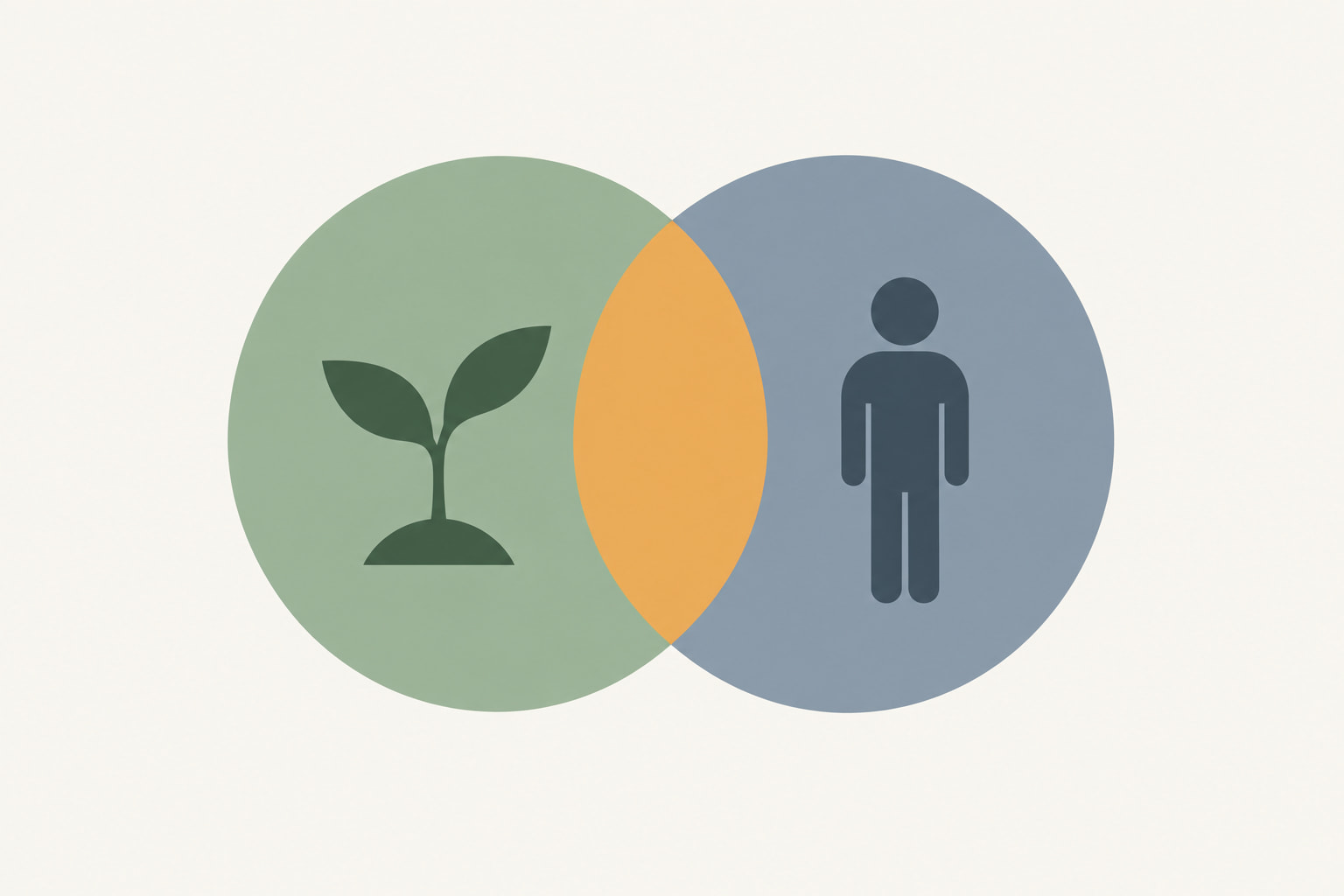
Grants for youth agriculture programs sit between two funder fields. Agriculture funders want farming, food or land outcomes, and youth development funders want outcomes for young people, so a school farm, a 4-H project or a teen market garden has to show both to the right funder and in that funder's own terms.
The search tends to be harder than the writing. In one Reddit thread, the person who started it said the hardest part was finding a grant that wants a project like theirs, not applying for it, and another reader asked for the same help for youth or agriculture programming (Reddit thread 1lgaq91, read September 2026). The channels for this work are few enough to learn, and several of them pay only one kind of applicant.
Quick Answer: Where Do Youth Agriculture Programs Find Grants?
Youth agriculture programs find grants through USDA programs (some routed through land-grant Extension), state agriculture department grants, program grants from FFA and regional SARE offices, community foundations, and private foundations whose filings show agriculture or youth grants. Check who may apply first, because several of these funders pay only chapters, Extension or partnerships.
Who Funds Grants for Youth Agriculture Programs
Funding for youth agriculture comes from seven kinds of sources, and the biggest difference among them is who is allowed to apply. A nonprofit that reads eligibility first can tell quickly whether to apply directly, apply with a partner, or skip.
The table shows why searching by topic alone misfires. A topic search can return programs your organization cannot apply to, such as chapter-only grants, beside programs it can. Sort every lead by its applicant rule before you sort it by topic.
The two-field problem also shapes the writing. Funders on each side state their goals in different words, so state both results early: one sentence naming the farming, food or land result, and one naming what the young people will learn or do. Then lead with whichever result the funder's own guidelines name first, and use its words for it.
Classification codes help with the foundation part of the search. The National Taxonomy of Exempt Entities is a classification system the IRS uses to record what each nonprofit does, and its major group K is "Food, Agriculture & Nutrition" while major group O is "Youth Development" (National Center for Charitable Statistics, October 2026). A youth farm program can sit in either group, and NCCS notes that the code "captures only one" category per organization (NCCS, September 21, 2026). Search both groups when you look for peer organizations and the funders that paid them.
Federal Youth Agriculture Money Runs Through USDA and Extension
The federal youth agriculture programs cited here all sit at USDA, and some of that money reaches communities only through land-grant Cooperative Extension. A community nonprofit may be able to reach it as a partner or subcontractor, so the first call is to the county Extension office.
NIFA describes 4-H as "USDA's youth development outreach program," delivered for more than 120 years by "the Land-grant University System's Cooperative Extension Service nationwide" (USDA NIFA, October 2026). It adds that private partners, including "state and local 4-H foundations," may provide funding support as well (USDA NIFA, October 2026).
Some programs are closed to direct nonprofit applications. CYFAR, which funds community-based programs for at-risk children, youth and families through Extension (USDA NIFA, October 2026), is one example: its Sustainable Community Projects applications "will only be accepted if submitted by Cooperative Extension" at 1862, 1890 and 1994 land-grant institutions, but "Award recipients may subcontract to organizations not eligible to apply, provided such organizations are necessary for the conduct of the project" (USDA NIFA, page updated July 16, 2026). A local youth farm with a site and a track record is the kind of organization that clause could cover.
Other programs require partnerships outright. USDA's FY 2026 Farm to School notice funded projects "ranging from $100,000 to $500,000 for a total of up to $18 million," listed nonprofits as eligible, and required them to "be part of a partnership to be eligible to apply" with their 501(c)(3) determination letter attached (USDA, page updated September 10, 2025). USDA says that round closed December 5, 2025, that the FY 2026 grants "have been officially awarded," and that "application requirements are subject to change each year" (USDA, page updated April 16, 2026).
On Grants.gov, the Agriculture, Education and Food and Nutrition categories are the closest matches for this work (Grants.gov, October 2026). Registration rules are the same as for any federal grant, and the walkthrough of Grants.gov registration and search covers them.
State Agriculture Department Grants for Youth Programs
State agriculture departments can run youth agriculture grants sized for a club, a school or a small nonprofit. They post on their own sites or a state grants portal, so check the department in every state where you operate.
Pennsylvania's program shows what a state round can look like. Its Ag & Youth Grant Program "offers direct and matching grants for youth-centered organizations, projects, programs, and equipment to promote agricultural, leadership, and vocational skills," with "Direct, non-matching reimbursement grants of up to $7,500" and "Matching reimbursement grants of up to $25,000" for capital projects or equipment "where the grant covers no more than 50% of the project cost" (Pennsylvania Department of Agriculture, October 2026). The 2026 window closed October 2, 2026 (Pennsylvania Department of Agriculture, October 2026), so treat it as an example of the pattern.
The same program defines its terms in ways that decide eligibility. "Youth" means "any individual 24 years of age or younger," and eligible applicants include "an organization with programs that benefit youth," including school districts (Pennsylvania Department of Agriculture, October 2026). Applications go through the state's Single Application for Assistance system, and an advisory board reviews them before the department decides (Pennsylvania Department of Agriculture, October 2026). Pennsylvania's farm bill also lists a separate farm to school program for "pre-kindergarten through fifth grade" (Pennsylvania Department of Agriculture, October 2026).
Other states organize the work differently. The Texas Department of Agriculture's Grants Office "administers state and federal funding opportunities that support agriculture, rural development, and community resilience," with assistance "available for farmers and ranchers, universities and schools, non-profits, and private entities" (Texas Department of Agriculture, October 2026). Read each program's own terms, because a department-wide statement does not mean every program accepts nonprofits.
A short state routine covers the gap. Bookmark the department's grants page and the state application portal, note each round's window and match rule, and check monthly. Reimbursement grants pay after you spend, so confirm cash flow before you accept one.
Program Grants From FFA, 4-H and SARE
Youth organizations and regional programs fund agriculture education directly, but each one defines its applicants narrowly. If your organization is not a chapter or an educator the program recognizes, the route in is a partnership with one that is.
FFA's grants go to its own members and units. Grants for Growing "is a competitive grant program for middle and high school FFA chapters," and "FFA chapters may apply for up to $5,000" (National FFA Organization, October 2026). FFA also lists financial assistance "to individual members, FFA chapters and advisors," including Living to Serve Grants for chapters and state associations and $1,000 Supervised Agricultural Experience grants for members (National FFA Organization, October 2026). A community farm that hosts a chapter's project can help the chapter apply, but it cannot apply in the chapter's place.
4-H clubs work through the Extension system, and NIFA names state and local 4-H foundations among the private partners that fund 4-H (USDA NIFA, October 2026). A program that wants to work with a 4-H club starts at the county Extension office and the state 4-H foundation.
SARE's youth educator grants are broader about who counts. North Central Region SARE defines a youth educator as "someone who teaches youth about sustainable agriculture," including 4-H, FFA, Extension, school and "non-profit organization educators," as well as farmers and ranchers (NCR-SARE, July 24, 2025). Those grants "can be up to $6,000," projects "may last up to 23 months," and "About 18 projects are funded each year" (NCR-SARE, October 2026). The program "CANNOT fund day-to-day farming expenses, purchasing land, or business startup costs" (NCR-SARE, 2026 call for proposals). SARE runs through four regions (SARE, 2026 call for proposals), and those terms are North Central's, so read your own region's call.
Loans sit beside these grants and are easy to confuse with them. USDA's Farm Service Agency makes Youth Loans "of up to $10,000" to youths "ages 10 to 20" in 4-H, FFA or similar groups for income-producing projects (USDA Farm Service Agency, October 2024). Those are loans to individuals, repaid from the project, not grants to programs.
Matching Foundations to Youth Agriculture Work With 990 Data
Foundation filings show which funders already pay for agriculture education, school gardens or youth development near you. Community foundations and private foundations file different forms, so search both, and read three years before you call any foundation a prospect.
Community foundations can be the closest local funder, and they file Form 990, not Form 990-PF, so they never appear in a 990-PF-only database (Grantmakers.io, read September 2026). Their grants appear on Schedule I, which lists each recipient "that received more than $5,000 aggregate of grants or assistance from the organization during the tax year" (IRS, Instructions for Schedule I, Rev. 12/2024). Smaller grants do not appear there, so a community foundation's website and its staff are part of the search.
Private foundations list their grants on Form 990-PF. The grant list's "Purpose of grant or contribution" column (IRS, 2025 Form 990-PF) shows the phrases a foundation uses, such as agricultural education, school garden or youth leadership, and those phrases tell you whether your project fits in its own words. The application block before the list states any limits "by geographical areas, charitable fields, kinds of institutions, or other factors" (IRS, 2025 Form 990-PF).
Check geography before topic. One commenter called geographic alignment the biggest issue in finding new opportunities (Reddit thread 1r8eviy, read September 2026). A rural youth program should start with foundations that registered in or paid grantees in its own state and county.
Openness varies. Candid's 2025 survey of 522 private and community foundations found 55% willing to accept unsolicited proposals (Candid, October 1, 2025), so check each foundation's own stated policy. The roundup of free foundation directory options lists the free tools for pulling filings.
A Fit Check for Youth Agriculture Proposals
Before writing, run each prospect through the same fit check: who may apply, whether a partner is required, how the funder defines youth, what costs it excludes, and whether a match or reimbursement schedule fits your budget. Those five lines are where the USDA, state, FFA and SARE programs in this field set their limits.
Run the checks in order and stop at the first failure. An applicant rule you cannot meet ends the review unless a partner can apply, and a partnership requirement means the partner's name, role and letter must exist before drafting starts. Age and excluded costs decide whether the project needs reshaping, and the payment terms decide whether the organization can carry the costs until reimbursement arrives. Write the result next to each prospect so the next search starts from the last one.
A worked prospect sheet makes the check concrete:
Illustrative figures, not data from a real organization. The rows describe Example County Youth Farm Project (composite).
GrantCue can keep these prospects in one place. Its search covers federal and state listings beside a directory of more than 10,000 private foundations built from IRS 990-PF filings, fit scores are on every plan, Free included, and the Free plan tracks up to 10 active opportunities on a kanban pipeline (grantcue.com, October 2026). Run the first pass in Discover, then confirm each funder's applicant rule on its own page.

FAQ
Are There USDA Grants for Youth Agriculture Programs?
Yes, though some run through partners. CYFAR money goes to Cooperative Extension at land-grant institutions, which may subcontract to organizations necessary to the project (USDA NIFA, page updated July 16, 2026), and USDA's FY 2026 Farm to School notice required nonprofits to apply as part of a partnership (USDA, September 10, 2025). Start with your county Extension office and Grants.gov's Agriculture and Food and Nutrition categories.
Can a 4-H Club or FFA Chapter Apply for Grants?
Yes, through programs built for them. FFA's Grants for Growing lets middle and high school FFA chapters apply for up to $5,000 (National FFA Organization, October 2026), and NIFA says state and local 4-H foundations may provide funding support to 4-H (USDA NIFA, October 2026). A nonprofit working with a club or chapter can support that application as a partner, but the club or chapter is the applicant.
Does USDA Lend Money to Young People for Farm Projects?
Yes. USDA's Farm Service Agency makes Youth Loans of up to $10,000 to individuals ages 10 to 20 who take part in 4-H, FFA or similar groups, for income-producing agricultural projects (USDA Farm Service Agency, October 2024). These are loans repaid from the project, not grants, and they go to the young person, not to a program.
Do Community Foundations Fund Youth Agriculture Programs?
Some do, and the way to know is to check their records and guidelines. Community foundations file Form 990, not Form 990-PF, and their Schedule I lists each recipient organization that received more than $5,000 in grants or assistance during the year (IRS, Instructions for Schedule I, Rev. 12/2024). Read their published guidelines too, because smaller grants do not appear on Schedule I.
What Can Youth Agriculture Grants Pay For?
It depends on the funder's allowable costs. Pennsylvania's Ag & Youth program lists seminars or field trips, agricultural safety training, and capital projects or equipment (Pennsylvania Department of Agriculture, October 2026), while North Central SARE's youth educator grants cannot fund day-to-day farming expenses, land purchases or business startup costs (NCR-SARE, 2026 call). Match your largest cost to the allowable list before applying.
What Age Counts as Youth for an Agriculture Grant?
Each funder sets its own definition. Pennsylvania's Ag & Youth program treats anyone 24 years of age or younger as youth (Pennsylvania Department of Agriculture, October 2026), and FSA Youth Loans cover ages 10 to 20 (USDA Farm Service Agency, October 2024). FFA's Grants for Growing is for middle and high school chapters (National FFA Organization, October 2026). Quote the funder's own definition in the proposal.
Map Your Partners Before You Search
Partnerships decide who can apply in several USDA and youth organization programs, so map them before a round opens. List the county Extension office, the nearest FFA chapters and 4-H clubs, the school district and the state agriculture department, and note which of them can apply where you cannot.
Then build the search around those routes: saved federal searches in the Agriculture and Food and Nutrition categories, a monthly check of the state department's grants page, the SARE call for your region, and filings for the community and private foundations in your county. For the general search across every field, the guide to finding grants for nonprofits covers the remaining channels, and when a funder fits, the sample youth program proposal shows how a full application is laid out.