No-Cost Extension on a Federal Grant: Rules, Deadlines and How to Request One
How a no-cost extension works on a federal grant: what 2 CFR 200.308 allows, how NIH and NSF handle requests, the deadlines, and an outline for the request.

In this article (11)
- Quick Answer: What Is a No-Cost Extension?
- What a No-Cost Extension Is and What It Is Not
- What 2 CFR 200.308 Says About No-Cost Extensions
- No-Cost Extension at NIH: First and Second Extensions
- No-Cost Extension at NSF: Grantee-Approved and NSF-Approved
- No-Cost Extension Deadlines: How Far Ahead to Ask
- No-Cost Extension Request Template: What to Include
- What an Extension Changes
- Common Mistakes and When to Start Tracking
- FAQ
- Before the End Date Arrives
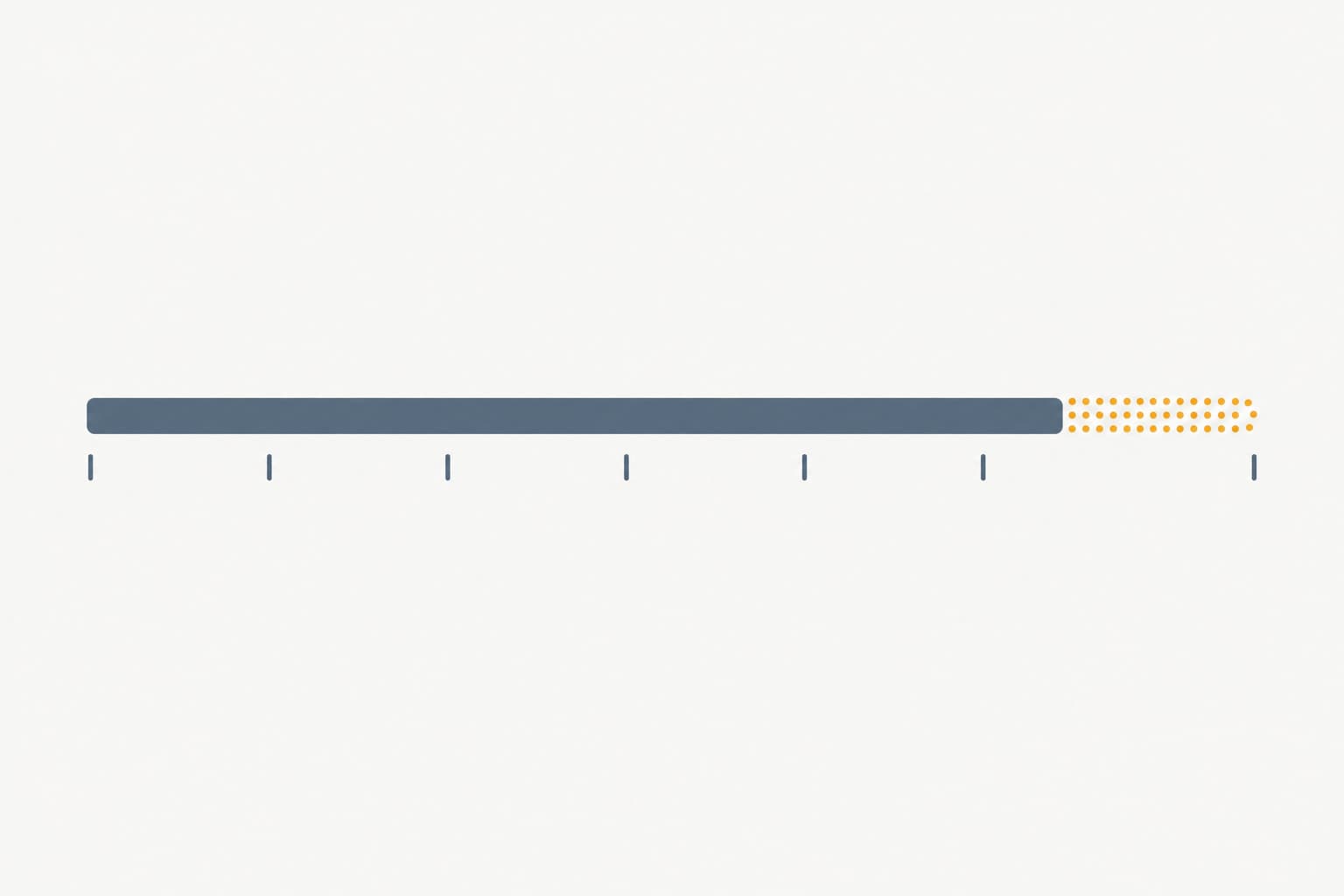
A no-cost extension is more calendar time on a federal award with no new federal money attached. The recipient gets longer to finish the work the award already paid for, and the agency's obligation stays the same. Whether you need approval, how far ahead you must act and who decides all depend on the award terms and the agency.
The federal rule is 2 CFR 200.308 (eCFR, current as of October 2026). NIH and NSF each apply it through their own policies, with different systems, lead times and limits on a second extension.
Quick Answer: What Is a No-Cost Extension?
A no-cost extension moves a federal award's end date without adding federal money. Under 2 CFR 200.308 it needs the agency's prior written approval, requested at least 10 calendar days before the end, unless the award terms, or for research awards the regulation itself, let the recipient initiate a one-time extension of up to 12 months by written notice.
What a No-Cost Extension Is and What It Is Not
A no-cost extension is an extension of time that "does not require the obligation of additional Federal funds" (2 CFR 200.308(f)(10), eCFR, current as of October 2026). It changes the end date and nothing else about the money. When an agency approves an extension, or a recipient extends under 200.308(g)(2), "the period of performance will be amended to end at the completion of the extension" (2 CFR 200.309, eCFR, current as of October 2026).
Three things are not extensions. A request for more money is a different action, because an extension that "requires additional Federal funds" falls outside the one-time authority and needs prior approval (2 CFR 200.308(g)(2)(ii)). A change in what the project does is a change in scope, which also needs approval. And carrying an unspent balance into the next budget period is a separate waiver, not an extension (2 CFR 200.308(g)(3), eCFR, current as of October 2026).
What 2 CFR 200.308 Says About No-Cost Extensions
The Uniform Guidance gives two routes, a request the agency approves in advance or a one-time extension the recipient initiates by notice, and a third rule for research awards sits on top of both.
The One-Time Extension of Up to 12 Months
The one-time extension lets a recipient "initiate a one-time extension of the period of performance by up to 12 months", and "prior approval is not required if a recipient is authorized in the terms and conditions of the Federal award to initiate" it (2 CFR 200.308(g)(2), eCFR, current as of October 2026). The text adds two limits: "A one-time extension may not be exercised for the sole purpose of using unobligated balances", and the paragraph "does not preclude the Federal agency from approving further no-cost extensions".
When Prior Approval Is Still Required
A one-time extension needs the agency's prior approval when the award terms prohibit it, when it "requires additional Federal funds", or when it "involves any change in the approved scope of the project" (2 CFR 200.308(g)(2)(i) to (iii), eCFR, current as of October 2026). For research awards, the (g) approvals are waived "unless stipulated in the Federal agency's regulations or terms and conditions of the Federal award", but "one-time extensions require the Federal agency's prior approval when one of the conditions in paragraph (g)(2) of this section applies" (2 CFR 200.308(h)).
Who Decides and How Long It Takes
The agency, or the pass-through entity for a subaward, reviews the request. It "should notify the recipient or subrecipient whether the revisions have been approved within 30 days of receipt of the request", and must say in writing when a decision can be expected if the review takes longer (2 CFR 200.308(d), eCFR, current as of October 2026). With a 30-day review window, the 10-day minimum is a floor, not a plan.
OMB proposed a rewrite of these rules on May 29, 2026 (91 FR 32198, Regulation for Federal Financial Assistance, read October 2026). It is not in force; the current text of 2 CFR 200.308 controls.
No-Cost Extension at NIH: First and Second Extensions
NIH lets a recipient extend the final budget period one time by up to 12 months through eRA Commons, and anything beyond that needs prior approval. The conditions in the NIH Grants Policy Statement 8.1.1 (section 8.1.1.3, revised March 2026, read October 2026) are that "no term of award specifically prohibits the extension, no additional funds are required to be obligated by the NIH awarding IC, and the project's originally approved scope will not change".
How the eRA Commons Window Works
The policy statement says recipients "must use the eRA Commons No-Cost Extension feature", which "becomes available to the recipient 90 days before the project period end date", with notification possible "up to the last day of the current project end date" (NIH Grants Policy Statement 8.1.1.3, read October 2026). A late notification changes the outcome: "the extension notification becomes a request and that requires the approval of the IC GMO". Funds left over are not enough: they are "not, in itself, sufficient justification for an extension without additional funds".
The 2025 Notices
NIH changed the process twice in 2025. NOT-OD-25-110, released May 7, 2025, said NIH had "temporarily disabled the No-Cost Extension functionality in eRA Commons" and that "all requests for NCEs must be submitted as a prior approval request in eRA Commons". NOT-OD-25-142, released August 7, 2025, said NIH "has re-enabled" the function: recipients "may resume initiating first no-cost extensions in eRA Commons" through the Extension action in the Status module. Requests sent through the prior approval module during the pause "will not be reviewed" (NIH Guide notices, read October 2026). These were the notices on the process found in October 2026; check the NIH Guide for anything newer before filing.
Second Extensions and Awards Outside the Authority
"Recipients may not extend project periods that were previously extended by the NIH awarding IC. Any additional project period extension requires NIH prior approval" (NIH Grants Policy Statement 8.1.1.3, read October 2026). The policy statement's table of standard terms also requires prior approval where a five-year project is funded by a single award, and cancellation of fixed-year funds may limit the authority on multiyear-funded awards. The one-time authority does not apply to fellowship awards.
No-Cost Extension at NSF: Grantee-Approved and NSF-Approved
NSF has two tracks. The recipient authorizes a one-time extension of up to 12 months itself, and anything beyond that is an NSF-approved request with a longer lead time. Both are in Chapter VI of the NSF Proposal and Award Policies and Procedures Guide, the version marked current on NSF's PAPPG page (NSF 24-1, read October 2026), which also says a draft guidance "will replace" the PAPPG.
The Grantee-Approved Extension
Grantees "may authorize a one-time extension of the end date of the grant of up to 12 months if additional time beyond the established end date is required to assure adequate completion of the original scope of work within the funds already made available" (NSF PAPPG 24-1, Chapter VI.D.3.c, read October 2026). It "may not be exercised merely for the purpose of using the unliquidated balances", and a recipient is "not authorized to extend an award that contains a zero balance". The authorized organizational representative notifies NSF at least ten calendar days before the end date, and no amendment is issued. NSF cooperative agreements are not eligible. NSF's Grant General Conditions dated July 31, 2026 carry the same authority for new grants and funding amendments made on or after that date, submitted through Research.gov (term 6, read October 2026).
The NSF-Approved Extension
Time beyond the grantee extension needs "exceptional circumstances", and the request "should be submitted to NSF at least 45 days prior to the end date of the grant"; late requests "must include a strong justification" (NSF PAPPG 24-1, Chapter VI.D.3.c, read October 2026). The request must explain the need and include "an estimate of the unobligated funds remaining and a plan for their use". The Program Officer considers a first request and notifies the grantee without an amendment. A second or later request goes to an NSF Grants and Agreements Officer and, if approved, comes as an amendment with a new end date.
No-Cost Extension Deadlines: How Far Ahead to Ask
Deadlines work backward from the end date, and the longest lead time governs. The first table records what each source says, dated; other agencies set their own terms.
For an award ending March 31, 2027, those lead times give these dates.
Illustrative figures, not data from a real organization. Ask earlier than the floor, because the agency's review can take 30 days.

No-Cost Extension Request Template: What to Include
A no-cost extension request states the award, the old and new end dates, why the work needs the time and what remains. Agencies set their own formats, so this outline is not a federal form: the Uniform Guidance requires the application's format unless the agency approved another, such as an electronic system (2 CFR 200.308(c), eCFR, current as of October 2026).
A composite request for prior approval shows the tone, written for Example Regional College (composite), Award EX-0001 (composite).
Illustrative figures, not data from a real organization. "Example Regional College requests approval of a no-cost extension of Award EX-0001 from March 31, 2027 to September 30, 2027, a period of six months. This is the first extension of the award. The project needs the time to complete the final cohort of participants and the data analysis described in the approved scope. The scope is unchanged. Unobligated funds as of October 31, 2026 are $53,800 of the $250,000 award, to be spent on personnel and supplies in the original budget categories. The project director's effort is unchanged and no key personnel will change."
For the effort row, see the guide to effort reporting and effort certification, which covers the 25 percent reduction rule.

What an Extension Changes
An extension moves the end date, and the duties tied to it follow. The period of performance is amended to end at the completion of the extension (2 CFR 200.309, eCFR, current as of October 2026).
- Reports. NSF requires the final annual project report no later than 120 days following the end date of the award (NSF PAPPG 24-1, Chapter VII, read October 2026), and late annual reports delay "administrative actions, including, but not limited to, no cost extensions". The full pattern of report dates is in the guide to multiple report deadlines per grant, and a progress report template helps in the interim.
- Terms and certifications. NIH says all terms and conditions apply during the extension period, and the recipient updates required certifications and assurances (NIH Grants Policy Statement 8.1.1.3, read October 2026).
- Subawards. The Uniform Guidance speaks of requests from the "recipient or subrecipient" to the "Federal agency or pass-through entity" (2 CFR 200.308(b), eCFR, current as of October 2026), so a subaward's own end date may need its own amendment.
- Closeout. Administrative closeout costs "may be incurred until the due date of the final report(s)", and all other costs "must be incurred during the approved budget period" (2 CFR 200.403(h), eCFR, current as of October 2026). The steps are in the post-award grant management checklist and the grant closeout checklist.
Common Mistakes and When to Start Tracking
Each of these turns a routine notice into a late request or a refusal.
- Treating 10 days as the plan. It is the minimum (2 CFR 200.308(f)(10)); NSF wants 45 days for an NSF-approved request, and agency review can take 30.
- Reading the research waiver as automatic. Paragraph (h) still requires approval when the award terms prohibit the extension, more money is needed or the scope changes.
- Using an extension to spend a balance. The one-time extension "may not be exercised for the sole purpose of using unobligated balances" (2 CFR 200.308(g)(2)), and NIH and NSF both say remaining funds alone do not justify one.
- Spending after the end date in anticipation. NSF cautions recipients "not to make new commitments or incur new expenditures after the end date of the award in anticipation of a no-cost extension".
- Filing the NSF final report first. Submitting the final annual project report signals that the PI does not anticipate further activities, "including a no-cost extension" (NSF PAPPG 24-1, Chapter VII).
- Assuming every award qualifies. NSF cooperative agreements, NSF awards with a zero balance and NIH fellowships fall outside the one-time authority.
- Forgetting subawards. An extension to the prime award does not by itself change a subaward, so check the subaward's own terms.
An extension is a date-driven task, and most of the work is noticing the end date early enough to act. GrantCue keeps each award's end date and report deadlines with tasks, due dates and notes, and every plan, Free included, provides an ICS calendar feed and simple email reminders for deadlines (grantcue.com, October 2026). A task with an owner, due at the start of the window, keeps the request from depending on memory; the request itself still goes through the agency's own system. See GrantCue for research institutions.
FAQ
Who approves a no-cost extension?
It depends on the route. A recipient initiates a one-time extension by written notice when the award terms authorize it. Otherwise the federal agency approves in writing, and for a subaward the pass-through entity does (2 CFR 200.308, eCFR, current as of October 2026). At NIH the awarding institute's Grants Management Officer approves late or additional requests, and at NSF the Program Officer considers a first request (October 2026).
How long can a no-cost extension last?
A one-time extension can run up to 12 months (2 CFR 200.308(g)(2), eCFR, current as of October 2026), and NIH and NSF each state the same 12-month limit for the first extension (October 2026). Later extensions are at the agency's discretion.
How many no-cost extensions can a grant have?
The Uniform Guidance lets the agency approve multiple extensions unless a statute or regulation prohibits them (2 CFR 200.308(f)(10), eCFR, current as of October 2026). The recipient's own authority covers one. At NIH a second extension needs prior approval, and at NSF a second request goes to a Grants and Agreements Officer (October 2026).
Can you request a no-cost extension after the award has ended?
The rule is built around asking before the end: requests are due at least 10 calendar days before the period ends (2 CFR 200.308(f)(10), eCFR, current as of October 2026). NIH treats a late notification as a request that needs approval, and NSF wants a strong justification for a late request (October 2026). What happens after the end date depends on the agency, so contact the program or grants officer immediately.
Do you need a no-cost extension to spend a carryover balance?
No. A one-time extension "may not be exercised for the sole purpose of using unobligated balances" (2 CFR 200.308(g)(2), eCFR, current as of October 2026). Carrying an unobligated balance into a later budget period is a separate approval that an agency may waive (2 CFR 200.308(g)(3)). An extension is for finishing the approved scope.
Does a no-cost extension change the reporting schedule?
Dates tied to the end of the period of performance can move with it, because the period is amended to end at the completion of the extension (2 CFR 200.309, eCFR, current as of October 2026). The award terms and the agency decide the specifics. At NSF, the final annual project report is due within 120 days following the end date of the award (NSF PAPPG 24-1, October 2026).
Before the End Date Arrives
Five steps keep the request on schedule:
- Read the award terms for any prohibition on extensions and for any one-time extension authority.
- Confirm the unobligated balance and write the plan for the remaining work.
- Pick the route: a notice if the terms allow it, or a request with the agency's lead time.
- Check the subawards and effort commitments the extension touches.
- File through the agency's system, then record the new end date and every date tied to it. The Uniform Guidance guide covers the rest of 2 CFR 200 that applies after award.