Should We Apply for This Grant? A Go/No-Go Framework
A go/no-go framework for the decision to apply for a grant: five tests covering eligibility, fit, capacity, cost to apply and odds, with a weighted scorecard.
In this article (18)
- Quick Answer: Should We Apply for This Grant?
- Should We Apply for This Grant? Five Go/No-Go Tests Before You Say Yes
- Grant Eligibility: the Quickest Route to a No
- How Detailed Should a Grant Budget Be at the Go/No-Go Stage
- A Grant Go/No-Go Scorecard With Weighted Criteria
- Cost to Apply: Length, Template and the Registration Clock
- Length: What the Funder Actually Asks For
- Template: Whose Form Sets Your Hours
- When to Say No: Closed Doors and Low Odds
- Running the Scorecard Across a Whole Pipeline
- FAQ
- Should We Apply for This Grant, Go or No-Go?
- How Detailed Should a Grant Budget Be?
- How Long Should a Grant Proposal Be?
- What Grant Proposal Template Should I Use?
- Is There a Sample Grant Proposal for a Nonprofit With No Funding?
- How Do Federal Grant Deadlines This Year Affect the Decision?
- Score Before You Assign a Writer
Should we apply for this grant? The go/no-go question is rarely calm. It arrives with a deadline attached, three days of staff time already implied, and a team split between wanting the money and knowing the paperwork will hurt.
A framework fixes the argument. Five tests, scored the same way every time, turn the decision into one meeting with a written result, so a no this year carries a reason on file when the same funder opens a window next year.
Quick Answer: Should We Apply for This Grant?
A go/no-go decision scores a grant opportunity on five tests: eligibility, mission fit, staff capacity, cost to apply, and realistic odds of winning. Eligibility passes or fails; score the other four from 0 to 5, weight them to a total out of 100, and compare it with a pass line set in advance. Below the line is a no.
Free download: Go/no-go scorecard (weighted criteria) as Excel workbook (.xlsx). No email address required.
Should We Apply for This Grant? Five Go/No-Go Tests Before You Say Yes
A go/no-go decision rests on five tests: eligibility, mission fit, staff capacity, cost to apply, and odds of winning. Eligibility is a gate that passes or fails, and the other four get scored.
Candid's grant-readiness guidance asks three questions before you seek a foundation grant: are you a 501(c)(3) organization as defined by the IRS, do you have a track record, and do you have capable leadership and an effective board (Candid, March 25, 2024). Those three questions feed the eligibility and capacity tests.
Score capacity honestly. GrantStation's published Grant Readiness Checklist lists 12 organizational documents, from the IRS designation letter and EIN through Form 990, an audit or financial review, bylaws, a board list, and an annual report (GrantStation, Grant Readiness Checklist, posted December 2023). If three of those live in an email thread nobody can open, the capacity score is low.
Some funders publish their own screen. The Michigan Health Endowment Fund's 2026 capacity-building request for proposals carries a five-question go/no-go screen, including "Is your organization or partnership ready to take action now?" and "Have you completed a recent organizational needs assessment?", and states that requests from organizations that have not completed an assessment "are unlikely to be competitive" (Michigan Health Endowment Fund, 2026 RFP, Cycle 2).
A poster on Reddit described being "0 for 10 on recent grant applications," and commenters replied "you're really not ready to apply for most grants" (Reddit thread 1w5jaaq, read September 2026). An honest capacity score is what stops a streak like that before the next application goes out.
Grant Eligibility: the Quickest Route to a No
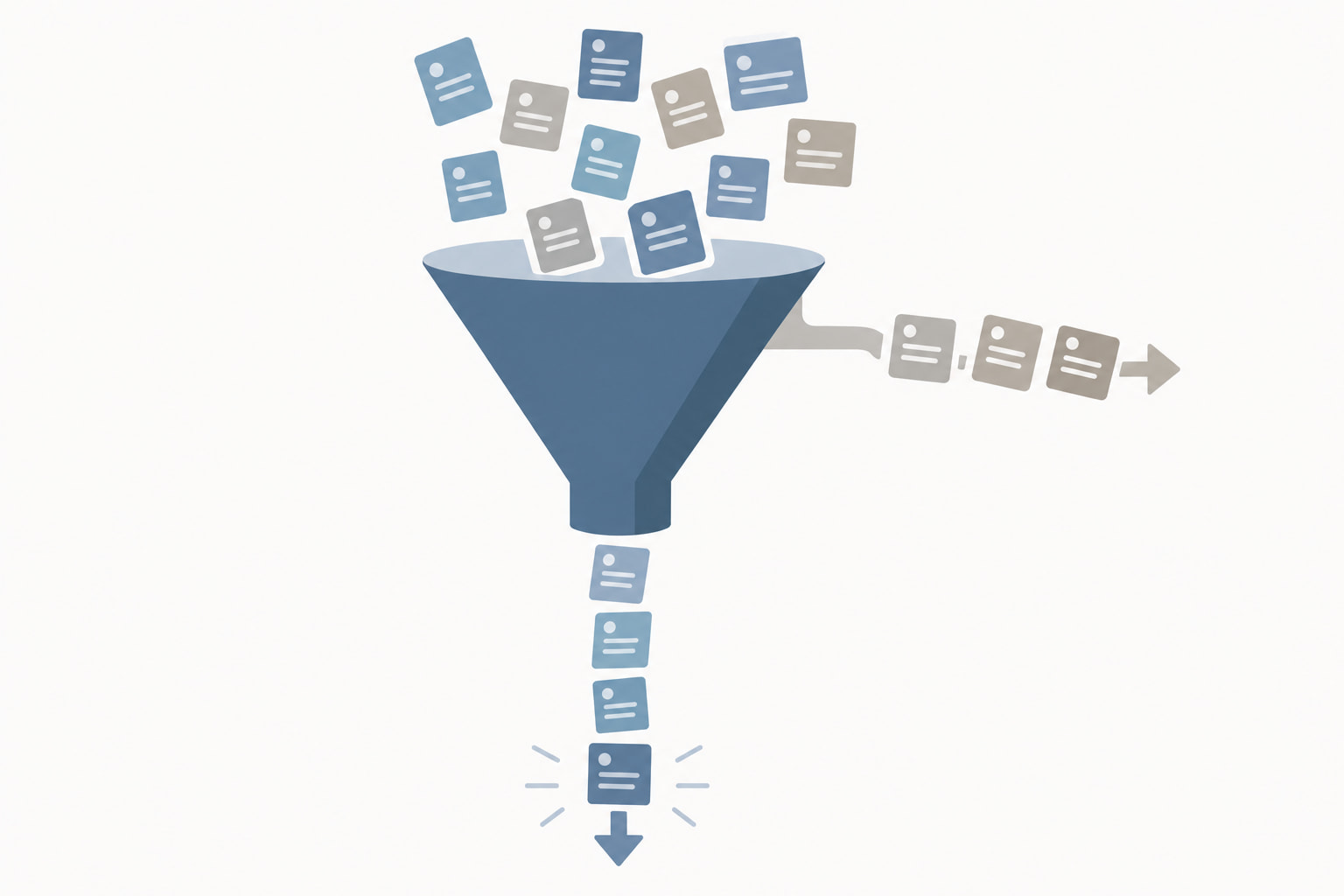
Eligibility fails fastest, so it goes first. If the stated requirements rule your organization out, no weighting scheme rescues the application and every hour on the narrative is wasted.
Federal funding has a registration gate first. Submitting a SAM.gov registration and getting a Unique Entity ID are both free, and registration must be renewed every 365 days to stay active (SAM.gov, Entity Registration, read September 2026). Allow at least ten business days after submission for the registration to become active (Federal Service Desk, 2.4 Quick Start Guide for Grant Registrations, read September 2026). Grants.gov states that an organization must register as an entity with SAM.gov before anyone can start applying in Grants.gov (Grants.gov, Applicant Registration, read September 2026).
Tax status is the second gate. To be tax-exempt under section 501(c)(3), an organization must be organized and operated exclusively for exempt purposes set forth in section 501(c)(3), and none of its earnings may inure to any private shareholder or individual (IRS, exemption requirements for 501(c)(3) organizations, page last reviewed June 28, 2026). Without public charity status, a private foundation's grant to your organization is a taxable expenditure unless the foundation exercises expenditure responsibility (IRS, "Grants to organizations," page last reviewed June 28, 2026). Fiscal sponsorship is the practical route, and sponsor fees are generally somewhere between 5% and 10% of all funds held on behalf of the sponsored group (Propel Nonprofits, read September 2026).
One rule teams get wrong: no law or IRS rule sets a minimum organization age for grants. Candid states that foundations want an established track record and that it is "difficult (though not impossible) for a brand-new organization" to get a grant (Candid, March 25, 2024). A three-year requirement you meet in one program's guidelines, such as The Community Foundation's Rocco Legacy Endowment Capacity-Building Grants, is that program's rule, not an industry rule (The Community Foundation, page dated May 12, 2026).
Geography is the eligibility line to read first. Commenters in three Reddit threads said "the biggest issue with finding new opportunities is geographic alignment" (Reddit threads 1r8eviy, 1vb5ctu and 1sewng0, read September 2026). Read the service-area rule before the program description, because a funder that only gives in three counties is a no for everyone outside them regardless of the program.
Select to enlarge (opens in a new tab).
How Detailed Should a Grant Budget Be at the Go/No-Go Stage
At the go/no-go stage the budget needs four numbers: the amount you would request, the funder's award range, any required match, and the categories the funder excludes. Line-item detail arrives after a yes, when the funder's own form fixes the categories for you.
Five published programs show how much screening those four numbers do on their own:
Scroll horizontally to see all columns when needed.
| Opportunity | Money terms | Requirement that screens applicants |
|---|---|---|
| Walmart Spark Good Local Grants | $250 to $5,000 | Same service area as the requesting facility; Spark Good account verified by Deed before applying (Walmart.org, Spark Good Local Grants guidelines, read September 2026) |
| DuPage Foundation 2026 Capacity Building | Up to $20,000 within a $120,000 program total | A grant from the funder's Community Impact or Arts DuPage programs within the last three years (DuPage Foundation, 2026 guidelines and program page dated July 25, 2025) |
| Chesapeake Bay Trust FY27 Capacity Building | Typical requests up to $40,000 for nonprofits | At least one full-time staff member (35 or more hours per week) or a dedicated volunteer contributing at least 35 hours per week, plus an active board of directors (Chesapeake Bay Trust, FY27 RFP released April 27, 2026) |
| Staunton Farm Foundation 2026 capacity building | Up to $25,000 per request | Excludes general operating support, capital construction, endowments, debt repayment, lobbying and fundraising events (Staunton Farm Foundation, 2026 opportunity) |
| Rocco Legacy Endowment Capacity-Building Grants | The applicant contributes 10-25% of the project cost | At least three years as an established functioning entity, plus a board-chair letter (The Community Foundation, page dated May 12, 2026) |
The match question settles a lot of decisions early. If a program requires the organization to contribute 10-25% of the project cost and you cannot fund that share this year, the answer is no (The Community Foundation, page dated May 12, 2026).
The restriction question does the same work. Candid advises that most grants, especially first-time grants, are restricted to program expenses, and that general operating or unrestricted grants "are largely the exception, rather than the rule" (Candid, March 25, 2024). A request that only balances as unrestricted funding is usually a request that does not balance.
Three checks close this test: if the ask exceeds the top of the award range, re-scope or decline; if the required match exceeds cash you can commit, decline; if every allowable use sits outside how your program actually spends, decline.

Select to enlarge (opens in a new tab).
A Grant Go/No-Go Scorecard With Weighted Criteria
A weighted scorecard turns the decision into arithmetic: clear the eligibility gate, score each weighted criterion from 0 to 5, multiply the score by its weight and divide by 5, and compare the total out of 100 against a pass line you write down before anyone scores.
Scroll horizontally to see all columns when needed.
| Criterion | Weight | A score of 5 means | A score of 0 means |
|---|---|---|---|
| Eligibility | Gate | Meets every stated requirement | Fails one stated requirement |
| Mission fit | 30 | Project language matches the funder's stated program areas | Work sits outside the stated field |
| Capacity and track record | 26 | Documents ready, board and staff ready for a site visit | Required documents missing |
| Cost to apply | 19 | Short letter of inquiry, registration already active | Multi-week build plus a match you cannot fund |
| Odds | 25 | Open window, small applicant pool, contact already made | Invitation only, no route to an introduction |
Illustrative figures, not data from a real organization.
The downloadable workbook uses these weights and a pass line of 65 of 100 (Illustrative figures). Set your own line before the first scoring session and keep it fixed for the season, because a pass line that moves is not a decision tool.
Published federal review rubrics weight the parts of a written application. An HRSA notice of funding opportunity (HRSA-24-002) allocates 100 total points as Need 10, Response 45, Evaluative Measures 15, Impact 10, Resources/Capabilities 15, and Support Requested 5 (HRSA, HRSA-24-002, FY2024 NOFO). A Bureau of Justice Assistance FY25 merit review weights Description of the Issue 5%, Funding Need 5%, Project Goals and Objectives 15%, Project Design and Implementation 30%, Capabilities and Competencies 30%, and Budget 15% (DOJ Bureau of Justice Assistance, FY25 COSSUP, FY2025). A review rubric scores an application, while this scorecard decides whether to write one: keep the five tests for the go or no-go call, and when a funder publishes its rubric, use it to score the draft.
The gate behaves the same way at review time. The Department of Justice's Office of Justice Programs screens applications against basic minimum requirements before peer review, and applications that do not meet them "will neither proceed to peer review nor receive further consideration" (DOJ Office of Justice Programs, OJP Grant Application Resource Guide, page dated March 20, 2020).
A yes on the scorecard moves the opportunity into drafting, where a pre-submission review checklist runs the final pass.
Cost to Apply: Length, Template and the Registration Clock
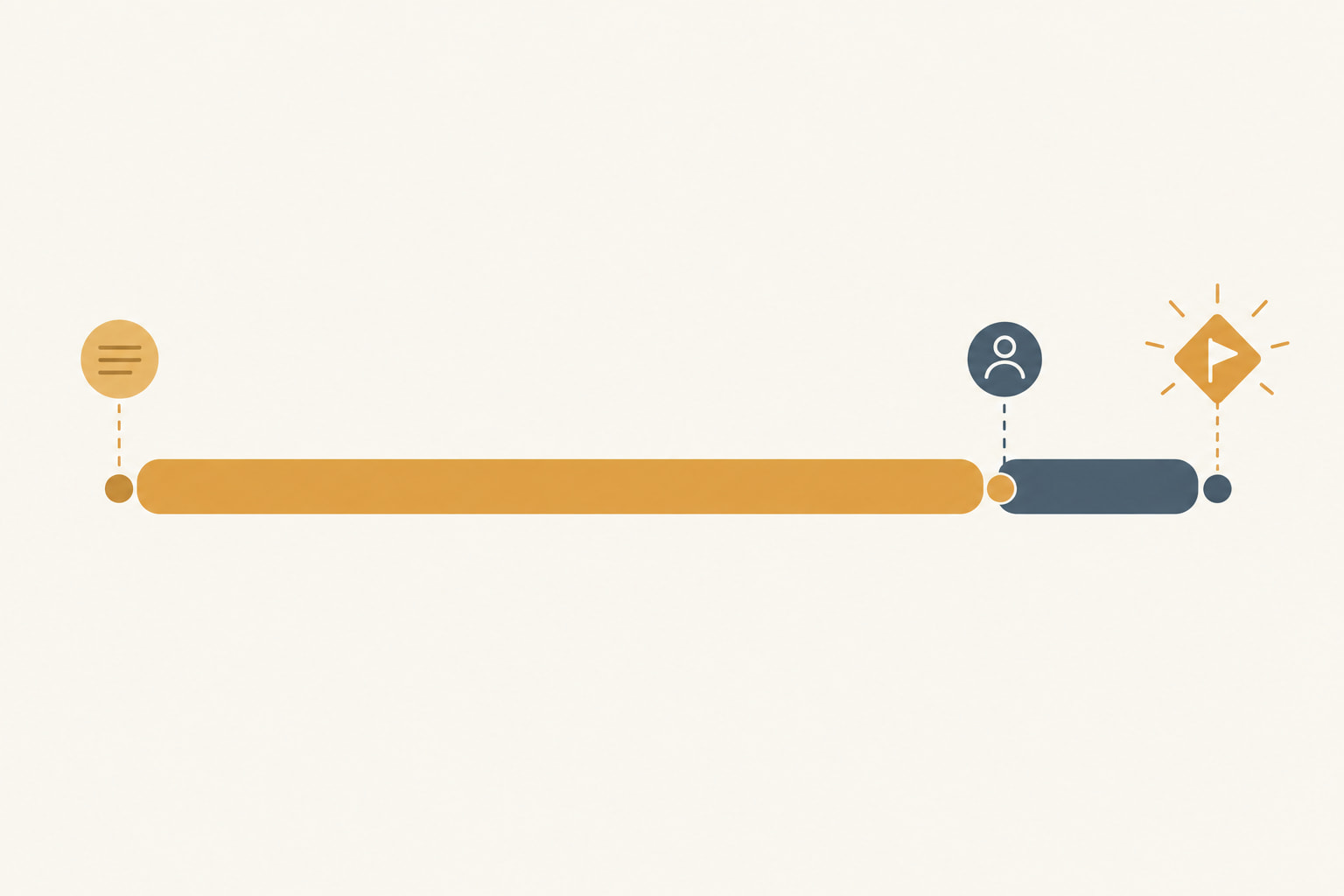
Cost to apply is hours plus lead time: the length of what the funder wants, the document you will fill, and the business days the registration systems need before you can submit anything.
Length: What the Funder Actually Asks For
For a first contact, short. Northwestern University's foundation relations office states that the first contact with a foundation is often a brief one- to three-page letter of inquiry, which many foundations accept on a rolling basis (Northwestern University Foundation Relations, read September 2026). The Institute for Advanced Study describes a letter of inquiry as a condensed version of a full proposal, usually two to three pages and sometimes as little as one page, and instructs writers never to exceed a funder-specified page limit (Institute for Advanced Study, read September 2026).
Two-stage programs cut the cost further. The Michigan Health Endowment Fund caps concept papers at 10,000 characters including spaces (about two pages) and states that non-competitive concepts will not be invited to apply (Michigan Health Endowment Fund, 2026 RFP, Cycle 2).
Template: Whose Form Sets Your Hours
Use the funder's own form when one exists, because it fixes section order, headings and page limits before you write a sentence. When no form exists, the standard structure of need, approach, qualifications, budget and evaluation is enough, and a first-time writer's version of those sections is covered in our guide for writers new to grants. Either way the template sets the hour count, and the scorecard should price that commitment before anyone starts writing.
Select to enlarge (opens in a new tab).
When to Say No: Closed Doors and Low Odds
The right answer is no when eligibility fails, when a funder closed to unsolicited requests offers no route in, or when the odds and the cost to apply do not justify the hours.
Candid found that of the 112,733 U.S. private foundations that filed Forms 990-PF for fiscal year end 2023, 71% checked the preselected-only box, which narrowly interpreted means only 29% (fewer than 33,000 foundations) are open to considering new grantees (Candid, October 1, 2025). Candid also notes that checking the box "doesn't necessarily reflect a firmly fixed policy, as foundation staff may still consider unsolicited requests," and lists routes those foundations still leave open, including an introduction form, a letter of inquiry, a limited opening period and a preliminary conversation (Candid, October 1, 2025). Candid's 2025 Foundation Giving Forecast Survey asked 522 private and community foundations whether they accepted unsolicited proposals and 55% said they were willing to do so (Candid, October 1, 2025).
Inside Philanthropy defines an unsolicited proposal as "basically a cold call" and notes that invitation-only practice "reflects limitations on a funder's time and resources more than it reflects on their funding generosity" (Inside Philanthropy, September 8, 2026). The Weingart Foundation uses an invitation-only process "in order to reduce the burden on applicants and expedite funds," and still invites contact with a program officer (Weingart Foundation, read September 2026).
Odds are the third no, and the two kinds of odds statistic answer different questions. Per application, NIH research project grants show how low the odds can run: NIH reported the success rate of research project grant (RPG) applications was 21.3% in FY2023, 18.5% in FY2024 and 13.0% in FY2025 (NIH Extramural Nexus, March 12, 2026). Per organization across a whole year, the picture looks the opposite: GrantStation's 2026 report, based on 1,354 organizations that pursued grant funding in 2025, found 90.8% of respondents who submitted an application secured at least one grant in 2025, while 7.5% received no awards (GrantStation, 2026 State of Grantseeking Report, 2026 report with 2025 data). Score one opportunity on the first kind of number, and plan a season on the second. GrantStation states its survey "was not scientifically conducted, as survey respondents are a nonrandom sample of organizations that self-selected to take the survey based on their affiliation with GrantStation and GrantStation partners" (GrantStation methodology, read September 2026), so read those figures as directional.
To find funders that are actually open, browse the grant listings that are accepting applications and read the guide to finding grants for nonprofits before scoring anything.
Running the Scorecard Across a Whole Pipeline
One scorecard decides one opportunity. A pipeline of them decides where the season's staff hours go, so score every live opportunity on the same five tests on a fixed rhythm and record the reason behind each no.
A scored no does not disappear. Keep the opportunity in the pipeline with its score and its failing criterion written next to it, because the criterion tells you what to fix: an eligibility fail means wait for the funder's own route to open, a capacity fail means build the missing document, an odds fail means come back once you have contact.
A pipeline-wide scorecard runs faster when closed doors drop out first. GrantCue's foundation directory, built from IRS 990-PF public filings, carries an accepting-applications filter on every plan, and its AI fit score, which starts on the Team plan, ranks what is left inside one kanban-style board (grantcue.com, September 2026). Read how the fit score is built before you let it stand in for any row of your own scorecard.
FAQ
Should We Apply for This Grant, Go or No-Go?
Score the opportunity on five tests: eligibility, mission fit, staff capacity, cost to apply, and odds. Treat eligibility as pass or fail, weight the other four, and set a pass line before anyone scores. Below the line is a no; above it, assign a writer and a date. Write the reason down either way, because it becomes the starting point the next time that funder opens a window.
How Detailed Should a Grant Budget Be?
At the go/no-go stage, four numbers are enough: the amount requested, the funder's award range, any required match, and the categories the funder excludes. Everything else waits for a yes. Once you are writing, budget detail is whatever the funder's form asks for, with line items that match the narrative and a match you can document from the general ledger.
How Long Should a Grant Proposal Be?
As long as the funder's instructions say, and not one line beyond them. First contacts run short: Northwestern University's foundation relations office describes the first contact as often a brief one- to three-page letter of inquiry (Northwestern University Foundation Relations, read September 2026), the Institute for Advanced Study's guidance puts a letter of inquiry at usually two to three pages and sometimes as little as one (Institute for Advanced Study, read September 2026), and full proposals follow the funder's stated page limit.
What Grant Proposal Template Should I Use?
The funder's own form when one exists, because it fixes section order, headings and page limits for you before drafting starts. Without a form, use the standard structure: statement of need, approach, organizational qualifications, budget, and evaluation. Keep one master file with those sections and adapt it per opportunity instead of starting from a blank page each time.
Is There a Sample Grant Proposal for a Nonprofit With No Funding?
Samples exist, such as the annotated grant proposal examples, but a sample shows structure, not qualification. For a nonprofit with no funding history, the earlier question is whether the funder accepts first-time applicants. Candid states that it is "difficult (though not impossible) for a brand-new organization" to get a grant, and asks about 501(c)(3) status, a track record, and capable leadership with an effective board before you seek one (Candid, March 25, 2024).
How Do Federal Grant Deadlines This Year Affect the Decision?
Check the registration clock first. Allow at least ten business days after you submit a SAM.gov registration for it to become active (Federal Service Desk, 2.4 Quick Start Guide for Grant Registrations, read September 2026). Grants.gov advises allowing time for activation even if your organization has a federal tax ID, and warns that unverified information "could take weeks or months" (Grants.gov, Applicant Registration, read September 2026). Registration must also be renewed every 365 days (SAM.gov, Entity Registration, read September 2026).
Score Before You Assign a Writer
Run the five tests on the next opportunity that lands in your inbox, before anyone opens a document or a budget template. Eligibility first, then fit, capacity, cost to apply and odds, with weights and a pass line written down where the whole team can see them.
Keep the scorecard file beside the pipeline and review the nos once a quarter. A no caused by a missing audit, an inactive registration, or a match you could not fund has a fix with a date on it, and the next window from that funder arrives with the problem already solved.