Foundation 990 Lookup: Where to Search by EIN and What You Get
A foundation 990 lookup is free at the IRS, ProPublica and Grantmakers.io. Where to search by EIN or by name, how to find the number first, and what each tool returns.

In this article (9)
- Quick Answer: Where Do You Run a Foundation 990 Lookup?
- What Does a Foundation 990 Lookup by EIN Return?
- How to Find a Foundation's EIN Before You Search
- ProPublica Nonprofit Explorer by EIN
- IRS Tax Exempt Organization Search by EIN
- Grantmakers.io and the IRS XML Download Files
- How Fresh Is a Foundation 990 Lookup by EIN?
- FAQ
- What to Record From Each EIN Lookup
A foundation 990 lookup by EIN pulls a private foundation's tax filings straight from the number the IRS assigned it. An EIN is an Employer Identification Number, also known as a Taxpayer Identification Number (TIN), and it is the field the IRS and every 990 database key on (IRS, Form 990-N (e-Postcard) page, read September 2026). Search by name and you inherit every spelling variant the funder ever used. Search by number and you get the record.
Four free sources return filings for an EIN: the IRS Tax Exempt Organization Search tool, ProPublica Nonprofit Explorer, Grantmakers.io, and the IRS monthly 990 XML downloads, the last as bulk files you filter yourself. Each one returns a different slice of the record, and the free 990 search comparison sets them side by side. The number is also not always in your file, so the work usually starts with a name search that hands you the EIN.
Quick Answer: Where Do You Run a Foundation 990 Lookup?
A foundation 990 lookup is free at three sites: IRS Tax Exempt Organization Search returns the Form 990-PF filings and Pub. 78 status, ProPublica Nonprofit Explorer rebuilds each e-filed return, and Grantmakers.io builds a foundation profile. Search by EIN when you have it; a TEOS name search matches only names on file with the IRS.
What Does a Foundation 990 Lookup by EIN Return?
A foundation 990 lookup by EIN returns the Form 990-PF filings the IRS holds for that number plus the exemption records tied to it. Which filings surface depends on the database you query, because each source holds a different slice.
Form 990-PF is the annual return that private foundations file with the IRS to figure the tax on investment income and to report charitable distributions and activities (IRS, Instructions for Form 990-PF (2025)). All private foundations, including nonexempt trusts treated as private foundations, must annually file Form 990-PF, Return of Private Foundation (IRS, Private foundations, June 28, 2026). The full title on the form is "Form 990-PF, Return of Private Foundation or Section 4947(a)(1) Trust Treated as Private Foundation" (IRS, 2025 Form 990-PF).
For prospecting, the grant list is the part of the return that matters most. On the 2021 through 2025 forms it is Part XIV, and on the 2019 and 2020 forms it is Part XV (IRS, 2019, 2020, 2021 and 2025 Forms 990-PF compared), so name the tax year whenever you cite a part number. Each row of that list names a recipient, a purpose and an amount (IRS, 2025 Form 990-PF). The part is completed only when the foundation held $5,000 or more in assets at some point in the year (IRS, 2025 Form 990-PF).
How to Find a Foundation's EIN Before You Search
Search the foundation's legal name in a free 990 database and read the EIN off the record it returns. That number then keys every later lookup.
The IRS Tax Exempt Organization Search tool takes a name or a number, and "The dash after the first two digits is optional for entering the employer identification number (EIN)" (IRS, TEOS FAQ, read September 2026). Name matching is strict. "Organizations are listed under the legal name or a 'doing business as' name that are on file with the IRS. Common or popular names of an organizations are not on file" (IRS, TEOS FAQ, read September 2026). The same page advises "Avoid common words such as 'the' or foundation" (IRS, TEOS FAQ, read September 2026).
ProPublica Nonprofit Explorer is the fallback when the legal name is unknown, because it lets you "Search for an organization or a person, or search the full text of filings" (ProPublica Nonprofit Explorer, August 20, 2026). A partial name can surface the record. The EIN then sits in the identifier block.
Record the number with the legal name and the source you took it from. Recipient names inside filings are typed free hand: "There is no IRS requirement to use the actual legal name for the grantees" (Grantmakers.io, The IRS 990 dataset, read September 2026). The EIN is the stable handle. The name is not. A roundup of free foundation directories is the other starting point when you are still collecting numbers to look up.
ProPublica Nonprofit Explorer by EIN
ProPublica Nonprofit Explorer is a free public database that returns annual filings by organization, private foundation returns included. Its Full Filing view rebuilds the return from IRS raw data.
Coverage is broad. You can "Browse millions of annual returns filed by tax-exempt organizations," and "Taxable trusts and private foundations that are required to file a form 990PF are also included" (ProPublica Nonprofit Explorer, August 20, 2026). The tool sits on the two formats the IRS releases: "The Internal Revenue Service releases them in two formats: page images and raw data in XML. The raw data is more useful, especially to researchers, because it can be extracted and analyzed more easily" (ProPublica Nonprofit Explorer, Full Filing view, read September 2026). A Full Filing page is "a reconstruction of a tax document using raw data from the IRS" (ProPublica, Full Filing view, read September 2026), and the guide to ProPublica's Full Filing view walks through reading one.
Two limits matter. The structured summary is dated: "The summary data contains information processed by the IRS during the 2012-2019 calendar years; this generally consists of filings for the 2011-2018 fiscal years" (ProPublica Nonprofit Explorer, August 20, 2026). And XML files are "Only available for electronically filed documents" (ProPublica Nonprofit Explorer, August 20, 2026), so a paper year has no machine-readable twin.
For scripted lookups there is a free JSON API whose requests "begin with https://projects.propublica.org/nonprofits/api/v2" and whose search endpoint is "GET /search.json" (ProPublica, Nonprofit Explorer API v2, read September 2026). It filters by state ("state[id]"), by NTEE major group ("ntee[id]") and by 501(c) subsection ("c_code[id]") (ProPublica, Nonprofit Explorer API v2, read September 2026).
One commenter on Reddit put it simply: "Propublica website has every 990 for free" (Reddit thread 1wiivcd, read September 2026).
IRS Tax Exempt Organization Search by EIN
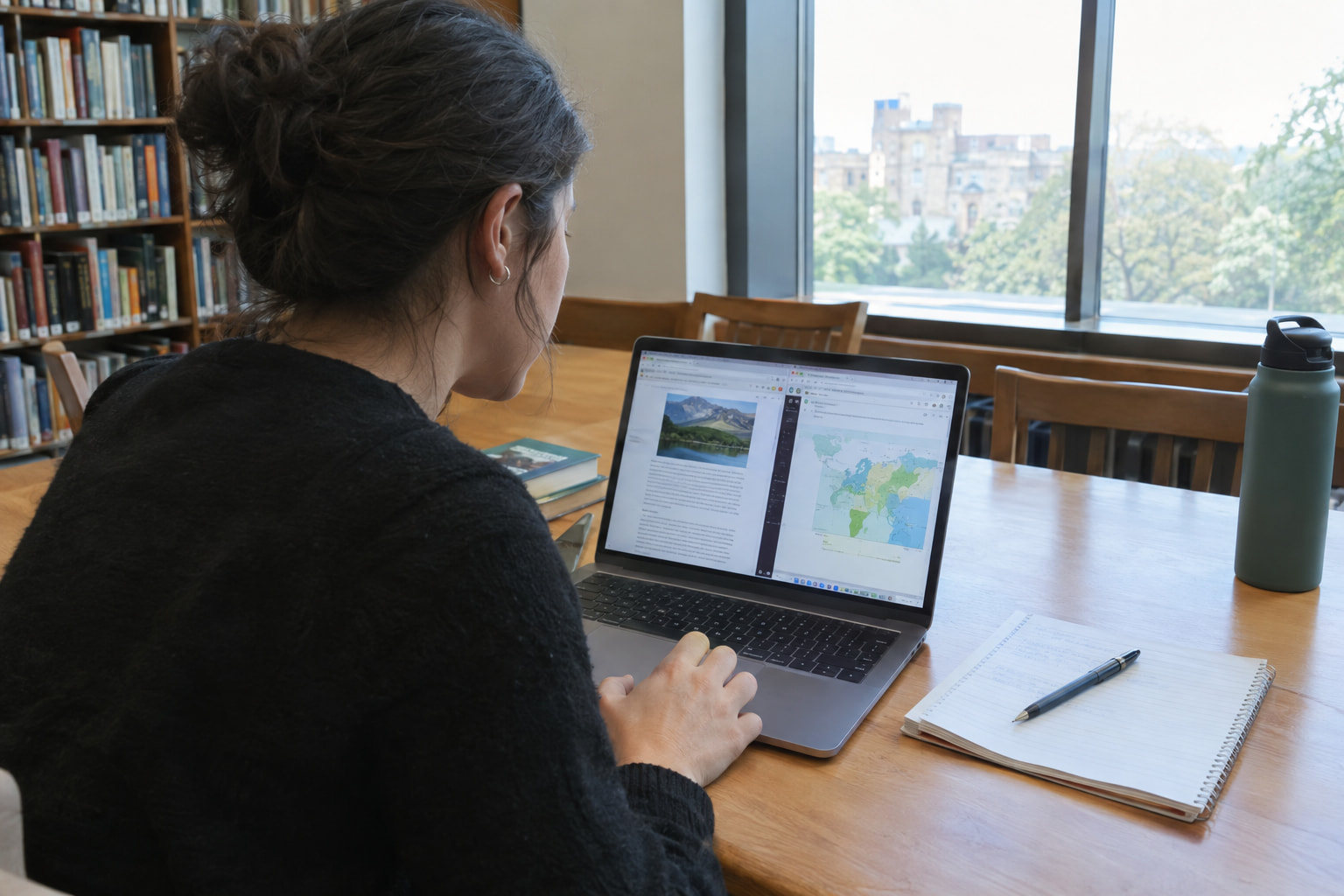
The IRS Tax Exempt Organization Search tool is the free government lookup, and it searches five separate data sets (IRS, TEOS FAQ, read September 2026). One number there answers both screening questions: can this foundation receive tax-deductible contributions, and what has it filed.
Those five sets are "Pub. 78 data," "Automatic revocation of exemption list," "Determination letters," "Form 990 series returns," and "Form 990-N (e-Postcard)" (IRS, TEOS FAQ, read September 2026). Pub. 78 Data is the IRS "list of organizations eligible to receive tax-deductible charitable contributions" (IRS, TEOS bulk data downloads, read September 2026).
The returns view is what a researcher wants. "The IRS makes available a private foundation's Form 990-PF, Form 990-T, and approved exemption application," and returns can be viewed "free of charge on Tax Exempt Organization Search (TEOS) at IRS.gov/TEOS" (IRS, Instructions for Form 990-PF (2025)). The other databases read from that same source.
One caution on the revocation list. "Presence of an organization's name on the Auto-Revocation List doesn't necessarily reflect its current tax-exempt status" (IRS, TEOS FAQ, read September 2026). The Auto-Revocation List is "the list of organizations whose federal tax exemption was automatically revoked because they did not file a Form 990-series annual return or notice for three consecutive tax years" (IRS, TEOS bulk data downloads, read September 2026). An automatically revoked organization "is not eligible to receive tax-deductible contributions and will be removed from the cumulative list of tax-exempt organizations, Publication 78" (IRS, Automatic revocation of exemption, read September 2026).
To confirm a reinstatement, the IRS points to "Pub.78 data ... or the exempt organizations business master file extract" or to the determination letter posted on TEOS (IRS, TEOS FAQ, read September 2026).
Grantmakers.io and the IRS XML Download Files
Grantmakers.io is a free foundation research site built from public filings that returns a profile for a US private foundation. Its own line is "Research any US foundation in seconds ... Built from public 990s. Forever free" (Grantmakers.io, read September 2026).
It "focuses exclusively on Form 990-PF, the tax filing used by private foundations" (Grantmakers.io, The IRS 990 dataset, read September 2026). That scope explains a common dead end: community foundations file Form 990, not Form 990-PF, so they do not appear on Grantmakers.io (Grantmakers.io, The IRS 990 dataset, read September 2026). A number that returns filings at TEOS and ProPublica but nothing at Grantmakers.io most likely belongs to an organization that files Form 990; where to find a Form 990 for an organization covers that case.
Access is open. "No hoops. No forms to fill out, no accounts to create, no affinity groups to join" (Grantmakers.io, About, read September 2026). The site runs on "a budget of just $200 per year" covered "by voluntary gifts from the community" and is free and open source software (Grantmakers.io, About, read September 2026). It does throttle: the search page can return "Hourly search limit reached" (Grantmakers.io, Search Foundation Profiles, read September 2026). Updates track the IRS: "Updates are typically live on Grantmakers.io within a week of being published by the IRS" (Grantmakers.io, The IRS 990 dataset, read September 2026).
For bulk work, skip the front ends. "On this page you may download all the most recent 990 series filings on record in XML formats," organized by year and month with an "Index file" CSV for each year (IRS, Form 990 series downloads, read September 2026). The IRS bulk files "are updated monthly" (IRS, TEOS bulk data downloads, read September 2026), and the page checked in September 2026 listed Pub. 78 data as "Last updated: April 14, 2026," Form 990-N data as "Latest data posting: April 27, 2026" and Form 990 series XML as "Latest data posting XML: April 20, 2026" (IRS, TEOS bulk data downloads, read September 2026). Machine-readable returns are recent in any case: the IRS "started publishing foundation tax returns in 'machine-readable format' for the first time in 2016" (Grantmakers.io, The IRS 990 dataset, read September 2026). A private foundation list organized by state is a useful companion once you hold numbers to check.
How Fresh Is a Foundation 990 Lookup by EIN?
A foundation 990 lookup by EIN returns what the IRS has published, and the newest return describes a tax year that closed many months earlier. Plan research around that gap.
After the filing date the IRS still has to process and release the return before any database can index it, so a return filed on extension reaches the lookup tools later still.
Electronic filing changed the data. "Effective for tax years beginning after July 1, 2019, the Taxpayer First Act, Pub. L. No. 116-25 Section 2301, requires organizations exempt from taxation under section 501(a) to file their annual Form 990 and Form 990-PF returns electronically" (IRS, Exempt organizations annual reporting requirements filing procedures, June 28, 2026). Paper years stay outside the XML feeds, and e-filing itself "is only available for the current tax year and 2 prior tax periods" (IRS, Instructions for Form 990-PF (2025)).
GrantCue keys its foundation pages to the same number. Each of its more than 10,000 private foundation profiles is built from IRS 990-PF public filings, and the page address carries the foundation's name and EIN (grantcue.com, September 2026). When a name search returns several look-alike funders, the EIN-keyed foundation profiles give you a second place to match the number before you save it.
FAQ
How Do I Do a Foundation 990 Lookup by EIN?
Type the number into IRS Tax Exempt Organization Search, ProPublica Nonprofit Explorer, or Grantmakers.io. The IRS accepts the EIN with or without the dash after the first two digits (IRS, TEOS FAQ, read September 2026). Each service returns the Form 990-PF filings on record for that foundation, or a profile built from them. Start at the IRS tool to check Pub. 78 eligibility, then read the filings on ProPublica when you want a faster browsing view.
Is There a Free 990 Lookup by EIN?
Yes. The IRS Tax Exempt Organization Search tool, ProPublica Nonprofit Explorer, Grantmakers.io, and the IRS Form 990 series downloads all charge nothing (IRS, TEOS, June 28, 2026; ProPublica Nonprofit Explorer, August 20, 2026; Grantmakers.io, read September 2026). None of them asks for payment to retrieve a filing. Grantmakers.io promises "No hoops. No forms to fill out, no accounts to create" (Grantmakers.io, About, read September 2026).
How Do I Find a Foundation's EIN?
Search the legal name at IRS Tax Exempt Organization Search or ProPublica Nonprofit Explorer and read the number off the organization record. TEOS lists organizations "under the legal name or a 'doing business as' name that are on file with the IRS" and advises avoiding filler words such as "the" or "foundation" (IRS, TEOS FAQ, read September 2026). ProPublica also lets you "Search for an organization or a person, or search the full text of filings," which helps when you know only a trustee's name (ProPublica Nonprofit Explorer, August 20, 2026).
Does ProPublica Include Private Foundation Filings?
Yes. ProPublica Nonprofit Explorer is free and covers private foundations, since "Taxable trusts and private foundations that are required to file a form 990PF are also included" (ProPublica Nonprofit Explorer, August 20, 2026). Its Full Filing pages are "a reconstruction of a tax document using raw data from the IRS" (ProPublica, Full Filing view, read September 2026). Its structured summary data covers only filings processed during the 2012-2019 calendar years, so read the full filings for recent years (ProPublica Nonprofit Explorer, August 20, 2026).
When Do New Foundation 990 Filings Appear in Lookup Tools?
Not quickly. A return is due on "the 15th day of the 5th month after the end of your organization's accounting period," and Form 8868 grants an automatic 6-month extension (IRS, Annual exempt organization return: due date, June 28, 2026). Grantmakers.io states that "new" grants in its results "were likely actually funded 9-18+ months before first appearing in results" (Grantmakers.io, The IRS 990 dataset, read September 2026). Expect the newest return to describe a year that ended long before your search.
What to Record From Each EIN Lookup
Leave four fields in your research file for every lookup: the EIN, the legal name as filed, the tax year of the newest return, and the source you pulled it from. Add the date you searched, because database contents move.
Check the part number against the tax year before you cite anything. On the 2025 form the grant list is Part XIV (IRS, 2025 Form 990-PF), and older write-ups that say Part XV are describing the 2020 and earlier forms (IRS, 2019, 2020, 2021 and 2025 Forms 990-PF compared). Save the filing beside the notes so the citation survives a database update.
A shortlist built this way holds up, because every name on it is tied to a number and a filing. For the wider search, the nonprofit grant search walkthrough covers where prospects come from. When the shortlist turns into applications, the foundation grant proposal template is the next document in the chain.