Free 990 Lookup on ProPublica Nonprofit Explorer: The Full Filing View
How to do a free 990 lookup on ProPublica Nonprofit Explorer and use the Full Filing view to read 990-PF grant lists, application blocks and payout figures.

In this article (9)
- Quick Answer: How Do You Do a Free 990 Lookup on ProPublica?
- What the Full Filing View Reconstructs
- Where the Grant List Sits in the Full Filing View
- How to Read the Application Block in Part XIV
- What Else the Full Filing Shows for Grant Research
- What the Data Does Not Tell You
- A Repeatable Research Routine
- FAQ
- Where to Go After the Full Filing
A free 990 lookup on ProPublica takes a few clicks: search Nonprofit Explorer for the foundation, open a return and choose Full Filing. ProPublica Nonprofit Explorer is a free search tool that lets you browse millions of annual returns filed by tax-exempt organizations (ProPublica Nonprofit Explorer, August 20, 2026), and its Full Filing view rebuilds a foundation's Form 990-PF from the raw data the IRS releases (ProPublica Nonprofit Explorer, Full Filing view, read September 2026). The summary page shows a few processed totals. The Full Filing page shows the return line by line, including every grant the foundation reported paying.
The grant list and the application block sit together in one part of Form 990-PF, the payout figures sit in three others, and the part numbers changed with the 2021 form (IRS, 2019, 2020, 2021 and 2025 Forms 990-PF compared). Reading the Full Filing view well means knowing which part to open and what its rows do and do not prove.
Quick Answer: How Do You Do a Free 990 Lookup on ProPublica?
Go to ProPublica Nonprofit Explorer, search for the foundation by name, open its page, pick a tax year and choose Full Filing to read the e-filed Form 990-PF line by line. On 2021 through 2025 returns, Part XIV line 3 is the grant list and line 2 the application block; 2019 and 2020 returns use Part XV.
What the Full Filing View Reconstructs
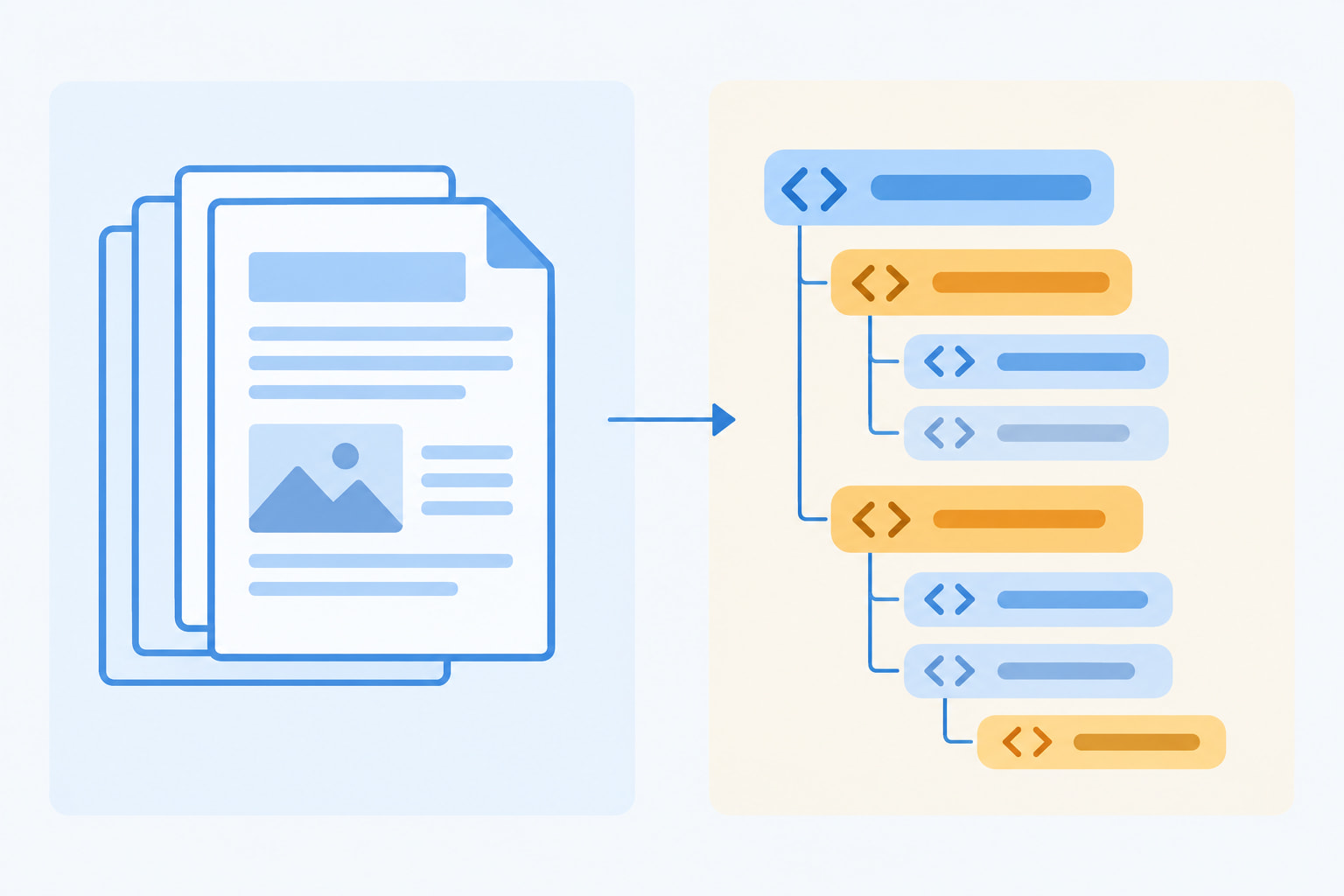
The Full Filing view is a reconstruction of a tax document using raw data from the IRS, and it is not a scan of the paper return (ProPublica Nonprofit Explorer, Full Filing view, read September 2026). Treat it as the machine-readable copy of what the foundation filed.
The IRS releases returns in two formats: page images and raw data in XML. ProPublica explains why it rebuilt the document: "The raw data is more useful, especially to researchers, because it can be extracted and analyzed more easily" (ProPublica Nonprofit Explorer, Full Filing view, read September 2026).
Only e-filed returns produce that XML. ProPublica states its XML files are "Only available for electronically filed documents" (ProPublica Nonprofit Explorer, August 20, 2026). Electronic filing has been required for Form 990 and Form 990-PF returns for tax years ending July 31, 2020 and later (IRS, E-file for charities and nonprofits, June 28, 2026). Recent years carry structured rows. Older paper filings do not.
Summary pages run on a separate clock. The summary data contains information processed by the IRS during the 2012-2019 calendar years, and this generally consists of filings for the 2011-2018 fiscal years (ProPublica Nonprofit Explorer, August 20, 2026). Full filings and PDFs are updated on their own schedule, so a foundation's newest return can appear in Full Filing while its summary figures still describe earlier years.
Coverage has a floor. ProPublica states that "Small organizations filing a Form 990N 'e-Postcard' are not included in this data" (ProPublica Nonprofit Explorer, August 20, 2026). Foundations are in: "Taxable trusts and private foundations that are required to file a form 990PF are also included" (ProPublica Nonprofit Explorer, August 20, 2026), which is what makes the site usable for funder research at all.
Where the Grant List Sits in the Full Filing View
The grant list is Part XIV on the 2021 through 2025 Forms 990-PF, and it is Part XV on the 2019 and 2020 forms (IRS, 2019, 2020, 2021 and 2025 Forms 990-PF compared). Match the part number to the tax year before you scroll, because guides written for older returns say Part XV.
Form 990-PF is the "Return of Private Foundation or Section 4947(a)(1) Trust Treated as Private Foundation" (IRS, 2025 Form 990-PF), and it is used "To figure the tax based on investment income, and To report charitable distributions and activities" (IRS, Instructions for Form 990-PF (2025)). Every private foundation files one annually (IRS, Private foundations, June 28, 2026).
Source: IRS, 2019, 2020, 2021 and 2025 Forms 990-PF compared.
On the current form the list sits under the heading "Part XIV Supplementary Information (continued) 3 Grants and Contributions Paid During the Year or Approved for Future Payment" (IRS, 2025 Form 990-PF). Line 3 splits into "a Paid during the year" and "b Approved for future payment," so forward commitments show up apart from cash grants (IRS, 2025 Form 990-PF).
Each row carries five fields: "Recipient Name and address (home or business)," a relationship note for individual recipients, "Foundation status of recipient," "Purpose of grant or contribution," and "Amount" (IRS, 2025 Form 990-PF). Read the purpose column first.
A blank list does not always mean a quiet year. Part XIV is completed only if the foundation "had $5,000 or more in assets at any time during the year" (IRS, 2025 Form 990-PF). Below that threshold the part is left empty on purpose.
How to Read the Application Block in Part XIV
Part XIV line 2 is the application block, and it is the first place to look before you write to a funder. It lists "The name, address, and telephone number or email address of the person to whom applications should be addressed," "The form in which applications should be submitted," "Any submission deadlines," and "Any restrictions or limitations on awards, such as by geographical areas, charitable fields, kinds of institutions, or other factors" (IRS, 2025 Form 990-PF).
Read the opt-out box first. The form offers a checkbox stating: "Check here if the foundation only makes contributions to preselected charitable organizations and does not accept unsolicited requests for funds" (IRS, 2025 Form 990-PF). When that box is checked, items 2a through 2d are not completed (IRS, 2025 Form 990-PF), so the empty fields below it are the answer and not a missing document.
The restrictions line is the most useful field in the block. A geography limit, a field-of-interest limit, or a bar on certain kinds of institutions tells you whether to apply at all. Compare those words against your own program before you spend a week on a narrative. When the form names a submission format and a deadline, write both into your research notes and treat the printed deadline as the one the funder used for that tax year. Once the format is known, a foundation grant proposal template gives the draft a starting shape.
If the block does name a contact, that person is the right addressee for a short inquiry. Part VII of the same form lists "all officers, directors, trustees, and foundation managers and their compensation" (IRS, 2025 Form 990-PF), which is where the decision-makers appear. Part VI-A line 13 asks for the foundation's "Website address" (IRS, 2025 Form 990-PF), and for a small family foundation that line is often the only web presence there is.
What Else the Full Filing Shows for Grant Research
The Full Filing view also carries the payout math, the timing signal, and the geography hints a grantseeker needs. Read Part IX, Part XI, Part XII, and Part VI-A in addition to the grant list.
Part IX produces the payout figure. Line 6 reads "Minimum investment return. Enter 5% (0.05) of line 5," and line 4 first deducts "Cash deemed held for charitable activities. Enter 1.5% (0.015) of line 3" (IRS, 2025 Form 990-PF). Line 1 measures only the "Fair market value of assets not used (or held for use) directly in carrying out charitable, etc., purposes" (IRS, 2025 Form 990-PF), so property used in the foundation's own programs sits outside the payout base.
Part XI is where "Qualifying distributions" are computed, and those include "Amounts paid (including administrative expenses) to accomplish charitable, etc., purposes" plus program-related investments and certain set-asides (IRS, 2025 Form 990-PF). The 5% test is met by qualifying distributions as a whole, so it is not a rule that 5% must go out as grants (IRS, 2025 Form 990-PF, Part XI).
Part XII line 6f is the timing signal. On the 2025 form it reads "Undistributed income for 2025. Subtract lines 4d and 5 from line 1. This amount must be distributed in 2026" (IRS, 2025 Form 990-PF). A foundation carrying a large undistributed balance has money it is expected to move in the following year.
Source: IRS, 2025 Form 990-PF.

What the Data Does Not Tell You
Full Filing rows are a starting point, and five limits decide how much weight they can carry.
The reporting lag comes first. Grantmakers.io warns that "'New' grants that appear in Grantee Search results were likely actually funded 9-18+ months before first appearing in results" (Grantmakers.io, The IRS 990 dataset, read September 2026). A return is due "by the 15th day of the 5th month after the end of your organization's accounting period," and Form 8868 gives an automatic 6-month extension (IRS, Annual exempt organization return: due date, June 28, 2026). The list you are reading is history.
Recipient names are whatever the funder typed. "There is no IRS requirement to use the actual legal name for the grantees, and no requirement to distinguish between national HQ recipients and their local/regional organizations" (Grantmakers.io, The IRS 990 dataset, read September 2026). Match on the city and the amount as well as the name.
Errors in a filing are effectively permanent, because "the only way a foundation can adjust their filing content is to file a full amendment to their return" (Grantmakers.io, The IRS 990 dataset, read September 2026). If a row looks wrong, it will keep looking wrong.
Not every funder files a 990-PF: community foundations file Form 990 instead, so they will not appear in a 990-PF-only database (Grantmakers.io, The IRS 990 dataset, read September 2026). When you widen to Form 990, the grant list moves to Schedule I, which only requires a line for each recipient "that received more than $5,000 aggregate of grants or assistance from the organization during the tax year" (IRS, Instructions for Schedule I (Form 990), Rev. December 2024). Smaller grants from public charities fall below that line.
Machine-readable history is short. The IRS "started publishing foundation tax returns in 'machine-readable format' for the first time in 2016," and XML exists only for electronically filed returns (Grantmakers.io, The IRS 990 dataset, read September 2026). Old returns also cannot be e-filed at all: "Electronic filing is only available for the current tax year and 2 prior tax periods" (IRS, Instructions for Form 990-PF (2025)). Deep history means page images.
A Repeatable Research Routine
A repeatable Full Filing pass is four steps: confirm status, open the latest return, read the Part XIV grant rows and application block, then read the payout parts for timing. Run the same four steps on every prospect so the notes line up.
Source: IRS Tax Exempt Organization Search (June 28, 2026); ProPublica Nonprofit Explorer (August 20, 2026); IRS, 2025 Form 990-PF.
Step 1 matters because a name on a list is not proof of current status. The IRS warns that "Presence of an organization's name on the Auto-Revocation List doesn't necessarily reflect its current tax-exempt status" (IRS, Search for tax exempt organizations, read September 2026). Confirm reinstatement through Pub. 78 data, the exempt organizations business master file extract, or the organization's determination letter (IRS, Search for tax exempt organizations, read September 2026) before you write anything down. IRS Tax Exempt Organization Search is free and checks "an organization's eligibility to receive tax-deductible charitable contributions (Pub 78 Data)" (IRS, Tax Exempt Organization Search, June 28, 2026).
If you are working a state list, search by EIN where you have it; the guide to a foundation 990 lookup by EIN covers that search on its own. An EIN is an Employer Identification Number, also known as a Taxpayer Identification Number, and it is the field the IRS and every 990 database key on (IRS, Form 990-N (e-Postcard), read September 2026). ProPublica's free API will also filter a search by state, by NTEE major group, and by 501(c) subsection (ProPublica, Nonprofit Explorer API v2, read September 2026).
Commenters in two Reddit threads described a free workflow that matches this routine: read the 990-PF directly in ProPublica's "Full Filing" view, not the summary, or pull the IRS monthly e-file XML (Reddit threads 1wcw9yl and 1ur2eou, read September 2026). In another thread, one commenter put the default free fallback plainly: "Propublica website has every 990 for free" (Reddit thread 1wiivcd, read September 2026). For a second free view, Grantmakers.io describes itself as a way to "Research any US foundation in seconds ... Built from public 990s. Forever free" (Grantmakers.io, read September 2026), though it "focuses exclusively on Form 990-PF" (Grantmakers.io, The IRS 990 dataset, read September 2026) and throttles searches (Grantmakers.io, Search Foundation Profiles, read September 2026).
A verified prospect then needs a place to wait for its deadline. GrantCue's public directory of more than 10,000 private foundations is built from the same IRS 990-PF public filings, with a profile page for each foundation under its name and EIN, and its Free plan includes a kanban pipeline for up to 10 active opportunities and an ICS calendar feed for deadlines (grantcue.com, September 2026). Use the foundation profile pages to cross-check each funder you verified.
FAQ
What Is the Full Filing View on ProPublica Nonprofit Explorer?
The Full Filing view is a reconstruction of a foundation's tax document using raw data from the IRS, not a scan of the paper return (ProPublica Nonprofit Explorer, Full Filing view, read September 2026). It rebuilds Form 990-PF so you can read every line the foundation reported, including the grant list, the application block, and the payout parts.
How Do I Find a Foundation's Grant List on ProPublica?
Open the organization, pick the filing year, and open the Full Filing view. The grant list is Part XIV line 3 on the 2021 through 2025 Forms 990-PF, with a split between "a Paid during the year" and "b Approved for future payment" (IRS, 2025 Form 990-PF). On the 2019 and 2020 forms the same list is Part XV (IRS, 2019, 2020, 2021 and 2025 Forms 990-PF compared).
Why Is There No Full Filing View for Some Returns?
The Full Filing view is rebuilt from the IRS's raw XML data, and ProPublica's XML files are "Only available for electronically filed documents" (ProPublica Nonprofit Explorer, August 20, 2026). A return filed on paper exists only as page images. Electronic filing became mandatory for Form 990-PF returns for tax years ending July 31, 2020 and later (IRS, E-file for charities and nonprofits, June 28, 2026), so a missing view is most likely on an older return.
Is ProPublica Nonprofit Explorer Free?
Yes. ProPublica Nonprofit Explorer lets you "Browse millions of annual returns filed by tax-exempt organizations" at no charge (ProPublica Nonprofit Explorer, August 20, 2026), and its JSON API is also free, with requests that "begin with https://projects.propublica.org/nonprofits/api/v2" (ProPublica, Nonprofit Explorer API v2, read September 2026).
How Current Is the Grant Data on ProPublica Nonprofit Explorer?
Full Filing rows describe money that has already moved. A return is due by the 15th day of the 5th month after the foundation's accounting period ends, and Form 8868 adds an automatic 6-month extension (IRS, Annual exempt organization return: due date, June 28, 2026). Grantmakers.io warns that grants appearing as new in its search were likely funded 9-18+ months earlier (Grantmakers.io, The IRS 990 dataset, read September 2026).
What Is the Difference Between the Summary View and the Full Filing View?
The Summary view shows ProPublica's structured summary data, which covers filings the IRS processed during the 2012-2019 calendar years (ProPublica Nonprofit Explorer, August 20, 2026). The Full Filing view rebuilds the whole return from raw data and shows every line the foundation filed (ProPublica Nonprofit Explorer, Full Filing view, read September 2026). Use the Summary for a quick profile and the Full Filing for the grant rows.
Where to Go After the Full Filing
Label every figure in your notes with its tax year, because the part numbers changed with the 2021 form and the rows describe money that has already moved (IRS, 2019, 2020, 2021 and 2025 Forms 990-PF compared). A note that names the part and the return year can be checked again later; a bare grant amount cannot.
When one foundation at a time is too slow, go to the source files. The IRS publishes raw filings itself in XML organized by year and month with an "Index file" CSV for each year (IRS, Form 990 series downloads, read September 2026), and ProPublica's free API has a search endpoint, "GET /search.json" (ProPublica, Nonprofit Explorer API v2, read September 2026). A broader set of free foundation directories and foundation lists sorted by state can seed the prospect list you then verify here, and the wider process sits in the end-to-end grant search guide.