Grant Proposal Review Checklist, Plus Where to Get Free Review and Feedback
Where to get free grant proposal review and feedback, from peers, program officers, decline comments and reviewer programs, plus a checklist to run before you submit.
In this article (29)
- Quick Answer: Where Can You Get Free Grant Proposal Review and Feedback?
- Where to Get Free Grant Proposal Review and Feedback
- What to Check Before Submitting a Grant Proposal
- 1. Eligibility Review
- 2. Requirement Review
- 3. Narrative Review
- 4. Budget Review
- 5. AI-Assisted Review Prompt
- 6. Final Submission Readiness
- Review Roles
- Review Priority Order
- Red Flag Checklist
- Section-by-Section Review
- Consistency Review
- Compliance Review
- Quality Review
- Review Evidence Table
- Review Checklist Template
- Review Timeline
- Review Meeting Agenda
- Review Comments That Help
- Example Review Finding Log
- Version Control During Review
- Post-Submission Checklist
- What AI Review Is Good At
- Review Questions for AI-Assisted Drafts
- Common Review Failure Points
- FAQ
- Build the Requirement Checklist Before You Draft
Free review and feedback on a grant proposal is hard to come by. One grantseeker on Reddit described being "0 for 10 on recent grant applications... it feels like we are shouting into the void" (Reddit thread 1w5jaaq, read September 2026), and an outside read is one step to add. A few free and low-cost routes exist, each with limits.
A grant proposal review checklist covers the rest: it helps nonprofit teams catch missing requirements, unclear sections, budget mismatches and compliance issues before submitting, checking both the quality of the proposal and the funder's exact instructions.
Quick Answer: Where Can You Get Free Grant Proposal Review and Feedback?
Free grant proposal review and feedback comes from a peer who trades reviews with you, the funder's program staff before you apply, the funder's comments after a decline, and federal reviewer programs that train you to score applications. Low-cost outside readers also exist. Each route has limits, so run your own review checklist first.
Where to Get Free Grant Proposal Review and Feedback
Feedback on a grant proposal comes from five places, four free and one low-cost, and none of them replaces your own review: each one sees the draft at a different stage and answers a different question.
Sources: NIH Extramural Nexus (July 22, 2026); Center for Effective Philanthropy (2016); The Unfunded List (read October 2026); HRSA, OJP and SAMHSA reviewer pages (read October 2026).
Before You Apply: The Funder's Own Staff
Program staff are the closest thing to free pre-submission review, as long as you ask about fit and not wording. NIH encourages applicants to contact its staff but says program officers do not co-write, rewrite or edit sections of an application (NIH Extramural Nexus, July 22, 2026), and some closed foundations offer a preliminary conversation to "save them time on ineligible proposals" (Candid, October 1, 2025).
After a Decline: Reviewer Comments
Decline feedback is free but uneven: "only about 50 percent of those declined applicants receive any sort of feedback from the foundation" (Center for Effective Philanthropy, September 6, 2016). A declined NSF investigator receives the reviews and the panel summary (NSF PAPPG 24-1, Chapter IV). The guide to asking a funder why you were rejected covers the request.
Outside Readers: The Unfunded List
The Unfunded List, recommended by a commenter in the same Reddit thread (Reddit thread 1w5jaaq, read September 2026), is low-cost, not free. Its volunteer evaluators review proposals "already submitted to a funder but did not win funding," for "a one-time $100 administrative fee when you submit your first proposal for review" (The Unfunded List, read October 2026). Deadlines "typically fall in March and September," and its evaluators "do not sign nondisclosure agreements," so leave sensitive material out (The Unfunded List, read October 2026).
Learning the Scoring: Become a Federal Peer Reviewer
Reviewing other applications shows how a panel reads one. HRSA reviewers "Review applications using published evaluation criteria" and are paid (HRSA, last reviewed August 2026), and BJA reviewers "will review 5-15 applications within a two-week period, earning $125 for each completed review" (Bureau of Justice Assistance, Peer Review page, read October 2026), though OJP bars anyone from your organization from serving as a peer reviewer in a competition your organization applied to (OJP Grant Application Resource Guide, read October 2026). The grant scoring rubric guide shows how panels score.
AI review is a separate route with its own confidentiality questions, covered in using ChatGPT to review grant proposals.
What to Check Before Submitting a Grant Proposal
Check:
- Eligibility.
- Deadline and timezone.
- Required sections.
- Word and page limits.
- Budget alignment.
- Attachments.
- Signatures.
- Formatting.
- Submission portal requirements.
- Final file names.
- Human approval.
Use this checklist against a finished draft. If you are still writing, the complete proposal guide covers each section first, and the annotated grant proposal examples show finished sections to compare against.
1. Eligibility Review
Before spending time polishing language, confirm the applicant is eligible.
If eligibility is unclear, stop and contact the funder or review the NOFO again.
An organization without its own exempt status can meet the first row through a fiscal sponsor, a route covered in how to find grants for nonprofits without 501(c)(3) status.
2. Requirement Review
Create a list of every required section and attachment. Compare the proposal to the funder's instructions line by line.
Common requirements include:
- Narrative questions.
- Budget form.
- Budget narrative.
- IRS determination letter.
- Board list.
- Audited financials.
- Organizational budget.
- Letters of support.
- Logic model.
- Work plan.
- Evaluation plan.
This is where an AI review can help, but a human should make the final call.
3. Narrative Review
The narrative should be clear, specific, and connected.
Check whether:
- The executive summary matches the full proposal.
- The statement of need uses current data.
- The program description explains who, what, where, when, and how.
- Goals and objectives are measurable.
- The evaluation plan measures the stated outcomes.
- The organization background proves capacity.
- The language is specific to the funder.
- The proposal avoids vague claims.
4. Budget Review
The budget should match the narrative. If the proposal says the project will hire tutors, the budget should include tutor costs. If the budget includes software, supplies, travel, or evaluation, the narrative should explain why.
Review:
- Request amount.
- Total project cost.
- Match or leveraged funds.
- Personnel calculations.
- Fringe rate.
- Indirect cost rules.
- Equipment rules.
- Budget narrative.
- Math.
For more detail, use the grant proposal budget template.
5. AI-Assisted Review Prompt
If AI-assisted grant writing tools helped draft the proposal, they can also help review it. Use this prompt with verified proposal text:
Review this nonprofit grant proposal against the funder requirements below.
Do not rewrite the proposal yet.
Create a checklist of missing, weak, unclear, or noncompliant items.

Funder requirements:
[Paste requirements]

Proposal draft:
[Paste draft]
Only after a human reviews the gap list, ask for revisions:
Revise the section below to address the confirmed issues.
Use only the verified facts provided.
This keeps AI from rewriting before the team understands the problem.
6. Final Submission Readiness
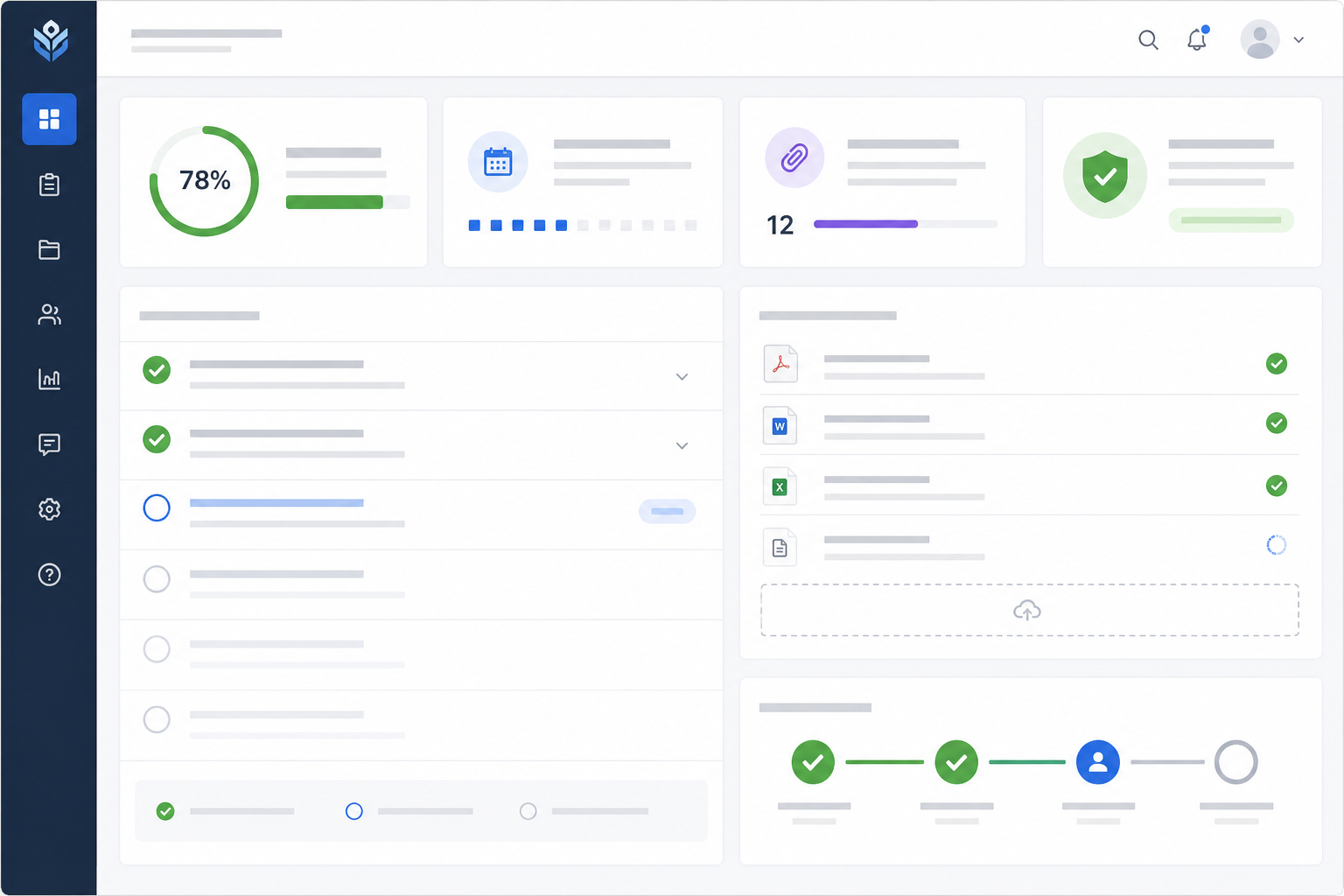
Before clicking submit:
- Confirm the deadline and timezone.
- Log into the portal early, and upload draft files if the system allows it.
- Upload files in the required format.
- Confirm file names are professional.
- Preview every uploaded document.
- Verify signatures and confirm budget totals.
- Save confirmation receipts.
- Save the final submitted proposal as a PDF.
- Add report dates to the grant calendar.
- Decide who will click submit, and have a backup plan for technical issues.
Do not discover portal problems in the final hour.
Review Roles
A strong review process includes several reviewers:
One person can hold multiple roles in a small organization, but the review questions should still be covered.
Review Priority Order
Review from the biggest risk to the smallest edit:
- Eligibility.
- Deadline.
- Compliance requirements.
- Budget accuracy.
- Required attachments.
- Narrative completeness.
- Outcomes and evaluation.
- Style and clarity.
A typo is embarrassing, but an ineligible or incomplete application is worse. Do not spend an hour polishing the introduction before confirming eligibility and attachments. The proposal is ready when it is compliant, accurate, complete, funder-aligned, and approved by the right people. Over-editing near the deadline can introduce new errors.
Red Flag Checklist
Stop and fix the proposal if:
- Eligibility is uncertain.
- Request amount does not match the budget.
- Narrative promises activities missing from the budget.
- Budget includes costs the funder excludes.
- Objectives cannot be measured.
- Evaluation data is unavailable.
- Attachments are outdated.
- The portal requires registration not yet completed.
- AI-generated text includes unsupported claims.
Section-by-Section Review
Consistency Review
Check consistency across:
- Organization name.
- Project name.
- Request amount.
- Grant period.
- Population served.
- Number served.
- Outcomes.
- Budget totals.
- Partner names.
- Dates.
Small inconsistencies create reviewer doubt.
Compliance Review
Compliance means the proposal follows instructions. Check:
- Page limits.
- File formats.
- Required forms.
- Signatures.
- Indirect cost rules.
- Match rules.
- Submission portal.
- Naming conventions.
- Font and margin requirements if specified.
For formal grants, a noncompliant application may never reach a reviewer: OJP screens applications against basic minimum requirements, and those that miss them "will neither proceed to technical review nor receive further consideration" (DOJ Office of Justice Programs, OJP Grant Application Resource Guide, page modified September 22, 2026).
Quality Review
After compliance and accuracy, review quality:
- Is the need compelling?
- Is the project realistic?
- Are outcomes meaningful?
- Is the budget reasonable?
- Does the proposal fit the funder?
- Is the writing clear?
- Is the ask specific?
Quality review should not happen before compliance. A beautifully written noncompliant proposal is still at risk.
Read the application as a funder would: quickly, skeptically, and against the instructions. If you cannot find the answer to a required question, the proposal needs revision even if the language is polished. Also check whether the application makes promises the organization can actually keep, because unrealistic commitments create reporting and relationship problems after award.
Review Evidence Table
Illustrative figures, not data from a real organization.
This table helps reviewers catch unsupported claims.
Review Checklist Template
Review Timeline
For a standard proposal:
For complex grants, start earlier.
Review Meeting Agenda
- Confirm eligibility.
- Review requirement checklist.
- Review unresolved questions.
- Confirm budget.
- Confirm attachments.
- Assign final edits.
- Confirm submitter.
- Confirm submission date.
Review Comments That Help
Useful comments are specific:
- "Add local data source and year."
- "Budget line does not match activity."
- "Objective needs a deadline."
- "Attachment list requires board roster."
- "This paragraph exceeds word limit."
Less useful comments are vague:
- "Make stronger."
- "Needs work."
- "Sounds off."
Train reviewers to leave comments that can be acted on.
Example Review Finding Log
Illustrative figures, not data from a real organization.
Version Control During Review
Use one final draft location. Avoid emailing attachments back and forth. Label files:
- Draft 1.
- Program Review.
- Finance Review.
- Final Internal.
- Submitted.
After submission, save the submitted version as the official record.
Post-Submission Checklist
After submission:
- Save confirmation.
- Save final submitted files.
- Update status to Submitted.
- Add expected decision date.
- Add report dates if awarded later.
- Store funder communications.
- Capture lessons for next proposal.
Review does not end at submission. The final package becomes source material for future work.
What AI Review Is Good At
AI is good at:
- Finding unanswered questions.
- Noticing inconsistent terms.
- Shortening sections.
- Creating checklists.
- Comparing a draft to pasted requirements.
AI is weak at:
- Knowing whether the organization is eligible.
- Confirming budget accuracy.
- Verifying partner commitments.
- Understanding informal funder relationships.
- Deciding strategic fit.
AI can also miss context. It may flag a strong section as weak because it does not know the funder relationship, suggest details that exceed word limits, or rewrite language in a way that changes a commitment. Use AI review as a second set of eyes, not as the final reviewer.
Review Questions for AI-Assisted Drafts
- Did AI add any facts not in the source material?
- Did AI change the meaning of a commitment?
- Did AI omit required funder language?
- Did AI introduce generic claims?
- Did AI make the section too long?
- Did AI create citations or data points that need verification?
If AI helped write the proposal, add one review pass focused only on unsupported claims. Search for numbers, dates, citations, partner names, outcomes, and budget statements, and verify each one against a real source. This catches the most dangerous AI errors before submission.
GrantCue sells one of the review options described in this guide. Its AI writing tools include a draft review, on the fast model from the Essentials plan at $49 a month and on the standard model from the Team plan at $109 a month (grantcue.com, October 2026). A machine review is one more reader, not a verdict: GrantCue's own scoring explainer says of its fit and readiness scores that "Neither score predicts whether you will win" (grantcue.com, September 2026), and the unsupported-claims pass still applies.
Common Review Failure Points
Review often fails when:
- Review starts too late.
- Finance sees the budget after the narrative is final.
- Program staff do not verify outcomes.
- Attachments are treated as admin details.
- AI language is trusted because it sounds polished.
- No one owns final submission.
- Comments are not converted into tasks.
The fix is to start review as soon as the funder requirements are known.
FAQ
Where Can I Get Free Feedback on a Grant Proposal?
From a peer who trades reviews with you, from the funder's program staff before you apply (about fit, not wording), and from feedback after a decline, which only about half of declined applicants received in the Center for Effective Philanthropy's foundation surveys (Center for Effective Philanthropy, September 6, 2016). Serving as a federal peer reviewer teaches the scoring itself.
Does The Unfunded List Charge a Fee?
Yes. The Unfunded List charges "a one-time $100 administrative fee when you submit your first proposal for review," and later proposals are reviewed at no charge (The Unfunded List, read October 2026). It reviews proposals already submitted to a funder that did not win funding, one proposal per organization per round, with rounds twice a year.
Who Should Review a Grant Proposal?
At minimum, include the grant writer, program lead, finance reviewer, and final approver. For complex grants, include compliance and executive leadership.
Can AI Review a Grant Proposal?
AI can identify missing sections, inconsistencies, and unclear language. It cannot replace human judgment on eligibility, financial accuracy, legal commitments, or final approval.
When Should Review Start?
Review should start before drafting, when the team extracts funder requirements. Final review should happen at least several days before the deadline whenever possible.
Build the Requirement Checklist Before You Draft
Build your requirement checklist from the funder's instructions before you draft, then run it again before you submit, because a checklist shows whether a proposal is ready or only well written. If the review turns up missing sections, return to the grant proposal template, and check the finished file against common grant proposal mistakes. To speed up the gap review itself, see our AI grant writing guide.