First-Time Grant Writing Guide for Nonprofits
A beginner-friendly guide for first-time grant writers, with a proposal workflow, sections, timeline, AI guidance, and links to grant proposal templates.
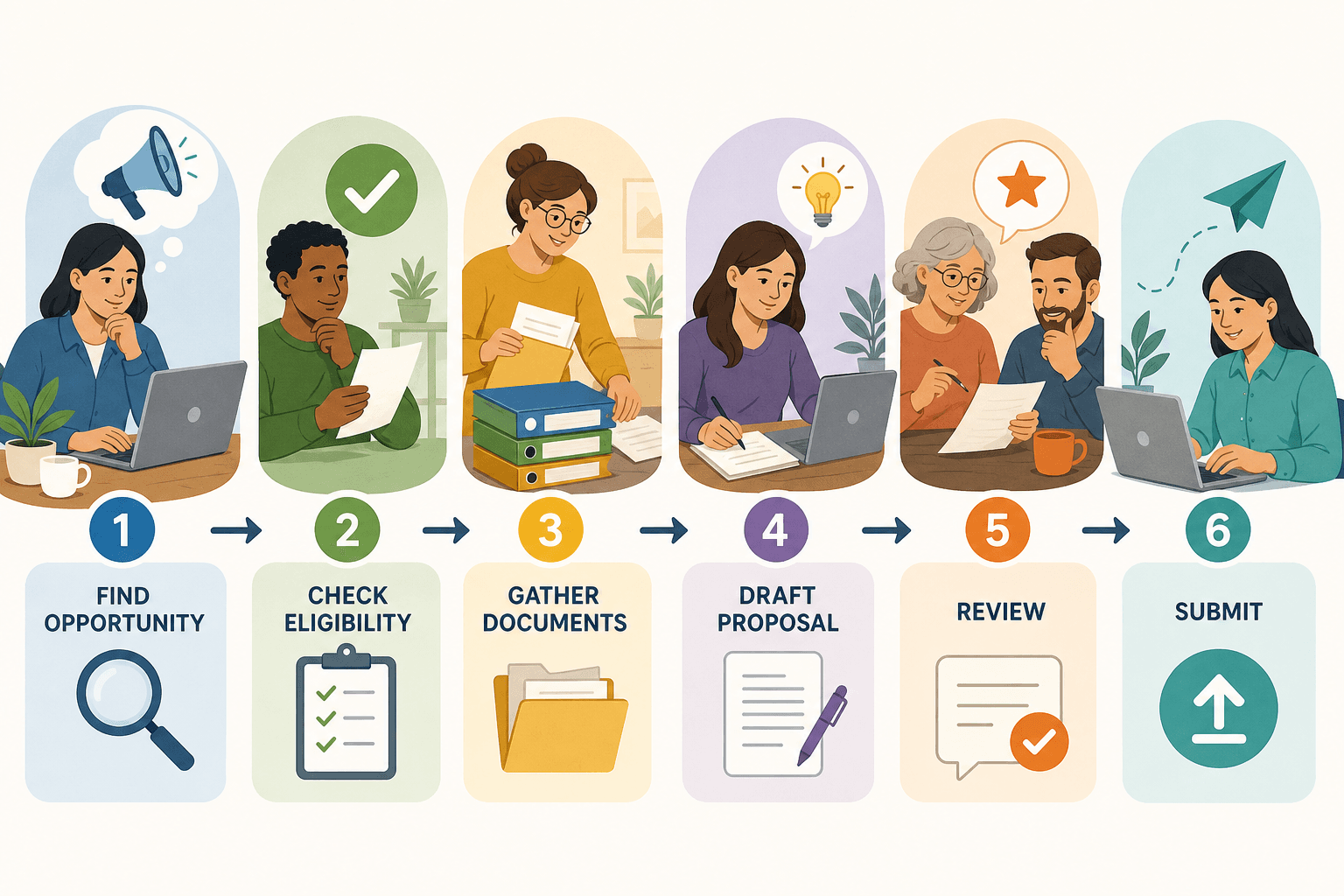
In this article (27)
- Quick Answer: How Do You Write Your First Grant Proposal?
- Step 1: Choose the Right Grant
- Step 2: Understand the Main Proposal Sections
- Step 3: Gather Source Material Before Drafting
- Step 4: Draft in the Right Order
- Step 5: Use AI Carefully
- Step 6: Review Before Submission
- Beginner Timeline
- What Beginners Should Not Do
- First-Time Grant Writer Toolkit
- First Proposal Section-by-Section Advice
- How To Read a NOFO as a Beginner
- Beginner Budget Advice
- What To Do After Submission
- First-Time Grant Writing Example
- Beginner Data Sources
- Beginner AI Prompt
- How To Learn From a Decline
- First-Time Grant Writing Checklist
- How Much Detail To Include
- First Grant Example Outline
- Beginner Grant Writing Vocabulary
- First-Time Submission Packet
- How To Improve the Second Grant
- First-Time Grant Writing Roles
- FAQ
- Next Step
First-time grant writing is easier when you treat the application as a project before you treat it as a writing assignment. A strong proposal starts with fit, eligibility, a clear program plan, a realistic budget, and a review process that catches missing requirements before submission.
If you are new to grant writing, begin with the grant proposal template and use this guide as the step-by-step workflow.
Quick Answer: How Do You Write Your First Grant Proposal?
To write your first grant proposal:
- Find a grant that matches your mission and program.
- Confirm eligibility before drafting.
- Read the NOFO or application instructions carefully.
- Gather required documents.
- Build a simple timeline.
- Draft the proposal section by section.
- Create a budget that matches the narrative.
- Review the proposal against funder requirements.
- Submit before the deadline.
- Save the final version for future reuse.
When you are ready to draft, the full grant proposal walkthrough covers each section in order.
Step 1: Choose the Right Grant
The first mistake beginners make is applying for a grant that is not a strong fit. Before writing, ask:
- Does the funder support our mission area?
- Are we eligible by organization type, geography, and budget size?
- Does the project fit the funder's priorities?
- Can we meet the reporting requirements?
- Is the deadline realistic?
- Do we have the required attachments?
If several answers are unclear, use a NOFO summarizer to extract the key requirements, then verify them manually.
Step 2: Understand the Main Proposal Sections
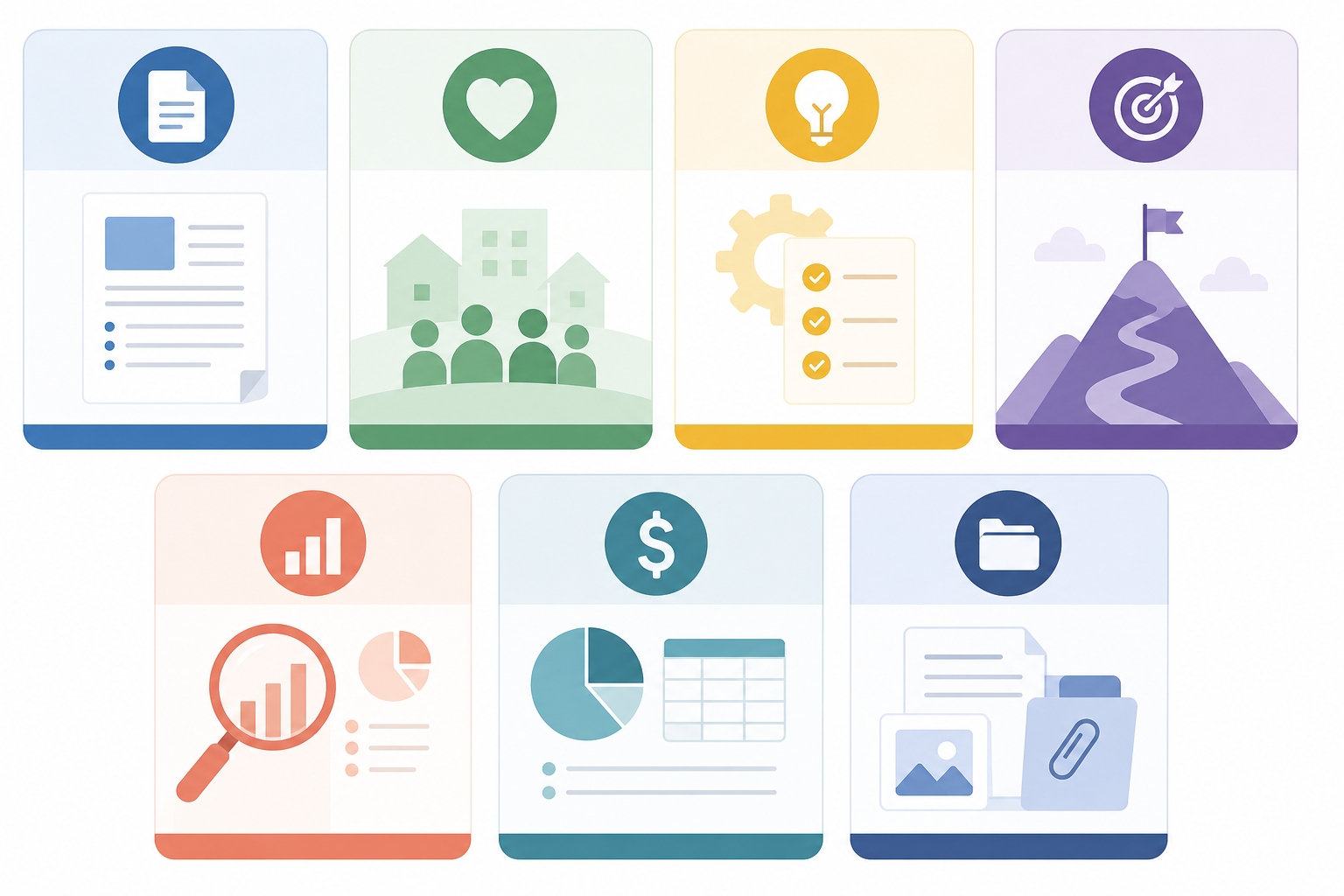
Most nonprofit grant proposals include:
Do not write these sections in isolation. The need, project, outcomes, evaluation, and budget should all describe the same plan.
Step 3: Gather Source Material Before Drafting
Collect:
- Mission statement.
- Program description.
- Recent service numbers.
- Community data.
- Staff bios.
- Partner information.
- Budget details.
- Prior proposals or reports.
- Required attachments.
This preparation makes drafting faster and improves AI-assisted writing. A free AI grant writer works best when it receives verified facts.
Step 4: Draft in the Right Order
Beginners often start with the executive summary. It is usually better to write it last.
Recommended order:
- Statement of need.
- Project description.
- Goals and objectives.
- Evaluation plan.
- Budget narrative.
- Organization background.
- Executive summary.
- Cover letter or letter of intent, if required.
Writing in this order helps the summary reflect the actual proposal.
Step 5: Use AI Carefully

AI can help a first-time grant writer:
- Turn notes into a first draft.
- Rewrite for clarity.
- Shorten text to fit word limits.
- Create a review checklist.
- Compare the draft to funder questions.
But AI should not invent facts, budgets, partnerships, or outcomes. Always ask it to list missing information rather than guessing. For a fuller look at how these tools fit a beginner's workflow, see the guide to AI grant writing software.
Step 6: Review Before Submission
Use a grant proposal review checklist before submitting. Confirm:
- The organization is eligible.
- The project fits the funder.
- Every required question is answered.
- The budget matches the narrative.
- Attachments are current.
- Signatures are complete.
- The submission portal works.
- The final file names are clear.
- The deadline includes timezone.
Beginner Timeline
For a simple foundation proposal due in six weeks:
For government grants, start earlier. Complex applications may require registrations, partner agreements, detailed budgets, and compliance review.
What Beginners Should Not Do
Avoid:
- Applying without checking eligibility.
- Starting with the executive summary.
- Writing before the budget is scoped.
- Using AI to invent missing details.
- Waiting until the final day to open the portal.
- Submitting without a checklist.
- Forgetting report requirements after award.
These mistakes are common because beginners treat grant writing as only writing. It is project management too.
Checking eligibility can start well before any deadline, and a plain test of whether your nonprofit is ready to apply works through status, records, track record and federal registration in order.
First-Time Grant Writer Toolkit
Use:
- Grant proposal template.
- NOFO summary.
- Deadline calendar.
- Budget worksheet.
- Document checklist.
- Proposal review checklist.
- Proposal library folder.
- Submission confirmation folder.
This toolkit creates a repeatable process for the next grant.
First Proposal Section-by-Section Advice
Executive summary: write it last. It should summarize the final request.
Statement of need: use local data and explain the specific problem.
Project description: explain who will do what, for whom, where, and when.
Goals and objectives: make results measurable.
Evaluation: explain how the team will know whether objectives were met.
Budget: show the cost of the project and how grant funds will be used.
Organization background: prove the nonprofit can deliver the work.
Attachments: follow the funder's list exactly.
How To Read a NOFO as a Beginner
Read in this order:
- Eligibility.
- Deadline.
- Award amount.
- Match requirement.
- Required activities.
- Required narrative sections.
- Attachments.
- Scoring criteria.
- Submission method.
- Reporting requirements.
If the organization is not eligible, stop. If the deadline is impossible, stop. If the reporting burden is too high, discuss before drafting.
Beginner Budget Advice
Do not write the proposal and then invent a budget. The budget should shape the proposal from the beginning. Ask:
- What staff time is needed?
- What supplies are needed?
- Are partners being paid?
- Is travel needed?
- Is evaluation needed?
- Are administrative costs allowed?
- Is match required?
The narrative and budget should describe the same project.
What To Do After Submission
Save the confirmation, final proposal, budget, attachments, and funder instructions. Add the expected decision date to the tracker. If awarded, add report dates immediately. If declined, save any feedback for future proposals.
First-Time Grant Writing Example
Scenario: a nonprofit youth program wants $20,000 for after-school tutoring.
Bad first approach:
- Find a grant two days before the deadline.
- Ask AI to write a full proposal.
- Guess the budget.
- Upload whatever attachments are nearby.
Good first approach:
- Confirm the nonprofit is eligible.
- Read the funder priorities.
- Define the tutoring project.
- Build a simple budget.
- Gather school partner information.
- Draft each proposal section.
- Review against requirements.
- Submit early and save confirmation.
The difference is process.
Beginner Data Sources
Use:
- Your own service records.
- School or county data.
- Participant surveys.
- Partner referral data.
- Public agency reports.
- Prior program outcomes.
Do not use statistics without knowing the source and year. Reviewers can tell when the need statement is vague.
Beginner AI Prompt
I am writing my first nonprofit grant proposal.
Use only the facts below.
Create a draft outline and list missing information.
Do not invent data, budget numbers, or partners.
This prompt is better than asking for a full proposal because it teaches the writer what is missing.
How To Learn From a Decline
If the grant is declined:
- Save the decision notice.
- Ask for feedback if allowed.
- Compare the proposal to the scoring criteria.
- Note whether fit, budget, need, or outcomes were weak.
- Save useful language.
- Add the funder to a watch list if appropriate.
A declined first grant can still improve the next proposal.
The request for feedback works best as one short email sent within a week of the notice, and our guide to asking funders about a declined proposal includes wording you can adapt.
First-Time Grant Writing Checklist
Before drafting:
- Eligibility confirmed.
- Deadline confirmed.
- Project approved internally.
- Budget owner assigned.
- Program owner assigned.
- Required documents listed.
- Funder priorities understood.
- Reporting requirements reviewed.
During drafting:
- Each question answered.
- Word limits followed.
- Budget matches narrative.
- Outcomes measurable.
- Evaluation method included.
- Attachments collected.
Before submission:
- Final review complete.
- Portal tested.
- Files named clearly.
- Confirmation saved.
How Much Detail To Include
Beginners often include too much history and not enough project detail. Focus on:
- The problem.
- The people served.
- The project activities.
- The requested amount.
- The expected results.
- The organization's ability to deliver.
Leave out unrelated programs unless they prove capacity.
First Grant Example Outline
Project: after-school STEM club for middle school students.
Need: students in the target school have limited access to hands-on STEM enrichment outside the school day.
Request: $15,000.
Activities: weekly STEM sessions, supplies, volunteer training, family showcase.
Objectives: enroll 40 students, deliver 24 sessions, and have 75 percent of participants complete a final project.
Evaluation: attendance, project completion, student surveys, teacher feedback.
Budget: instructor stipend, supplies, background checks, snacks if allowed, evaluation materials.
Attachments: IRS letter, board list, program budget, partner letter from school.
This outline is not a full proposal, but it shows how a beginner can connect need, activities, budget, and outcomes.
Beginner Grant Writing Vocabulary
First-Time Submission Packet
Before submitting, create a packet:
- Final proposal narrative.
- Final budget.
- Budget narrative.
- Required attachments.
- Checklist.
- Submission confirmation.
- Funder guidelines.
- Internal notes.
Save this packet even if the grant is declined. It becomes the starting point for the next application.
How To Improve the Second Grant
After the first submission:
- Note which sections took longest.
- Save reusable language.
- Update the budget template.
- Improve the document checklist.
- Create a better internal timeline.
- Add the funder to the tracker.
- Record feedback.
The second grant should be easier because the process is no longer brand new.
First-Time Grant Writing Roles
Even a first grant needs roles:
If one person holds several roles, write that down. The point is to make sure every responsibility is covered.
FAQ
How long does it take to write a first grant proposal?
A simple foundation proposal may take several days. A complex government grant can take weeks or months because it requires more planning, attachments, budgets, and compliance review.
Can a beginner win a grant?
Yes, especially when the project fits the funder and the proposal is complete, specific, and realistic. A beginner should focus on smaller, well-aligned opportunities first.
Should I use AI for my first grant proposal?
Yes, for organizing notes, drafting, and reviewing verified information. A beginner should still learn the funder's instructions, verify every fact, and never let AI invent the project, budget, or partners.
What is the hardest part of a first grant?
Usually the hardest part is not writing sentences. It is understanding the funder instructions, gathering documents, creating a realistic budget, and getting internal approval.
What should I do first?
Read eligibility and deadline information before drafting anything. If the organization is not eligible or the deadline is impossible, do not write the proposal.
Next Step
Choose one realistic, well-fit grant, turn its instructions into a checklist, and build the proposal section by section instead of starting with a blank page and a deadline. Save the final narrative, budget, attachments, and lessons learned so your second application starts from a stronger place. When you want help drafting or reviewing, start with a free AI grant writing tool and keep the grant proposal review checklist open before you submit.