990-PF Undistributed Income and the 5 Percent Payout Rule
Undistributed income on Form 990-PF shows whether a private foundation met its five percent payout rule and how much it still must distribute.

In this article (9)
- Quick Answer: What Is 990-PF Undistributed Income and the 5 Percent Payout Rule?
- What Undistributed Income Is and Where It Sits
- How the Five Percent Figure Is Built on Part IX
- What Counts Toward the Payout Under Part XI
- Carryovers, Penalties, and the Operating Foundation Exception
- How to Read Part XII as a Payout Timing Signal
- How Grantseekers Turn a Payout Balance Into an Outreach List
- FAQ
- What to Check Next on a Foundation With Undistributed Income
Undistributed income on a 990-PF is the unpaid remainder of the payout a private foundation owes each year, a requirement that starts from 5 percent of its assets not used directly for charity (IRS, 2025 Form 990-PF). Learn to read it and you can spot funders that face a deadline to give.
On the 2025 form, the five percent figure is built in Part IX, qualifying distributions are totaled in Part XI, and the shortfall is carried in Part XII with its own due date. The undistributed income part was Part XIII on the 2019 and 2020 forms (IRS, 2019, 2020, 2021 and 2025 Forms 990-PF compared).
Quick Answer: What Is 990-PF Undistributed Income and the 5 Percent Payout Rule?
Undistributed income is the part of a private foundation's payout requirement left unpaid after qualifying distributions and carryovers. The requirement starts from 5 percent of assets not used directly for charity (IRS, 2025 Form 990-PF). The shortfall sits in Part XII on 2021 through 2025 forms and must be distributed the next year, or a 30 percent tax applies.
What Undistributed Income Is and Where It Sits
Undistributed income is the balance a private foundation still owes in qualifying distributions at year end. You find it in the undistributed income part, which is Part XII on the 2021 through 2025 forms and was Part XIII on the 2019 and 2020 forms (IRS, 2019, 2020, 2021 and 2025 Forms 990-PF compared). Name the tax year when you cite a part number.
The current line states the deadline on its face. Part XII line 6f of the 2025 form reads "Undistributed income for 2025. Subtract lines 4d and 5 from line 1. This amount must be distributed in 2026," which is the timing signal a grantseeker can read off the form (IRS, 2025 Form 990-PF). It gives the shortfall for the year just closed and the calendar year to cure it.
The filing behind that line is mandatory. "All private foundations, including nonexempt trusts treated as private foundations, must annually file Form 990-PF, Return of Private Foundation" (IRS, Private foundations, June 28, 2026). Undistributed income reconciles what the rule required with what the foundation paid.
A private foundation is a tax exempt body described in section 501(c)(3) that falls outside the excluded categories, as the IRS states: "Every organization that qualifies for tax exemption as an organization described in section 501(c)(3) is a private foundation unless it falls into one of the categories specifically excluded from the definition of that term (referred to in section 509(a))" (IRS, Private foundations, June 28, 2026). Qualifying distributions are the payments that meet the payout test and are computed in Part XI on the 2025 form.
One boundary saves time. Community foundations file Form 990, not Form 990-PF (Grantmakers.io, The IRS 990 dataset, read September 2026), so they have no Part XII, and the section 4942 tax on undistributed income applies to private foundations (IRS, Taxes on private foundation failure to distribute income, June 28, 2026). For general prospecting, see our guide to locating grant funders as a nonprofit.
How the Five Percent Figure Is Built on Part IX
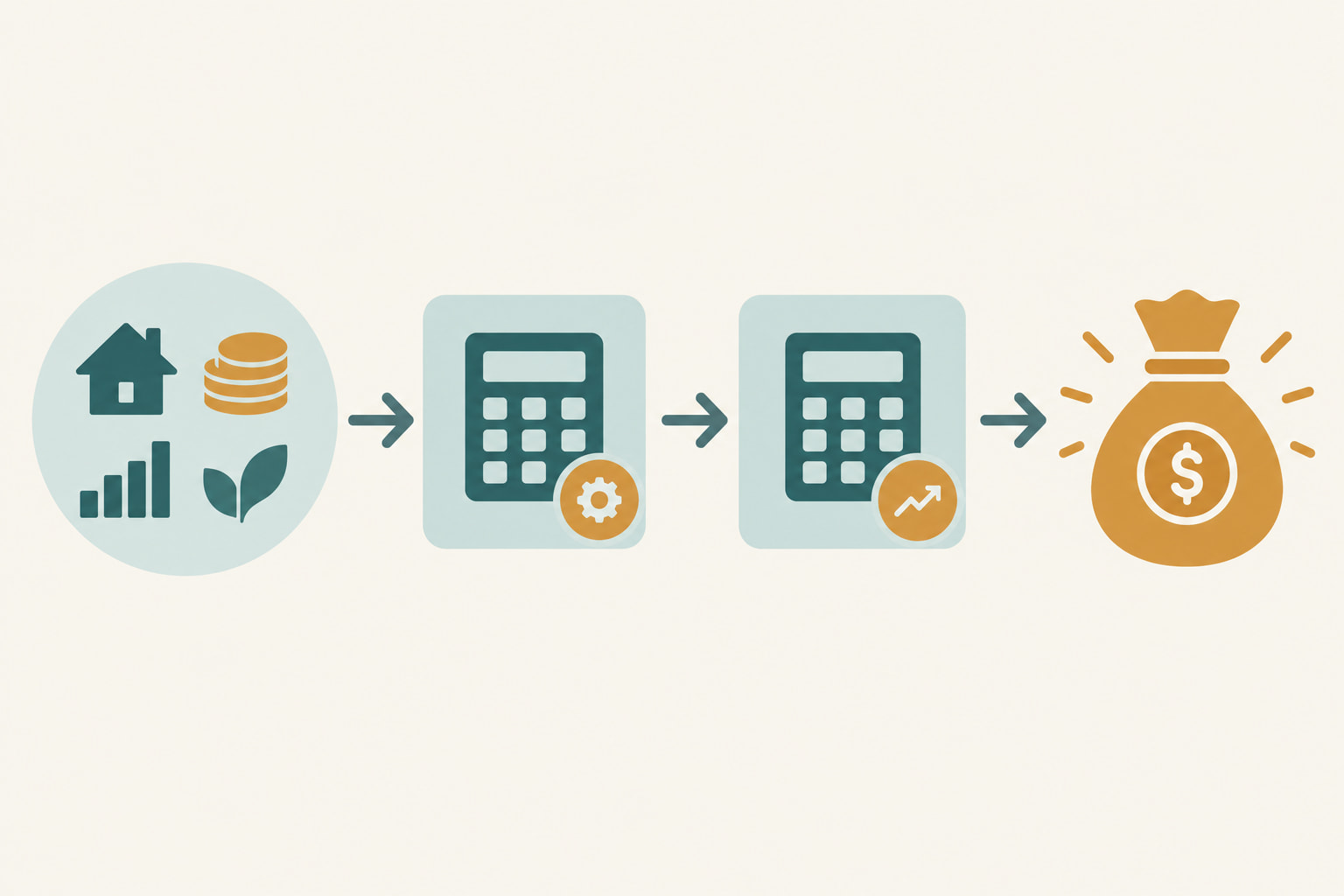
The five percent figure is a minimum investment return computed from assets. It is not a share of gifts received or of income earned. The return measures the asset base, subtracts a deemed charitable cash holding, then applies the rate.
The base leaves out property used straight for charity, because Part IX line 1 measures only the "Fair market value of assets not used (or held for use) directly in carrying out charitable, etc., purposes" (IRS, 2025 Form 990-PF). A museum building held for direct charitable use does not raise the base. Stocks, bonds, and cash held for investment do.
On the 2025 form the calculation sits under the heading "Part IX Minimum Investment Return" and runs in two steps: line 4 deducts "Cash deemed held for charitable activities. Enter 1.5% (0.015) of line 3," and line 6 reads "Minimum investment return. Enter 5% (0.05) of line 5" (IRS, 2025 Form 990-PF).
Source: line headings quoted from IRS, 2025 Form 990-PF.
Two nearby figures cause mixups. The excise tax on net investment income is a flat rate, since Part V line 1b directs "All other domestic foundations enter 1.39% (0.0139) of line 27b" (IRS, 2025 Form 990-PF). That tax is distinct from the payout test. The old two-tier rate is gone, because the 2020 form prints "SECTION 4940(e) REPEALED ON DECEMBER 20, 2019 - DO NOT COMPLETE" across the part that used to compute the reduced rate (IRS, 2020 Form 990-PF).
What Counts Toward the Payout Under Part XI
Qualifying distributions are the payments that meet the yearly payout test. The return computes them in "Part XI Qualifying Distributions" and they include "Amounts paid (including administrative expenses) to accomplish charitable, etc., purposes" plus program-related investments and certain set-asides (IRS, 2025 Form 990-PF). That scope is wider than cash grants, so a low grant total does not always mean a low payout total.
The five percent need not all go out as grants. A foundation that runs its own programs can meet much of the test through direct charitable spend and tied administration.
Grants paid are the most visible part. Administrative costs count when they are tied to charitable work, such as staff time and systems used to run a grant program. Program-related investments count too, such as low interest loans that advance a charitable aim. Approved set-asides count when they meet the rules for a defined future project.
Set-asides need care. A set-aside is money earmarked for a future project that counts in the Part XI total before it is paid out (IRS, 2025 Form 990-PF), so a funder can meet the test in a year of modest grants. Check whether the return leans on set-asides or direct operations before you judge a funder by grants alone.
Admin costs need care in the other direction. Only administration tied to charitable ends counts. A return with heavy admin and thin grants still passes on paper, yet the grant budget is then smaller than the payout total implies. Read each prospect's own guidelines before you write, and use the grant listings with open calls for funders with a live call.
Carryovers, Penalties, and the Operating Foundation Exception
A shortfall in one year does not draw a penalty at once, and an overpayment in one year can cover later years. Excess distributions carry forward for five years: Part XII line 3 on the 2025 form lists carryovers "From 2020" through "From 2024," and line 8 handles "Excess distributions carryover from 2020 not applied" (IRS, 2025 Form 990-PF).
The penalty design explains the delay. Section 4942 imposes an "excise tax of 30 percent ... on the undistributed income of a private foundation that has not been distributed before the first day of the second (or any succeeding) tax year following the year earned" (IRS, Taxes on private foundation failure to distribute income, June 28, 2026). The foundation gets the full next year to cure the gap.
The second level is steeper. "If the initial tax is imposed and the undistributed income has not been distributed by the end of the taxable period, an additional tax of 100 percent of the amount remaining undistributed will be imposed" (IRS, Taxes on private foundation failure to distribute income, June 28, 2026). Paying tax does not clear the duty, since "Payment of the excise tax is required in addition to, rather than instead of, making required distributions of undistributed income" (IRS, Taxes on private foundation failure to distribute income, June 28, 2026).
Source: timing and rates from IRS, Taxes on private foundation failure to distribute income, June 28, 2026.
One group stays outside this tax. "In general, a private operating foundation (POF) is a private foundation that devotes most of its resources to the active conduct of its exempt activities" (IRS, Private operating foundations, March 5, 2026). Operating foundations "are not subject to the excise tax on failure to distribute income" (IRS, Private operating foundations, March 5, 2026).

How to Read Part XII as a Payout Timing Signal
Start at the bottom line, then work back. Part XII line 6f gives the sum that "must be distributed in 2026" for a 2025 return (IRS, 2025 Form 990-PF). A positive balance means the foundation starts the new year with a duty. A zero means the test is met for that year, after carryovers.
Check carryovers before you react to one figure, because old overpayments listed in Part XII line 3 apply against the current need (IRS, 2025 Form 990-PF).
Put the filing date in context. The return is due "by the 15th day of the 5th month after the end of your organization's accounting period," so a calendar-year filer is due May 15 of the following year (IRS, Annual exempt organization return: due date, June 28, 2026). Filers can seek more time, since they "Use Form 8868 ... to request an automatic 6-month extension of time to file Form 990, 990-EZ, or 990-PF" (IRS, Annual exempt organization return: due date, June 28, 2026). With the extension, a calendar-year return can be filed late in the same year its balance must be paid out, so treat the balance as direction, not a live bank total.
Use a fixed order. First, confirm the tax year on the face of the return and use the part pairing for that year, since the grant list is Part XV on the 2019 and 2020 forms but Part XIV on the 2021 through 2025 forms, and undistributed income moved from Part XIII to Part XII at the same time (IRS, 2019, 2020, 2021 and 2025 Forms 990-PF compared). Then read the Part XI total and the Part XII chain to line 6f, and scan two prior years for trend.
A developer on Reddit described a free workflow: read the 990-PF directly, including the grant list and the application-information block, and check undistributed income "as a payout-timing signal," using ProPublica's "Full Filing" view or the IRS monthly e-file XML (Reddit threads 1wcw9yl and 1ur2eou, read September 2026). Treat the balance as one input, next to guidelines and fit.
Use the signal to rank, not to press. A funder with a large balance due this year may welcome a matched proposal. For place-based sorting, our foundations-by-state list helps you group prospects before you read returns in depth.
How Grantseekers Turn a Payout Balance Into an Outreach List
A payout balance helps when it moves a prospect from a long list to a short list. Sort by who owes distributions this year, then filter that subset by fit.
Build the short list in three passes. First, pull the current return for each prospect and note the line 6f balance and the year it must be paid, since that line states sum and deadline together (IRS, 2025 Form 990-PF). Second, check trend across two or three years so a one-year dip does not pose as a pattern. Third, read the application block to confirm the funder takes requests.
GrantCue can shorten the third pass. Its directory of more than 10,000 private foundation profiles, built from IRS 990-PF public filings and keyed by name and EIN, can be filtered to foundations that indicate they accept applications (grantcue.com, September 2026). Run the line 6f shortlist through that accepting-applications filter, and take each Part XII balance from the return itself.
FAQ
What Is Undistributed Income on Form 990-PF?
Undistributed income is the share of the yearly payout need that stays unpaid after qualifying distributions and carryovers. On the 2021 through 2025 forms it sits in Part XII, with line 6f stating the sum that must be paid the next year (IRS, 2025 Form 990-PF). On the 2019 and 2020 forms the same math sat in Part XIII (IRS, 2019, 2020, 2021 and 2025 Forms 990-PF compared).
How Does the Five Percent Payout Rule Work?
The rule starts from the assets not used directly for charity, subtracts a small deemed charitable cash holding, and requires payout of 5 percent of the rest (IRS, 2025 Form 990-PF). The form deducts cash deemed held for charitable activities at 1.5 percent before taking 5 percent of the balance (IRS, 2025 Form 990-PF). Qualifying distributions are then set against that required figure.
What Counts as a Qualifying Distribution?
Qualifying distributions include sums paid to advance charitable ends, with tied administrative costs included, plus program-related investments and certain set-asides (IRS, 2025 Form 990-PF). Grants are the most visible part. Direct program spend and approved set-asides also qualify under that definition.
What Happens if a Foundation Does Not Distribute Enough?
No tax applies at once, because the first tax reaches only income not paid before the first day of the second tax year after the year earned. That first tax is 30 percent of the sum still unpaid at that point, and a further tax of 100 percent follows if the sum is still unpaid at the end of the taxable period (IRS, Taxes on private foundation failure to distribute income, June 28, 2026).
Can Old Overpayments Cover a Current Shortfall?
Yes, within limits. Excess distributions carry forward for five years: on the 2025 form, Part XII line 3 lists carryovers "From 2020" through "From 2024," and line 8 handles "Excess distributions carryover from 2020 not applied" (IRS, 2025 Form 990-PF). Those sums apply against the current need before any remainder becomes undistributed income for the year.
Do All Foundations Face the Payout Tax?
No. Operating foundations that devote most resources to running their own charitable work are not subject to the excise tax on failure to distribute income (IRS, Private operating foundations, March 5, 2026). Community foundations file Form 990 instead of Form 990-PF, so they have no Part XII at all (Grantmakers.io, The IRS 990 dataset, read September 2026).
What to Check Next on a Foundation With Undistributed Income
Take the balance you found and confirm three points before you write. Confirm the tax year on the return so part numbers match that year, since the undistributed income part moved numbering at the same time as the grant list (IRS, 2019, 2020, 2021 and 2025 Forms 990-PF compared). Confirm trend and confirm the funder takes requests in your field and place.
Where all three checks pass, place the funder near the top of this year's outreach list. Keep the return with your notes so next year starts from proof. For deadline tracking once prospects are ranked, see our guide to software for tracking nonprofit grants.