Budget Proposal Examples: 3 Samples With Full Line Items
Three budget proposal examples with complete line items, totals that add up, the standard cost categories behind them, and the narrative for each.
Last updated: September 2026
A budget proposal example is more useful than a blank template, because it shows what a reviewer actually opens: real line items, arithmetic anyone can recheck, and a short justification for every number. This page has three worked examples at different scales, the standard cost categories all three use, and the narrative language that goes with them. Each example is a composite written for this article, so the structure is yours to reuse even though the amounts are not.
Quick Answer: What Is a Budget Proposal Example?
A budget proposal example is a completed sample budget showing how a funding request breaks into line items, totals, and a justification narrative. Standard categories are personnel, fringe benefits, contracted services, supplies, travel, equipment, other direct costs, and indirect costs. Each line pairs a unit cost with a quantity so the reviewer can recompute every total independently.
Free download: Budget proposal workbook with three worked examples as Excel .xlsx. No email address required.
What Every Budget Proposal Example Has in Common
Every credible budget proposal example organizes costs into the same standard categories, and every line shows its basis of calculation rather than a bare number. A basis of calculation is the short formula behind the amount, such as 0.25 FTE at a $54,000 annual salary, or 120 books at $16 each.
The categories below appear in federal, state, and private foundation forms in some arrangement, and the names change more often than the structure does.
| Category | What belongs here | Basis of calculation |
|---|---|---|
| Personnel | Salaried and hourly staff on the project | Salary multiplied by FTE or hours |
| Fringe benefits | Payroll taxes, insurance, retirement | A percentage of charged salaries |
| Contracted services | Consultants, evaluators, trainers | Day rate or flat contract amount |
| Supplies and materials | Consumables used by the project | Unit cost multiplied by quantity |
| Travel | Mileage, transit, lodging, per diem | Miles times rate, or trips times cost |
| Equipment | Durable items above your capitalization threshold | Quoted unit price |
| Other direct costs | Printing, postage, participant stipends, software | Itemized unit cost |
| Indirect costs | Shared overhead not traceable to one project | A rate applied to a defined cost base |
Every total has to sum correctly in the exported document you submit, not in the working spreadsheet alone. And every line has to be traceable to something described in the proposal narrative, so a reviewer reading your grant proposal budget template can match each cost back to an activity.

Sample Budget Proposal: A $25,000 Program Request
A small program budget fits on one page with eight to twelve line items, and one part-time staff position carries most of the request. This composite example is a hypothetical literacy nonprofit asking a community foundation for $25,000 to run an after-school tutoring program for one school year.
| Line item | Basis of calculation | Amount |
|---|---|---|
| Program coordinator, 0.25 FTE | $54,000 annual salary x 0.25 | $13,500 |
| Fringe benefits | 24% of charged salary | $3,240 |
| Tutor stipends | 10 tutors x $200 | $2,000 |
| Books and workbooks | 120 students x $16 | $1,920 |
| Reading assessment software | 1 annual site license | $1,000 |
| Local travel | 575 miles x $0.76 | $437 |
| Printing and family materials | Flat allocation | $224 |
| Total direct costs | $22,321 | |
| Indirect costs | 12% of total direct costs | $2,679 |
| Total request | $25,000 |
The travel line uses the IRS standard business mileage rate of 76 cents per mile, which applies to travel on or after July 1, 2026 under Announcement 2026-11 (IRS standard mileage rates, checked September 2026). Travel earlier in 2026 uses 72.5 cents under Notice 2026-10, so a budget period that straddles July 1 carries two rates. Organizations with their own board-approved rate should budget at that rate and say so in the narrative.
The example does not round every figure to the nearest thousand, which reads as a guess. It does not bury four different costs inside one line called program expenses. Indirect costs sit on their own row with the rate stated, so the reviewer never has to reverse-engineer them.
Budget Proposal Examples at Larger Scale: A Two-Year, $156,912 Request
A multi-year budget adds one column per year and holds the category list steady, so a reviewer can read across a row and see how a cost changes over time. This second composite example is a hypothetical community health organization requesting two years of support for an outreach project.
| Line item | Year 1 | Year 2 | Total |
|---|---|---|---|
| Project director, 0.35 FTE at $68,000 | $23,800 | $23,800 | $47,600 |
| Outreach coordinator, 0.50 FTE at $44,000 | $22,000 | $22,000 | $44,000 |
| Fringe benefits, 25% of charged salaries | $11,450 | $11,450 | $22,900 |
| Contracted evaluator | $6,000 | $4,000 | $10,000 |
| Participant supplies, $30 each | $5,400 | $6,600 | $12,000 |
| Travel and mileage | $1,800 | $1,800 | $3,600 |
| Total direct costs | $70,450 | $69,650 | $140,100 |
| Indirect costs at 12% | $8,454 | $8,358 | $16,812 |
| Total request | $78,904 | $78,008 | $156,912 |
Evaluation costs more in year one because the evaluator builds the instruments and collects baseline data, then bills less for repeat collection. Participant supplies rise in year two because the project serves 180 people in the first year and 220 in the second, once recruitment matures. Those are the two lines a reviewer will ask about, so answer both in the narrative and the budget stops looking padded. Your evaluation plan should name the same evaluator and carry the same participant numbers on the same schedule.
Budget Proposal Sample for a One-Time Equipment Purchase
A capital or equipment budget proposal sample is shorter than a program budget and leans on vendor quotes, and it shows matching funds where the funder expects the applicant to cover part of an asset purchase. This composite example is a hypothetical rural food bank requesting a refrigerated delivery van.
| Line item | Basis of calculation | Amount |
|---|---|---|
| Refrigerated cargo van | 1 unit, dealer quote | $62,000 |
| Interior shelving and vehicle wrap | Vendor quote | $4,500 |
| First-year commercial insurance | Annual premium | $3,200 |
| Driver certification training | 2 staff x $450 | $900 |
| Total project cost | $70,600 | |
| Organization match, board-designated reserve | $10,600 | |
| Amount requested from funder | $60,000 |
Every price here traces to a written quote you can attach, and the match line names its source, so the funder knows the money exists. There is no indirect cost line in this example. Under the modified total direct cost base defined at 2 CFR 200.1 (eCFR current text, checked September 2026), equipment and capital expenditures are excluded from the base a federal indirect rate is applied to. Private funders set their own rules on overhead for equipment, so read the guidelines before you add a line.
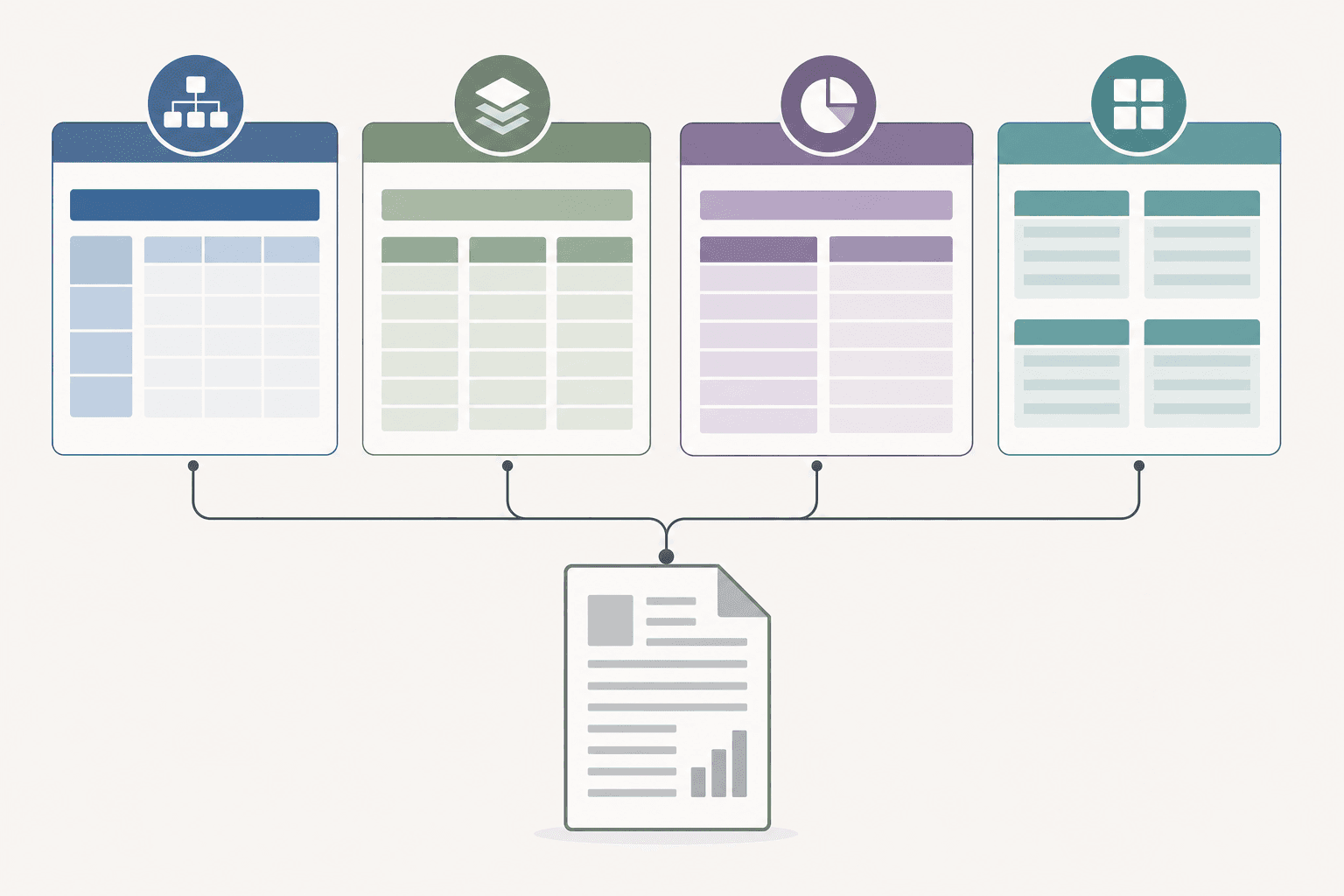
Examples of Budget Proposals by Type
Budget proposals fall into four common shapes, and the funder's guidelines say which one they want. Submitting the wrong shape is harder to recover from than an arithmetic slip.
| Type | What it covers | How the numbers lay out | Most common mistake |
|---|---|---|---|
| Project or program | One defined set of activities | Line items limited to that project | Charging costs the project does not cause |
| General operating | The whole organization | Full annual income and expense | Submitting it when a project budget was requested |
| Capital or equipment | A one-time purchase or build | Unit costs, quotes, matching funds | Omitting installation, delivery, or first-year running costs |
| Event | A single event or conference | Revenue and expense side by side | Showing expenses with no revenue offset |
The shape you pick changes the question the reviewer is answering. A project budget invites them to check whether the costs match the activities, so it lives or dies on the basis of calculation in each row. A general operating budget raises a different question, whether the organization is solvent and how much of its income any one funder would represent, so it needs full-year revenue next to expense. An event budget is the only shape where a reviewer expects income on the same page as cost, because a conference that sells tickets is partly funding itself. When the guidelines are silent, a project budget answers the most questions, and all four shapes use the category structure laid out in the budget template for nonprofits.
Multi-year requests are a variation on the project budget, not a fifth type. Keeping the category list identical across years is what makes the columns comparable.
The Budget Narrative That Goes With Every Budget Proposal Sample
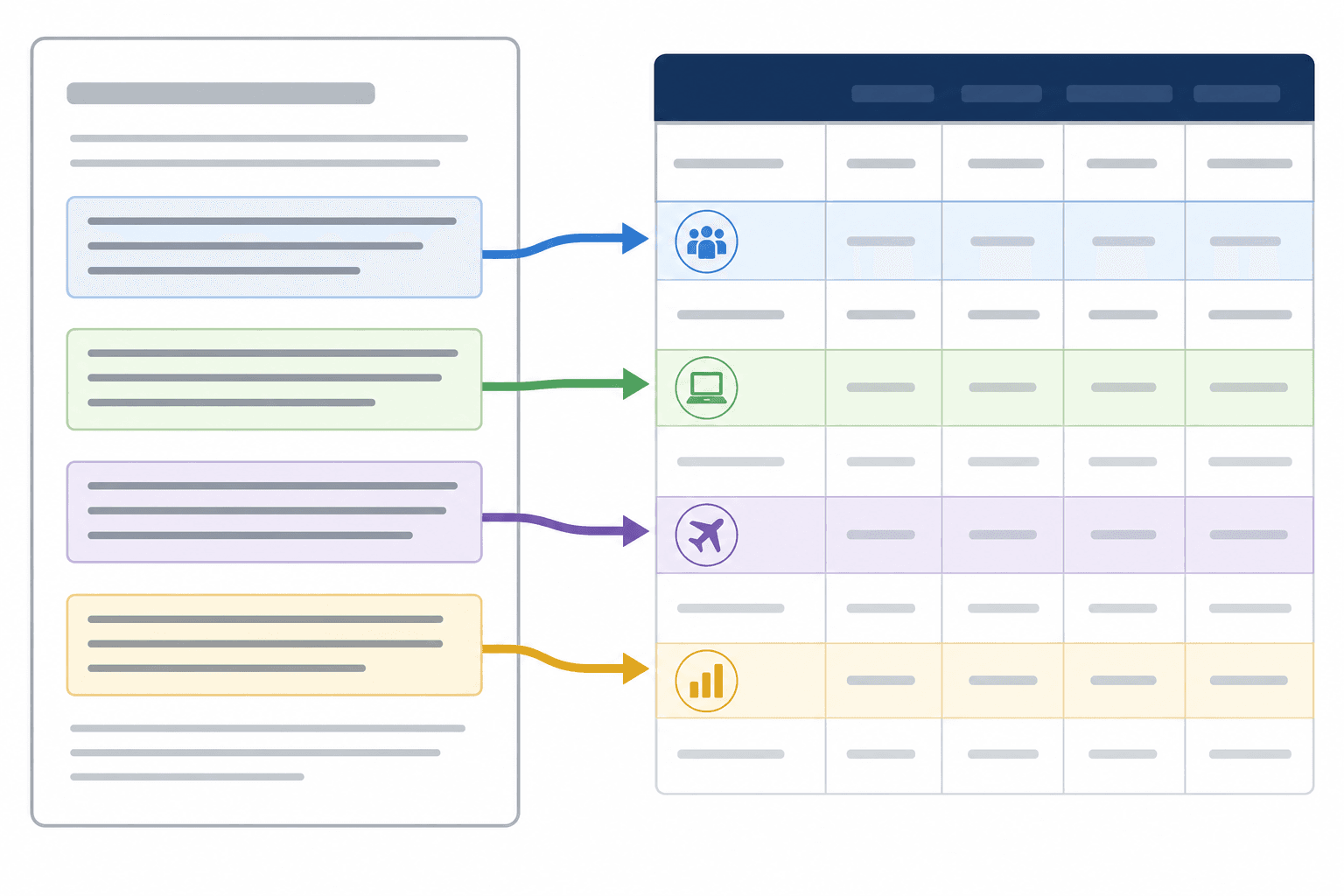
A budget narrative is a short written justification that explains, line by line, what each cost buys and how you calculated it. Funders read it next to the table, so the two have to agree down to the dollar.
Keep it to one or two sentences per line item. In the $25,000 after-school tutoring budget, the personnel entry would read:
Program coordinator, 0.25 FTE, $13,500. The coordinator schedules tutoring sessions, trains volunteer tutors, and administers reading assessments three afternoons per week during the 36-week school year. The amount reflects 25% of a $54,000 annual salary, the organization's current rate for this position.
Then the software entry:
Reading assessment software, $1,000. An annual site license lets staff score pre- and post-program reading assessments for all 120 participants. The price is the vendor's published nonprofit rate.
Use the same figures that appear in the table, down to the dollar, and never introduce a cost in the narrative that has no matching row. If a cost supports an activity you never described anywhere in the proposal, the program design is incomplete and the fix belongs in the workplan rather than the budget.
Samples of Budget Proposals: What Reviewers Catch First
Reviewers catch arithmetic and consistency errors before they weigh the substance of a request. Run these seven checks before you submit.
- Totals that do not sum. Recompute every subtotal and the grand total in the final PDF, not in the working file. Late edits to a single cell are the usual cause.
- A request that does not match the cover letter. The number in the application form, the cover letter, and the budget table have to be the same number.
- Line items with no basis. "Supplies, $4,000" gives a reviewer no way to check the number. "Supplies, 200 participant kits at $20" gives them the arithmetic.
- Indirect costs applied to the wrong base. State the rate and state what it is applied to. If the funder caps the rate, apply the cap and show it.
- Personnel time that exceeds reality. If three grants each charge 0.5 FTE of the same person, that person is at 1.5 FTE. Check across your whole pipeline, not one application.
- Costs the funder excludes. Every funder publishes a list of unallowable costs. Read it before you build the budget, and check it again before you submit.
- A budget period that does not match the project period. A funder will send back a 15-month workplan with a 12-month budget. Make the budget period match the project period stated in the application.
Budgetary Proposal Sample vs. the Final Award Budget
The budget you propose is a request; the budget in your award agreement is a binding spending plan. Once the funder issues an award, the approved budget governs what you can charge, and moving money between categories may require written approval.
For federal awards, the rules on revising a budget after award sit in 2 CFR 200.308, Revision of budget and program plans (eCFR current text, checked September 2026). That section requires prior written approval for a change in the scope or objective of the project and for a change in key personnel identified in the award, and it tells recipients to request budget revisions in the same format they used in the application. It also bars agencies from adding prior-approval requirements beyond the guidance without OMB approval, so the award terms tell you what applies. Private funders set their own thresholds and usually state them in the grant agreement.
A sloppy proposal budget follows you for the entire award period. Building it accurately is part of grants lifecycle management, and you will report at closeout against the same categories you set now.
That is also why the category names matter more than they look. Invent a category the funder's report form has no row for, and someone spends an afternoon at closeout mapping your ledger onto their form. Name categories the way the funder names them, use the same names in your accounting system, and the final report becomes a matter of pulling numbers. Where the funder publishes no category list, the eight standard categories in the table above map onto most report forms.
How to Build Your Own From These Budget Proposal Examples
Start from the funder's own form where they publish one, and use these examples to fill it in, not to replace it. The order below prevents the rewrites that come from pricing a project before deciding what it does.
- Read the guidelines for limits first: award ceiling, indirect cost cap, match requirement, allowable and unallowable costs, and budget period length.
- List the activities before the costs. Every line item should trace to an activity in the workplan. If one does not, either the activity is missing or the cost is.
- Price personnel next. Salary times FTE, then fringe as a percentage of the charged salary only, never of the full salary.
- Add non-personnel costs with a visible basis. Quantity times unit cost, every time.
- Apply indirect costs last. Use your negotiated or approved rate, note the cost base, and respect any funder cap.
- Write the narrative from the finished table, not from a draft you are still changing.
- Recheck the arithmetic in the exported file. Then have someone who did not build it recheck it.
Build the budget in a spreadsheet where every subtotal is a formula and the indirect rate sits in one labeled cell that each line refers back to. Change an FTE or a unit cost and the category subtotal, the indirect line, and the grand total all update. Export to PDF at the end, and proofread the exported file, not the spreadsheet, because the export is the version a reviewer opens. If you are assembling a full application around the budget, the guide on how to write a grant proposal covers the sections that surround it.
FAQ
What is a budget proposal?
A budget proposal is a document submitted with a funding request that lists every projected cost of a project, organized by category, with the calculation behind each amount. It usually pairs a table of line items with a written narrative justifying them, and it states the total amount requested.
What should a budget proposal include?
Personnel, fringe benefits, contracted services, supplies, travel, equipment, other direct costs, and indirect costs, plus a total request that matches the number on the application form. Each line should show a basis of calculation. Add a short narrative explaining each category, often called the budget justification.
How long should a budget proposal be?
A small program budget fits on one page with eight to twelve line items, and its narrative runs one to two pages. Multi-year and federal budgets run longer because they add a column per year and often require separate forms per budget period. Follow the funder's stated page limit over any general rule.
What is the difference between a budget proposal and a budget narrative?
The budget proposal is the table of numbers. The budget narrative, sometimes called the budget justification, is the written explanation of what each line buys and how you calculated the figure. Where an application asks for both, the figures in the two must match exactly.
Can I use a budget proposal example from another organization?
Use it for structure, category names, and level of detail, but never copy the amounts. Your salary rates, fringe percentage, indirect rate, and participant counts are specific to your organization, and a reviewer who spots numbers that do not match your audited financials will question the whole application.
What are indirect costs?
Indirect costs are shared overhead expenses that keep an organization running but cannot be traced to one project, such as accounting, rent, insurance, and IT support. In a budget proposal they sit on their own line below total direct costs, with the rate and the base both stated, for example 12% of total direct costs. If you hold a federally negotiated indirect cost rate agreement, cite it. If the funder caps indirect costs at a lower rate, apply the cap and note the difference.
Next Steps
Pick the example closest to your request and replace the numbers with your own before you write a word of narrative. Work from the funder's form where one exists, and keep a visible basis of calculation in every row.
If you are still deciding which funders to apply to, GrantCue's grant search covers federal and state portals in one place with deadlines attached, and the companion budget template examples walk through the category structure in more depth.