Letters of Support for Grants: Three Full Examples, a Template, and How to Ask
Three letters of support for grants reproduced in full, a fill-in template, the email that gets a busy partner to reply, and the agency rules that apply.
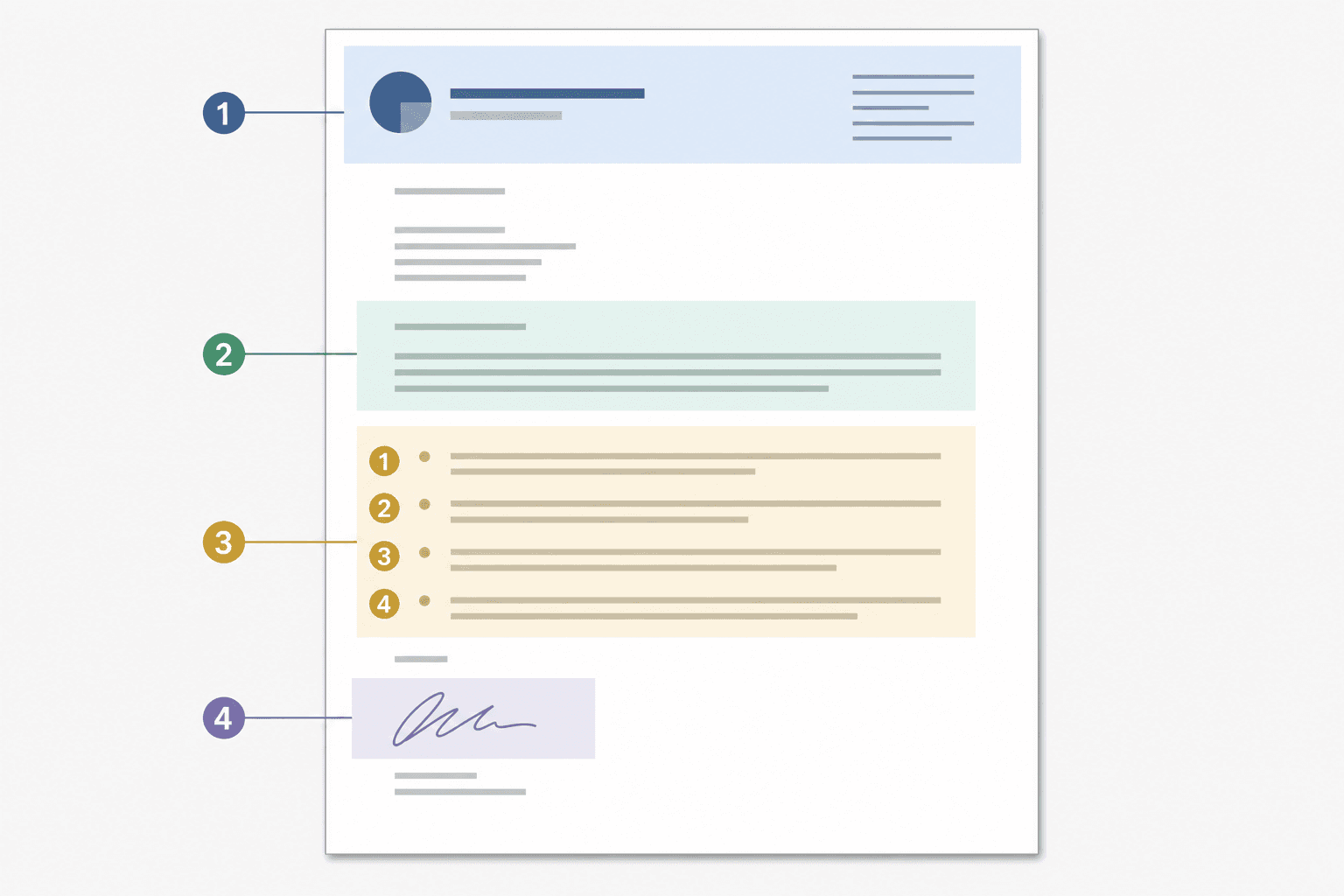
In this article (12)
- Quick Answer: What Is a Letter of Support for a Grant?
- What a Letter of Support Actually Proves
- Do NIH Applications Still Use Letters of Support?
- Letter of Support vs Letter of Intent vs Memorandum of Understanding
- Who Should Write a Letter of Support, and Who Should Not
- Sample Letters of Support for Grants: Three Complete Examples
- Letter of Support for a Grant Proposal: Template You Can Fill In
- How to Request a Letter of Support From a Busy Partner
- Common Mistakes in Letters of Support
- Where Letters of Support Go in the Application Package
- FAQ
- Next Step
Letters of support for grants are the one attachment you do not write yourself, which is why so many land soft. A partner writes it, usually in a hurry, after the third reminder. Three complete letters follow, plus a fill-in template, the request email that gets a reply, and the rules that decide whether a letter helps or gets your package returned. For the rest of the package, see how to write a grant proposal.
Quick Answer: What Is a Letter of Support for a Grant?
A letter of support for a grant is a signed letter from a third party confirming a specific commitment to a proposed project. It names the applicant, the project, and the funding opportunity. What the writer promises has to be countable: referrals, staff hours, donated space. And the signature has to come from someone authorized to promise them.
What a Letter of Support Actually Proves
A letter of support proves that a commitment in your narrative also exists outside it. Reviewers know you wrote every word of the proposal, so a partner letter is the one place someone else confirms a claim.
NIH draws the line plainly. Letters of support "serve to describe terms of a collaboration or consultation and also are not de facto letters of reference from persons not actively participating in the project" (NIH, PHS 398 Research Plan Form instructions, section 9, verified August 9, 2026). A reference letter says the applicant is good. A letter of support says the writer will act.
A letter earns its page when the writer has a role rather than an opinion. Two more tests: the commitment is stated in numbers, and the writer controls the resource promised.
Do NIH Applications Still Use Letters of Support?
Not for much longer. NIH announced that "with the implementation of Forms J in Fiscal Year 2027, the NIH will no longer allow letters of support but will instead require letters of collaboration," that a letter of collaboration "must not exceed 100 words," and that "applications that continue to include letters of support after the implementation date may be returned without review" (NIH Notice NOT-OD-26-094, released July 27, 2026, verified August 9, 2026). Until Forms J takes effect, the PHS 398 section 9 rules still govern NIH letters.
Letter of Support vs Letter of Intent vs Memorandum of Understanding
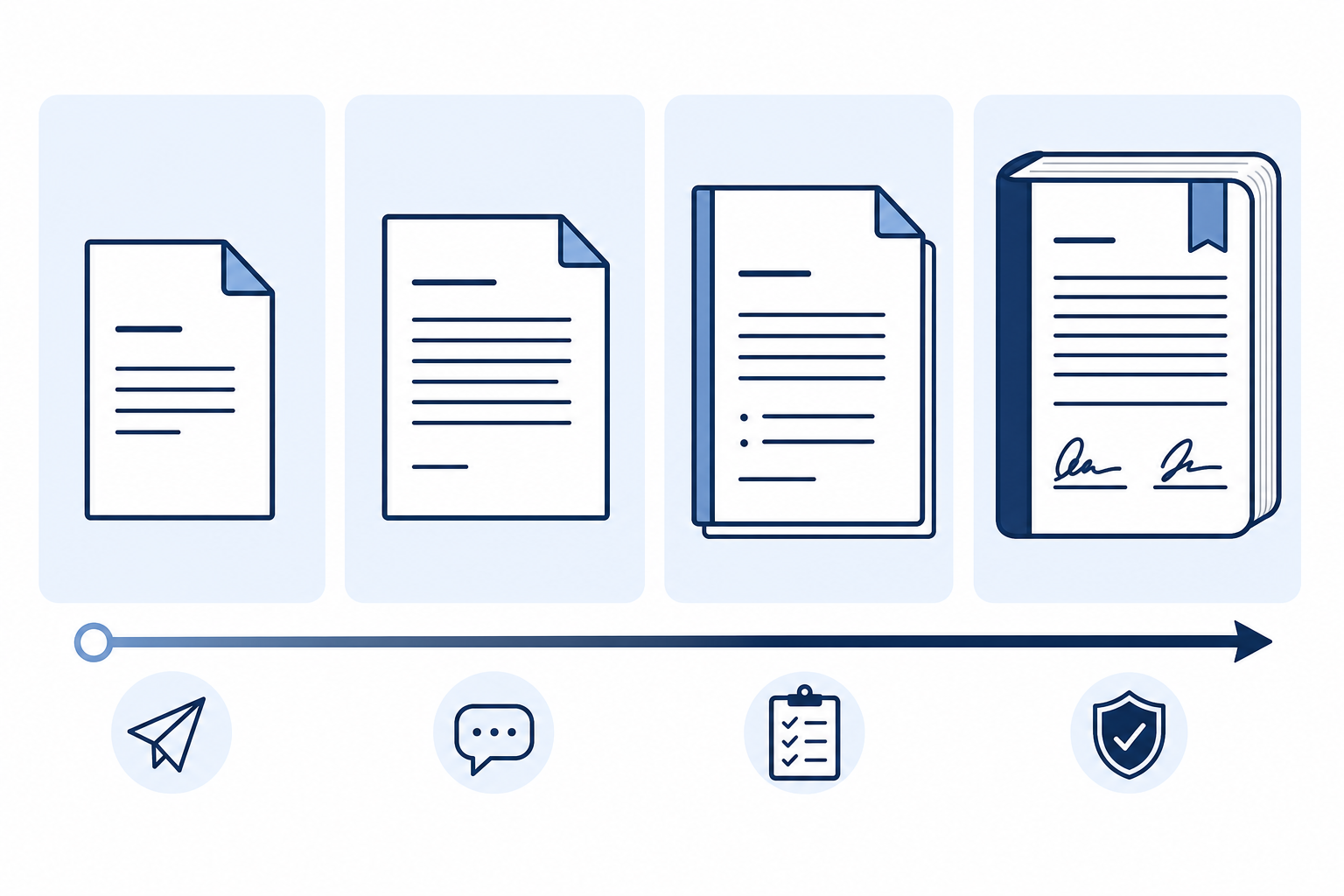
A letter of support confirms a partner's role, a letter of commitment pledges a resource, a letter of intent signals that you plan to apply, and a memorandum of understanding is a negotiated agreement. The labels are not interchangeable, and the wrong one can cost you the review.
Select to enlarge (opens in a new tab).
NIH dropped the letter of intent: "Effective immediately NIH will no longer request or accept Letters of Intent (LOIs) as part of the application process" (NIH Notice NOT-OD-26-019, December 3, 2025, verified August 9, 2026). Foundations still use LOIs, and the letter of intent for grant example page covers that format.
Public-sector programs lean on letters of commitment. USDOT caps each letter at two pages in its SMART program template (USDOT, SMART Letters of Commitment Template, verified August 9, 2026). When a notice says "commitment," it wants a number. One more document belongs to the applicant: the grant proposal cover letter.
Who Should Write a Letter of Support, and Who Should Not
The right author is someone whose organization changes what it does if the grant is funded. The wrong one admires you from a distance.
Federal agencies are explicit about that last row. NIH instructs that consultant letters "should include rate/charge for consulting services and level of effort / number of hours per budget period anticipated," and that letters "are not required for personnel (such as research assistants) not contributing in a substantive, measurable way" (NIH, PHS 398, section 9, verified August 9, 2026).
NSF discourages the document outright: "unless required by a specific program solicitation, letters of support should not be submitted," and such proposals "may be returned without review" (NSF PAPPG 24-1, Chapter II.D.2.i(iii), verified August 9, 2026).
Sample Letters of Support for Grants: Three Complete Examples
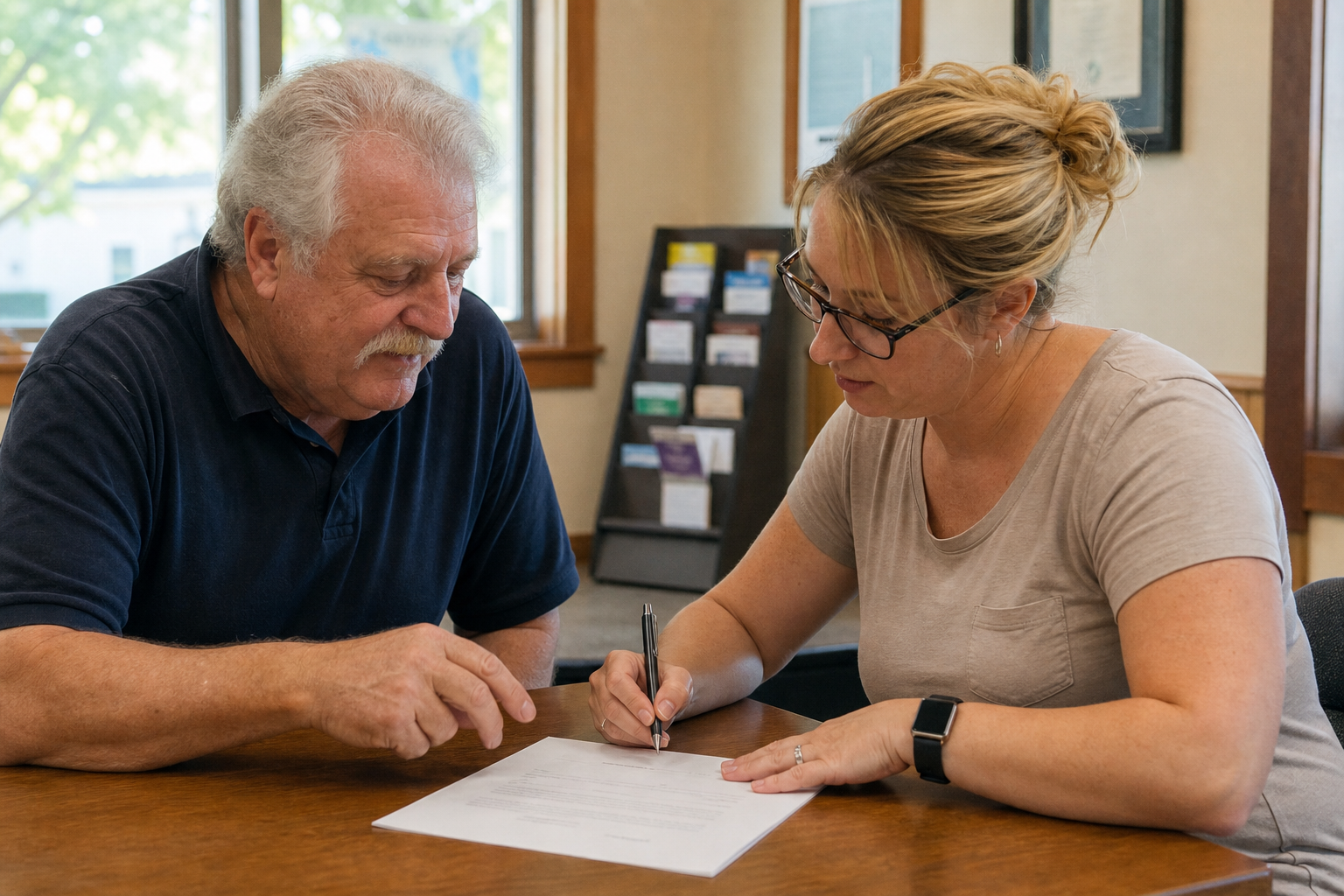
Reviewers scan a letter for a commitment they can turn into one line of notes, so every promise below carries a number. The three letters are composites written for illustration. No real organization or person appears in them.
Select to enlarge (opens in a new tab).
Example 1: Community Partner Organization
[Partner Organization] · [City, State ZIP] · [Phone]
[Date]
[Program Officer Name], [Title], [Funding Agency]
Re: Letter of support for [Applicant Organization], [Program Name], [Opportunity Number]
Dear [Program Officer Name]:
[Partner Organization] is a [community health center] serving [number] residents of [county] each year. I am writing to confirm our role in [Applicant Organization]'s proposed [Program Name].
We have referred clients to [Applicant Organization] since [year]. In [last full year] we made [number] referrals, and [number] households enrolled.
If funded, [Partner Organization] commits to the following for the [number]-month period:
- Refer at least [number] eligible households per quarter through our [department] intake.
- Assign [number] hours per week of a [job title] to screening at [site], valued at [$ amount].
- Provide [number] square feet of space at no cost, worth [$ amount] per year at our lease rate.
- Share de-identified [outcome measure] data quarterly under the data use agreement of [date].
These commitments sit in our [fiscal year] operating plan. [Name], our [title], will be the day-to-day contact. We reviewed the narrative dated [date] before signing this letter.
Sincerely,
[Name], [Title] · [Phone] · [Email]
Why it works. Every promise carries a number and a source for it. The in-kind value comes off the lease rate rather than a guess. Naming a contact means the commitment survives if the signer leaves.
Example 2: Elected Official or Public Agency
Office of the [Mayor / County Commissioner] · [Jurisdiction]
[Date]
[Grants Officer Name], [Title], [Federal Agency]
Re: [Applicant Organization] application to [Program Name], Assistance Listing [Number], [Opportunity Number]
Dear [Grants Officer Name]:
I write regarding [Applicant Organization]'s application to [Program Name] and ask that it receive all due consideration under applicable law and regulation.
[Jurisdiction] has [number] residents, and [number] live in the [census tracts] this project would serve. Our [year] [plan name] named [specific problem] an adopted priority.
The [department name] has worked with [Applicant Organization] since [year]. If funded, the department will [assign a liaison for [number] hours per month / contribute [$ amount] in local match approved by resolution [number]].
I am not requesting preferential treatment, and the award decision rests with your review process. [Staff name], my [title], can be reached at [phone].
Sincerely,
[Name], [Title], [Jurisdiction]
Why it works. It stays inside the ethics boundary and still carries a real commitment. The Congressional Research Service notes that congressional letters of support are "bound by House and Senate ethics guidance, which limits a support letter to encouraging the agency to give all due consideration under applicable law and regulation," and that willingness to accept one "varies among grant-making agencies and programs" (CRS In Focus IF12921, March 18, 2026, verified August 9, 2026). A department that commits staff time beats a higher office that commits nothing.
Example 3: Beneficiary or Participant Organization
[Participant Organization] · [Address] · [Phone]
[Date]
[Program Officer Name], [Title], [Funder]
Re: Letter of support from a participating site, [Program Name], [Opportunity Number]
Dear [Program Officer Name]:
[Participant Organization] serves [number] [students] at [number] sites in [place]. We are one of the [number] sites that would participate in [Applicant Organization]'s proposed [Program Name]. Here is what participation looks like from our side.
We asked for this program. In [month, year] we surveyed [number] [families] and [number] reported [specific unmet need]. We keep a waiting list of [number] and turn away roughly [number] each year, and cannot close that gap inside our own budget.
If the project is funded, [Participant Organization] will:
- Host [number] sessions per week at [site], absorbing custodial and utility costs of about [$ amount] per year.
- Enroll and track [number] participants and give [named data element] to the evaluation team each [term].
- Designate our [job title] as site coordinator for [number] hours per week.
We reviewed the evaluation plan and agree to the data collection it describes. If the scope changes, we would revisit our role first.
Sincerely,
[Name], [Title]
Why it works. Demand comes from the people who would be served, and a waiting list number beats a paragraph describing need. NIH tells SBIR and STTR applicants that user letters "should be limited and directly relevant to the proposed project" (NIH, PHS 398, verified August 9, 2026). See the SBIR and STTR grant management guide.
Letter of Support for a Grant Proposal: Template You Can Fill In
A letter of support template runs five paragraphs: who is writing, the relationship, the commitment, local context, and a contact.
[Writer's Organization Letterhead]
[Date]
[Recipient name and title], [Funder]
Re: Letter of support for [Applicant Organization], [Project Name], [Opportunity Number]
Dear [Recipient name]:
1. Who is writing. [Writer's Organization] is [one clause on the organization and its scale]. I am writing to confirm our role in [Applicant Organization]'s [Program Name].
2. The relationship. [How the two organizations already work together, since what year, with one countable fact.]
3. The commitment. If [Program Name] is funded, [Writer's Organization] will:
- [Commitment with a number and a unit.]
- [Commitment with a number and a unit.]
- [Commitment with a dollar value and how it was calculated.]
4. Why it matters here. [Local context the applicant cannot supply about itself.]
5. The close. [Named contact, title, and phone.]
Sincerely,
[Name], [Title]
Keep it to one page. Send the draft as an editable Word file so the partner can rewrite without retyping, then ask for the signed PDF.
How to Request a Letter of Support From a Busy Partner
One email should carry the deadline, the exact ask, and a draft the partner can rewrite. Most requests fail because they arrive late and vague, with nothing the partner can work from.
Select to enlarge (opens in a new tab).
The request email
Subject: [Applicant Organization] grant application, one-page letter needed by [internal due date]
Hi [Name],
We are applying to [Funder]'s [Program Name] on [submission date]. The notice asks for letters from partners with a defined role. Yours is the [role] on page [number] of the narrative.
What I need: one page on your letterhead, signed and dated, returned as a PDF by [internal due date]. Three attachments to make it fast:
1. A project summary listing every number we cite about your organization, so you can check it.
2. Draft language you can rewrite or replace however you like. You know your own operation better than I do.
3. The funder's rules: [letterhead, signature, page limit, file naming].
If a number is wrong or a commitment is more than you can promise, change it. A smaller accurate commitment beats a large vague one with reviewers.
Thanks,
[Name], [Title], [Phone]
The Congressional Research Service lists what an office needs before writing one: the applicant and project contact, the program name and assistance listing number, the deadline, the project description, how many people benefit, other support, and a budget (CRS In Focus IF12921, March 18, 2026, verified August 9, 2026). The list works for any letter writer.
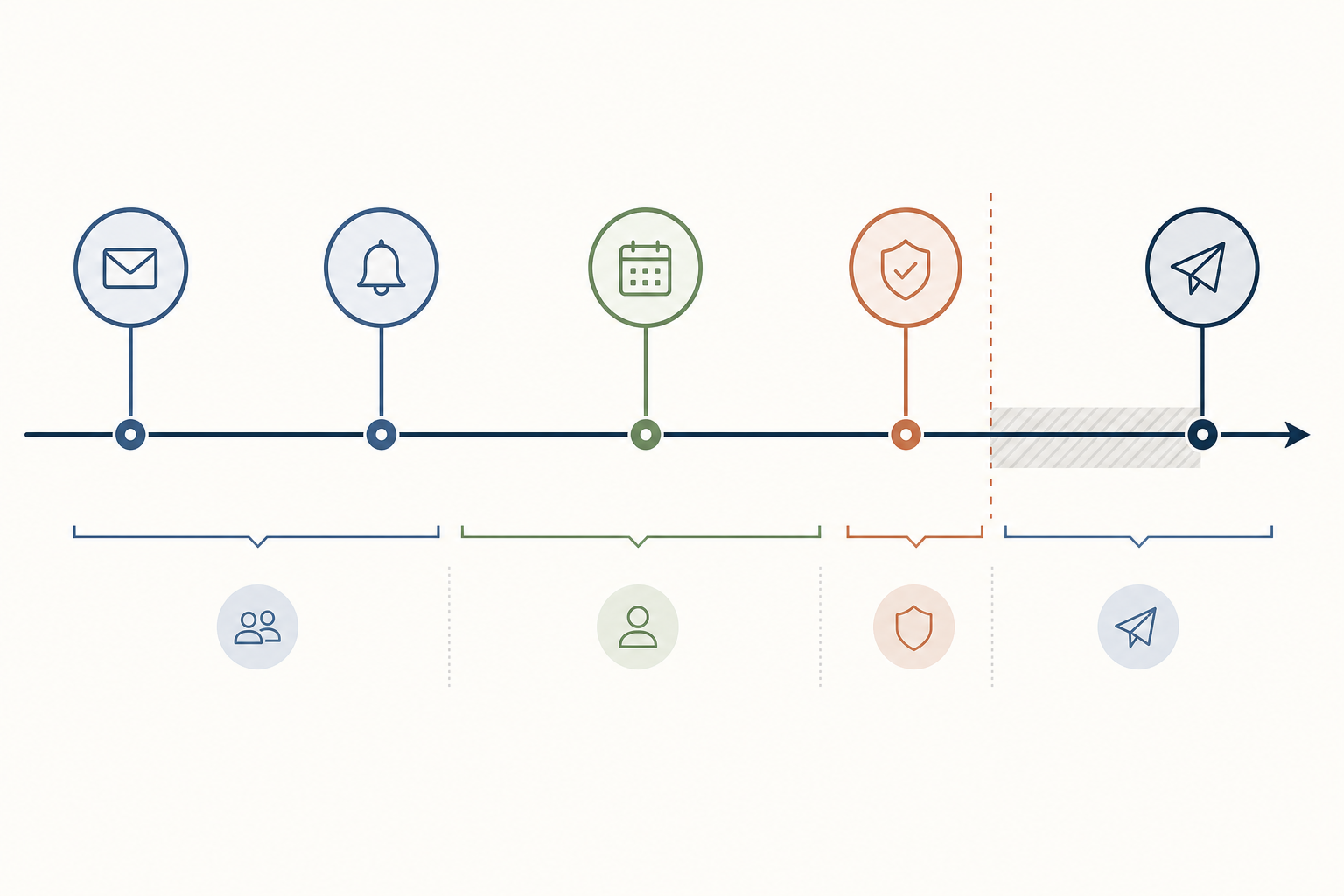
The four-week timeline
Set the internal due date a week before the real one.
Common Mistakes in Letters of Support
Letters that reviewers skip usually fail for reasons that take minutes to fix.
More patterns appear in the guide to common grant proposal mistakes, and a grant proposal review checklist pass before upload catches most of them.
Where Letters of Support Go in the Application Package
Letters belong in the designated attachment field, combined into a single PDF, not in the appendix. Which field depends on the submission system.
NIH advises that "documents with signatures (e.g., letters of support) can be printed, signed, scanned and attached in PDF format," and rejects electronic signatures unless the PDF is flattened (NIH, Format Attachments, verified August 9, 2026).
FAQ
What is a letter of support for a grant?
A letter of support for a grant is a signed one-page letter from a partner, agency, or participating site confirming a defined role in a proposed project and the resources the writer will contribute if it is funded.
How many letters of support should a grant application include?
The notice of funding opportunity decides. Some programs name an exact number. Others cap the attachment by page count, and a few refuse letters entirely. NSF may return a proposal unreviewed when it carries letters no solicitation asked for.
Can I write the letter of support myself and have the partner sign it?
You can draft language as a starting point, and most partners expect it, but the writer must be free to change it. NSF states that such a letter "must be unique to the specific proposal submitted and cannot be altered without the author's explicit prior approval" (NSF PAPPG 24-1, verified August 9, 2026).
Do letters of support count toward the page limit?
Usually not toward the narrative limit, because they sit in a separate attachment. NIH caps the Letters of Support attachment at 6 pages for fellowship and career development applications and lists no limit for most research applications (NIH, Page Limits, verified August 9, 2026).
Does a letter from a member of Congress help a federal grant application?
It depends on the agency. FEMA states that letters of support are not considered in its award decision-making process for Assistance to Firefighters Grants (FEMA, verified August 9, 2026). Never substitute one for a required partner letter.
Next Step
Open the notice you are working on and find the sentence about letters. Write down who signs, how many pages you get, and which field the file uploads to. Then send the request email today. Letters written the night before a deadline are the ones that say nothing. The full sequence sits in how to write a grant proposal.