Cheap Foundation Research Tools at $299 and Grant Research Tool Free Tiers
A cheap foundation research tool at $299 can mean $299 a year or $299 a month. Both prices dated, plus every published grant research free tier and the caps it carries.

In this article (9)
- Quick Answer: Is There a Cheap Foundation Research Tool at $299?
- What Each Free Tier Includes
- Free Grant Research Tools With No Subscription
- Cheap Foundation Research Tools: $299 a Year or $299 a Month
- Which Free Tiers Also Track Applications
- Grant Research Tool Free Tier Limits by Vendor
- How Far You Can Get on a Grant Research Tool Free Tier
- FAQ
- Your First 30 Days on Free Grant Research
A grant research tool free tier looks like the obvious answer for a first-year development office. The database is there, the invoice is zero. The free tiers differ most in what they let you take away, and the cap you hit first decides how long free lasts. When free runs out, the next step is usually a cheap foundation research tool, and at $299 the market sells two very different bills (vendor pricing pages, read September 2026).
Three vendors publish a permanent free tier of their database, two more offer a free email or newsletter, and several free routes open a paid database for a while.
Quick Answer: Is There a Cheap Foundation Research Tool at $299?
Yes, and $299 means two different bills. GrantLedger Pro, a foundation search over IRS grant records, is $299 a year, while Instrumentl Discover is $299 a month paid upfront annually for up to 3 users (vendor pricing pages, read September 2026). Under both prices, Candid, Kindora and CharityEZ publish permanent free tiers with tight caps on views, users or credits.
What Each Free Tier Includes
Three grant research vendors publish a permanent free tier of the database itself, and each one caps a different thing (Candid, Kindora and CharityEZ pricing pages, read September 2026). Grant Gopher's free option is a semi-monthly email, and a free GrantWatch account comes with a weekly newsletter for one selected location (Grant Gopher, Plans & Pricing, and GrantWatch, Join/Login page, read September 2026).
A free tier is a plan that stays at no cost for as long as the account exists, not a trial with an end date. CharityEZ says its tier is open to "any U.S. nonprofit", needs "No credit card" and is "Not a trial" (CharityEZ pricing page, read September 2026).
Sources: Candid pricing page, Kindora pricing page, CharityEZ pricing page, Grant Gopher Plans & Pricing, GrantWatch Join/Login page, Instrumentl pricing page and GrantStation membership page (all vendor pages, read September 2026).
Free tiers differ because the products behind them do different jobs. Candid's free tier sits in front of 1.9M+ nonprofit profiles, 304k+ funder profiles and 29M+ grants (Candid, Candid search, read September 2026), and one full profile view a month is the read limit (Candid pricing page, read September 2026). CharityEZ Free shows advertisements while Kindora Explore searches without a pipeline attached (CharityEZ and Kindora pricing pages, read September 2026).
Seat limits matter as much as search limits. CharityEZ Free carries one concurrent user, and adding a second moves the organization to AI Gold, which is $497.50 a year with one user included and additional licenses listed at $39 a month or $390 a year (CharityEZ pricing page, read September 2026). Check the seat count before you rely on the free tier.
Free Grant Research Tools With No Subscription
Grants.gov is free, requires no subscription, and is the single federal portal for discretionary federal funding opportunities (Grants.gov home page, read September 2026). The search screen filters by opportunity status (Forecasted, Posted, Closed, Archived), funding instrument type, eligibility, category and agency, and offers an "Export Detailed Data" button, so a shortlist lands in a spreadsheet without a paid tool (Grants.gov, Search Grants, read September 2026). Grants.gov carries federal opportunities only (Grants.gov home page, read September 2026).
Public filings are the other free route: the IRS publishes the full Form 990 series as free bulk XML downloads and updates the data set files monthly (IRS bulk data downloads, read September 2026), and the tools built on those filings are compared in the free foundation directory guide.
Several free routes also open a paid database for a while:
Sources: Candid Learning, Grant Professionals Association, TechSoup, GrantStation, Instrumentl and GrantForward pricing and membership pages (all read September 2026); TechSoup Support, updated September 14, 2026, for the $199, $150 and $699 prices.
The TechSoup offer ran over a two-day window, September 15 to 16, 2026 (TechSoup, GrantStation for Nonprofits, read September 2026). It was limited to U.S. 501(c)(3) nonprofits and public libraries, ran in the United States and Canada only, and has since closed (TechSoup, GrantStation for Nonprofits, read September 2026). Outside that window, TechSoup says a one-year membership "is normally available on TechSoup for $199" and that "TechSoup Plus members may request the offer for $150", against a $699 list price on GrantStation itself (TechSoup Support, updated September 14, 2026).
A third-party software directory reports that state and sector nonprofit associations resell GrantStation to their members for $75 to $139 and calls paying list price "essentially a mistake" (Softwr, GrantStation Review, checked August 31, 2026).
Commenters in four threads named reading Foundation Directory free at a public library, university library or nonprofit resource center as the standard workaround (Reddit threads 1p511oo, 1r8eviy, 1lgaq91 and 1vb5ctu, read September 2026). One warned that "a lot of places have been dropping Candid over the past year or two" (Reddit thread 1p511oo, read September 2026), so confirm the route by phone first.
Cheap Foundation Research Tools: $299 a Year or $299 a Month
Two grant research products carry a $299 price, one a yearly price and the other a monthly rate paid upfront for a year (GrantLedger pricing page and Instrumentl pricing page, read September 2026), and the gap between them is the shape of this market.
GrantLedger Pro is $299 a year, described on its own page as "Just $24.92/month", with a monthly option at $49 (GrantLedger pricing page, read September 2026). The page advertises unlimited 990-PF downloads, recipient search and keyword search (GrantLedger pricing page, read September 2026).
At the other end of the same number, Instrumentl Discover costs $299 a month paid upfront annually, or $326 paid monthly, for up to 3 users (Instrumentl pricing page, read October 2026).
Sources: GrantLedger, GrantWatch, GrantStation and Candid pricing pages (all read September 2026) and the Instrumentl pricing page (read October 2026); Candid figures are its nonprofit-discounted rates.
A commenter put GrantLedger at "$299/year" (Reddit thread 1sewng0, read September 2026), and another put most grant directories around $200 a year (Reddit thread 1lgaq91, read September 2026), a commenter's shorthand and not a market average. The grant database pricing comparison sets these prices against seats and caps, and the cheaper alternatives to Candid guide covers the foundation-only options.
Instrumentl has no permanently free tier; every published tier carries a "Try 14 days free" trial (Instrumentl pricing page, read September 2026). A commenter weighing Instrumentl against a cheaper tool wrote that it "does find more grants, hands down" but questioned whether the extra results justified the price gap (Reddit thread 1wiivcd, read September 2026), and another called it great but expensive (Reddit thread 1vb5ctu, read September 2026). The Instrumentl alternative guide covers the options if you are weighing that number, alongside a side-by-side comparison with Instrumentl.
Which Free Tiers Also Track Applications
Grant software in this category covers three jobs a trade guide names: finding funders worth applying to, tracking applications and compliance once the money arrives, and reviewing applications from other people (Business-Software.com, Grant Management Software for Nonprofits in 2026, September 3, 2026). Almost every free tier covers only the first job, which the grant finder comparison ranks on its own.
Kindora Explore is browse-only with 10 funders watched and 1 program (Kindora pricing page, read September 2026), and pipeline with basic exports arrives on Starter at $25 a month or $250 a year (Kindora pricing page, read September 2026). CharityEZ Free includes document and volunteer management but caps the account at one concurrent user (CharityEZ pricing page, read September 2026).
The products that bundle research and tracking charge for the bundle: Instrumentl includes pipeline tracking and task management on all four tiers but has no free tier, and calendar integration, CRM integrations and collaborator access start at Pre-Award at $499 a month paid upfront annually (Instrumentl pricing page, read September 2026). GrantStation adds saved funders, saved search criteria and alerts, and is a research membership rather than an application-workflow tool (GrantStation membership page, read September 2026).
Commenters in two threads stated the unbundling objection in the same words: "you'd be paying for the prospecting half you said you don't need" (Reddit threads 1vydvxu and 1wiivcd, read September 2026). The workaround commenters describe is to find grants in one tool and track them in a separate spreadsheet (Reddit threads 1wiivcd and 1ubd86x, read September 2026), which our free grant tracker template covers at no cost.
Grant Research Tool Free Tier Limits by Vendor
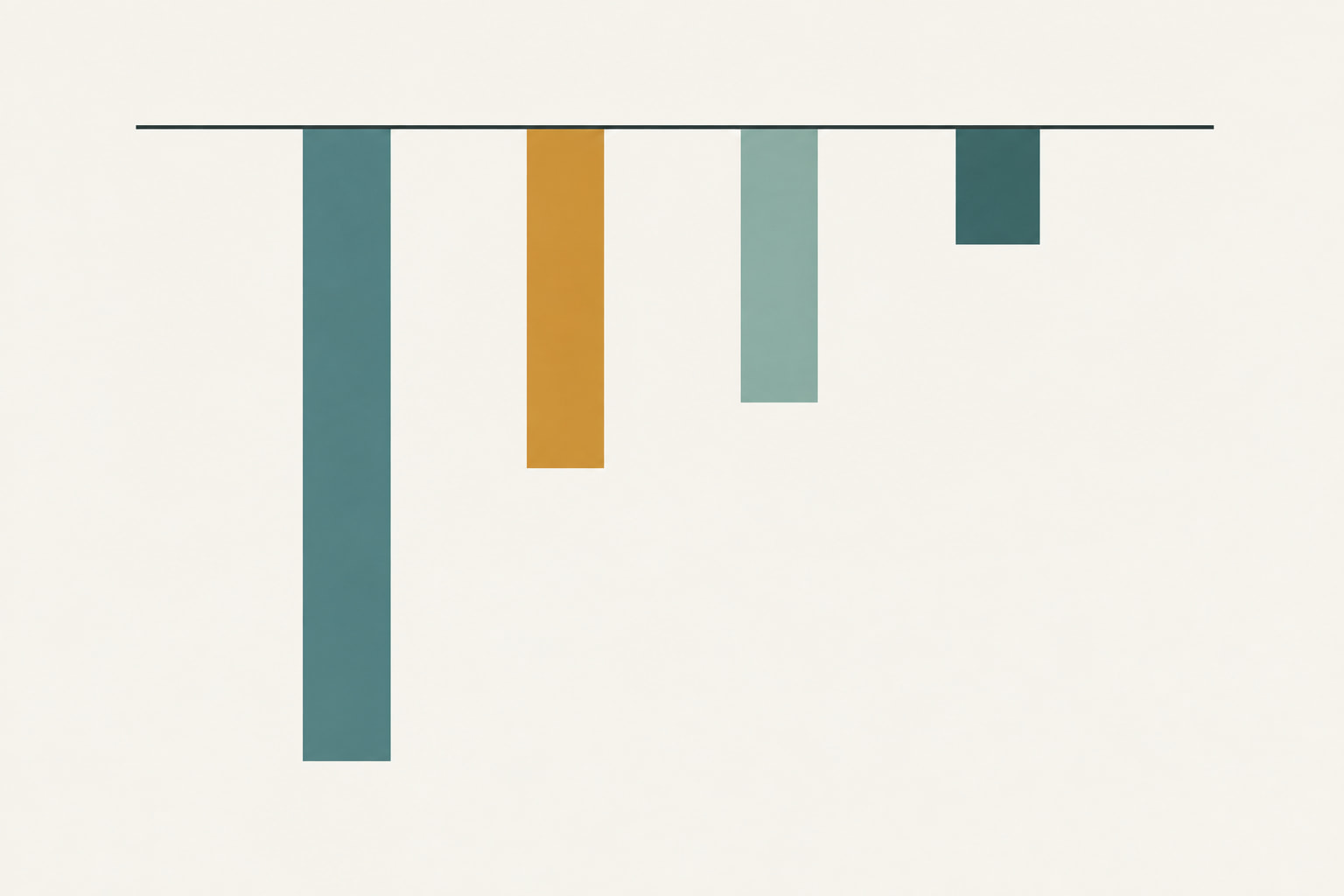
Every free tier in grant research caps users, searches, full profile views, exports or AI credits, and paying does not remove all of those caps (Candid pricing page, Kindora pricing page and GrantWatch, Pricing and Plans, read September 2026).
Sources: Candid pricing page (nonprofit-discounted rates), Kindora pricing page, CharityEZ pricing page, GrantWatch Pricing and Plans, Grant Gopher Plans & Pricing, Instrumentl pricing page and GrantStation discounts page (all read September 2026).
The export cap is the one that outlives the free tier. Candid caps downloads on every paid tier, at up to 250 grants and 750 profiles per month on the monthly plan and up to 1,000 grants and 5,000 profiles per month on the annual plan (Candid pricing page, read September 2026).
The larger ceiling sits in the data itself: government and corporate funders are not required to file Form 990s with the IRS, so they have no 990 report in any 990-derived database (Instrumentl help center, Locate funder profiles, read September 2026). Paper-filed returns produce no structured data either (Instrumentl help center, How Instrumentl creates 990 insights, updated June 18, 2026).
One commenter put the cheap-tier ceiling plainly: "the cheap tiers cap records and attachments and you will hit the ceiling" (Reddit thread 1vydvxu, read September 2026).
Read the seat count, the export count and the credit count on any tier you are considering, because those three decide when the $0 plan ends (Candid, Kindora and CharityEZ pricing pages, read September 2026).

How Far You Can Get on a Grant Research Tool Free Tier
A small nonprofit can build a federal shortlist and screen foundations at $0; the limits it meets are Candid's one full profile view a month, Kindora Explore's browse-only access and CharityEZ Free's single user (Candid, Kindora and CharityEZ pricing pages, read September 2026).
The workable sequence starts on Grants.gov, where filters and the export button produce a federal shortlist for free (Grants.gov, Search Grants, read September 2026). Spend the single free profile view each month on the funder you intend to approach (Candid pricing page, read September 2026), and use free in-person access at Candid's partner locations for deeper reading (Candid Learning, read September 2026). Organizations with annual revenue or expenses under $1M and a 2026 Gold Seal of Transparency can get a free year of Candid Premium for up to two users (Candid Learning, read September 2026).
Three events justify paying: a second person needs access, the monthly profile view runs out before the shortlist does, or exports become necessary for a board packet. On CharityEZ, a second user moves the organization to AI Gold (CharityEZ pricing page, read September 2026), and on Candid, exports stay capped even after you pay, since downloads are limited on every paid tier (Candid pricing page, read September 2026).
The cheap paid routes also assume some history. GrantStation's own readiness guidance says a member should have a budget of "$10,000 or more" and "a track record of fundraising" (GrantStation membership page, read September 2026).
Another free option covers tracking as well as discovery. GrantCue's Free plan is $0 for 1 user, with Grants.gov search and filters, up to 10 active opportunities, a kanban pipeline, fit scores and 3 AI NOFO summaries a month, and every new workspace gets 14 days of the Team plan free with no card (grantcue.com, October 2026). When a second person needs access, Essentials is $49 a month for up to 3 users (grantcue.com pricing, October 2026), and GrantCue's free-plan limits are listed beside each paid plan.
FAQ
Which Grant Research Tools Have a Free Tier?
Three vendors publish a permanent free tier of the database (Candid, Kindora and CharityEZ pricing pages, read September 2026). Candid's $0 tier gives limited results and one full profile view per month, Kindora Explore allows 1 user and 10 watched funders, and CharityEZ Free gives nationwide Form 990 search for one user. Grant Gopher's free option is a semi-monthly sample email, and Grants.gov needs no account at all (Grant Gopher, Plans & Pricing, and Grants.gov home page, read September 2026).
Does a Free Tier Include Exports?
Rarely in useful volume. Kindora's exports start on the paid Starter tier (Kindora pricing page, read September 2026), and Candid's $0 tier gives one full profile view a month while downloads stay capped even on paid plans (Candid pricing page, read September 2026). Grants.gov's Export Detailed Data button is the main free export (Grants.gov, Search Grants, read September 2026).
Is There a Cheap Foundation Research Tool at $299?
Yes, and the number hides two different bills. GrantLedger Pro is $299 a year, described as $24.92 a month, with a monthly option at $49 (GrantLedger pricing page, read September 2026). Instrumentl Discover is $299 a month paid upfront annually for up to 3 users (Instrumentl pricing page, read September 2026), which comes to $3,588 for a year, twelve times the listed monthly price and not a figure Instrumentl publishes (Grantsights, August 7, 2026).
Can a Free Tier Track Applications as Well as Research?
Not fully. A trade guide names three jobs in this category: finding funders worth applying to, tracking applications and compliance once the money arrives, and reviewing applications from other people (Business-Software.com, Grant Management Software for Nonprofits in 2026, September 3, 2026). Kindora Explore is browse-only, with pipeline starting on Starter at $25 a month (Kindora pricing page, read September 2026), and CharityEZ Free adds document management for one user (CharityEZ pricing page, read September 2026).
What Does a Grant Research Tool Free Tier Limit?
A free tier usually caps users, searches, full profile views, exports or AI credits. Candid limits search results and allows one full profile view per month on its $0 tier (Candid pricing page, read September 2026). CharityEZ Free allows one concurrent user, and a second user moves the organization to AI Gold, listed at $497.50 a year for one user (CharityEZ pricing page, read September 2026).
How Do You Do Grant Research for Free?
Start on Grants.gov, which is free, needs no subscription and filters by opportunity status, funding instrument type, eligibility, category and agency (Grants.gov, Search Grants, read September 2026). Spend the free tier's limited profile views on the funders you will actually approach (Candid pricing page, read September 2026), and use free in-person access at Candid's partner locations (Candid Learning, read September 2026).
Your First 30 Days on Free Grant Research
Free research holds up for a month when it runs on a schedule. Week one: run Grants.gov with your eligibility filters and export the results into a spreadsheet (Grants.gov, Search Grants, read September 2026). Week two: shortlist the foundations whose past grants match your work and spend your single Candid full profile view on the one you most intend to approach (Candid pricing page, read September 2026). Week three: call your library or nonprofit resource center and confirm whether it is a Candid partner location with free in-person access (Candid Learning, read September 2026). Week four: write down which cap stopped you, because that cap is the feature you are shopping for.
The qualification side of the same problem, deciding which of those funders you can credibly pursue, is covered in our guide to qualifying grant prospects, and open opportunities are listed on the grants page.