Sample Grant Proposal for a Disability Services Program: Supported Employment Example
A sample grant proposal for a disability services program, written section by section for a fictional supported employment nonprofit, with sourced need data, competitive integrated employment objectives, a three-payer budget and notes on why each part works.

In this article (13)
- Quick Answer: What Goes in a Sample Grant Proposal for a Disability Services Program?
- How This Disability Services Proposal Example Is Built
- Executive Summary: Sample Text
- Statement of Need: Sample Text
- Goals and Objectives: Sample Text
- Project Description: Sample Text
- Disability Services Program Budget Example
- Evaluation Plan: Sample Text
- Organizational Background: Sample Text
- Sustainability Plan: Sample Text
- Adapting This Sample for Autism Services or Special Needs Programs
- FAQ
- Start Your Disability Services Proposal as a Draft
A sample grant proposal for a disability services program reads best when it names one service and one result. This example asks a foundation to fund supported and customized employment for adults with intellectual and developmental disabilities, measured by jobs that meet the federal definition of competitive integrated employment. Every section is written out, with a budget that adds up and a note on why each part works.
Quick Answer: What Goes in a Sample Grant Proposal for a Disability Services Program?
A disability services grant proposal needs a need statement with disability employment data, objectives stated as jobs at competitive wages in integrated workplaces, a description of discovery, job development and job coaching, a funding plan that separates what vocational rehabilitation and Medicaid pay for, an evaluation table, and a line-item budget.
Writing your own? Start it as a draft in GrantCue, with AI help for each section. Start the proposal free
How This Disability Services Proposal Example Is Built
The applicant, Example Pathways Employment Services, is a fictional organization; replace the details with yours. It helps adults with intellectual and developmental disabilities find and keep jobs in the community, and it asks one foundation for $110,000 toward a $176,000 project. The numbers are illustrative and they add up. The sections follow the seven parts of the full proposal draft in GrantCue, plus a line-item budget.
The method behind each of these sections, from qualifying the opportunity to submitting, is in how to write a grant proposal.
Executive Summary: Sample Text
Sample text. Example Pathways Employment Services requests $110,000 over 12 months to add two employment specialists who will help 30 adults with intellectual and developmental disabilities find jobs in the community. Each job seeker starts with a discovery process to learn their interests and strengths, then works with a specialist to develop a job with a local employer and gets on-site coaching after hire. We expect 18 job seekers to start competitive integrated employment, paid at least minimum wage and the same rate as coworkers, and 15 to still be working 90 days later. The project costs $176,000; projected vocational rehabilitation fees and Medicaid waiver billing cover $66,000.
Why it works. It names the population, the method and a result that has a legal definition, so the reviewer knows exactly what "a job" means here. The cost-sharing sentence shows the foundation it is paying for the part public programs do not.
Statement of Need: Sample Text
Sample text. In 2025, 22.8 percent of people with a disability were employed, compared with 65.2 percent of people without a disability. Among people with a disability aged 16 to 64, the share employed was 38.1 percent, and the unemployment rate for people with a disability was 8.3 percent, about twice the 4.1 percent rate for people without one (BLS, Persons with a Disability: Labor Force Characteristics 2025, read November 2026). In [state], [percentage] of adults report a cognitive disability (CDC Disability and Health Data System, read November 2026). Our waitlist for employment services held 46 adults on [date]; 31 of them spend their weekdays in day programs with no paid work.
Why it works. The sample quotes the working-age ratio next to the headline 22.8 percent because about half of all people with a disability are 65 or older, as the same BLS release notes, so the working-age figure is the fairer comparison for an employment program. CDC's Disability and Health Data System gives state-level estimates for six functional types of disability, including cognitive disability, from the Behavioral Risk Factor Surveillance System, so the state line can be filled with an official number. The waitlist makes the need local and specific. See these statement of need examples for more structure.
Goals and Objectives: Sample Text
Sample text. Goal: adults with intellectual and developmental disabilities in [county] work in jobs they choose, at competitive wages, alongside coworkers without disabilities.
- Objective 1: Enroll 30 job seekers and complete a discovery profile with 28 of them within 90 days of enrollment.
- Objective 2: 18 job seekers start competitive integrated employment by month 12.
- Objective 3: 15 of the 18 are still employed 90 days after their start date.
- Objective 4: Employed participants average at least 20 hours a week, paid at least the applicable minimum wage and the same rate as coworkers doing similar work.
Why it works. Objective 2 uses a defined term. Under the federal vocational rehabilitation rules, competitive integrated employment is work paid at least the higher of the federal or applicable state or local minimum wage and not less than the employer's customary rate for similar work by employees without disabilities, with the same eligibility for benefits, at a location typical in the community where the worker interacts with coworkers without disabilities, and with similar chances for advancement (34 CFR 361.5(c)(9), read November 2026). Writing to that definition tells the reviewer which placements count and which do not. The SMART goals and objectives guide covers the format.
Project Description: Sample Text
Sample text. Each job seeker begins with discovery: about 20 hours over six weeks with an employment specialist, at home, in the community and at short work tryouts, to learn interests, skills and the conditions under which the person does best. The specialist then develops a job with a local employer. When no existing job description fits, the specialist uses customized employment: negotiating a set of duties, a schedule, supervision arrangements and a work location that match the job seeker's strengths and the business's needs. After hire, the specialist provides on-site job coaching that fades as the worker learns the job and coworkers take on natural supports. A contracted benefits planner meets every job seeker who receives SSI or SSDI before they accept an offer. Each of the two specialists carries 15 job seekers.
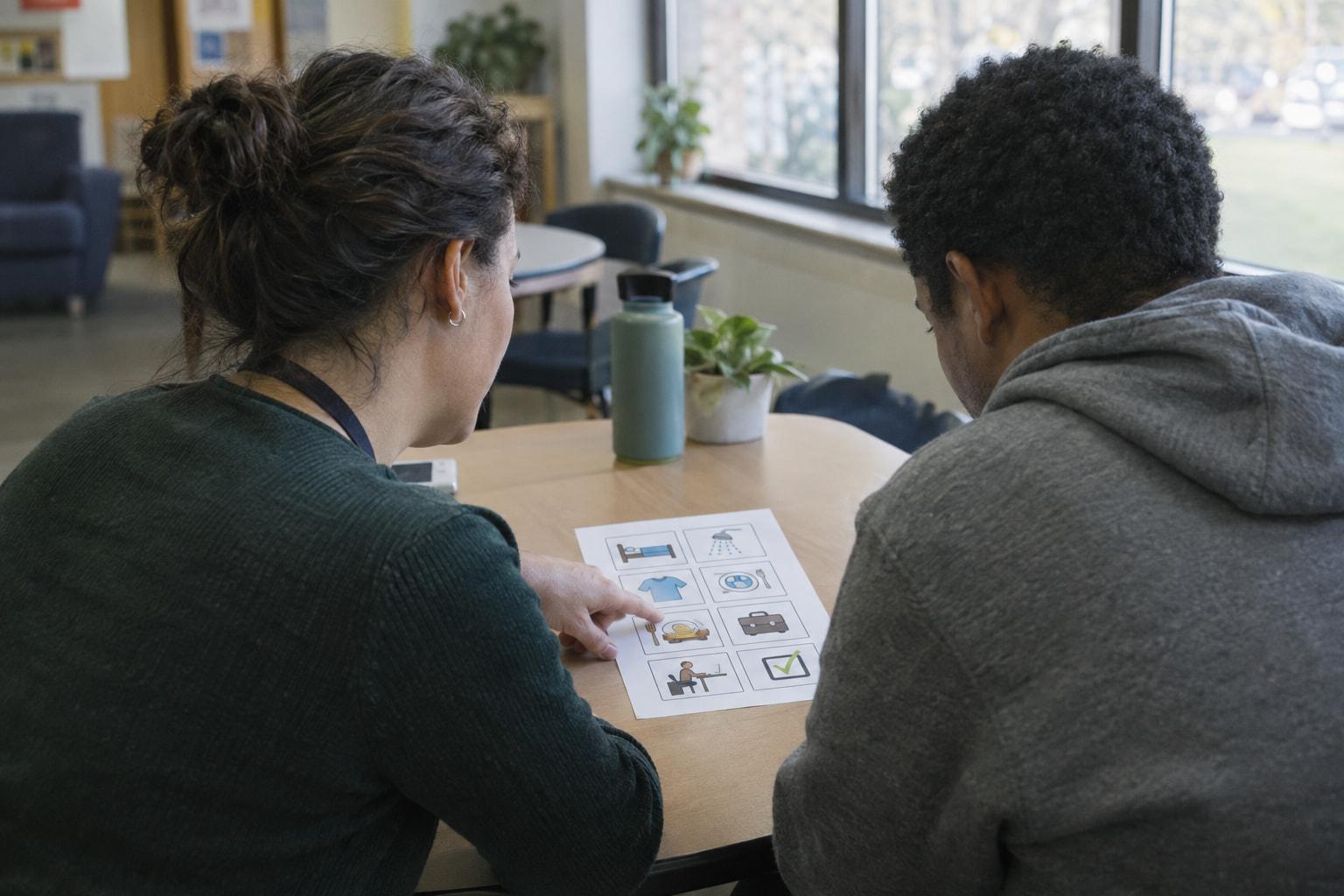
Why it works. It describes the method in the terms used by the agencies that will pay for services later. The customized employment steps follow the federal definition, which lists customizing a job description, developing duties, a schedule and supervision arrangements, choosing a job location, and providing supports at the job site (34 CFR 361.5(c)(11), read November 2026). The benefits planning line answers a common family question about work, how earnings will affect benefits, before it becomes a reason to turn down a job.
Disability Services Program Budget Example
Sample text. The budget covers 12 months.
Why it works. It separates three payers by what each one covers. How your state VR agency pays providers varies, so use its fee schedule and say so. Medicaid home and community-based services waivers can pay for supported employment as a habilitation service, but CMS says employment services available to a person through other programs, such as vocational rehabilitation, cannot be provided through Medicaid (Medicaid, Employment & HCBS, read November 2026). The foundation pays for what neither covers: discovery for people not yet referred, staff training, mileage and the accommodation fund. One unit cost helps: $176,000 divided by 18 people hired is about $9,780 per hire. The grant proposal budget template guide covers the narrative.
Evaluation Plan: Sample Text
Sample text. Employment specialists record each step in the case file. Wages and hours come from pay stubs shared with the worker's permission, or from the employer with the worker's written consent. The organization reports quarterly, in aggregate.
Why it works. Every row maps to an objective, and the wage row checks that each hire meets the definition. The satisfaction survey is written for the people answering it and offered with supports, which tells a reviewer the organization measures what the worker thinks, too. See how to track client outcomes for grants and the evaluation plan template.
Organizational Background: Sample Text
Sample text. Example Pathways has provided employment services since 2011 and helped [number] people start community jobs in the last three years. It is an approved vendor of [state VR agency] and a Medicaid waiver provider of supported employment, and its staff have completed [named customized employment training].
Why it works. Vendor and provider status show the organization can already bill the public programs the sustainability plan depends on. Name them exactly. The guide to organizational capacity statements has more.

Sustainability Plan: Sample Text
Sample text. Vocational rehabilitation fees and Medicaid waiver billing will cover $66,000 of the program in year one and more in year two, as job seekers referred by VR move into long-term supports paid by the waiver. Example Pathways will ask this funder for $60,000 in year two for discovery and training, which public payers do not cover for people not yet referred, and will build employer fees for customized hiring services.
Why it works. It shows the public money growing and the foundation's share shrinking, and it is specific about which phase each payer covers. More patterns are in these sustainability plan examples.
Adapting This Sample for Autism Services or Special Needs Programs
The structure holds for any disability service; the population, measures and supports change. For an autism services program, define the population the way your eligibility rules do, and describe workplace supports in concrete terms, such as written task lists, a predictable schedule, a quiet break space or a single named supervisor. For a program serving children with special needs, the outcomes move from jobs to school and daily-living goals, and the family becomes a partner in every section. A developmental disabilities proposal for day or residential services keeps the same budget logic: show which public payer covers what, and ask the foundation for the gap. The education nonprofit sample and youth program sample show the school-age versions of these sections. For a general job training program, see the workforce development sample proposal.
For funders, GrantCue's free foundation directory lists foundations by state with their past grants, and open grants are searchable without an account. The full guide to finding grants for nonprofits covers the rest of the search.
FAQ
How do you write a grant proposal for a disability services program?
Pick one service and one result you can count, such as jobs that meet the federal definition of competitive integrated employment. Build the need statement from BLS or CDC data and your own waitlist. Describe the method step by step, show which public payer covers which phase, and ask the foundation for the gap. Write the evaluation table so each row checks an objective, then write the summary last.
What is competitive integrated employment?
Under the federal vocational rehabilitation rules at 34 CFR 361.5(c)(9), it is full-time or part-time work paid at least the applicable minimum wage and the employer's usual rate for similar work, with the same benefit eligibility as other employees, in a typical community workplace where the worker interacts with coworkers without disabilities, and with similar chances for advancement. Self-employment can qualify when it yields comparable income.
Can Medicaid and vocational rehabilitation both pay for supported employment?
They can both play a part, but not for the same service. CMS says employment services available to a person through programs such as vocational rehabilitation cannot be provided through Medicaid. A proposal can show VR paying for job development and placement for a referred job seeker and a Medicaid waiver paying for long-term job coaching afterward. Confirm the split with your state VR agency and your state Medicaid agency.
Is there a sample grant proposal for students with disabilities?
This sample serves adults, but the structure transfers. For students, replace the employment objectives with goals tied to school, such as attendance, progress on individual goals or a transition plan into work or further education, and name the school district as a partner. The education nonprofit sample shows those sections for a school-based program.
What outcomes do funders want from disability employment programs?
The usual measures are hires into community jobs, wages at or above minimum wage and the coworker rate, weekly hours, and how long people stay employed (this sample checks at 90 days). Some funders also ask about the worker's own satisfaction and about employers who hire more than once. Use pay stubs and employer confirmation, with the worker's consent, as the source for each number.
Should a disability services proposal include participant stories?
Only when the person chose to share, gave informed written consent and reviewed what will be said, with supports to understand the request. Aggregate results and a plain description of the service usually make the case without one. If you include a story, keep the person's dignity and choices at the center, and leave out details that could identify them without permission.
Start Your Disability Services Proposal as a Draft
Open a free GrantCue account and start the full proposal draft. It has the same seven sections as this sample, with AI writing help for each one. Free to start; AI writing help is included in the 14 days of Team every new workspace gets, no card. The free grant templates include a budget workbook with request, match and total columns, a budget narrative template and a logic model template. When the draft is ready, search open grants and track each deadline with reminders in the same account.