Sample Grant Proposal for Youth Program: A Complete After-School Example
A sample grant proposal for a youth or after-school program, with line-item budget figures, staffing ratios, dosage targets, and the outcome measures funders ask for.
Last updated: September 2026
A youth application answers a question a general nonprofit application never raises: who is in the room with the young people between the last bell and the hour a caregiver gets home? This sample grant proposal for youth program funding walks through a complete after-school request, section by section, using a composite example. The example organization is a community nonprofit running a 60-slot program at one middle school. Every figure in this guide belongs to that example rather than to a real program.
Quick Answer: What Goes Into a Youth Program Grant Proposal?
A youth program grant proposal includes an executive summary, a statement of need built on local school data, a program design that names staffing ratios and safeguarding policies, goals tied to an attendance dosage threshold, an evaluation plan for school-day outcomes, and a budget for staff, transportation, food, and enrichment. Draft the design and dosage sections first.
Free download: Complete sample proposal for a youth program as Word .docx. No email address required.
What Funders Expect in a Youth Program Grant Proposal
A youth program grant proposal is a funding request that describes an out-of-school-time service for minors, the adults who supervise it, and the outcomes it produces. Two things separate it from a general nonprofit application: who is with the participants, and how many hours each young person actually receives.
Each question a youth reviewer has to resolve maps to one section of the proposal and one attachment.
| Reviewer question | Section that answers it | Evidence to attach |
|---|---|---|
| Who is with the participants, and are they cleared? | Program design | Screening policy, clearance renewal schedule |
| How many adults per participant? | Program design | Staffing chart by activity block |
| How often does one participant attend? | Goals and objectives | Attendance definition, dosage target |
| How will you know it worked? | Evaluation plan | Data sharing agreement, survey instrument |
| Who else serves these participants? | Statement of need | Partner letters, local service map |
| What happens when the grant ends? | Sustainability | Fee schedule, renewal pipeline |
The general walkthrough of how to write a grant proposal covers the mechanics of each section. The sections that follow cover what changes when the beneficiaries are minors.

How to Write the Statement of Need for an After-School Program Grant
A youth program statement of need proves that a specific group of young people has unsupervised hours and unmet academic or social support. The evidence has to be tied to the schools and neighborhoods you serve.
Name the district, the school, and the attendance zone. A national youth statistic describes a country, not the blocks your program sits on. Pull from sources you can cite:
- District or state school report cards for chronic absenteeism, enrollment, and free and reduced-price meal eligibility at your specific school.
- Census tract data for household composition and median income in the attendance zone.
- Published law enforcement or juvenile court summaries for time-of-day incident patterns.
- Your own waitlist, which is evidence a reviewer cannot argue with.
Write the gap in hours. The example organization frames it this way: the middle school dismisses at 2:40 p.m., the earliest caregiver return reported in its enrollment survey is 5:30 p.m., and no free programming operates in the attendance zone during that window.
Then say who gets in and how. Counselor referral, open enrollment, or a priority list built on a stated criterion all read fine. Silence about selection invites a question, because the proposal has not said which young people the program will reach. The statement of need examples and template breaks down the problem, evidence, and consequence sequence.
Youth Program Goals and Objectives: Setting a Dosage Target
Youth program objectives have to state a dosage threshold, meaning the number of days or hours a participant attends before you count that young person as served. Set the threshold before you write a single objective.
Use the same threshold in the proposal, in the evaluation plan, and in every report that follows. The example proposal sets these targets:
- Enroll 60 middle school students across the school year.
- Reach 45 regular attendees, defined as 60 or more program days.
- Hold average daily attendance at 38 or above across 165 program days.
- Deliver 4 hours of academic support and 3 hours of enrichment per participant per week.
Those figures belong to the composite example. Yours come from your site capacity and your prior-year attendance records.
Two errors sink this section. The first is an objective you cannot measure without school data you have not arranged access to. The second is an outcome target for something the program does not touch. A 12-week after-school club should not promise a change in graduation rate.
Program Design, Staffing Ratios, and Safeguarding
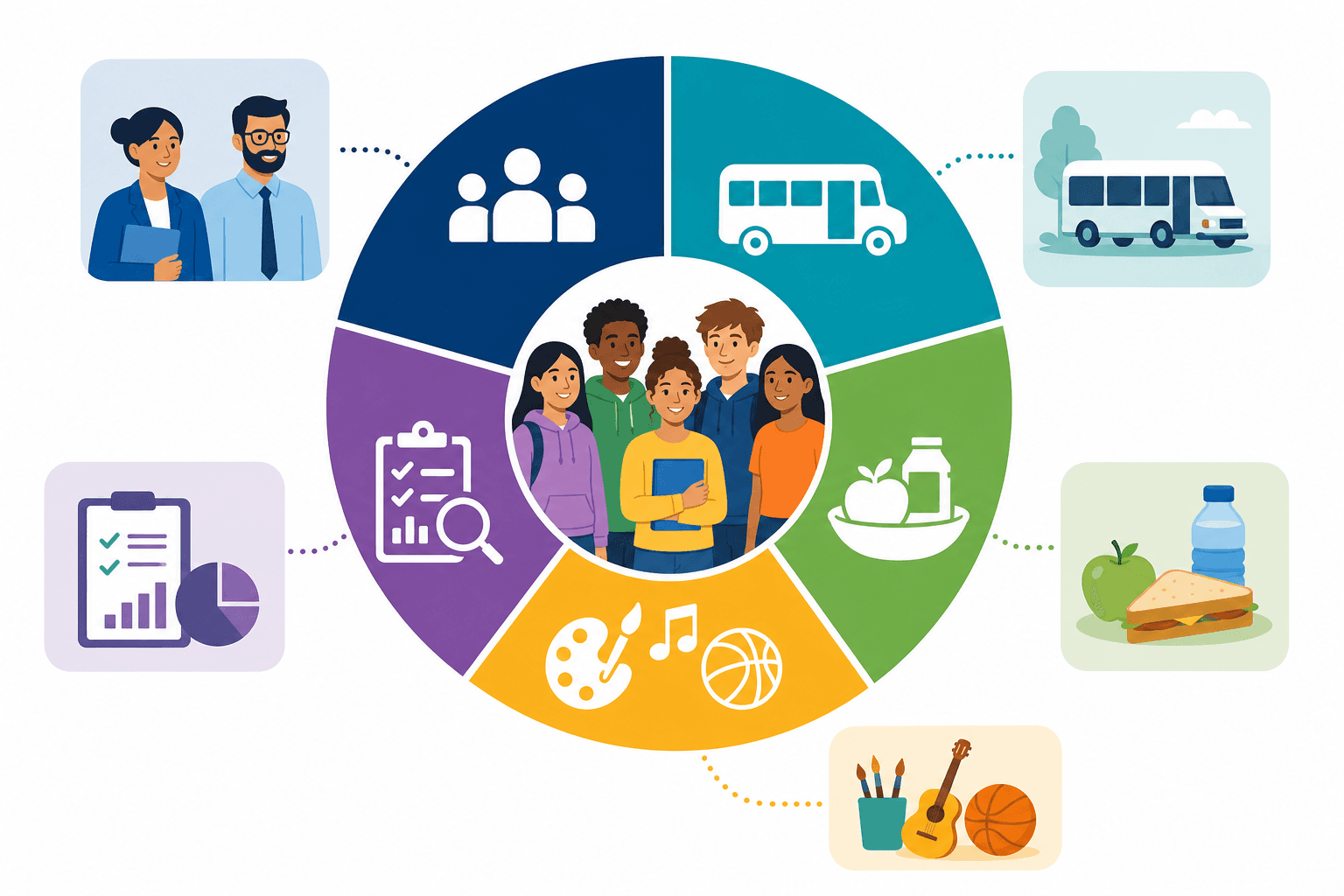
The program design section of a youth proposal gives clock times, a ratio for every activity block, and the screening every adult completes before contact with participants. It is usually the thinnest part of a first draft.
Cover six things:
The daily block schedule. Arrival and attendance check, snack or supper, homework and academic support, enrichment rotation, closing circle, dismissal. Give clock times.
Ratios by block. Requirements differ by activity type and by whether your site is licensed. State the ratio per block rather than as a program average, because a 1:10 average can conceal a 1:22 gym period.
Screening and training. List what each adult completes, including volunteers and contracted instructors, and name who tracks expiration dates. Say which trainings happen before an adult works unsupervised, such as mandated reporter training and de-escalation.
Transportation. For many youth programs, transportation decides whether enrollment turns into attendance. Name the route, the vehicle, the driver credential, and the release procedure at drop-off. Without those, the enrollment target has nothing holding it up.
Food. After-school programs can claim meal and snack reimbursement through the At-Risk Afterschool Meals component of the Child and Adult Care Food Program. The site has to sit in a school attendance area where at least half of children qualify for free or reduced-price school meals, offer educational or enrichment activities, and meet state or local licensing, health, or safety codes, and the reimbursement runs during the school year (USDA Food and Nutrition Service, accessed September 2026). If you participate, show that reimbursement as revenue instead of asking the funder to pay for food twice.
Family engagement. Name the contact points: enrollment conference, mid-year progress conversation, showcase night, and the channel used for day-to-day communication.
Write this section before the budget. Every ratio and every training named here becomes a budget line, which is the reverse of the order most drafts follow. The general grant proposal walkthrough covers section order for the rest of the document.
Youth Program Budget: What to Include and What It Costs
A youth program budget carries lines most nonprofit budgets do not: background checks, transportation, food on days outside a reimbursement program, contracted instructors, and participant stipends.
The composite example organization's 12-month request breaks down as follows. The figures are illustrative and belong to that example rather than to a real program.
| Budget line | Amount |
|---|---|
| Site coordinator, 1.0 FTE | $46,000 |
| Youth development staff, 3 part-time positions | $27,000 |
| Payroll taxes and benefits, 18% of salaries | $13,140 |
| Background checks and clearances, 14 adults | $700 |
| Snacks and suppers on non-reimbursable days | $3,400 |
| Transportation: van insurance, fuel, driver hours | $6,800 |
| Enrichment supplies and STEM materials | $4,000 |
| Contracted teaching artists and coaches | $6,000 |
| Field trips and family showcase night | $2,400 |
| Teen leadership stipends, 8 participants | $4,800 |
| Staff training: youth development, mandated reporting, de-escalation | $1,600 |
| Evaluation: attendance system, survey licenses, analyst hours | $4,160 |
| Total direct costs | $120,000 |
| Indirect costs at the example organization's negotiated rate of 10% | $12,000 |
| Total request | $132,000 |
The 10 percent indirect rate in that example budget is the organization's own negotiated rate, set in an agreement with its cognizant agency for indirect costs. A negotiated rate belongs to one organization and is not the de minimis rate.
Four lines draw the most questions:
- Teen stipends. Older participants paid for leadership roles need an explanation of what the stipend buys: hours worked, training completed, or both. Unexplained payments to participants invite follow-up.
- Background checks. A small line, and its absence signals that screening was never budgeted, and therefore may not be happening.
- Contracted instructors. Show the rate and the session count. A flat "teaching artists, $6,000" reads as a placeholder.
- Evaluation. A proposal that promises school-day outcome data and budgets nothing to collect it is not credible. Budget it.
For indirect costs, use your negotiated rate if you hold one. If you do not, a federal award lets you elect a de minimis rate of up to 15 percent of modified total direct costs under 2 CFR 200.414 (eCFR, accessed September 2026). The 2024 revision to the Uniform Guidance, published April 22, 2024, raised that ceiling from 10 percent, so check the section itself rather than an older template. For line formatting and the narrative that accompanies each line, see the grant proposal budget template with nonprofit examples.
Youth Program Evaluation: Outcomes a Funder Will Accept
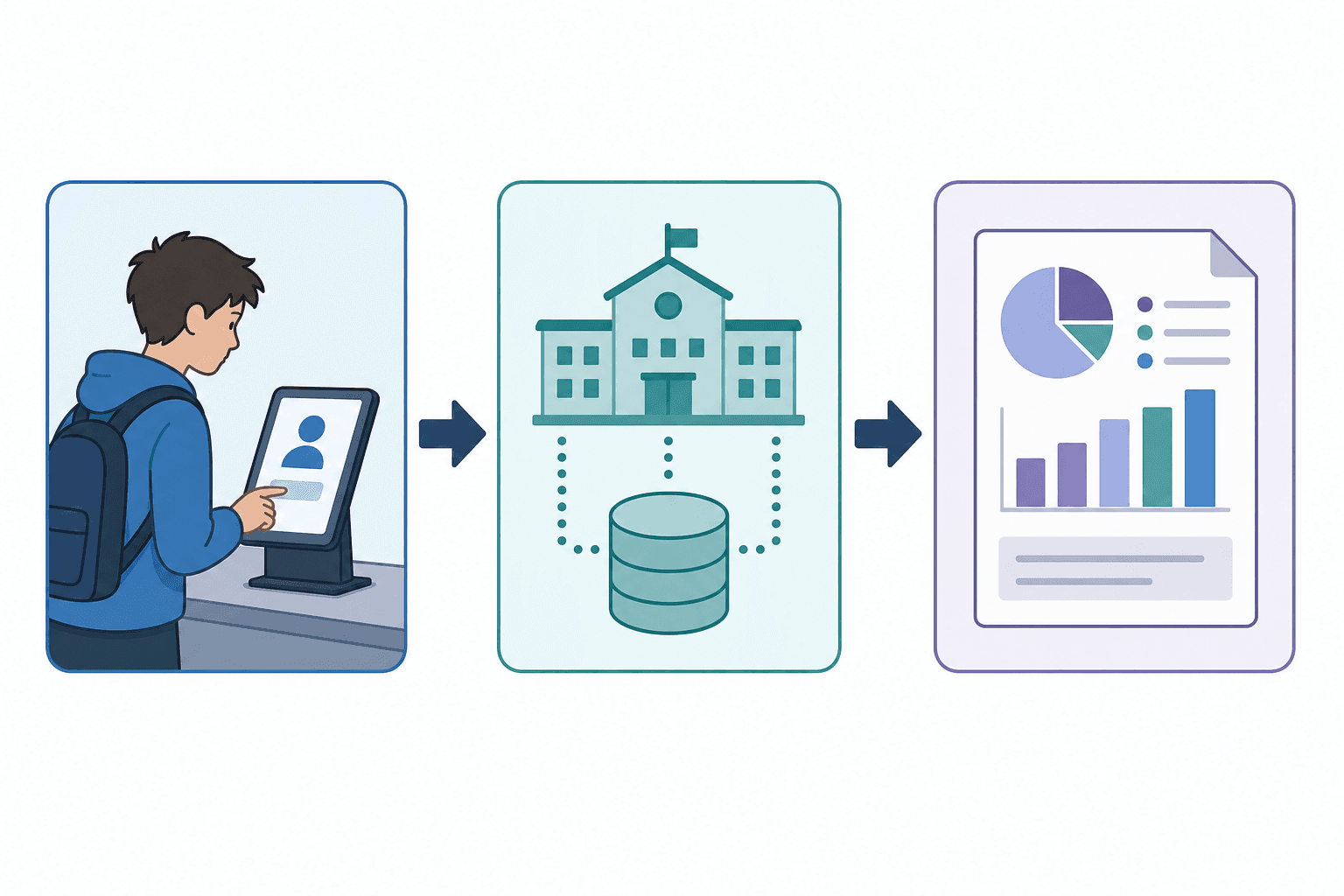
Attendance shows the program ran. A school-day measure shows it mattered, so a youth evaluation plan needs both, plus one social or behavioral measure and a named collector for each one.
| Measure | What it shows | Source | Collected |
|---|---|---|---|
| Program days attended per participant | Dosage, the base for every other claim | Daily sign-in system | Every session |
| Regular attendee count | How many participants received a real intervention | Attendance system | Monthly |
| School-day attendance rate | Whether program attendance moved school attendance | District data share | Fall and spring |
| Course grades or credit status | Academic effect for participants | District data share | Each marking period |
| Behavior referrals | Change in school-day conduct | District data share | Fall and spring |
| Youth social and emotional survey | Self-reported skills the program targets | Validated youth survey | Baseline and year end |
| Family engagement contacts | Whether caregivers stay reachable | Program log | Monthly |
| Fall-to-spring retention | Whether participants stay once enrolled | Attendance system | End of year |
The permission chain deserves its own paragraph in the proposal. Student-level school records are protected under the Family Educational Rights and Privacy Act and its implementing regulations at 34 CFR Part 99 (eCFR, accessed September 2026). Districts release those records to an outside evaluator only under stated conditions, so ask the district which route applies to you: a written agreement under one of the exceptions in 34 CFR 99.31, or guardian consent collected at enrollment. Write the route and its date into the proposal timeline. Proposals routinely assume school data will arrive on its own, and it does not.
Keep the instrument list short. One validated youth survey run twice, plus attendance, plus one district data pull will outperform five instruments you never administer. The evaluation plan template and examples lays out measures, methods, and reporting schedule in the format funders ask for.
What a Sample Nonprofit Grant Proposal Leaves Out for Youth Programs
General nonprofit proposal samples omit the sections a youth application needs most: supervision ratios, adult screening, transportation, food service, dosage definitions, and the student data permission chain.
If you adapt a general template, add the youth-specific sections before you submit.
| Missing from generic templates | Why a youth application needs it |
|---|---|
| Ratio by activity block | Safety scoring and licensing compliance |
| Screening and clearance schedule | Confirms every adult in the room is cleared |
| Dosage definition | Separates real participation from a drop-in count |
| Transportation plan | Predicts whether enrolled participants actually attend |
| Meal or snack plan | Programs in the after-school window feed participants |
| Data sharing agreement status | Determines whether promised outcomes are collectible |
| Summer and school-break coverage | Answers what happens when school is closed |
Youth-serving organizations that also run adult programming should keep the youth budget and the youth outcomes in their own sections. A reviewer assigned to a youth portfolio needs that population's numbers, and a merged table hides them.
Where to Find Youth Program Funders
Youth funding comes from three distinct pools: federal out-of-school-time programs administered by state agencies, state and municipal youth services departments, and private foundations that fund youth development directly.
The Nita M. Lowey 21st Century Community Learning Centers program, authorized under Title IV, Part B of the Elementary and Secondary Education Act, supports academic enrichment during non-school hours. It is a formula grant to state educational agencies under assistance listing 84.287, and each state runs its own subgrant competition (U.S. Department of Education, Office of Elementary and Secondary Education, accessed September 2026). Deadlines and stated priorities differ by state, so no single national portal lists them all.
Private foundation support for youth work is large and mostly invisible to keyword search. GrantCue's IRS Form 990-PF corpus, measured on September 10, 2026, holds 95,969 grant line items whose stated purpose matches youth programming, totaling $3.6 billion. Those grants appear in tax filings rather than application portals.
Methodology: counts reflect grant records in GrantCue's IRS 990-PF corpus as measured on September 10, 2026, classified by the purpose stated on each grant line. The corpus holds roughly 2.4 million grant line items, drawn from each foundation's most recent reported fiscal year rather than from a single calendar year. Lines with no stated purpose are excluded, so both the count and the dollar total are a floor for youth funding rather than a complete sector census.
GrantCue searches federal and state portals and surfaces 990-PF foundation records next to them, so you can search open grants and prior foundation giving in one place.
How to Use This Sample Grant Proposal for Youth Program Applications
The worked example in this guide is a composite: a 60-slot after-school program at one middle school, asking $132,000 over twelve months. Adapt it in a fixed order, because each step constrains the one after it.
- Need data first. Replace the district, school, and attendance-zone figures with your own before you touch anything else.
- Objective numbers second. Set the dosage threshold, then set the enrollment, regular-attendee, and average-daily-attendance targets that follow from it.
- Budget third. Every ratio and every training named in the program design becomes a line.
- Evaluation instruments fourth. Pick measures you can collect given the district agreement you hold or can get signed before the project period starts.
- Executive summary last. It summarizes decisions you have not made yet when you start.
Keep the ratio table and the outcome definitions in one place so the next application starts from them. For the sections every sector shares, the next step is the full grant proposal walkthrough.
FAQ
How long should a youth program grant proposal be?
Follow the funder's stated page limit exactly. Where no limit appears, write only as long as the questions require and move supporting detail into attachments. A state out-of-school-time application usually runs far longer than a foundation request, because it adds assurances, a partnership agreement, and a detailed budget narrative.
What should an after-school program budget include?
Staff salaries and payroll taxes, background checks and clearances, transportation, food on days outside a reimbursement program, enrichment supplies, contracted instructors, participant stipends, staff training, evaluation costs, and indirect costs. Leave out transportation, screening, or evaluation and you will get asked about all three.
How do you write a statement of need for a youth program?
Name the school and the attendance zone, quantify the unsupervised hours between dismissal and caregiver return, and cite district or state report card data for that specific school. Add your waitlist if you have one, then state which young people you will prioritize and who refers them.
What outcomes do funders want from youth programs?
Report program days attended and the number of regular attendees, then pair that dosage with one school-day measure such as attendance rate or course grades and one measure from a validated youth survey.
Can you adapt a general nonprofit proposal sample for a youth program?
Yes, if you add the youth-specific sections. A general sample supplies the narrative skeleton. It will not include staffing ratios, adult screening, transportation, meal service, a dosage definition, or the district data sharing agreement that makes your outcome claims collectible. Add those six, and keep the ratio table as its own attachment when the page limit is tight.
Do youth program grants require matching funds?
Some do and some do not. Out-of-school-time subgrants administered by state agencies may carry a match or maintenance-of-effort condition, while many private foundation youth grants carry none. The application guidelines state the requirement, so never assume in either direction.