Outputs vs Outcomes in a Grant Proposal: How to Fix a Not Measurable Objective
The difference between outputs and outcomes in a grant proposal, with CDC and federal definitions, a six-question test for measurable objectives, examples by program type, and one objective marked not measurable, rewritten step by step.

In this article (11)
- Quick Answer: What Is the Difference Between Outputs and Outcomes in a Grant?
- Outputs and Outcomes Defined
- Why Funders Return Proposals as Not Measurable
- Fixing a Returned Objective: An Invasive Shrub Example
- A Six-Question Test for Any Objective
- Outputs and Outcomes Examples by Program Type
- When an Output Is the Right Thing to Promise
- How to Turn an Output Into an Outcome
- Reporting Outcomes After the Award
- FAQ
- Rewrite Your Objectives Before the Next Deadline
When a reviewer writes "not measurable" next to an objective, the cause is usually one of two things. The objective counts the program's activity (an output) instead of the change it should produce (an outcome), or it names a change with no measure, baseline, target or date. This guide sets out the difference, then fixes one objective that came back from review marked not measurable.
Quick Answer: What Is the Difference Between Outputs and Outcomes in a Grant?
Outputs are what a program produces: sessions held, people served, acres treated. Outcomes are the changes that result: skills gained, jobs kept, native plants returning. Funders count outputs to confirm the work happened and judge outcomes to see whether it mattered. A measurable outcome names who changes, how much, from what baseline, by when, and how it is measured.
Writing your own? Start it as a draft in GrantCue, with AI help for each section. Start the objectives free
Outputs and Outcomes Defined
The CDC's program evaluation guide defines both terms. Outputs "are the products of program activities." Outcomes describe "who or what will change due to the program's efforts," and they run in sequence from shorter-term outcomes to intermediate and then longer-term ones (CDC Program Evaluation Framework, Step 2, updated August 18, 2024; read November 2026).
A proposal needs both kinds of measure. The trouble starts when an output is written where an outcome belongs.
Why Funders Return Proposals as Not Measurable
A reviewer marks an objective not measurable when they cannot picture the number that would show whether it was met. Federal rules make the expectation explicit. The Uniform Guidance says federal agencies should "clearly communicate in the Federal award any expected outcomes (such as outputs, service performance, or public impacts of any of these), indicators, targets, baseline data, or data collections that the recipient is responsible for measuring and reporting" (2 CFR 200.301, read November 2026). The Department of Education asks reviewers whether goals, objectives and outcomes are "clearly specified, measurable, and ambitious yet achievable within the project period" (34 CFR 75.210, read November 2026).
The same department's definitions show what that vocabulary means (34 CFR 77.1, read November 2026):
- A performance measure is "any quantitative indicator, statistic, or metric used to gauge program or project performance."
- A baseline is "the starting point from which performance is measured and targets are set."
- A performance target is "a level of performance that an applicant would seek to meet during the course of a project or as a result of a project."
An objective a reviewer can score has all three: a measure, a baseline and a target, plus a date. The usual failures are an objective that counts activity ("serve 200 families"), an outcome with no unit ("improve health"), a target with nothing to compare it to (below 10% of what starting level?), and a measure nobody has been assigned to collect.
Fixing a Returned Objective: An Invasive Shrub Example
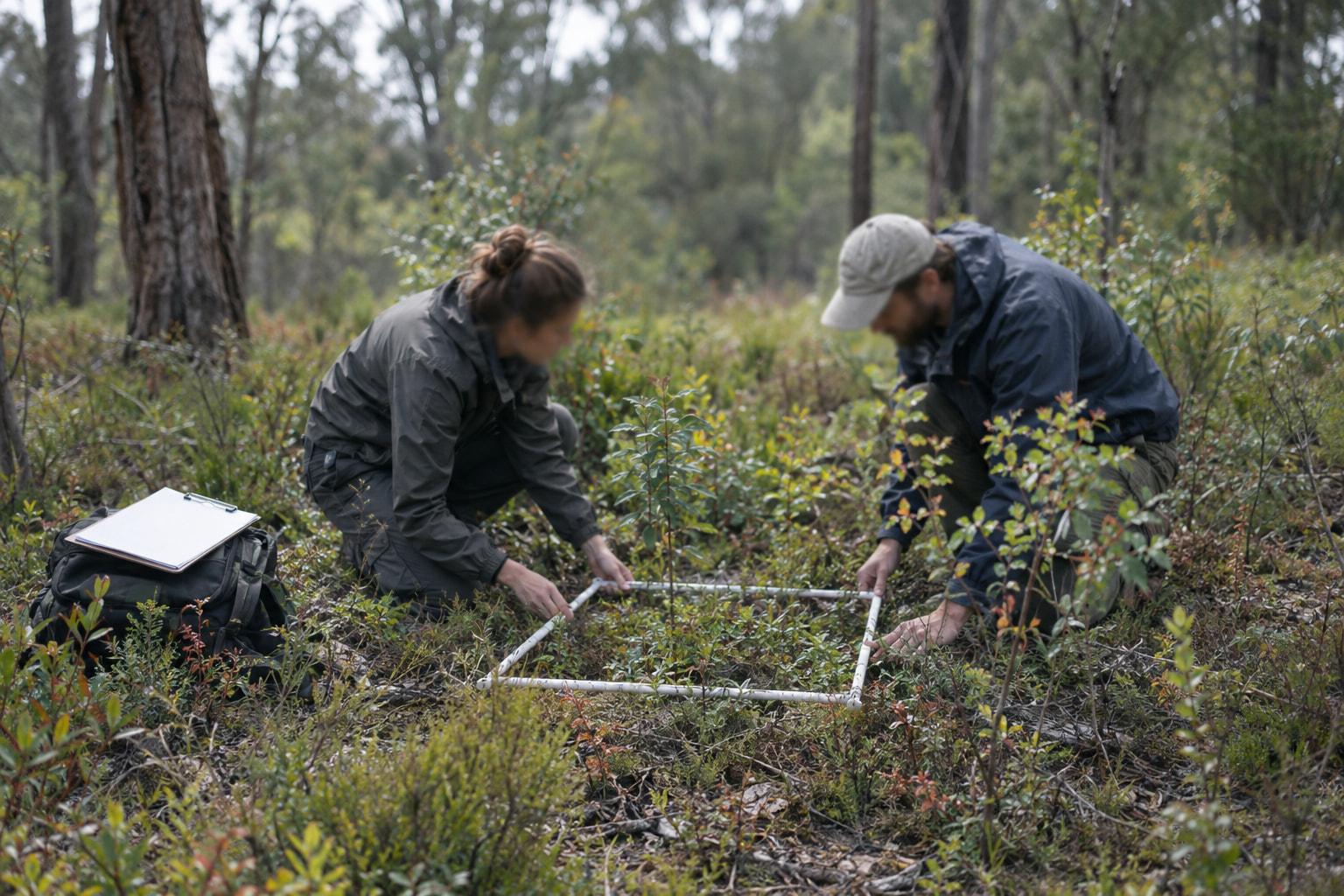
This example is illustrative. A fictional land trust is restoring a 12-acre creekside meadow by cutting invasive shrubs and replanting native species, and a reviewer marked this objective not measurable:
"Reduce the density of glossy buckthorn and autumn olive on the preserve to 10% or less over the course of the project."
A common first fix is to switch to something easy to count, such as the number of shrubs pulled or truckloads hauled away. That is measurable, but it is an output: it counts the crew's work and says nothing about whether the meadow recovers. The objective is right to aim at an outcome; it lacks the parts that make an outcome measurable.
Here is one way to rewrite it. All figures are illustrative.
- Outcome objective 1: By September 30 of year two, average cover of glossy buckthorn and autumn olive in 20 permanent monitoring plots will fall below 10%, from the baseline measured before treatment in the first spring. The project lead will estimate cover with the same plot method each June and September.
- Outcome objective 2: By September 30 of year two, native species will make up at least half of the plant cover in the same 20 plots, up from the first-spring baseline.
- Outputs to report alongside them: acres treated, shrubs cut and stumps treated, native plugs planted, volunteer workdays and, if the funder wants it, the number of shrubs removed.
Each objective now has a measure (percent cover), a place (20 permanent plots), a baseline (first spring, before treatment), a target (below 10%; at least half native), a date, a method and an owner. The shrub count is still reported, as an output that shows the work was done.
A Six-Question Test for Any Objective
An objective is measurable when it answers six questions. Run every objective through them before submission; any blank is the reason a reviewer will write "not measurable."
The guide to SMART goals and objectives covers the wording, and the statement of need is the usual source of the baseline: the number you cite to prove the problem is often the number your outcome has to move. A community needs assessment is where that number is first found.
Outputs and Outcomes Examples by Program Type
The same program can be described either way. These pairs show the shift from what the program did to what changed. The targets are illustrative.
The health outreach row comes from the Community Tool Box, which uses it to separate a process objective ("During the first project year, provide evidence-informed heart-health information through at least 20 community and clinical outreach locations") from an outcome objective ("By the end of the three-year project period, reduce the prevalence of uncontrolled high blood pressure among participating adults by an agreed-upon amount from baseline") (Community Tool Box, Chapter 42, Section 5, read November 2026).
When an Output Is the Right Thing to Promise
Outputs belong in a proposal, and some objectives should be outputs. A process objective that commits to delivering a set number of sessions, sites or participants tells the funder the work will reach the scale the budget pays for. A one-year grant for equipment, a building repair or an event may have no outcome it can measure inside the grant period, and an honest output target is better than an outcome no one will collect.
The CDC guide notes that outputs, as indicators of the activities, "fit best in the narrative section that describes the evaluation measures." In practice that means the evaluation plan lists them as delivery measures, while the objectives section leads with outcomes. A short grant can promise short-term outcomes and show, in the logic model, how they connect to the long-term change the funder cares about. The guide to theory of change vs logic model covers mapping that longer path. Promising a long-term outcome inside a one-year grant sets up a final report that cannot show it.
How to Turn an Output Into an Outcome
Take any output and ask what should be different because of it. The CDC guide calls this asking "so what" of each activity. Then make the answer measurable.
- Write the output as it stands: "Provide 12 financial coaching sessions to 50 households."
- Ask so what: households should have less debt and more savings.
- Pick the indicator you can actually collect: the share of households with an emergency savings balance, checked from statements they bring to sessions.
- Set the baseline: the share with savings at the first session.
- Set the target and the date: 50% of households that attend eight or more sessions have at least $500 in savings at the last session, up from the intake share.
- Name the tool and the person: the coach records the balance from the statement at intake and at the last session.
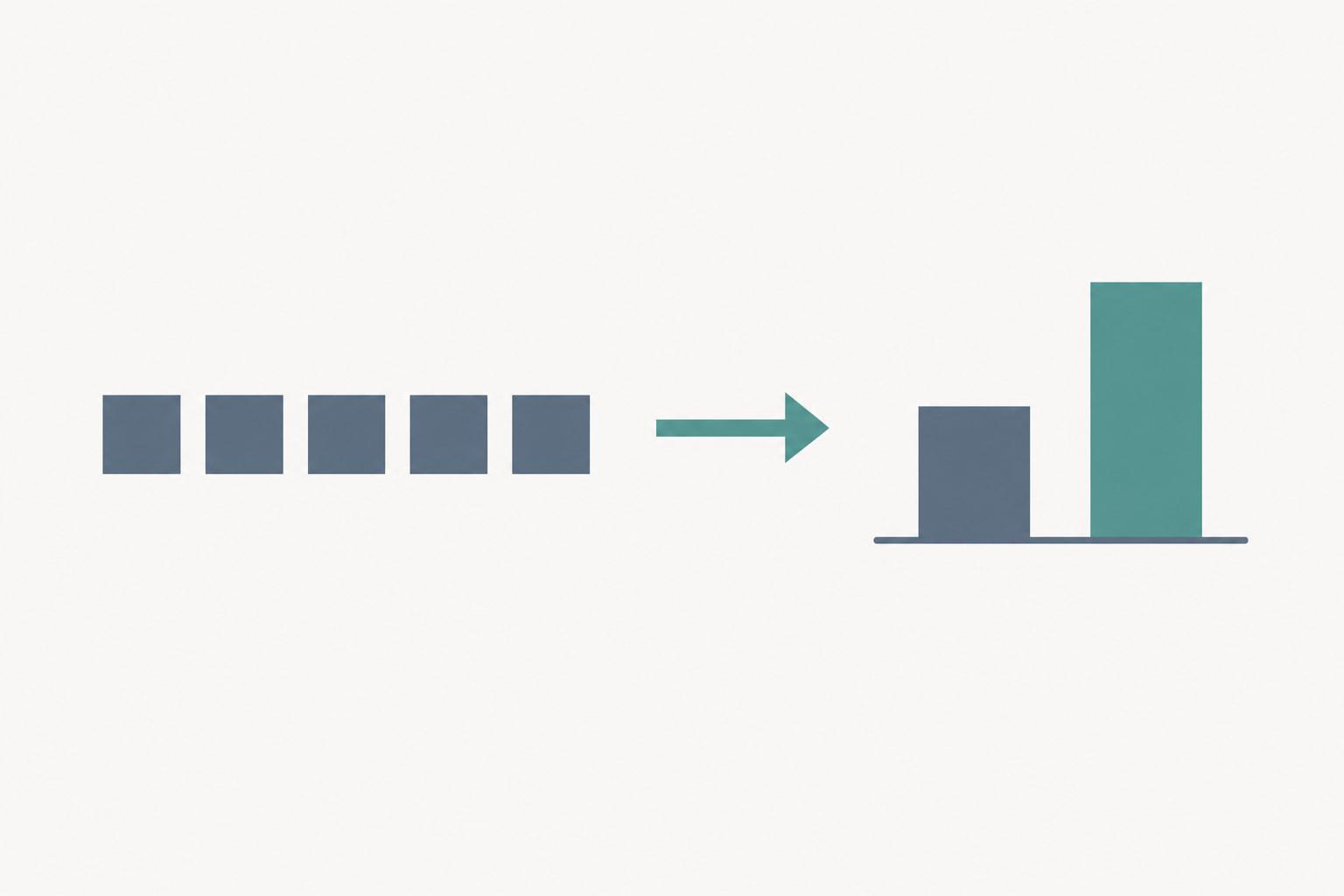
Keep the output too. "12 sessions to 50 households" goes in the evaluation plan as a delivery measure, where it shows the outcome result came from a program that ran as planned. The activities that produce the output are described in the methods section.
Reporting Outcomes After the Award
The outcomes you promise become the numbers you report, so write only outcomes you can collect on the funder's schedule. Set up the data collection before the first participant arrives: the intake form that captures the baseline, the follow-up date, and the person responsible. How to track client outcomes for grants covers the collection points, and the guide to grant metrics and KPIs covers choosing the few measures worth reporting. When the report is due, the grant progress report template shows where outputs and outcomes go. At the end of the grant, the final grant report template shows how to report the outcomes against their targets. For a public summary of results, see the grant impact report template.
In GrantCue, each collection date can be a task with an owner and a due date on the award's record, with reminders before it is due, so the follow-up survey does not depend on someone remembering it. A free account includes deadline and task tracking.
FAQ
How do you write outcomes for a grant?
Start from the change the program should produce, then name who changes, what changes, by how much, from what baseline, by what date and how it will be measured. For example: 70% of adults who complete training will be employed 90 days after finishing, verified by employer contact. Write one outcome per objective and check that your evaluation plan collects each one.
Can you give examples of outputs and outcomes?
Outputs count what a program delivers: 40 adults trained, 200 families attending classes, 12 acres treated. Outcomes describe what changed: 70% of trainees employed at 90 days, more families eating vegetables daily, invasive plant cover below 10% in monitored plots. Each output above has a matching outcome, and a proposal usually reports both.
What is the difference between a result and an outcome?
"Result" is a general word that funders use for both outputs and outcomes, so check how the funder's guidelines use it. In evaluation terms, an outcome is a specific kind of result: a change in people, places or systems that follows from the program. An output is a result of activity, such as a count of sessions or participants.
Is the number of people served an output or an outcome?
It is an output. The number served counts how far the program reached, not what changed for the people it reached. It is still worth reporting, because funders use it to check scale and cost per participant, but pair it with at least one outcome that describes what those people gained.
What is the difference between an outcome and an impact?
Funders use impact in two ways. Some mean the long-term, community-level change a program contributes to, such as lower poverty in a county. Others, especially in research, mean a change shown to be caused by the program, usually through a comparison group. Read the funder's guidelines, and do not promise impact in either sense from a short program grant.
Why did a reviewer say our objective is not measurable?
Usually the objective is missing one of these: a defined measure, a baseline, a numeric target, a date, or a method of collection. Sometimes it counts activity instead of change. Run it through the six questions: who changes, what changes, how much, from what, by when, and measured how. Any blank answer is the gap.
Rewrite Your Objectives Before the Next Deadline
Go through each objective in your draft, sort it into output or outcome, and run the outcomes through the six questions. Most fixes take one sentence. Then carry the measures into the evaluation plan, and see the guide to writing a grant proposal for how to write each section and the grant proposal outline for their order. The free files at /templates include a SMART goals and objectives worksheet and a logic model template.
To draft the whole proposal with these sections in one place, start it in a free GrantCue account; a new account includes 14 days of the Team plan with AI writing help, and no card is needed. When the objectives are ready, look for a funder whose priorities match in grant search, or start from how to find grants for nonprofits.