Grant Metrics and KPIs: Examples of Metrics for Grants and How to Report Them
Examples of metrics for grants across output, outcome, financial, and process categories, with guidance on setting targets and a reporting cadence you can run.

In this article (12)
- Quick Answer: What Are Examples of Metrics for Grants?
- Examples of Metrics for Grants
- Output Metrics vs Outcome Metrics
- Grant KPIs by Program Type
- How to Choose Metrics for a Grant Proposal
- Tracking Spend Against the Award Ceiling
- Grant Metrics Example: A Full Set for a Small Award
- How Often to Report Grant Metrics
- What to Do When You Miss a Grant Metric Target
- Common Mistakes with Grant Metrics
- FAQ
- Where to Go Next
Most grant reports break in the same place. The numbers in the report do not line up with the numbers promised in the proposal, because nobody chose the metrics with collection in mind. Examples of metrics for grants are easy to find. The harder job is picking the small set your team can actually gather every quarter, then reporting it the same way for the life of the award.
Quick Answer: What Are Examples of Metrics for Grants?
Examples of metrics for grants fall into four groups. Output metrics count what a program delivers, such as students enrolled or meals distributed. Outcome metrics measure change, such as reading level gains or job placements. Financial metrics track spending against the award, including percent expended and match contributed. Process metrics track whether funder deliverables arrive on time.
Free download: Grant KPI tracker workbook as Excel .xlsx. No email address required.
Examples of Metrics for Grants
A grant metric is a defined, countable measure that shows whether an awarded project is doing what the proposal said it would do. Most proposals and progress reports draw on the same short list, and every metric on that list comes off a record staff already keep.
Two habits separate a metric a funder trusts from a number that raises questions. Write the counting rule down before the award starts: who counts as a participant, what counts as a completion, what gets excluded. Then name one person responsible for producing the number each reporting period. Metrics get reported during grants lifecycle management, but they are chosen months earlier while the proposal is still being drafted, and a metric with no collection plan will not be there at report time.
Output Metrics vs Outcome Metrics
An output metric counts activity the program controls. An outcome metric measures a change in the people or conditions the program serves. Write both into a proposal, because a project described only through outputs reads as an activity plan.
The two are linked. Outputs are the volume of the work and outcomes are the result of it. A logic model is where that connection gets written down, one column at a time. If you are drafting a project now, set the measures alongside your goals and objectives so each objective carries a single indicator, and check that the outputs you count plausibly lead to the outcomes you claim.
One practical test settles most arguments about which column a measure belongs in. Ask whether the number would still be reportable if the program had no effect at all. Sessions held would be. A reading level gain would not. Anything that survives the test is an output, and it belongs in the report next to an outcome that fails it.

Grant KPIs by Program Type
The fastest route to a defensible indicator is the set of records your staff already keep. Sectors differ in what those records contain, so a tutoring program and a housing program end up measuring in different units even when both were funded for the same reason.
Sector norms are a starting point. Read the funder's own reporting form before you commit to an indicator, because a notice of funding opportunity will often name the performance measures the agency intends to collect and define them in its own terms. Where a funder publishes required measures, use their measures and their definitions rather than your internal ones, even when yours are better. A mismatch between the proposal and the report costs more credibility than an imperfect indicator.
Thin records are the usual constraint, and the fix is smaller than most teams expect. Take a composite example: a $25,000 request from a small literacy nonprofit to run after-school tutoring. It has a sign-in sheet and a volunteer schedule, and no assessment system at all. Building one is a real cost, so the honest options are to fund it in the budget or to pick an outcome the sign-in sheet can already support, such as the share of enrolled students who attend at least two thirds of sessions. Attendance is not a reading gain. It is a measure the organization can produce every quarter without inventing a process it cannot staff, and a funder can see exactly how it was calculated.
How to Choose Metrics for a Grant Proposal
Choose the smallest set of metrics that proves the project worked, and confirm each one can be collected before you write it into the proposal. Aim for three to six indicators, one per objective. More than that produces a reporting burden program staff quietly stop carrying partway through the award.
- Start from the objective. Each objective gets one indicator. If an objective has no measurable indicator, it is a value statement and needs rewriting.
- Name the data source for every indicator. Write the system, form, or record next to it. A new survey or a database you do not own is a cost you have to budget for.
- Set a baseline. A gain with no starting point is unreadable. If no baseline exists, say so and describe how the first reporting period will establish one.
- Set a target you can defend. Use your own prior program data where it exists. Where it does not, base the target on the size of the intervention and say what it is based on, and avoid a round percentage picked because it sounds ambitious.
- Pick the reporting frequency. Match it to the funder's report schedule so you never have to recalculate a figure on a different cycle.
- Write the counting rule. One sentence per metric that defines who or what is counted and what is excluded.
Six steps is more process than a two-page concept note deserves. Scale it: for a small award, the whole exercise is one table row per objective, filled in while you are building the budget.
The proposal document that carries this detail is the evaluation plan, and its figures have to reconcile with the grant proposal budget. If the budget funds 40 participants and the evaluation plan promises outcomes for 120, the two documents contradict each other before anyone reaches the narrative.
Tracking Spend Against the Award Ceiling
Tracking spend against the award ceiling means comparing cumulative expenditures and unliquidated financial obligations to the amount the funder authorized. For a Federal award the regulation names the result: 2 CFR 200.1 defines the unobligated balance as the authorized amount less the recipient's cumulative unliquidated financial obligations and expenditures (eCFR, 2 CFR 200.1, as amended at 89 FR 79732, October 1, 2024). The comparison covers the money side of the award, and it runs on a schedule through the whole period.
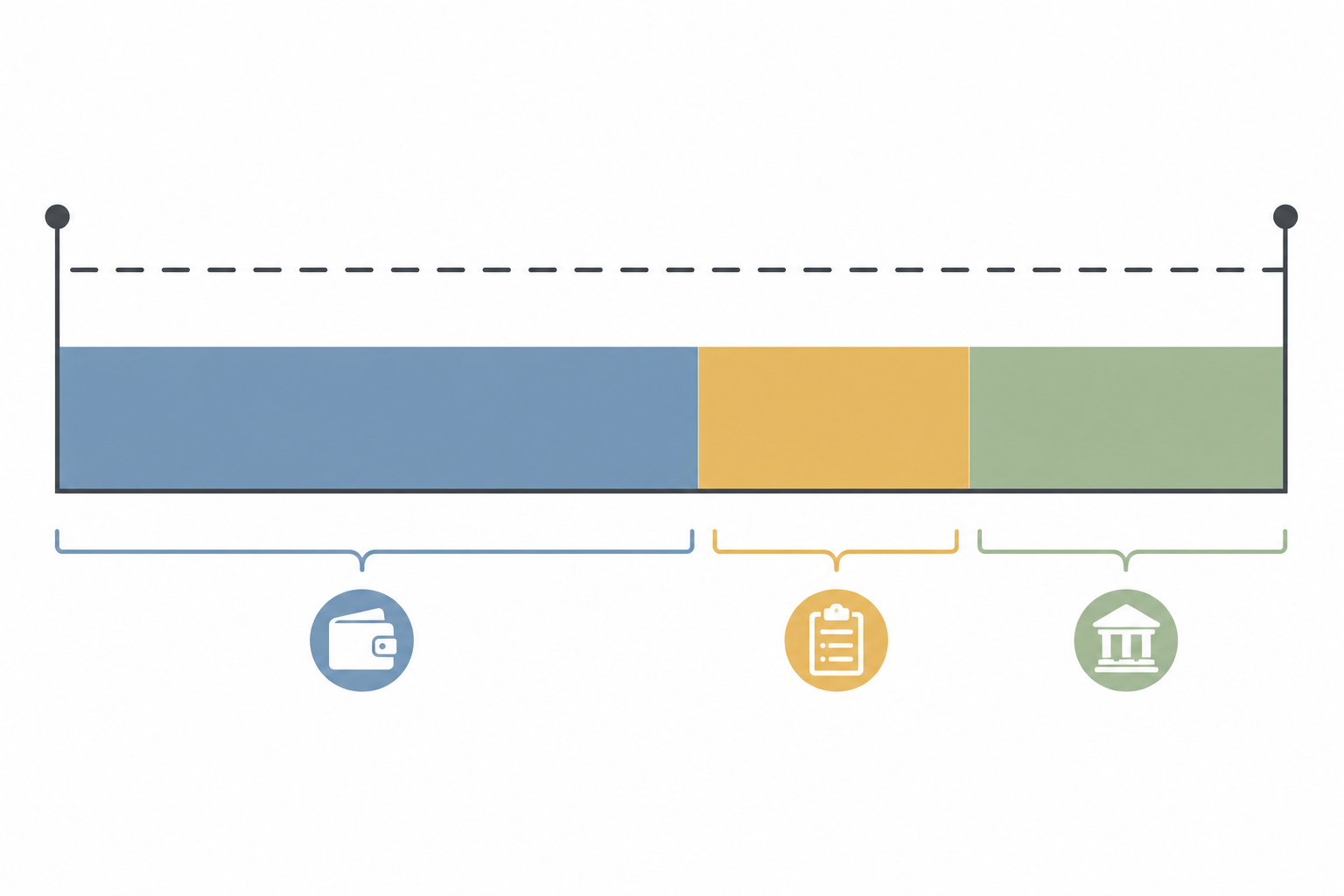
Run the reconciliation against the general ledger. A working spreadsheet drifts, and the ledger is the record that has to agree with the financial report you file. Purchase orders and signed contracts count as financial obligations under 2 CFR 200.1, and they consume the ceiling before the invoice arrives, so include them. And run it before a drawdown request, never after: 2 CFR 200.305(b)(1) requires advance payments to be limited to the minimum amounts needed and timed to the recipient's actual, immediate cash requirements (eCFR, retrieved September 10, 2026), which is hard to demonstrate from a figure nobody has reconciled.
Underspend is the quieter failure. A project sitting at a low percent expended halfway through the period usually means activities slipped, and the performance metrics will show the same slip a quarter later. Catching it midway through the period leaves time for a no-cost extension request or a rebudget conversation. Catching it at closeout leaves neither. This check belongs in the post-award stretch of the grant lifecycle, sitting next to the compliance calendar.
Grant Metrics Example: A Full Set for a Small Award
Here is the whole method applied to one award. The organization and every number below are illustrative, not a real client: a literacy nonprofit running after-school tutoring on a $25,000 award across twelve months, with a part-time coordinator responsible for collection and a small assessment line funded in the budget.
Each row carries a counting rule short enough to fit on one line. A student counts as enrolled when the intake form is signed, and counts once no matter how many terms they attend. A session counts when at least one student attends it. Both rules go into the proposal text, so the definition a funder reads at report time is the one the coordinator was using in January.
The financial row is worth working through, because the arithmetic is what turns it into a warning. Say the award runs January to December and the ledger shows $9,400 spent at the end of June. Six of twelve months have elapsed, so on-pace spend would be $12,500. The burn rate is $9,400 over six months, roughly $1,567 a month. Project that across the full twelve months and the award closes near $18,800, leaving about $6,200 unspent.
In June that gap still has answers. The program can add a summer session, move money to materials through a rebudget request, or ask the program officer about a no-cost extension. The same calculation run in November returns the same $6,200 and none of the options.
How Often to Report Grant Metrics
Report grant metrics on the funder's schedule and review them internally more often. In practice that means a weekly data-entry check, a monthly financial reconciliation, and a full review against targets each quarter.

The weekly check is the one teams skip, and it is the one that saves the quarter. Data that was never entered cannot be recovered three months later from memory; a missing week of attendance stays missing. Give the job to whoever already opens the intake system, and keep it to a single question: is last week in?
One rule protects you across every cadence. Never change a metric definition mid-award without telling the funder. A quiet redefinition makes the trend line meaningless, and if anyone compares two reports it looks deliberate. When a definition genuinely has to change, say so in the report, restate the prior period on the new definition, and show both figures for the period where they overlap. That takes a paragraph. Explaining it after the fact takes a phone call you would rather not have.
What to Do When You Miss a Grant Metric Target
Report the miss in the period it happened, name a cause specific enough to act on, and say what changes next period. Missed targets are ordinary. What gets a report questioned is an explanation vague enough that a reader cannot tell whether anyone noticed.
The same illustrative literacy award missed three targets in its first six months. Each one can be written up two ways.
The right-hand column gives the actual figure and names a cause a reader can check against the rest of the report. Both fit inside three sentences.
Sort the miss into one of two kinds before writing anything, because they call for different corrections. A target missed because the program did less than planned is an execution problem, and the fix belongs in the work plan. A target missed while the program ran exactly as designed points at the target itself, usually one set without a baseline. Revising a target is not the same as redefining a metric, and it survives review when it happens in writing: propose the revised figure for the remaining periods and keep the original visible so the change sits on the record.
Raise a large miss before the report if you can. A short note to the program officer at the point you know gives the funder room to respond with an extension or a rebudget, which is a different conversation from the one that starts when a shortfall first appears in a final report.
Common Mistakes with Grant Metrics
The most common mistakes with grant metrics are promising a number nobody is assigned to collect, counting the same participant twice, reporting outputs with no outcome attached, setting a target with no stated basis, and changing a definition mid-award. None of them are arithmetic errors. They come from choices made months earlier.
- A metric nobody owns. If no one is assigned the number, it does not exist at report time.
- The same person counted twice. Unique participants and total service contacts are different measures. Say which one you are reporting.
- Outputs with nothing attached to them. A list of activities with no result reads as a description of effort.
- Targets with no stated basis. A round number chosen because it looks ambitious will be questioned, and you are more likely to miss it.
- Changing the definition mid-award. The trend becomes unreadable and the change looks deliberate.
- Finance and program numbers that drift apart. Cost per participant calculated from a spreadsheet that disagrees with the ledger is a figure you cannot defend.
- Underspend that nobody flags. A low burn rate usually means the program is behind, and the finance column is where it surfaces first.
FAQ
What are examples of metrics for grants?
Start with the funder's own reporting form, which often names the performance measures it will collect and defines each one. Where nothing is specified, a workable default set is participants served, a completion or retention rate, an assessment or placement result, percent of award expended, and on-time submission of every funder deliverable.
What is the difference between outputs and outcomes in a grant?
Outputs count what the program delivered, such as the number of workshops held. Outcomes measure the change that resulted, such as the share of participants who gained a skill or kept a job. Outputs sit within the program's control; outcomes are shaped by it and by everything else in a participant's life. Report both.
How many KPIs should a grant proposal include?
Three to six indicators is a workable range, with one attached to each objective. A larger set is harder to collect consistently, and inconsistent collection produces gaps in later reports. Pick the measures that prove the project worked and drop anything included only because it sounds impressive.
How do you track grant spending against the award?
Compare cumulative expenditures and unliquidated financial obligations against the amount the funder authorized, and do it before each drawdown request. For a Federal award, 2 CFR 200.1 calls the result the unobligated balance (eCFR, as amended at 89 FR 79732, October 1, 2024). Running that comparison monthly against the general ledger surfaces a shortfall or an underspend while there is still time to act on it.
What are good performance indicators for a nonprofit grant?
Good indicators are specific, countable, tied to an objective, and drawn from records the organization already keeps. A useful test is whether two staff members counting independently would arrive at the same number. If the definition allows two answers, tighten it before the award starts.
How do you set targets for grant metrics?
Base the target on your own prior program data when you have it, and on the scale of the planned intervention when you do not. State that basis in the proposal itself, in one sentence next to the number. A modest target with a stated basis is easier to defend in review and easier to meet in the report.
Where to Go Next
Pick one active award and list every metric you committed to in the proposal. Check that each one has a named owner and a live data source. The gaps you find in that exercise are the reports that will be difficult later. Then run the first reconciliation against the general ledger this month, before the next report deadline forces it. The grant lifecycle guide covers the stages either side of reporting, if you want the wider sequence. GrantCue handles grant search across federal and state portals and keeps deadlines and tasks attached to the award they belong to.