Grant Closeout Checklist: How Nonprofits Finish a Grant the Right Way
A practical grant closeout checklist for nonprofit teams completing final reports, expenses, records, outcomes, and renewal planning.

In this article (17)
- Quick Answer: What Is Included in Grant Closeout?
- 1. Confirm the Closeout Requirements
- 2. Reconcile Expenses
- 3. Document Outcomes
- 4. Archive Records
- 5. Capture Lessons Learned
- Closeout Timeline
- Closeout Sequence
- Closeout Roles
- What Goes in the Final Report
- Closeout Risks
- Federal and Compliance Requirements
- Closeout to Renewal
- Closeout Email Template
- Closeout Quality Review
- FAQ
- Next Step
Grant closeout is the process of completing final reporting, reconciling expenses, archiving records, documenting outcomes, and deciding whether to pursue renewal. It is the final stage of grants lifecycle management, but it also sets up the next funding conversation. Done well, it leaves the organization with a complete record, a stronger funder relationship, and better evidence for the next proposal.
Quick Answer: What Is Included in Grant Closeout?
Grant closeout usually includes:
- Final program report.
- Final financial report.
- Expense reconciliation.
- Outcome documentation.
- Required attachments.
- Record retention.
- Funder confirmation.
- Internal lessons learned.
- Renewal decision.
1. Confirm the Closeout Requirements
Start with the award agreement and funder instructions. Confirm:
Add the due date to the grant calendar well before the grant ends.
2. Reconcile Expenses

Finance should reconcile:
- Total award amount.
- Payments received.
- Expenses charged.
- Remaining balance.
- Match or cost share.
- Indirect costs.
- Budget modifications.
- Unallowable expenses.
Before submitting the final financial report, finance should also confirm:
- The final expense total matches the ledger.
- Costs fall within the project and budget period.
- Restricted categories were followed.
- Required match is documented.
- Payroll, contractor, travel, supply, and indirect cost support is saved.
- Any budget revision approvals are stored with the award.
- Unspent funds are handled according to funder instructions.
- The final invoice or reimbursement request matches the report.
If anything does not match the approved budget, document the explanation and confirm whether funder approval is needed. Program staff should review the financial closeout too. They do not need to audit the ledger, but they should confirm the reported expenses make sense given the activities described in the narrative.
Payroll support is easier to confirm at closeout when each paycheck was split by award all along, the practice explained in job costing payroll for nonprofit grants.
3. Document Outcomes
The final report should connect back to the proposal.
Avoid waiting until the final report to find outcome data. Strong post-award grant management tracks it throughout the grant period.
4. Archive Records
Save:
- Original proposal.
- Award letter.
- Grant agreement.
- Approved budget.
- Budget modifications.
- Reports.
- Receipts and invoices.
- Funder communications.
- Final confirmation.
- Closeout notes.
Use consistent, clear file names so future staff can understand the record without opening every file:
Final Report Submitted 2026-10-30Final Budget ReconciliationAward LetterApproved BudgetFunder ConfirmationLessons Learned
Never rely on memory after a final report is submitted. Save the portal confirmation, email receipt, uploaded files, final expense total, submission date, and the staff member who submitted it. If the funder asks a question months later, you should be able to prove exactly what was sent and when.
5. Capture Lessons Learned
Ask:
- Did the project deliver what was promised?
- Was the budget realistic?
- Were reporting requirements manageable?
- Did the funder relationship strengthen?
- What should change next time?
- Should we reapply?
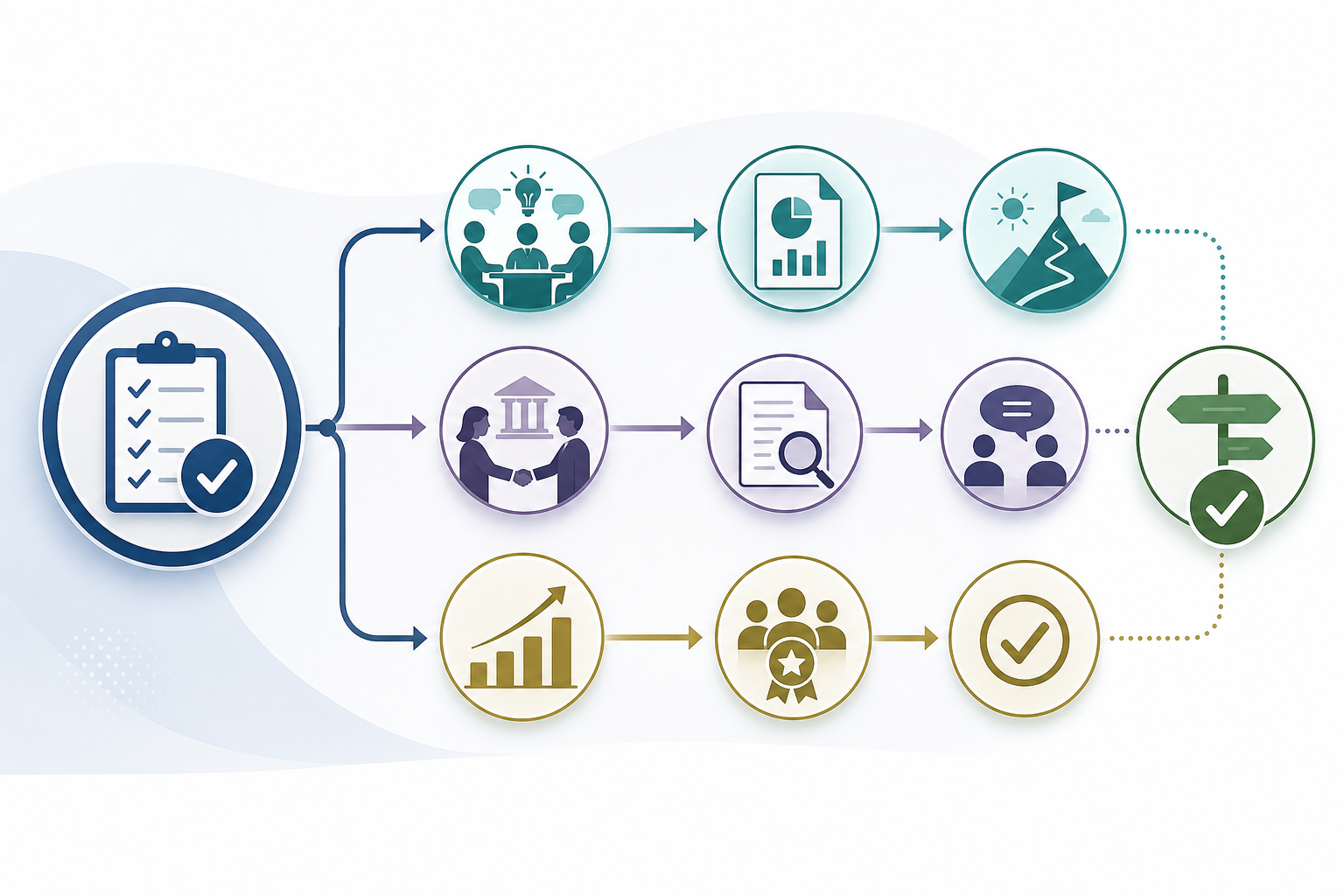
The closeout conversation should include program, finance, grants, and leadership.
Closeout Timeline
Start closeout at least 60 days before the grant end date when possible.
Complex awards may need a longer timeline.
Closeout Sequence
A strong closeout follows a predictable order. Because closeout is the last stage of grants lifecycle management, the sequence below works best when expenses and outcomes were tracked during the award instead of reconstructed at the end:
- Review the award agreement and reporting instructions.
- Confirm the project end date and final reporting due date.
- Stop or separate expenses that fall outside the approved period.
- Reconcile grant expenses to the approved budget.
- Confirm match and in-kind documentation if required.
- Gather outcome data and supporting evidence.
- Draft the final narrative report.
- Draft the final financial report or invoice.
- Review the report with program and finance.
- Submit through the official funder process.
- Save confirmation of submission.
- Archive final documents and record the retention date.
- Decide whether to pursue renewal or future funding.
This sequence helps because it separates closeout into decisions. If one step is blocked, the team can see exactly what is missing.
Closeout Roles
Closeout should not be left to one person unless that person has all program and financial information.
To see which grants are truly complete rather than just ended, track a short status view for each award:
- Grant name.
- Grant end date.
- Final report due date.
- Program data status.
- Finance reconciliation status.
- Final report status.
- Confirmation saved.
- Renewal decision.
What Goes in the Final Report
Most final reports need the same core elements, even when the funder uses a different form:
- Project summary and what was funded.
- Original goals.
- Activities completed.
- People or communities served.
- Outcomes achieved.
- Differences between the plan and reality.
- How funds were spent.
- Lessons learned.
- Partner contributions.
- Sustainability or next steps.
Use the original proposal as the outline and report against what was promised. If the proposal promised three workshops, the final report should say how many happened, who attended, what changed, and what evidence supports the claim. If the project changed, explain why and whether the funder approved the change.
The interim reports leading up to this one follow the same discipline; the grant progress report template covers them.
Closeout Risks
Federal and Compliance Requirements
The exact closeout process depends on the funder, the award agreement, and the funding source. A private foundation may require a final narrative and expense report. A state or federal pass-through award may require additional forms, final invoices, property records, match documentation, or monitoring responses.
For federal awards, closeout and record retention are addressed in 2 CFR Part 200. Under 2 CFR 200.334, federal award records are generally retained for three years from the date the final financial report is submitted, unless a longer period or exception applies. Private funders may set their own retention rules. When unsure, ask finance or compliance before setting a retention date or deleting records.
The practical takeaway is that final reporting is not the only closeout task. The organization also needs a complete record that can support later questions, monitoring, or audits. There is no universal closeout deadline, so treat the timeline above as a planning tool and adjust it to the award terms.
The federal grant compliance checklist covers the retention periods and audit thresholds that apply here.
Closeout to Renewal
Closeout is also a relationship moment. A complete final report can support the next proposal, while a rushed or incomplete one can weaken trust. A strong final report can be reused as a renewal proposal summary, a funder update, a board report, or a case for support.
After the report is submitted, hold a short renewal discussion:
- Did the project fit the funder's priorities?
- Were outcomes strong enough to justify another request?
- Did the award require more administrative effort than expected?
- Did the funder communicate clearly?
- Is there a logical next phase?
- What should change before applying again?
Save the renewal decision in the grant record. If the team plans to reapply, create a future opportunity with the expected cycle, likely request amount, and content to reuse. If the team decides not to reapply, document the reason so the same debate does not repeat next year. Save useful outcome summaries, budget notes, and funder feedback in a grant proposal library so the next proposal has real evidence instead of impact language rebuilt from memory.
Closeout Email Template
When the report is submitted, close the loop internally with a short note:
"The final report for [Grant Name] was submitted on [date]. Final expenses totaled [amount], and the project achieved [brief outcome]. Confirmation and supporting documents are saved in [location]. The team recommends [renewal/no renewal/follow-up] based on [reason]."
Closeout Quality Review
Before you archive the grant and call it closed, confirm:
- The final report answers the funder's questions.
- Financial totals match finance records.
- Outcomes are supported by data.
- Communications are saved.
- The renewal decision is recorded.
- Retention rules are understood.
Do not close the record just because the project ended. Close it when reporting, reconciliation, archiving, and renewal review are all complete.
FAQ
When should grant closeout begin?
Start closeout planning at least 30 to 60 days before the grant period ends. Complex government awards may require earlier preparation.
What happens if a nonprofit misses a final report?
Missing a final report can damage the funder relationship, delay payments, affect eligibility for future funding, or create compliance issues.
Is closeout only a finance task?
No. Finance handles expenses, but program staff provide outcomes, grant staff coordinate reporting, and leadership may own funder follow-up.
Next Step
Pick one grant that is coming due, add its final report date to a shared calendar, and start pulling outcomes and expenses now instead of in the final week. A clean closeout is the last stage of grants lifecycle management, and it is the moment the organization proves what happened, preserves the record, and decides what comes next. Bringing every reporting date and record into one system is the difference between a rushed closeout and a finished one.