Grant Proposal Library: How to Reuse Winning Nonprofit Grant Language
A practical guide explaining how nonprofits can build a grant proposal library for reusable language, outcomes, budgets, attachments, and AI-assisted drafting.
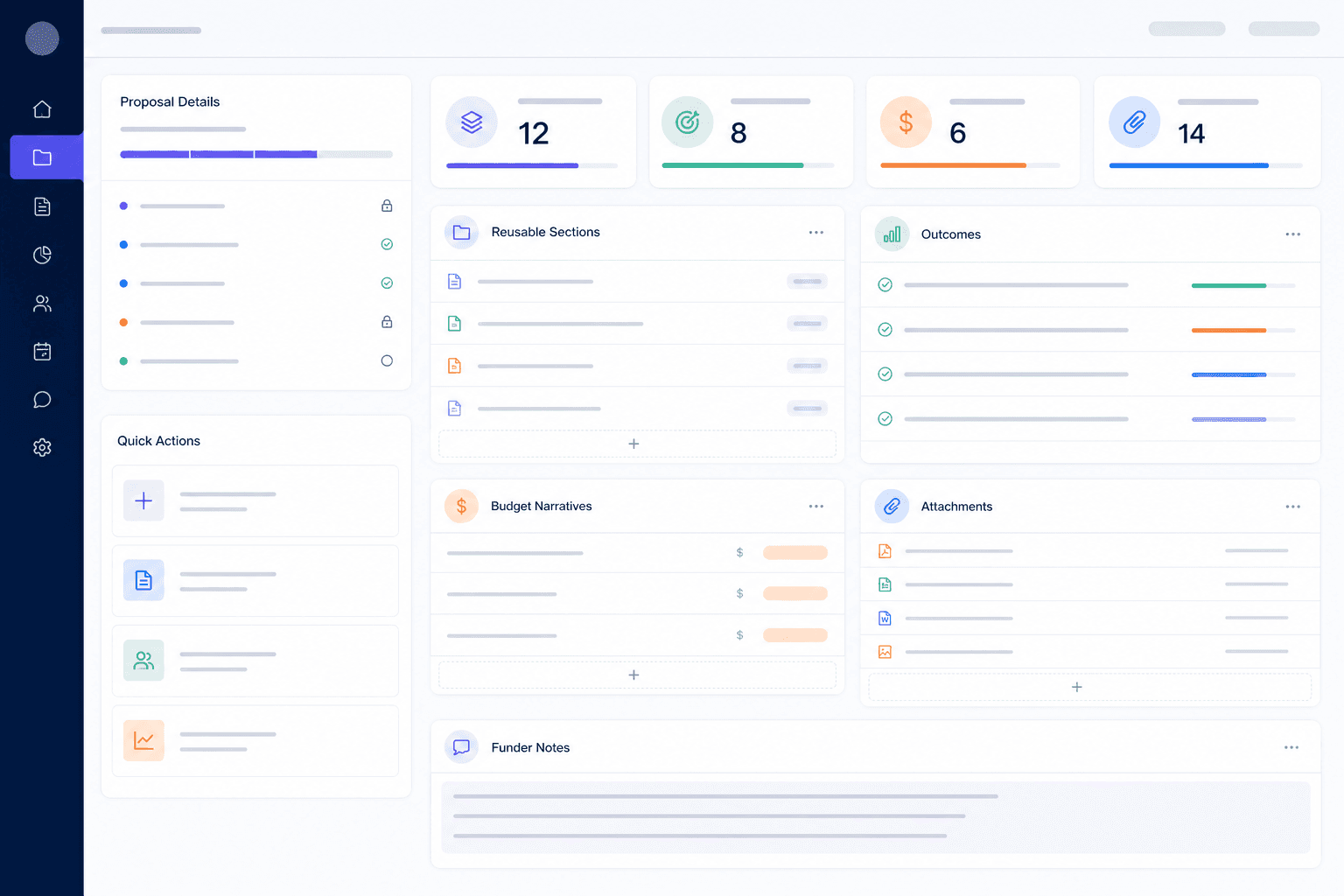
In this article (14)
- Quick Answer: What Should Go in a Grant Proposal Library?
- Why Proposal Libraries Matter
- Recommended Library Structure
- Library Governance
- How to Keep the Library Accurate
- How AI Should Use the Library
- Proposal Library vs Template
- Example Library Entry
- How to Add New Winning Language
- Proposal Library Roles
- Common Library Mistakes
- What to Do First
- FAQ
- Next Step
A grant proposal library is a central collection of approved language, examples, attachments, outcomes, budgets, and funder notes that nonprofit teams reuse across applications. It helps teams stop starting from a blank page and reduces the risk of copying outdated or inaccurate language from old files.
For AI-assisted grant writing, a proposal library is especially important. The strongest AI grant writing software uses trusted source material instead of inventing details.
Quick Answer: What Should Go in a Grant Proposal Library?
Why Proposal Libraries Matter
Most grant teams already have a proposal library. It is just hidden in old folders, email attachments, and submitted PDFs. The problem is that nobody knows which version is current.
A real library answers:
- Which language is approved?
- When was it last updated?
- Which proposal did it come from?
- Which funder accepted it?
- Which sections need fresh data?
- Which content should not be reused?
That structure turns past work into a strategic asset. A proposal library is one part of wider grants lifecycle management, which runs from the first application to closeout.
Recommended Library Structure

Organize the library by proposal section:
Use naming conventions that include the year and status, such as approved-2026, needs-update, or retired.
For a wider view, group content into five buckets: organization details (mission, history, service area, leadership, financial stewardship, capacity); programs (descriptions, logic models, staffing patterns, eligibility, timelines); evidence (need data, source notes, prior evaluation results, community assessment findings); reusable proposal sections (executive summaries, statements of need, objectives, evaluation plans, budget narratives, cover letters, and LOIs); and post-award material (final reports, outcome summaries, funder feedback, and closeout notes).
Library Governance
A proposal library needs rules. Without governance, it becomes another messy folder.
Set rules for:
- Who can mark language as approved.
- How often core language is reviewed.
- How retired language is labeled.
- Where source notes are stored.
- How AI can use library content.
- Who updates outcomes, budgets, and staff bios.
Use labels such as Approved, Needs Update, Retired, Draft, and Funder-Specific, and tag each block by section (mission, need, program, outcomes, evaluation, budget, staff, partner) so writers and AI tools can find the right material.
Every reusable block should answer:
- Is this current?
- Who approved it?
- What source supports it?
- When should it be reviewed?
- Where has it been used?
- Should AI be allowed to use it?
If those questions cannot be answered, the block should not be marked approved.
How to Keep the Library Accurate
Set a review rhythm. For each content block, include an owner and a last-reviewed date. This is useful for human writers and for AI tools that need reliable source material.
Quarterly:
- Update service numbers.
- Review outcomes.
- Check staff bios.
- Retire outdated program descriptions.
- Remove duplicate blocks and archive old drafts.
Annually:
- Update organizational history.
- Review strategic priorities.
- Refresh budget narrative assumptions.
- Archive old proposals.
After every submission:
- Save the final proposal and final budget.
- Mark reusable sections.
- Record funder feedback.
A quarterly 30-minute review meeting keeps this habit alive: check blocks marked Needs Update, confirm whether program descriptions changed, update outcome numbers, retire old budget language, and add strong language from recent submissions. Without a review habit, even good library content becomes stale.
How AI Should Use the Library
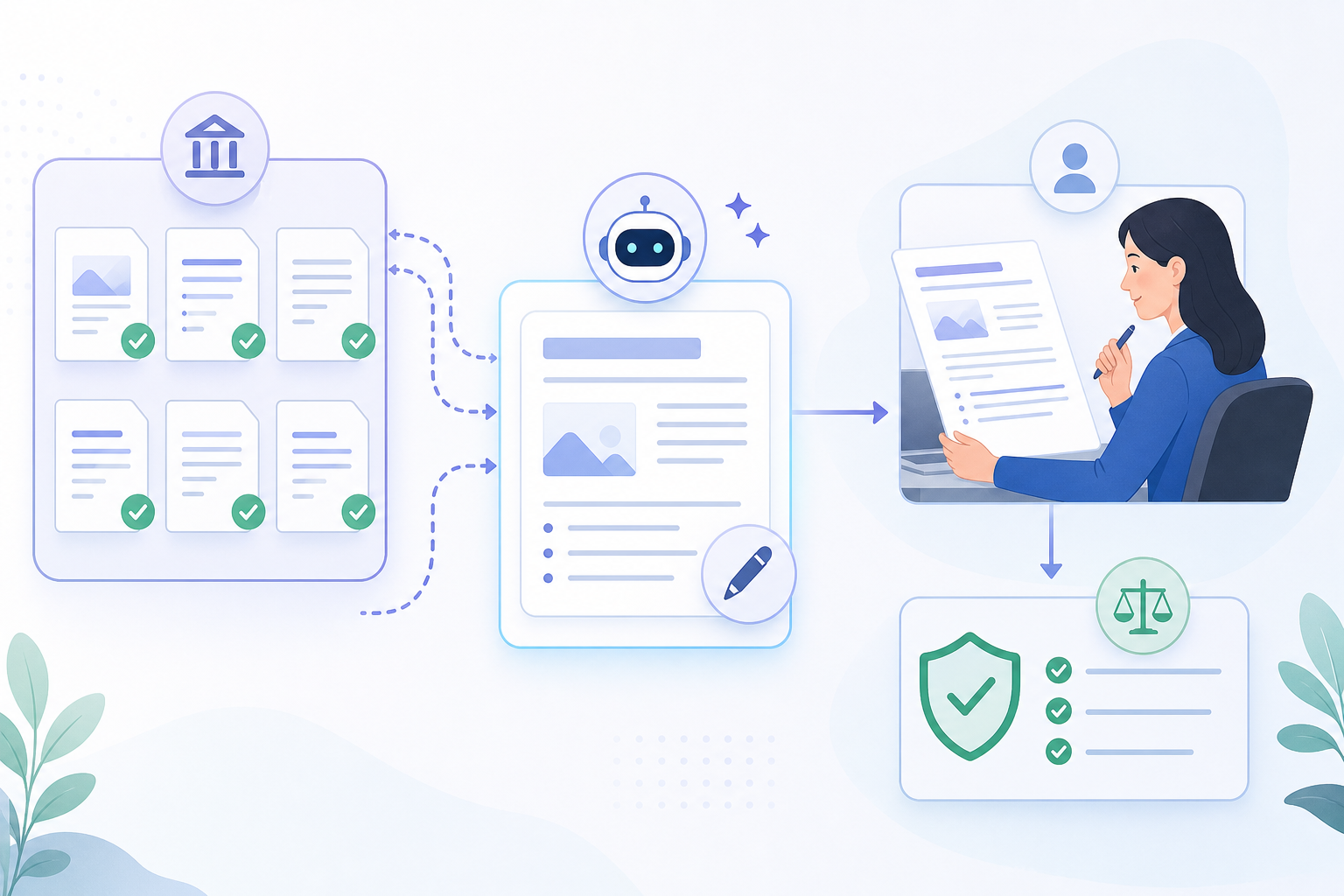
AI should treat the proposal library as source material rather than roaming through old documents blindly. Give it approved blocks and a clear instruction:
Use only the approved library language and project facts below.
Do not invent statistics, funder history, partnerships, or budget details.
Do not use retired language.
If a required fact is missing, list it under "Needs human input."
This makes AI output easier to review and safer to use. The same principle applies across every tool you might pick from the free grant writing software options: the draft is only as trustworthy as the source material behind it.
For AI use, store short, clean blocks so a tool can pull one without dragging in unrelated text:
Block title:
Rural Youth Program Overview

Status:
Approved

Last reviewed:
July 2026

Use:
Foundation and corporate proposals

Text:
[Approved language]

Do not use for:
Federal proposals requiring evidence citations
Proposal Library vs Template
A grant proposal template gives structure. A proposal library gives content. Teams need both.
Example Library Entry
Metadata is what keeps a library trustworthy. A single entry should carry enough context that another staff member can reuse it without asking the original writer.
How to Add New Winning Language
After a proposal is submitted or awarded:
- Save the final version.
- Identify strong reusable sections.
- Remove funder-specific language if needed.
- Confirm facts are still current.
- Add source notes.
- Mark the section approved.
- Add a review date and owner.
Do not mark language reusable just because it appeared in a proposal. It should be accurate, current, and useful for future applications. In practice the library grows through completed work: the grant writer drafts from approved blocks, the program lead updates project-specific activities, finance updates budget language, and reusable sections are tagged once the proposal is submitted.
Proposal Library Roles
Without clear owners, the library goes stale.
Common Library Mistakes
Avoid:
- Saving every draft as reusable.
- Reusing old data without checking dates.
- Mixing final and draft language.
- Letting AI use outdated sections.
- Storing files without tags.
- Keeping partner language after partnerships change.
A few simple metrics show whether the library is a living resource or a filing project people ignore: number of approved blocks, number of outdated blocks, date of last review, proposals saved, sections reused, and time saved in drafting.
What to Do First
Start with five blocks:
- Organization background.
- Current program description.
- Statement of need data.
- Outcomes and evaluation language.
- Budget narrative language.
These five blocks support many proposals and make AI-assisted drafting much safer. Build the first version in one afternoon. Do not wait for perfection. Pick the last strong proposal your organization submitted, save those sections as separate blocks with review dates and owners, and repeat the process after each major submission. The easiest library is built from work the team already completed, not from a separate documentation project.
Here is the difference a clean library makes. Before, staff search old proposals, outdated numbers get copied, drafts and final versions are mixed, AI produces generic language, and reviewers debate basic organizational wording. After, approved sections are easy to find, last-reviewed dates are visible, outdated content is retired, AI uses better source material, and reviewers focus on funder fit and strategy.
FAQ
Should every past proposal go into the library?
Store every submitted proposal for reference, but only mark language as reusable if it is current, accurate, and approved.
How often should a proposal library be updated?
Review core organizational language at least twice a year. Update program data, budgets, and outcomes whenever a program changes.
Can a proposal library improve AI grant writing?
Yes. A proposal library gives AI tools verified facts and approved wording, which reduces generic output and lowers the risk of fabricated details. AI should use current, approved blocks, not old drafts or retired language.
What is the difference between a proposal template and a proposal library?
A template gives the structure of a grant proposal. A library stores the approved language, evidence, outcomes, and documents used to fill that structure.
Next Step
Build the library alongside your free grant proposal software workflow, and point your AI grant writing tools at the approved blocks so every draft stays grounded in real facts. Before each submission, run the grant proposal review checklist to confirm the reused language still fits the funder in front of you.