How to Write a Grant for the First Time: A Beginner's Step-by-Step Guide
Download the free templateA complete beginner's guide to writing a grant proposal for the first time. Covers researching funders, a pre-writing checklist, walking through each proposal section, building a reusable boilerplate bank, handling rejection, and the number one mistake first-time applicants make.
In this article (8)
Your board chair just dropped a bomb at the last meeting: "We need grant funding. Can you write one?"
And now you're here, staring at a blank document, wondering if there's a secret handshake or a decoder ring that experienced grant writers use. There isn't. Grant writing is a learnable skill — not a mystical art reserved for people with MFA degrees and a fondness for jargon.
You absolutely can do this. Let's walk through it together.
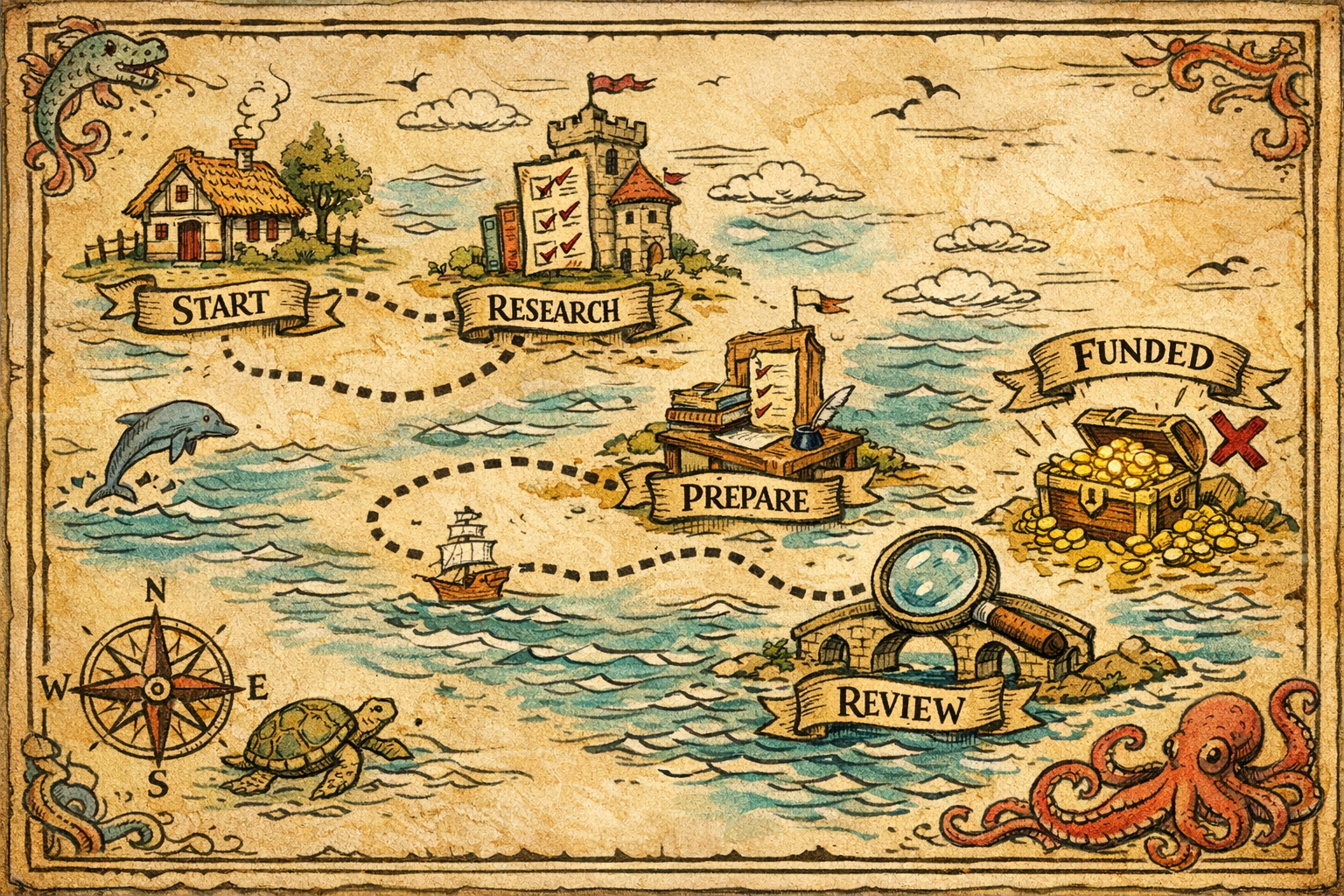
Before You Write a Single Word: Research the Funder
The biggest mistake first-time grant writers make? They start writing before they start reading.
Before you draft anything, spend time understanding who you're asking for money and what they care about. Here's how:
Step 1: Read the Funding Announcement Completely
Whether it's a federal Notice of Funding Opportunity (NOFO), a foundation's Request for Proposals (RFP), or guidelines on a corporate giving page — read it twice. The first read is for understanding. The second read is for details you missed.
Pay special attention to:
- Eligibility requirements — Are you even qualified to apply?
- Funding priorities — What specific issues does this funder care about?
- Page limits and formatting — Breaking these rules is an instant disqualification
- Required attachments — Letters of support, board list, audit, 501(c)(3) letter
Step 2: Study Their Past Grants
Most foundations publish their grantees. Federal agencies publish past awards on USASpending.gov. Look for:
- What types of organizations they funded (size, sector, geography)
- Typical grant amounts
- Whether they funded projects similar to yours
Step 3: Check the Funder's 990 (Foundations)
Foundation tax returns (990-PFs) are public and available through Candid/GuideStar. They reveal giving patterns, board members, and total annual grantmaking — intel that helps you calibrate your ask.
Step 4: Look for a Relationship Entry Point
Do you know anyone connected to the funder? Has your organization received funding from them before? Even a brief introductory email or phone call to a program officer can dramatically improve your odds.
The Pre-Writing Checklist
Gather these before you start drafting. Missing even one can derail your timeline:
- [ ] IRS determination letter (501(c)(3) status)
- [ ] Organization's annual budget (current fiscal year)
- [ ] Most recent audited financial statements or Form 990
- [ ] Board of directors list with affiliations
- [ ] Organizational history and mission statement
- [ ] Program data from existing work (participants served, outcomes achieved)
- [ ] Letters of support or commitment from partners
- [ ] Resumes/CVs of key project personnel
- [ ] Relevant data about your community's needs (census, surveys, reports)
- [ ] The funder's complete application guidelines (printed and highlighted)
Having this ready before you write saves you from the frantic 11 PM scramble the night before the deadline. Trust us on this one.
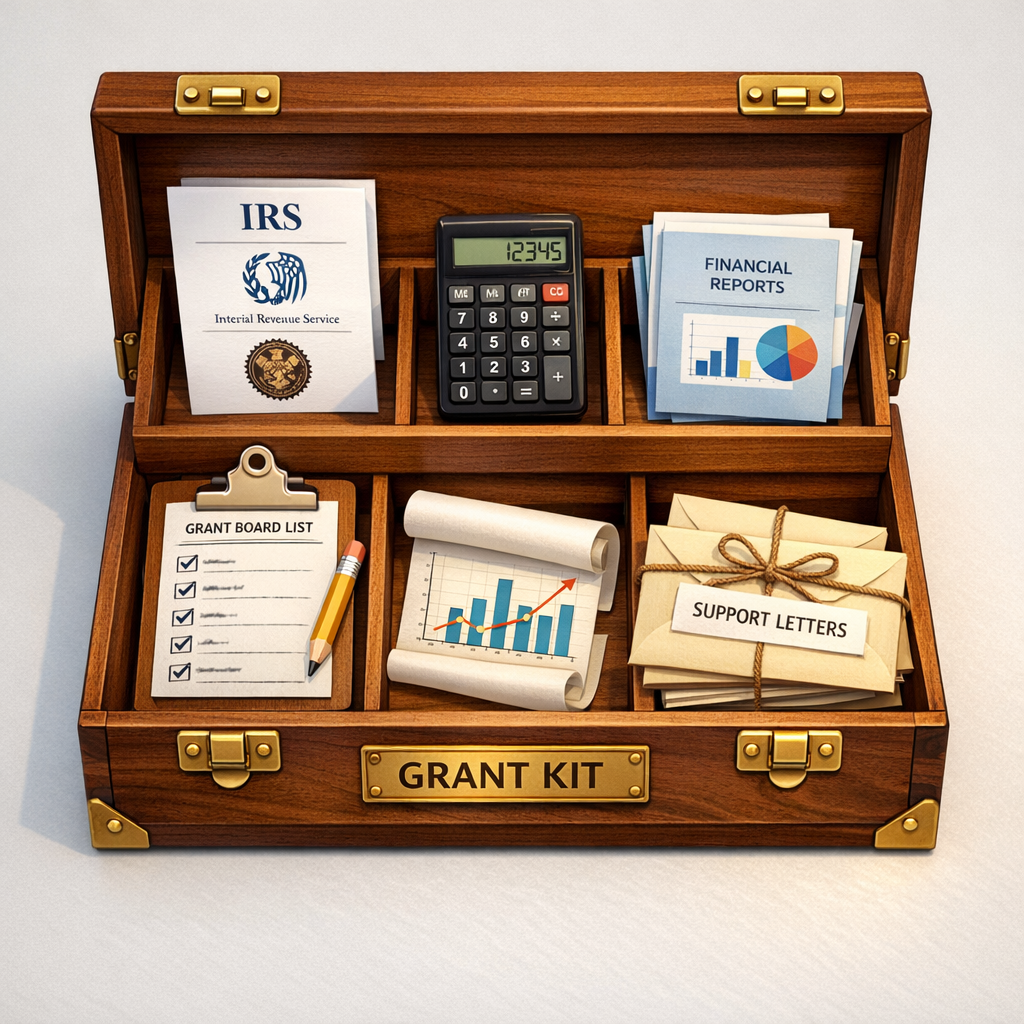
Many of these items can live in a standing file between deadlines, and a grant readiness checklist shows what each document proves to a funder and how to close the gaps.
Walking Through Each Section
Most grant proposals follow a standard structure. Here's what goes where, and how to write a grant proposal covers every section in full:
Executive Summary
A one-page standalone overview of your entire proposal. Write this last — it's easier to summarize something that already exists. For detailed guidance with examples, see our executive summary guide.
Statement of Need
The evidence-based case for why your project matters. Combine national data, local statistics, and a human story. This is where many first-time writers either overwhelm with data or rely on anecdotes alone — you need both.
Project Description / Methods
What you'll actually do. Describe your approach, activities, timeline, and staffing. Be specific enough that a stranger could implement your plan from this section alone.
Goals and Objectives
Your goals are the big-picture outcomes. Your objectives are the specific, measurable steps to get there. Use the SMART framework (Specific, Measurable, Achievable, Relevant, Time-bound).
Evaluation Plan
How you'll measure success. Include what data you'll collect, how often, and who's responsible. Even a simple evaluation plan is better than none.
Budget and Budget Narrative
A line-item budget with a justification for every dollar. Show your math. Explain why each expense is necessary.
Organizational Capacity
Why your organization is the right one for this project. Past results, relevant experience, key staff qualifications, and partnerships.
Sustainability Plan
How the project will continue after grant funding ends. Funders don't want to fund something that disappears when their money runs out.
For a complete template showing all sections together, our sample grant proposal guide provides the full picture.
The #1 Mistake First-Time Applicants Make
Not following the funder's guidelines.
It sounds almost too simple to be the number one mistake, but it is. Every year, thousands of proposals are rejected — not because the project was bad, but because the applicant:
- Exceeded the page limit
- Used the wrong font or margin size
- Skipped a required section
- Submitted after the deadline (even by minutes)
- Forgot a required attachment
- Didn't answer the specific questions asked
Federal grants are especially strict. If the NOFO says 12-point Times New Roman with 1-inch margins and a 15-page limit, that's not a suggestion. It's a rule. Breaking it means your proposal doesn't get reviewed.
The fix: Create a compliance checklist from the funder's guidelines before you start writing. Check every item before you submit.
Building a Reusable Boilerplate Bank
Here's a secret from experienced grant writers: they don't start from scratch every time.
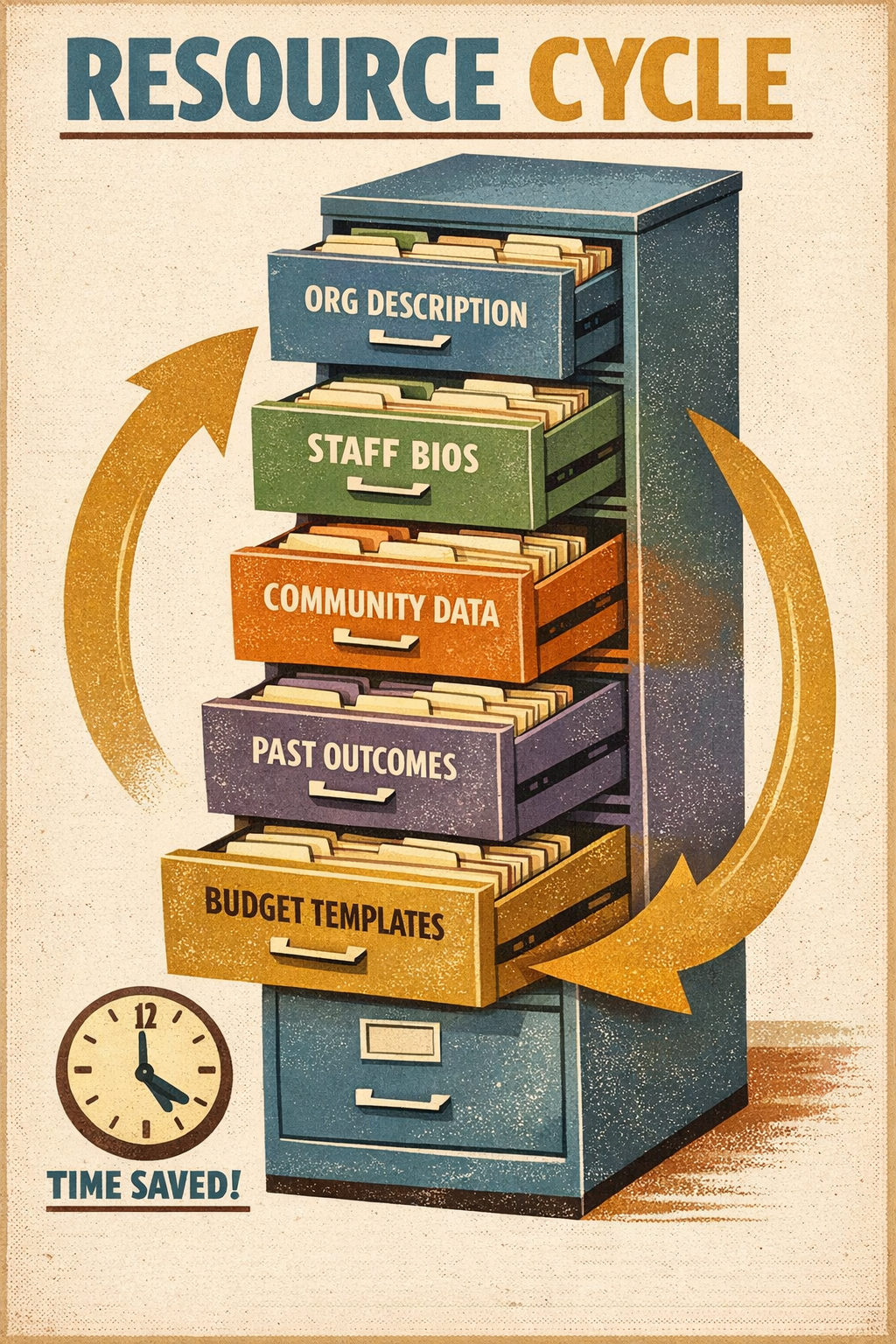
After your first proposal, start saving polished versions of sections you'll reuse:
- Organization description (2-3 versions: short, medium, long)
- Mission statement (exact language)
- Board list (updated quarterly)
- Key staff bios (paragraph and bullet formats)
- Community data (refreshed annually with new sources)
- Past program outcomes (updated after each reporting cycle)
- Budget templates (by grant size: small, medium, large)
Store them in a single folder or document. When the next grant opportunity appears, you're assembling and customizing — not creating from zero. This alone cuts your writing time by 40-60%.
How to Handle Rejection (And Learn From It)
Let's be direct: your first grant proposal will probably get rejected. And your second might too.
Federal grants have acceptance rates of 10-25%. Competitive foundation grants run even lower. Rejection isn't failure — it's the normal operating condition of grant writing.
What to do when it happens:
- Request reviewer feedback. Federal agencies often provide summary statements. Foundations sometimes share brief comments if you ask politely.
- Read the feedback without defensiveness. Look for patterns across multiple reviews if available.
- Revise and resubmit. Many successful grants were funded on their second or third submission.
- Track what you learn. Keep a simple log: which funder, what feedback, what you changed. This builds institutional knowledge.
- Don't take it personally. A rejected proposal often means misalignment, not a bad project. The funder's priorities simply didn't match yours this cycle.
For a deeper dive into why proposals get rejected and how to avoid common pitfalls, see our guide on common grant proposal mistakes.
Finding Grants That Match Your Organization
The best-written proposal in the world fails if it's sent to the wrong funder. Before you invest weeks in writing, make sure there's a strong match between:
- Your organization's mission and the funder's priorities
- Your project's geography and the funder's service area
- Your requested amount and the funder's typical grant size
- Your organization's size/type and the funder's eligibility requirements
This matching process is where most beginners waste the most time — scrolling through databases, reading outdated listings, and applying to anything that seems close enough.
GrantCue's AI-powered grant discovery matches your organization's profile to active funding opportunities, including live data from Grants.gov — so you spend time writing proposals for grants you can actually win, not chasing long shots.
Mission, geography, grant size and eligibility can each be checked against the funder's guidelines, tax filing and past grants, as a five-screen funder fit check shows.
You've Got This
Grant writing isn't about being the best writer in the room. It's about being the most prepared, the most responsive to what the funder asked for, and the most honest about what your organization can deliver.
Start with one proposal. Build your boilerplate. Learn from the feedback. And keep going.
The funding is out there. Now you know how to ask for it.