Cost Allocation Plan for Local Government: Central Service Costs and Indirect Cost Proposals
How a cost allocation plan for local government works under 2 CFR 200: central service plans, department indirect cost proposals, who submits, who approves, and a worked rate example.
In this article (11)
- Quick Answer: What Is a Cost Allocation Plan for Local Government?
- Three Ways a Local Government Can Recover Indirect Costs
- Central Service Cost Allocation Plans Under Appendix V
- State and Local Indirect Cost Proposals: 2 CFR 200 Appendix VII
- Cost Allocation Plan Template: What the Document Should Contain
- Allocation Bases and a Worked Example: Pool, Base and Rate
- Public Assistance Cost Allocation Plans Under Appendix VI
- Who Approves the Plan, and What Reviewers Check
- Comparing Allocated Indirect Lines With the Approved Rate
- FAQ
- Put the Plan and the Proposal on One Calendar
A city, county or school district that spends federal grant money also uses services it does not buy separately for each grant: accounting, payroll, purchasing, buildings and computer systems. A cost allocation plan for local government is the document that assigns those shared costs fairly, and it is the first step toward recovering them under federal awards.
Whether a government needs a plan, an indirect cost proposal, both or neither depends on whether it claims central service costs and how much direct federal funding each department receives. The rules are in 2 CFR Part 200 and its Appendices V, VI and VII (eCFR, current as of October 2026).
Quick Answer: What Is a Cost Allocation Plan for Local Government?
A cost allocation plan is the document a state, local government or tribe uses to identify central service costs, such as accounting, purchasing and computer services, and assign them to the departments that benefit. A department that claims indirect costs then prepares an indirect cost proposal that turns its own overhead, plus those allocated costs, into an indirect cost rate.
Three Ways a Local Government Can Recover Indirect Costs
A local government can recover overhead on federal awards in three ways: the de minimis rate, a rate built from an indirect cost proposal, or direct charging of every cost.
The de minimis rate is the lightest path. A recipient without a current negotiated rate "may elect to charge a de minimis rate of up to 15 percent of modified total direct costs," needs no documentation to justify it, and may use it indefinitely, but once elected it applies to all federal awards until the recipient chooses to receive a negotiated rate (2 CFR 200.414(f), eCFR, current as of October 2026). Our guides to the indirect cost rate for federal grants and to modified total direct costs cover that rate and its base in full.
Direct charging has its own rule: costs incurred for the same purpose in like circumstances must be treated consistently as direct or indirect (2 CFR 200.413, eCFR, current as of October 2026), and administrative and clerical salaries should normally be treated as indirect.
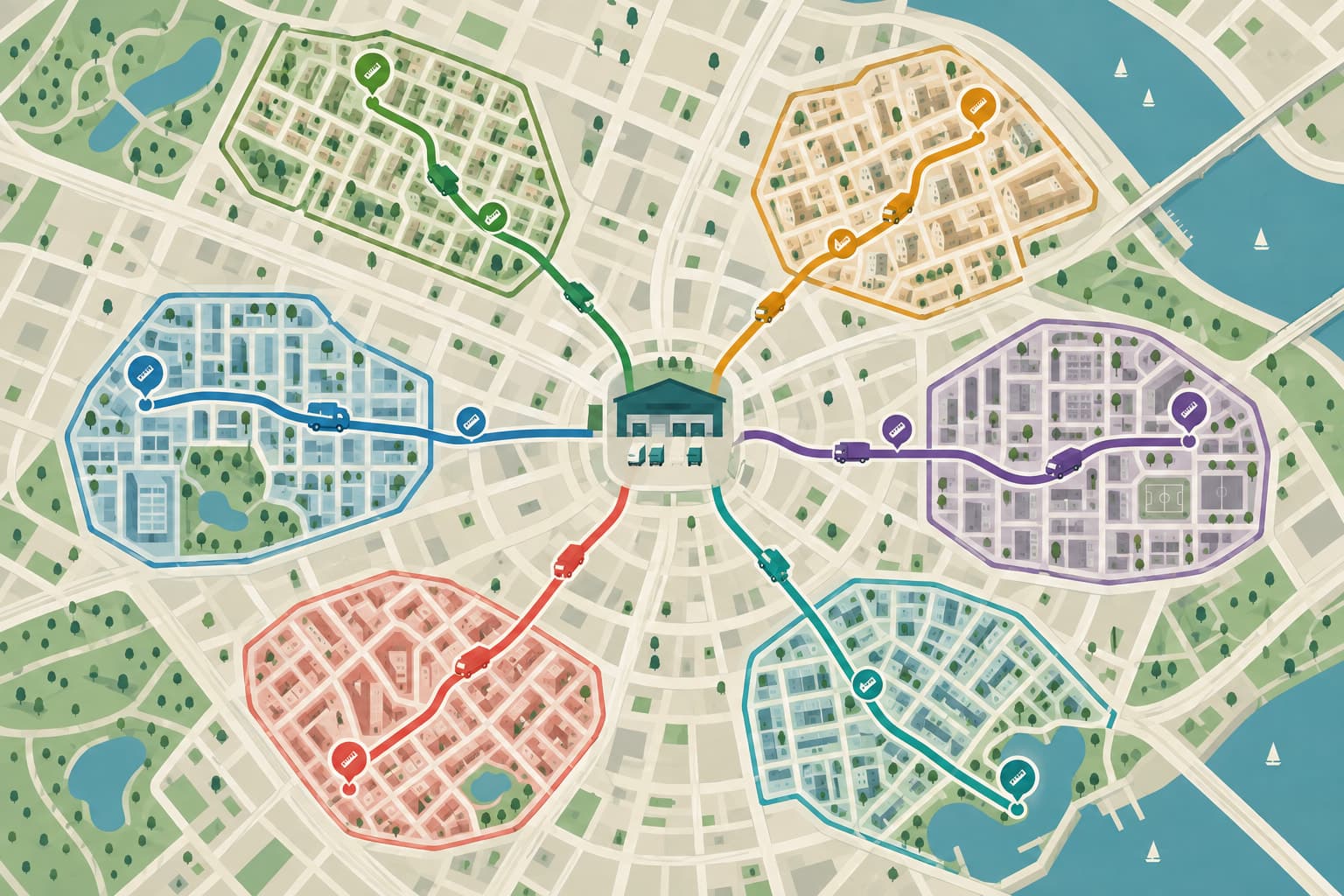
The proposal path usually takes two documents, and 2 CFR 200.416 explains why: awards are usually carried out at the level of the department, so central service costs are first assigned to departments through a central service cost allocation plan, and each department usually needs its own indirect cost rate proposal to claim indirect costs.
Central Service Cost Allocation Plans Under Appendix V
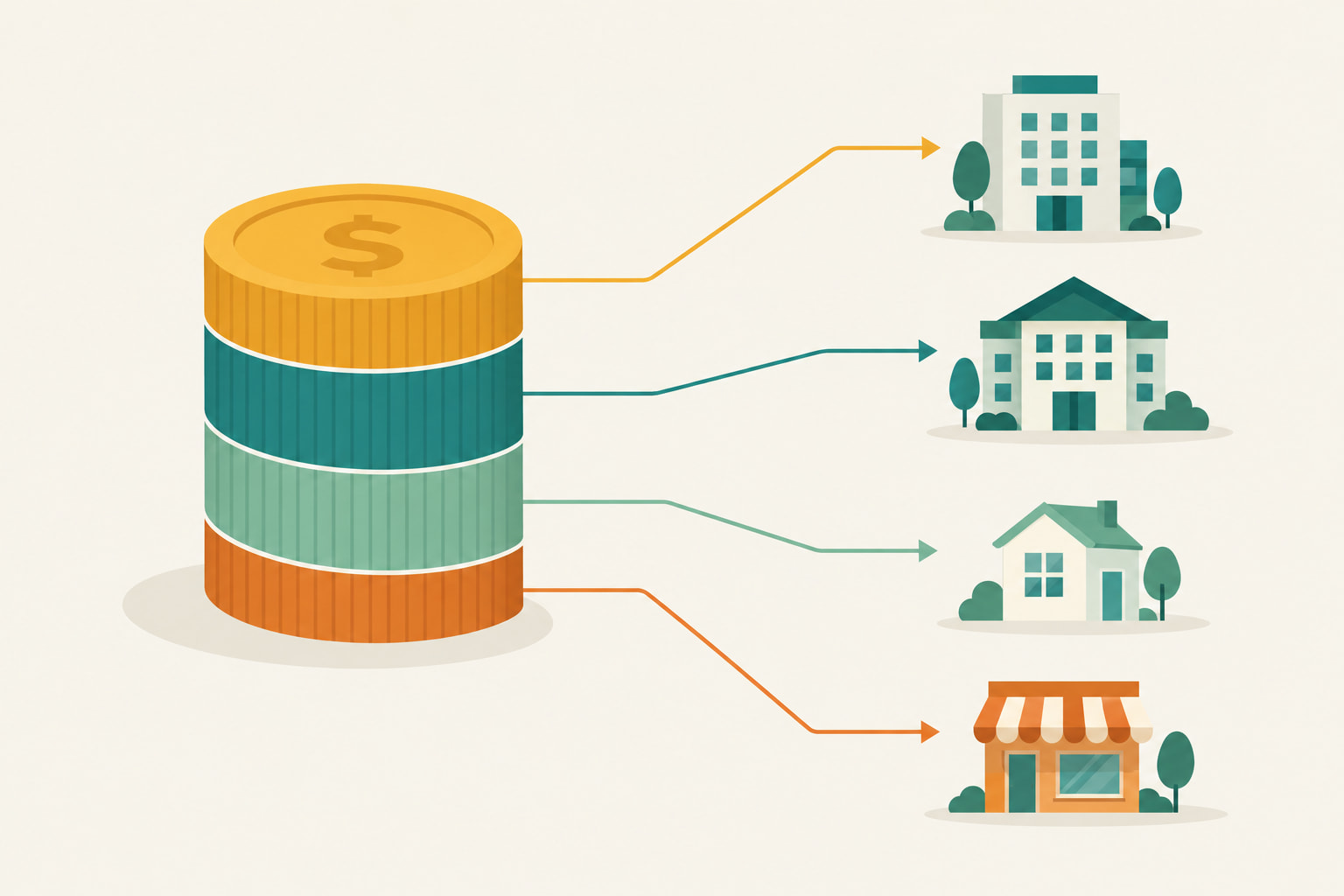
A central service cost allocation plan is the documentation that identifies, accumulates and allocates, or develops billing rates for, the allowable costs of services a government provides to its departments on a centralized basis (2 CFR 200.1, eCFR, current as of October 2026). Appendix V to Part 200 sets its rules.
Allocated and Billed Central Services
Appendix V sorts central services into two kinds. Allocated central services benefit departments but are not billed on a fee-for-service basis, so their costs are spread on a reasonable basis; the appendix names general accounting, personnel administration and purchasing. Billed central services are charged to departments or programs on a fee-for-service basis, such as computer services, transportation services, insurance and fringe benefits.
A plan must include every central service cost the government will claim, billed or allocated, and a service left out of the plan is not reimbursed.
Who Submits and When
Who must submit depends on size (Appendix V, section D, eCFR, current as of October 2026):
- Each state submits a plan to the Department of Health and Human Services for each year it claims central service costs.
- Each major local government, one that receives more than $100 million in direct federal awards subject to Part 200, submits a plan to its cognizant agency for indirect costs every year.
- Every other local government that claims central service costs must develop a plan and keep it with its supporting documentation for audit, and submits it only if the cognizant agency asks.
- A local government that receives funds only as a subrecipient has its plan monitored by the pass-through entity.
Plans are prepared and, when required, submitted within the six months before the start of each fiscal year in which the government proposes to claim central service costs. The cognizant agency can grant extensions.
Fixed With Carry-Forward
Allocated central service costs are usually negotiated and approved for a future year on a "fixed with carry-forward" basis. The fixed amounts for that year are not adjusted. When actual costs become known, the difference is carried forward as an adjustment to a later year. Billed services are compared with actual allowable cost at least annually.
State and Local Indirect Cost Proposals: 2 CFR 200 Appendix VII
An indirect cost proposal is the documentation a department prepares to support the rate it will use to charge indirect costs to federal awards. Appendix VII to Part 200 covers states, local governments and Indian tribes, and it does not apply to state public assistance agencies.
Every department or agency that wants to claim indirect costs must prepare a proposal and keep it for audit. Whether it is submitted depends on federal funding:
For a department at or under $35 million, the rate it establishes "must be accepted by any Federal agency to which the governmental department or agency applies for funding," and federal agencies "must not compel" it to accept the de minimis rate or another rate. The agency's review should be limited to confirming that the proposal is consistent with Part 200 (Appendix VII, section D.1, eCFR, current as of October 2026). A department that is only a subrecipient has its indirect costs negotiated or monitored by the pass-through entity, and an Indian tribal government submits to the Department of the Interior.
A proposal is developed, and submitted when required, within six months after the close of the fiscal year, unless the cognizant agency approves an exception. If the plan for the same period is not yet approved, the department may use the latest approved plan and adjust later.
What the Proposal Contains
Each proposal includes the proposed rates with worksheets, the financial data the rate rests on, the approximate direct base costs under federal awards split between salaries and wages and other direct costs, an organization chart with a functional statement, and a signed certificate of indirect costs. A fringe benefit rate computation goes with it if the central service plan does not set one.
Rate Types for Governments
Appendix VII defines provisional, predetermined, fixed and final rates. A predetermined rate may not be used by a governmental unit that has not submitted and negotiated it with the cognizant agency, and it is allowed for grants and cooperative agreements but not federal contracts (Appendix VII, section B, eCFR, current as of October 2026).
Cost Allocation Plan Template: What the Document Should Contain
Appendix V lists what a submitted plan must contain rather than prescribing a form, so its section E is the practical outline for a cost allocation plan template. A local government that keeps its plan on file for audit can use the same outline, because the cognizant agency may ask for the plan later.
An internal service fund with an operating budget of $5 million or more adds a balance sheet, a revenue and expense statement and a schedule of current rates. The cognizant agency may expand or reduce these requirements case by case, and allocated-service descriptions need to be submitted only once, with later plans showing changes (Appendix V, section E, eCFR, current as of October 2026).
Allocation Bases and a Worked Example: Pool, Base and Rate
An indirect cost rate is "the ratio (expressed as a percentage) of the indirect costs to a direct cost base" (Appendix VII, section B, eCFR, current as of October 2026). The pool is the accumulated cost that benefits two or more programs, and the base is the direct cost used to distribute it.
Appendix VII accepts total direct costs (excluding capital expenditures and distorting items such as pass-through funds, subcontracts above $50,000 and participant support costs), direct salaries and wages, or another base that distributes costs equitably (Appendix VII, section C). When indirect costs benefit functions in different degrees, costs go into separate groupings, each allocated on a base such as staff hours, square feet, documents processed or population served. Our guide to allocating salaries across multiple grants shows how to choose and document a time share base for shared staff.
Step One: Allocate a Central Service
Example County (composite) spends $240,000 a year on central purchasing and allocates it to departments by purchase orders processed (illustrative figures).
Illustrative figures, not data from a real organization.
Step Two: Build the Department Rate
The Public Works department also receives $31,500 of general accounting. Its indirect cost pool and rate use the simplified method, with direct salaries and wages as the base.
Illustrative figures, not data from a real organization. Costs that are unallowable under the cost principles are removed from the pool before the division.
A federal grant to Public Works with $180,000 of direct salaries and wages would carry $22,500 of indirect cost at 12.5 percent. The same award, with $260,000 of modified total direct costs, would carry $39,000 at the 15 percent de minimis rate, because the two rates sit on different bases. Here the computed rate recovers less, so compare dollars across all of the department's federal awards, not percentages, before doing the work.

Public Assistance Cost Allocation Plans Under Appendix VI
Appendix VI to Part 200 covers public assistance cost allocation plans for state public assistance agencies, which administer programs such as Temporary Aid to Needy Families, Medicaid and Child Support Enforcement, not for a typical city or county department. Such an agency develops its plan under Subpart E of 45 CFR Part 95, the Department of Health and Human Services approves it for all affected federal agencies, and administrative costs, direct and indirect, are normally charged through that plan.
Who Approves the Plan, and What Reviewers Check
The cognizant agency for indirect costs is the federal agency responsible for reviewing, negotiating and approving cost allocation plans and indirect cost proposals for all federal agencies (2 CFR 200.1). For a local government, Appendix V section F.1 sets the rule: for a central service plan it is the agency with the largest dollar value of total federal awards to the government, and for indirect cost rates it is the agency with the largest dollar value of direct federal awards to the government or component. Once designated, the agency stays for five years.
The appendix then names agencies that remain responsible for certain entities, unless the agencies agree otherwise:
The agency reviews a submitted plan within six months of receipt and either negotiates and approves it or asks for more documentation. The result is a written agreement that all federal agencies accept unless a statute prohibits it, and a pass-through entity must accept the federally negotiated rates of its subrecipients (2 CFR 200.414(c) and (d)).
The agreement can be reopened if it violates a statute or if the information behind it was materially incomplete or inaccurate. A plan or proposal later found to include unallowable or clearly unallocable costs is adjusted, or a refund is made, at the cognizant agency's option. A reviewer tests what the certification says: costs are allowable and allocable, no cost is claimed both direct and indirect, and similar costs are treated consistently.
Records for indirect cost proposals and cost allocation plans are kept three years, counted from the date of submission if the plan went to the Federal Government for negotiation and from the end of the covered fiscal year if it did not (2 CFR 200.334(f), eCFR, current as of October 2026).

Comparing Allocated Indirect Lines With the Approved Rate
The plan and the rate agreement live in your accounting records and in the written agreement with the cognizant agency. A grants team still needs an award-level view of whether the indirect line charged to each award matches the approved rate and period.
For that award-level view, every GrantCue plan, Free included, has notes, deadlines, post-award budgets and payment schedules, and the Organization plan adds a read-only QuickBooks Online spend import mapped to grant budgets (grantcue.com pricing page, October 2026). A finance lead can record the approved rate and its dates in an award's notes and check the indirect line each quarter. GrantCue does not build cost allocation plans or compute indirect cost rates, and it does not replace the accounting system. See GrantCue for the public sector.
FAQ
What Is a Cost Allocation Plan?
A cost allocation plan is a document that identifies shared costs and assigns them to the departments that benefit. Part 200 recognizes two kinds: a central service cost allocation plan for services a government provides to its departments, and a public assistance cost allocation plan for state public assistance agencies (2 CFR 200.1, eCFR, current as of October 2026).
Does a County Need a Cost Allocation Plan to Charge Indirect Costs?
Not always. The de minimis rate needs no documentation to justify it, and direct charging needs none of these documents. A county that claims central service costs must develop a plan and keep it for audit, and it submits the plan for approval only when it is a major local government or the cognizant agency asks (Appendix V, section D, eCFR, current as of October 2026).
What Is the Difference Between a Cost Allocation Plan and an Indirect Cost Rate?
A cost allocation plan distributes central service costs to departments. An indirect cost rate is the ratio of a department's indirect cost pool to a direct cost base. The plan feeds the rate: central service amounts allocated to a department join its own overhead in the pool that the rate is computed from (Appendix VII, section A, eCFR, current as of October 2026).
Who Is the Cognizant Agency for a Local Government?
By default, the cognizant agency is the federal agency with the largest dollar value of awards to the government: total awards for a central service plan, direct awards for an indirect cost rate. Appendix V assigns some entities by type, such as Education for school districts and Interior for tribal governments, and an assignment lasts five years (eCFR, current as of October 2026).
Can a Local Government Use the De Minimis Rate?
Yes, if it has no current federal negotiated indirect cost rate. It may charge up to 15 percent of modified total direct costs, and it must then use that rate for all federal awards until it chooses to receive a negotiated rate (2 CFR 200.414(f), eCFR, current as of October 2026).
How Often Must a Cost Allocation Plan Be Updated?
A central service plan is prepared for each fiscal year in which the government claims central service costs, within the six months before that year begins. States and major local governments submit it every year, and other local governments keep it on file for audit (Appendix V, section D, eCFR, current as of October 2026). Indirect cost proposals follow within six months after the fiscal year closes.
Put the Plan and the Proposal on One Calendar
The two documents run on opposite sides of the fiscal year: the plan in the six months before it starts, the proposal within six months after it closes. Put both dates on the finance calendar with the cognizant agency's name and the start of its five-year designation. The rest of the award cycle for city and county teams is in the guide to local government grant management.
Three records are worth assembling before the first meeting with a cognizant agency: the comprehensive annual financial report or executive budget, an organization chart showing every central service unit, and a list of federal awards by department with the direct salaries and wages charged to each. Both appendices refer to cost allocation guides published by the Department of Health and Human Services, so ask the cognizant agency which edition it expects. The wider rules around them are in our overview of 2 CFR 200 grant management.
OMB's proposed rewrite of Part 200, published May 29, 2026 (Regulation for Federal Financial Assistance, 91 FR 32198), is not in force, and as read in October 2026 it does not amend 2 CFR 200.416 or Appendices V, VI and VII.