GrantKeep Alternative: An Honest GrantCue vs GrantKeep Comparison
GrantKeep is a $29/month grant pipeline tool for small nonprofits. Compare it with GrantCue on pricing, team seats, grant discovery, and post-award tracking.
In this article (11)
- Quick Answer: Which Is the Better GrantKeep Alternative?
- What Is GrantKeep?
- How Much Does GrantKeep Cost?
- GrantCue vs GrantKeep: A Side-by-Side Comparison
- Where GrantKeep Is the Better Choice
- Where GrantCue Fits Better
- What Neither Tool Does
- How to Switch from GrantKeep to GrantCue
- What to Ask Before You Switch
- FAQ
- Next Step
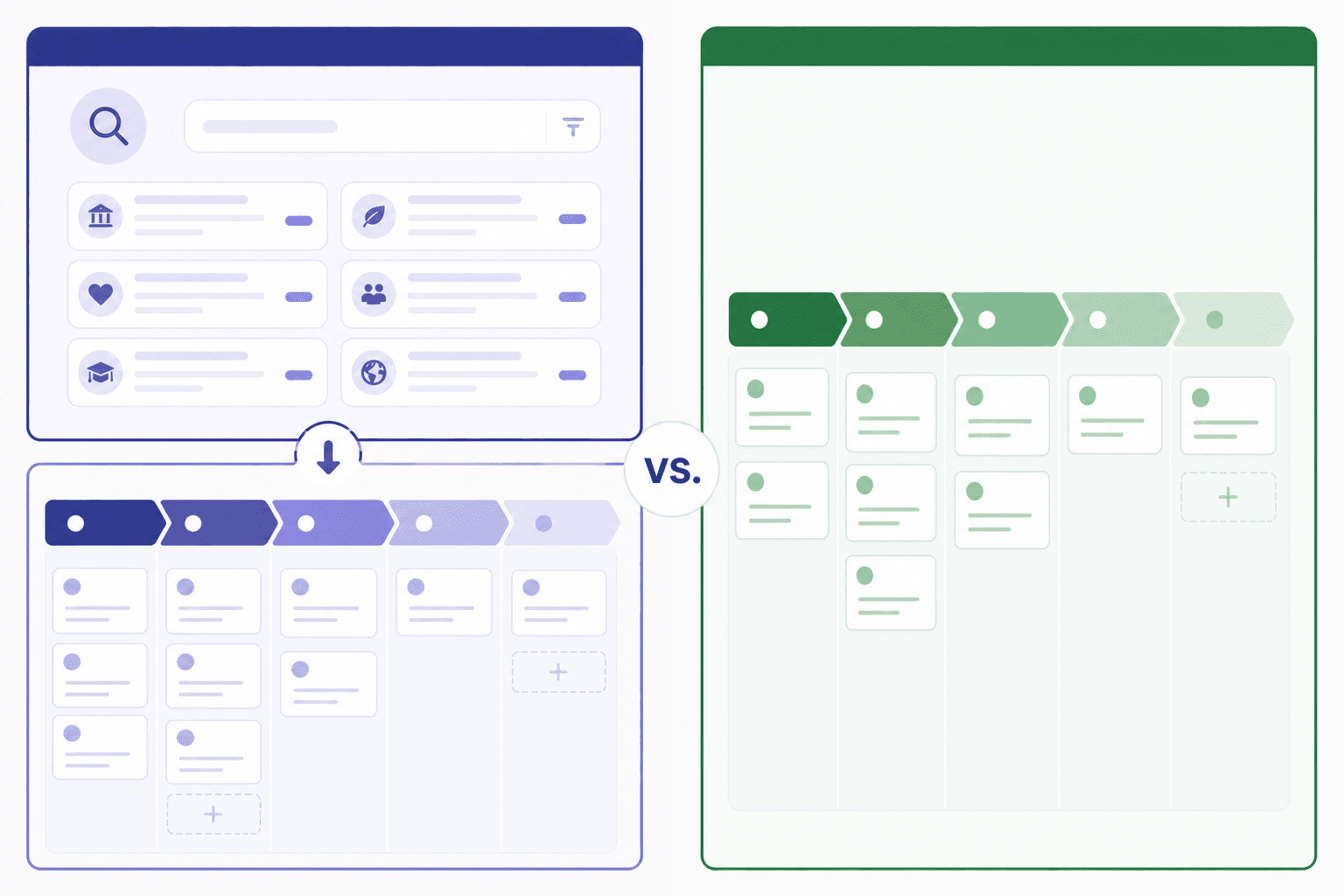
Most people shopping for a GrantKeep alternative open with the price column. Usually the wrong column. What decides this one is where your grant opportunities come from in the first place. GrantKeep is a pipeline tracker for small nonprofits: you add the grants you already know about, and it holds the deadlines, stages, and notes in one place. GrantCue tracks grants the same way, and it also searches federal and state portals to find them.
Everything here about GrantKeep comes from its own pages on grantkeep.com, checked August 10, 2026. When we checked again on October 6, 2026, grantkeep.com returned an HTTP 404 error, and the Internet Archive holds no copy of its pricing or feature pages from that period. Nothing here about GrantKeep can be re-checked, so read its prices and features as what the site said on that date, and confirm with GrantKeep that the product is still sold before you plan around it. Where GrantKeep is the better buy, this page says so.
GrantCue sells one of the products compared here, so every GrantKeep detail below is tied to the date it was read.
Quick Answer: Which Is the Better GrantKeep Alternative?
- Stay with GrantKeep if two people cover your grants, you already know which programs you are applying to, and you want a pipeline board plus email deadline alerts for $29 per month (its listed price on August 10, 2026; confirm GrantKeep is still sold).
- Switch to GrantCue if you need to find opportunities as well as track them, if you need more than two seats, if you track spending after the award lands, or if your organization is not a nonprofit.
What Is GrantKeep?
GrantKeep is grant pipeline software that tracks grant opportunities, deadlines, and application progress for nonprofit teams. Its site called the product grant pipeline management for nonprofits and listed four capabilities.
The features published on grantkeep.com as of August 10, 2026:
- Grant Pipeline Board. A Kanban board that carries a grant from research to awarded.
- Deadline Email Alerts. Automatic email 7 days and 1 day before every deadline.
- AI Grant Brief. Paste a grant URL and get a plain-English summary of it.
- Notes and Contact Log. Funder details, contacts, and notes attached to each grant card.
GrantKeep's pricing page defined its buyer as a small nonprofit, typically under $1 million in annual budget, managing 10 to 60 active grant applications. The homepage widened that range to organizations between $500,000 and $10 million with development directors handling 10 to 50 active grants. Both descriptions pointed at the same person: a nonprofit staffer who is leaving a spreadsheet for the first time.
The AI Grant Brief worked from a URL you supply, and no page on grantkeep.com described a searchable database of open opportunities. As published, GrantKeep organized the grants you had already found. It did not go find them.
How Much Does GrantKeep Cost?
On August 10, 2026, GrantKeep listed two plans, $29 per month or $249 per year. Both included every feature and up to 2 team seats. The 14-day free trial applied either way, and it did not ask for a credit card at signup.
Two terms in GrantKeep's FAQ were worth reading before committing. If you did not enter a card when the trial ended, the account paused instead of closing: you were not charged, your data stayed, and you could reactivate later. On cancellation, monthly plans cancelled immediately while annual plans were non-refundable, with access continuing through the end of the paid period. GrantKeep's terms of service and privacy policy both carried a last-updated date of July 9, 2026, and the privacy policy named Stripe for billing, Supabase for hosting, Resend for email, and OpenAI for the AI features.

GrantCue vs GrantKeep: A Side-by-Side Comparison
The two products overlap on pipeline and deadlines and diverge on discovery, seats, and what happens after an award. GrantCue prices and limits below come from GrantCue pricing and GrantCue features.
"Not listed" means the capability was not documented on grantkeep.com as of August 10, 2026. It does not prove the capability is missing from the product. Ask GrantKeep directly if one of those rows decides your purchase.
Where GrantKeep Is the Better Choice
For a two-person nonprofit that already knows its funders, GrantKeep cost less at the prices it listed on August 10, 2026, and asks less of you. That is a real advantage. Three situations in particular make it the right call.
Your team is two people and your budget is tight. Run the arithmetic on annual billing: $249 per year for GrantKeep (listed August 10, 2026) against $468 for GrantCue Essentials at $39 per month billed annually. Roughly half. The free GrantCue tier does not close that gap either, since it allows 1 user and 10 active opportunities, and a two-person team tracking 30 grants blows past that on day one.
You want a short feature list. GrantKeep published four features and stopped. There is no approval workflow to configure and no post-award module sitting unused in a corner of the nav. A development director who is also the program director and the person writing thank-you notes does not need more software surface area. GrantCue has considerably more of it, and unused surface area is just overhead.
Your opportunities arrive by email, not by search. Plenty of small nonprofits get their grants from a community foundation newsletter, a program officer, a county announcement list, or a peer organization. If that describes you, a discovery engine solves a problem you do not have. Pasting a URL into GrantKeep's AI Grant Brief is a short route from tip to tracked grant.
Where GrantCue Fits Better
GrantCue is a grant platform that searches for opportunities, tracks them through award, and follows the money afterward. Four differences drive most switches.
1. It searches for the opportunities
GrantCue searches an ingested catalog of Grants.gov plus 105 state and state-agency sources across 47 states and the District of Columbia, then lets you save those searches and get emailed when a new opportunity matches. Coverage is even at the federal level and uneven by state, so check your own state before you rely on it. Every state runs its own portal on its own software, which is why a single Grants.gov search never returns the whole picture. GrantKeep did not claim this capability anywhere on its site as of August 10, 2026.
2. Seats beyond two
GrantKeep published a 2-seat ceiling on both plans. Grant work rarely stays with two people once finance, program leads, and an executive director need visibility. GrantCue includes 3 seats on Essentials, 8 on Team, and 20 on Organization, with role-based access and @mentions on grant records. Teams that manage more than one entity can switch between organizations.
3. The work after the award
An award is the middle of the process. GrantCue tracks budget versus actuals, disbursements, payment schedules, and compliance requirements, with an audit trail of who changed what. GrantKeep's published pipeline ended at awarded. If your reporting burden is the painful part of your year, that gap will find you.
4. Organizations that are not nonprofits
GrantKeep described itself as software for nonprofits throughout its site. GrantCue serves research institutions, startups pursuing SBIR and STTR awards, and public-sector agencies alongside nonprofits. If you are a university department or a small company chasing federal research funding, nonprofit-only positioning is a hard stop.
What Neither Tool Does
Both products stop short in the same two places, and knowing that saves a disappointing trial.
Neither is a dedicated foundation prospecting tool. GrantCue's opportunity search covers federal and state public funding, and for private foundations it offers a public foundation directory of more than 10,000 foundations built from their IRS 990-PF filings (grantcue.com, September 2026). GrantKeep did not claim foundation prospecting at all as of August 10, 2026. If building a private-foundation prospect list is your main need, a dedicated prospect research tool is the correct purchase, and our GrantCue vs Instrumentl comparison explains where that line falls.
Neither submits your application. GrantCue prepares and tracks applications; it does not submit them to Grants.gov, eRA Commons, or DSIP. Submission still happens in the funder's own portal.
How to Switch from GrantKeep to GrantCue
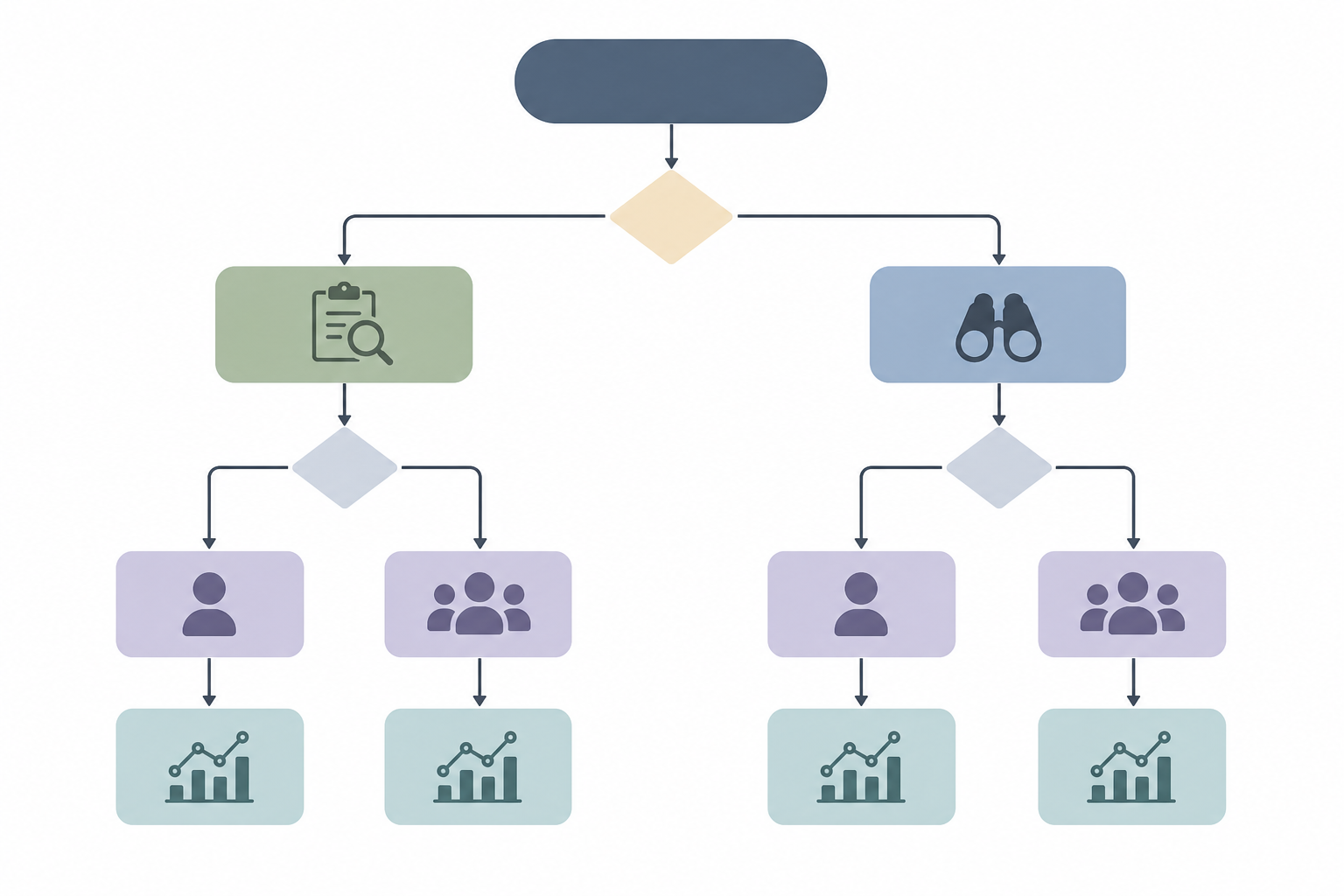
Moving a grant pipeline between tools is mostly a data question, and the export step decides how long it takes. Budget a week: most of it is waiting on the export, not rebuilding records.
- Export your GrantKeep data first. Do this before you cancel anything. GrantKeep's privacy policy described account and data deletion on request; it did not document a self-serve export button, so ask their support what format you can get and how long it takes.
- Get the fields that matter. Grant name, funder, amount requested, amount awarded, deadline, stage or status, owner, and notes. Those eight columns reconstruct a pipeline. Contact records and uploaded documents usually need a separate pull.
- Import into GrantCue. The CSV importer walks you through mapping your columns to GrantCue fields, validates the rows, and shows a preview before it writes anything. Teams arriving from GrantHub can use the dedicated GrantHub migration path, which handles the same field shapes.
- Set the alerts up fresh. Build your saved searches and deadline reminders from scratch instead of trying to replicate old notification settings.
- Run both for one cycle. Keep the old account alive through one deadline before you cancel. If you are on GrantKeep's annual plan, their published terms made it non-refundable with access through the end of the period, so there is no cost to letting it run out.
What to Ask Before You Switch
Answer these six questions honestly and the decision usually makes itself.
The same questions apply to any tool on a shortlist, and the grant management software for nonprofits guide compares grant tracking software by published price. If you are still comparing options, the roundup of best GrantHub alternatives covers the wider field, including the platforms that picked up teams after GrantHub closed on January 31, 2026.
FAQ
What is the best GrantKeep alternative?
It depends on what GrantKeep is missing for you. If you need to find opportunities rather than only track them, GrantCue adds search across Grants.gov and 105 state and state-agency sources across 47 states and the District of Columbia. If private-foundation prospecting is your main need, a dedicated prospect research tool is the better fit; GrantCue's public directory covers more than 10,000 private foundations (grantcue.com, September 2026), and GrantKeep listed no foundation search.
How much does GrantKeep cost?
When we checked grantkeep.com on August 10, 2026, GrantKeep listed two plans: $29 per month or $249 per year, each including all features and up to 2 team seats, and both started with a 14-day free trial that did not ask for a credit card at signup. The site returned an HTTP 404 error on October 6, 2026, so confirm current pricing with GrantKeep.
Does GrantKeep find grants for you?
No page on grantkeep.com described a searchable database of open opportunities when we checked on August 10, 2026. Its AI Grant Brief summarized a grant when you pasted in the grant's URL, which means you supplied the opportunity. GrantCue searches an ingested catalog of federal and state sources and emails you when a new opportunity matches a saved search.
Is GrantKeep the same as GrantHub?
No. They are separate products with similar names. GrantHub was Foundant Technologies' grant tracking software and closed on January 31, 2026. GrantKeep is an independent product that published its own site at grantkeep.com, which returned an HTTP 404 error on October 6, 2026. Teams that left GrantHub sometimes find GrantKeep while searching for a replacement.
Is there a free alternative to GrantKeep?
Yes. GrantCue has a free tier that does not expire, covering 1 user and up to 10 active opportunities with pipeline, tasks, and deadline tracking. GrantKeep's free access on August 10, 2026 was a 14-day trial rather than a permanent plan, though its FAQ said an unconverted account paused without deleting your data.
Can businesses and universities use GrantKeep?
GrantKeep described itself as software for nonprofits across its homepage, pricing page, and terms when we checked on August 10, 2026. GrantCue supports research institutions, SBIR and STTR startups, and public-sector agencies alongside nonprofits, so organizations outside the nonprofit sector have a clearer path there.
Next Step
Write down the last five grants your organization applied for and note where each one came from. If all five arrived by email or from funders you already knew, a low-cost tracker probably covers you, and GrantKeep deserves the trial if it is still sold. If even two of them turned up because someone went looking, the search layer is the part worth paying for.
GrantCue's free tier takes no card, so you can test the discovery side against your own state before moving any data. Start free, or read the wider GrantHub alternatives roundup to compare more than two tools.