Grant Management Software for Universities
What grant management software for universities has to cover, from proposal submission to effort certification and research compliance, and the federal rules behind each need.

In this article (9)
- Quick Answer: What Does Grant Management Software for Universities Need to Cover?
- What Universities Need From Grant Management Software
- Pre-Award: Proposal Development and System-to-System Submission
- Post-Award Tracking and Effort Certification
- Federal Grant Compliance for Universities
- How the Named Research Suites Map to University Needs
- Where Lighter Grant Tools Fit on Campus
- FAQ
- Map Your Current Systems Before the First Vendor Demo
Grant management software for universities has to follow a research award through far more hands than a nonprofit tracker does. Faculty build the proposal, a sponsored programs office submits it, finance spends the award under 2 CFR 200, payroll feeds effort certification, and review committees approve the human and animal research the award pays for.
The dollars explain the stakes. Higher-education R&D spending reached $117.7 billion in FY 2024, "8.1% greater than R&D spending by academic institutions in FY 2023" (NCSES InfoBrief, February 10, 2026). The NSF HERD Survey's FY 2024 population was 925 institutions, meaning colleges and universities in the United States that expended at least $150,000 in separately accounted-for R&D in the fiscal year (NCSES, HERD Survey 2024, September 2026).
Quick Answer: What Does Grant Management Software for Universities Need to Cover?
University grant software needs four connected parts: pre-award proposal development and system-to-system submission, post-award tracking of spending against each budget, effort certification drawn from payroll, and compliance review for conflicts of interest, human subjects, animals and biosafety. Cayuse, Kuali, Huron, InfoEd Global and Workday sell systems that cover different mixes of these parts.
What Universities Need From Grant Management Software
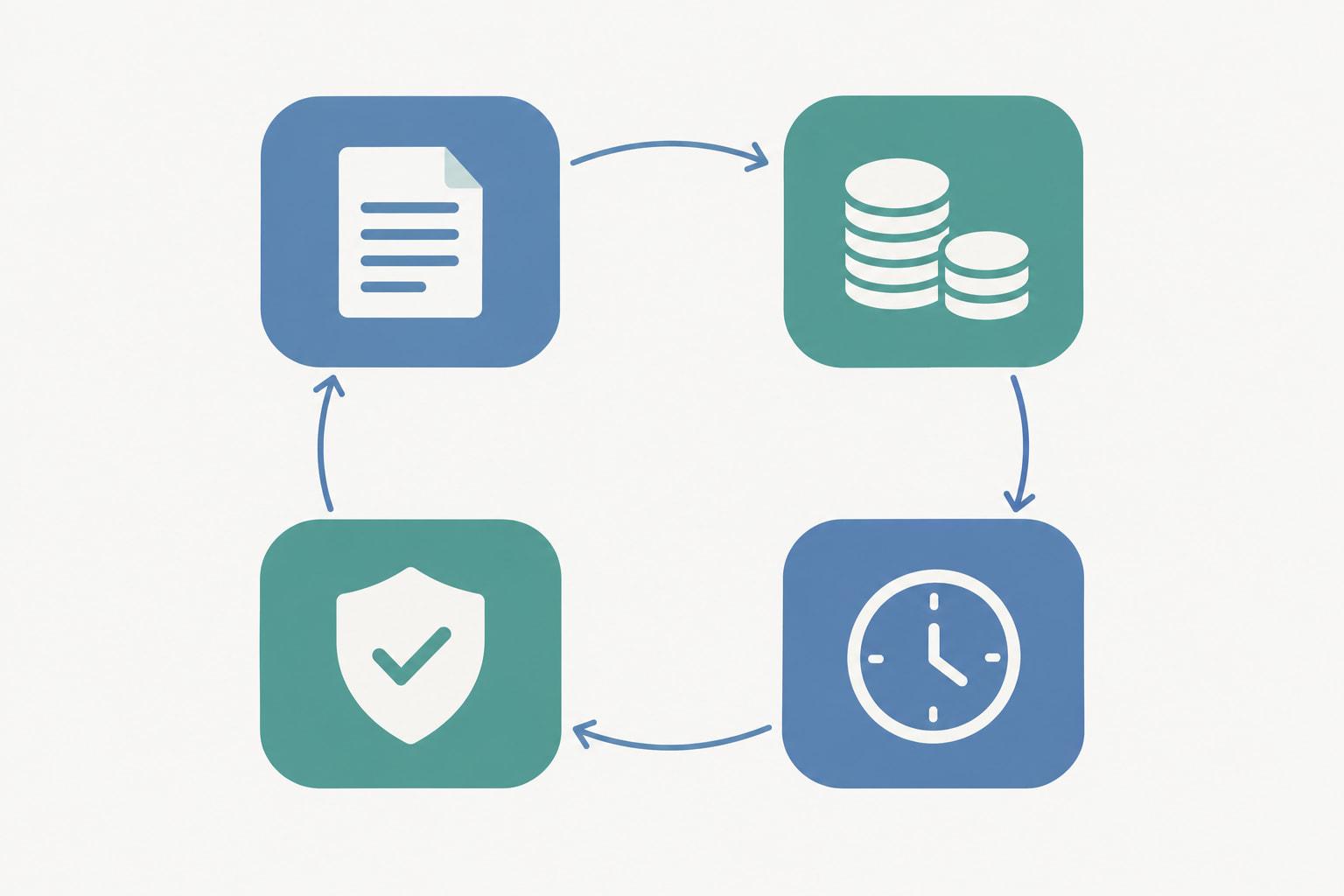
Universities need grant software that carries one record from the first proposal budget to closeout, with each campus office working its own part of it. The parts are pre-award, post-award, effort reporting and research compliance, plus closeout and records.
The case for software starts with investigator time. The Federal Demonstration Partnership's 2018 Faculty Workload Survey found "PIs estimating that an average of 44.3% of their research time associated with federally-funded projects was spent on meeting requirements rather than conducting active research," up from 42.3% in earlier FDP surveys (FDP, 2018 Faculty Workload Survey Primary Report, September 2020). The survey drew responses from "Almost 12,000 investigators" at 111 FDP member organizations (FDP, 2018 Faculty Workload Survey Primary Report, September 2020). Every administrative step a system takes off an investigator comes out of that share.
Follow one proposal to see why the parts belong together. The budget built at submission becomes the basis of the approved budget that post-award spending is compared against, its salary lines become effort that payroll records must support, and its protocols become approvals the compliance offices track. If each step lives in a different system, someone retypes the award at every handoff.
One shared record matters because each office sees a different slice of the same award. Finance sees accounts, compliance offices see protocols, and investigators see deadlines. Vendors sell against that problem: InfoEd Global, for one, describes its platform as modules "that share information, increase data integrity and result in more efficient processes" (InfoEd Global, September 2026).
Pre-Award: Proposal Development and System-to-System Submission
Pre-award software builds each proposal, collects internal sign-off and submits the application to the sponsor's system, so the university's record of what it promised starts in one place.
System-to-system (S2S) submission is the module vendors name for sending a proposal from the university's own software to a federal sponsor. Kuali lists "System-to-System (S2S)" among the modules of Kuali Research, next to Sponsored Programs and Internal Opportunities (Kuali, Research Administration, September 2026). Cayuse says "Proposals (S2S) covers 100% of grant opportunities posted by NIH, NSF, AHRQ, CDC, NIFA, ONR, CDMRP, DoD, and other U.S. federal agencies" (Cayuse, Proposals S2S page, August 22, 2025). That is a vendor claim, so test it against your own sponsor list before you rely on it.
The sponsor side has its own systems. NIH's eRA Commons "is an online interface where grant applicants, recipients, and federal staff at NIH and grantor agencies can access and share administrative information relating to research grants" (NIH eRA, Overview of eRA Commons, September 2026). A university system does not replace it; it keeps the institution's own copy of the record.
Proposal budgets also carry the indirect cost rate. An entity without a current negotiated rate "may elect to charge a de minimis rate of up to 15 percent of modified total direct costs (MTDC)" (2 CFR 200.414(f), eCFR, current as of September 2026), so the budget tool has to apply either the negotiated rate or that fallback, on the right base.
Keep the science separate from the routing. The research narrative is written by the investigator and attached to the record, and the research grant proposal template and examples cover how to structure it.
Post-Award Tracking and Effort Certification
Post-award software has to show, for every award, what was spent against the approved budget and what records support each salary charge, because 2 CFR 200 asks for both.
Financial management comes first. A recipient's system "must be sufficient to permit the preparation of reports required by the terms and conditions; and tracking expenditures to establish that funds have been used in accordance with Federal statutes, regulations, and the terms and conditions of the Federal award" (2 CFR 200.302(a), eCFR, current as of September 2026). It must also provide "Comparison of expenditures with budget amounts for each Federal award" (2 CFR 200.302(b)(5), eCFR, current as of September 2026).
Workday puts grants inside its finance platform. The company says Workday Grants Management was built on the same platform as Workday Financial Management, Workday Human Capital Management and Workday Payroll (Workday Grants Management for Higher Education datasheet, September 2026), which puts award spending, personnel and pay in one system.
Effort is the salary side of the same question: "Charges to Federal awards for salaries and wages must be based on records that accurately reflect the work performed" (2 CFR 200.430(g)(1), eCFR, current as of September 2026), and the same paragraph says budget estimates alone do not qualify as that support. When you compare systems, ask where each one draws effort data from and who certifies it.
Vendors answer with effort modules. Workday's documentation describes generating and routing effort certification reports from payroll information (Workday Administrator Guide, September 2026), and Cayuse markets Cayuse Project Effort as automated effort reporting that removes manual data entry, a claim the vendor makes for its own product (Cayuse, Award Management, May 4, 2026). The method behind a split salary, and the records that support it, are covered in allocating salaries across multiple grants.

Federal Grant Compliance for Universities
Federal grant compliance for universities rests on a set of 2 CFR 200 sections, and each one turns into a record the grant system must hold or a date it must track.
Source: 2 CFR 200, eCFR, current as of September 2026.
NIH shows how the reporting rows play out. NIH says "There is no RPPR form available for download. Submit RPPR data through the eRA Commons." (NIH, Research Performance Progress Report page, updated September 4, 2024). SNAP progress reports are due the 15th of the month before the month in which the budget period ends (NIH Grants Policy Statement 8.4.1.2.4, revised March 2026), non-SNAP reports the first of that month (NIH RPPR Instruction Guide, January 2026), and the Final RPPR within 120 calendar days of the end of the period of performance (NIH Grants Policy Statement 8.6, revised March 2026). A system that holds each award's budget period dates can flag those due dates for every NIH award.
Subawards add a second layer. When a university subawards part of a project, it becomes a pass-through entity, "a recipient or subrecipient that provides a subaward to a subrecipient (including lower tier subrecipients) to carry out part of a Federal program" (2 CFR 200.1, eCFR, current as of September 2026). It must then confirm "in SAM.gov that a potential subrecipient is not suspended, debarred, or otherwise excluded from receiving Federal funds" (2 CFR 200.332(a), eCFR, current as of September 2026). The pass-through grant management guide covers those duties step by step, and the Uniform Guidance overview sets these sections in the rest of 2 CFR 200.
How the Named Research Suites Map to University Needs
Map each suite's named modules against the four needs before a demo, because vendors package the same work differently. Cayuse and Kuali name modules for submission and compliance, Workday builds grants into its finance and payroll platform, and Huron and InfoEd Global describe broad module sets.
Source: vendor pages read September 2026 (Cayuse, Kuali, Workday, Huron, InfoEd Global).
Cayuse groups its suite into Award Management, for finding, managing and submitting grants, proposals, funding and effort, and Compliance Management, which helps "manage COI, IRB, IACUC, and IBC submissions and reviews" (Cayuse, The Cayuse Suite, September 2026). Kuali describes Kuali Research as "a suite of connected modules on one platform" and reports "350+ institutions served" and "$118B total grants managed," both vendor figures (Kuali, Research Administration, September 2026). Huron says its suite covers "every aspect of research, from managing grants to conducting human subject and animal research and tracking conflict of interest and agreements" (Huron, Huron Research Suite, September 2026).
The first fork is where post-award work lives: in a grants product built into the finance system, as Workday's is, or in a research suite that leads with submission and compliance modules. A campus can run one of each with an integration between them, so ask every vendor which side of that integration it expects to own.
A campus still running Coeus should weigh one more fact: the public Kuali Coeus code repository was last pushed on May 16, 2018 (GitHub, kuali/kc, September 2026), so staying on that code is not a maintained open-source path.
Where Lighter Grant Tools Fit on Campus
Lighter grant tools fit the parts of campus that find and pursue funding without running the institution's award record: departments scouting opportunities, centers tracking internal deadlines, foundation relations teams and small colleges with few federal awards. Those teams shop much as a nonprofit grant office does, so our guide to grant management software for nonprofits is a reasonable place to start the list.
A department's tracker should stop where the institutional system starts. Use it for opportunities, internal deadlines, limited submissions and drafts; once a proposal is routed, treat the sponsored programs record as the source of truth and link to it instead of copying budget figures that will change.
Public contracts show what a lighter seeker product has cost a university. Kansas State University's AmpliFund contract, which ran from April 7, 2021 through April 6, 2024, priced "AmpliFund Grant Seeker Advanced" at a $12,000 annual subscription plus a one-time setup fee of $6,500 for 30 hours or $12,000 for 70 hours, and noted "The Annual Subscription Fee is $22,000 without the included discount" (Kansas State University, AmpliFund contract 40982, September 2026). The fee "allows for up to $5M of Annual Grant Revenue (AGR) and up to 30 programs managed," with "unlimited user licenses and unlimited document storage space" (Kansas State University, AmpliFund contract 40982, September 2026). Those are historical prices from a finished contract term, not a current quote.
Fluxx aims its Grantseeker at nonprofits, higher education institutions and public sector organizations with 10 to 50 or more active grants (Fluxx, Grantseeker product page FAQ, read September 2026), and lists "Grantseeker starting at $6,000 per year" without naming the plan (Fluxx demo page FAQ, July 25, 2026).
GrantCue lists research institutions among its audiences and fits this pre-award end of campus work: it searches Grants.gov plus 188 state and state-agency sources across 49 states and the District of Columbia, and every plan includes discovery, the pipeline, deadline reminders, and admin, contributor and view-only roles with an activity log (grantcue.com, October 2026). A center that needs more seats can look at the Organization plan, listed at $229 a month, or $189 a month billed annually, for up to 20 users and unlimited tracked grants (grantcue.com pricing page, October 2026). SSO/SAML single sign-on comes only with the Enterprise plan, so check that against campus IT rules first; the research institutions page describes the use case. GrantCue makes one of the products compared in this post, so check the figures yourself: each one names its public source and a date.

FAQ
What Is the Difference Between Pre-Award and Post-Award Grant Software?
Pre-award software covers the path to submission: finding an opportunity, building the budget, collecting approvals and submitting the proposal. Post-award software covers the award once it arrives: spending against the budget, effort, reports and closeout. Grants.gov draws the same line, with a post-award phase for implementation, reporting and closeout (Grants.gov, The Grant Lifecycle, September 2026). Cayuse and Kuali each name a separate S2S module for the submission step.
Do Universities Need Separate Software for IRB and IACUC Reviews?
Not necessarily. Cayuse's Compliance Management helps "manage COI, IRB, IACUC, and IBC submissions and reviews" within the same suite as its award tools (Cayuse, The Cayuse Suite, September 2026), and Kuali Research lists Human Ethics (IRB) and Animal Ethics (IACUC) modules on the platform that holds Sponsored Programs (Kuali, Research Administration, September 2026). Whichever route you take, the award record should show each protocol's approval status.
Which Offices Should Help Choose University Grant Software?
Every office that works in the award record should have a seat: sponsored programs for proposals and awards, finance and payroll for spending and effort, and the compliance offices for COI, IRB, IACUC and biosafety reviews. Add IT, because recipients must "Take reasonable cybersecurity and other measures to safeguard information including protected personally identifiable information (PII)" (2 CFR 200.303(e), eCFR, current as of September 2026). Add investigators too, since they build proposals and certify effort in the system.
Should a University Buy Every Module at Once?
Not necessarily. Kuali describes Kuali Research as "a suite of connected modules on one platform," and Cayuse groups its suite into Award Management and Compliance Management (vendor pages, September 2026), so a campus may be able to start where retyping costs the most and add modules later. Ask each vendor for a separate price per module and a demonstration of how a module added later reads the award records already in the system.
Can a University Get Google for Nonprofits?
No. Google's eligibility guidelines exclude "A school, academic institution, or university (philanthropic arms of educational organizations are eligible)," and a U.S. organization must be registered with the IRS under Section 501(c)(3) (Google for Nonprofits Help, September 2026). A university's philanthropic arm registered under that section can apply, but the university and its departments cannot.
Map Your Current Systems Before the First Vendor Demo
List every system that touches an award today: proposal routing, sponsor portals, the finance system, payroll and each compliance committee's database. Mark which of the four needs each one covers and where staff retype data between them.
Then ask each vendor to walk through your worst handoff in a live demo, using one of your own closed awards. Record the modules and implementation hours the fix would need, and ask for the sponsor list behind any submission coverage claim.
Finish with the retention tail. Closed awards still need their records for three years from the final financial report under 2 CFR 200.334, so confirm how the new system will hold or import them before you retire the old one.