Who Funds Organizations Like Mine? Find Similar Funders in 990 Filings
A 990-based method for finding who funds organizations like yours: pick peer nonprofits, read 990-PF grant lists and Schedule I, and qualify each funder you find.

In this article (9)
- Quick Answer: Who Funds Organizations Like Mine?
- Who Funds Organizations Like Mine? Start With Your Peers
- Where to Find Who Funds Organizations Like Mine in 990 Data
- Read the Application Block Before You Write Anyone Down
- Who Funds Charities? The Free Databases That Hold the Answers
- Qualify Each Name Before It Reaches Your Pipeline
- Keep the Qualified Shortlist in One Pipeline
- FAQ
- Run the Method on Five Peers This Week
The question "who funds organizations like mine" has a public answer, and the answer sits in tax filings you can read for free. Every private foundation must annually file Form 990-PF, Return of Private Foundation (IRS, Private foundations, June 28, 2026), and that return lists the grantees it paid. Read enough of those lists and a funder shortlist builds itself.
A peer-based method works backwards from peers instead of forwards from keywords. Name the organizations that already look like yours, then search Form 990-PF grant lists to find the funders that paid them (IRS, 2025 Form 990-PF). Qualify every funder before it reaches your pipeline. The raw filings and several free search tools cover the whole job.
Quick Answer: Who Funds Organizations Like Mine?
The funders of organizations like yours show up in 990 filings. Pick five to ten peers that share your mission, geography and size, then search the grant lists in foundations' Form 990-PF and in Schedule I of grantmaking charities' Form 990 for each peer's name. Funders that repeat across peers are your first prospects.
Who Funds Organizations Like Mine? Start With Your Peers
Start with organizations that already look like yours. Their funders are your first prospect list.
Pick peers on four criteria: same charitable field, same service geography, similar budget size, and the same population served. Five to ten peers is enough to show which funders repeat.
For each peer, record its legal name, its city and state, and its EIN. An EIN is an Employer Identification Number, also known as a Taxpayer Identification Number (TIN), and it is the field the IRS and every 990 database key on (IRS, Annual electronic filing requirement for small exempt organizations Form 990-N (e-Postcard), read September 2026). The EIN finds the peer's own filings and confirms its legal name and address, but it will not find the peer inside a funder's grant list: each row there carries a recipient name and address, not an EIN (IRS, 2025 Form 990-PF), and the name is whatever the funder typed, since there is no IRS requirement to use the actual legal name for the grantees (Grantmakers.io, The IRS 990 dataset, read September 2026). Search the lists by name and confirm each match by city and state.
This method beats keyword search because it starts from evidence. A keyword search surfaces everyone who mentions your field. A peer filing search surfaces only the funders who wrote checks to organizations doing your work.
A funder that shows up in three peers' grant lists has a pattern, not a one-off. The repeat pattern tells you where to focus, and searching grants by one foundation shows how to pull every row a single funder filed once it makes the list. If you need the keyword side of prospecting covered, see our keyword-led prospecting guide. For what changes once you move from research to application, see federal grant proposals versus foundation grants.
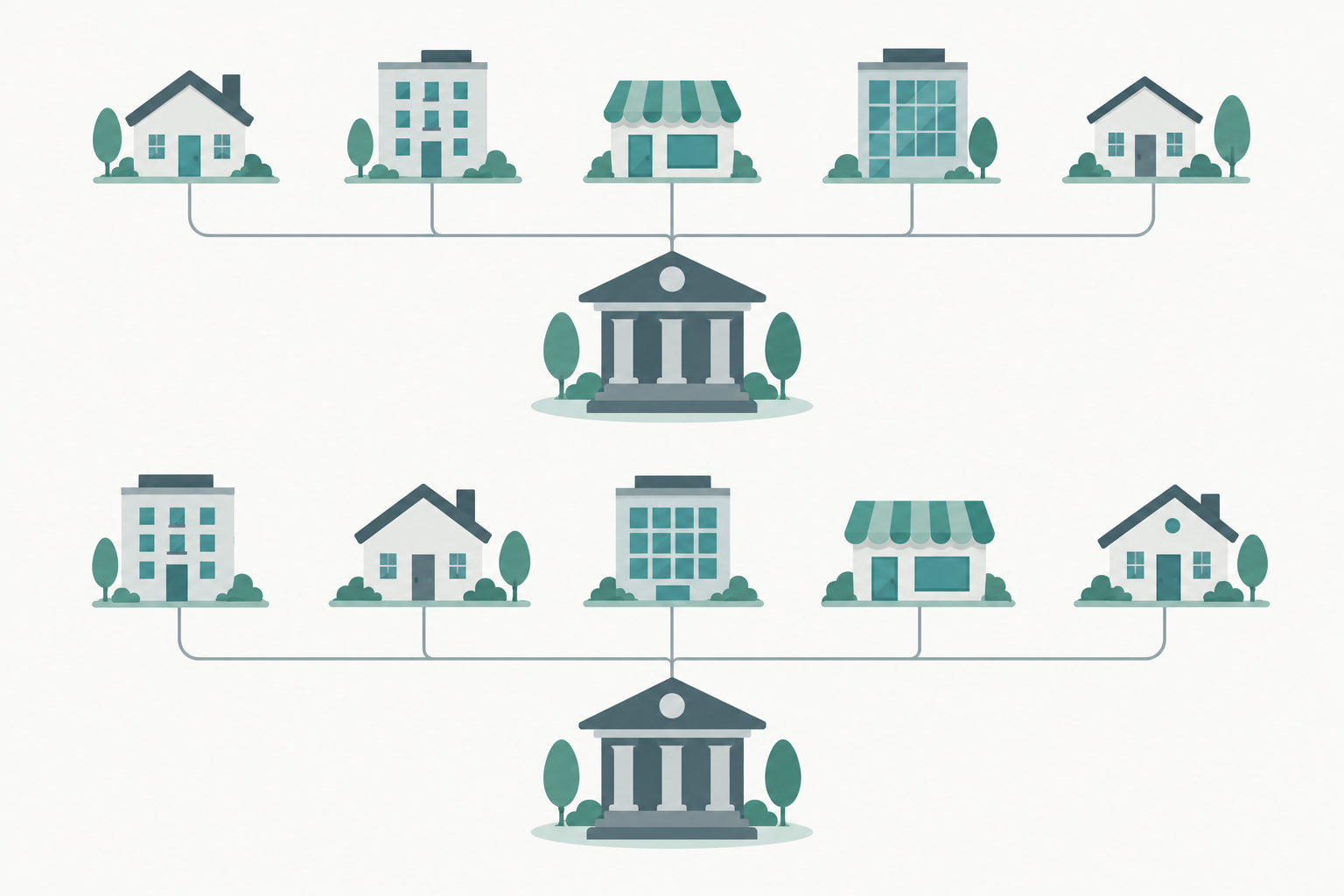
Where to Find Who Funds Organizations Like Mine in 990 Data
The grant list lives in Part XIV of the 2021 through 2025 Form 990-PF, and in Part XV of the 2020 and earlier forms (IRS, 2019, 2020, 2021 and 2025 Forms 990-PF compared). Check the tax year before you trust a part number. Guides written for older returns say Part XV, which is wrong for every return on the 2021 form or later (IRS, 2019, 2020, 2021 and 2025 Forms 990-PF compared).
On the 2025 form the list is headed "Part XIV Supplementary Information (continued) 3 Grants and Contributions Paid During the Year or Approved for Future Payment" (IRS, 2025 Form 990-PF). Each row carries five fields: recipient name and address, any relationship to a foundation manager or substantial contributor if the recipient is an individual, the foundation status of the recipient, the purpose of the grant or contribution, and the amount (IRS, 2025 Form 990-PF). Line 3 splits into "a Paid during the year" and "b Approved for future payment", so forward commitments appear apart from cash grants (IRS, 2025 Form 990-PF).
Five other places in the same return round out the funder profile.
Part XII line 6f on the 2025 form reads "Undistributed income for 2025. Subtract lines 4d and 5 from line 1. This amount must be distributed in 2026" (IRS, 2025 Form 990-PF). That line is the closest thing a filing gives you to a giving-capacity signal for the year ahead. The 5 percent payout behind it is computed in Part IX, whose line 6 reads "Minimum investment return. Enter 5% (0.05) of line 5" (IRS, 2025 Form 990-PF). Line 1 of that part measures only the "Fair market value of assets not used (or held for use) directly in carrying out charitable, etc., purposes" (IRS, 2025 Form 990-PF), so a foundation with large program assets has a smaller minimum payout than its balance sheet suggests.
The payout does not have to arrive as grants. The test is met by qualifying distributions, which Part XI computes as "Amounts paid (including administrative expenses) to accomplish charitable, etc., purposes" plus program-related investments and certain set-asides (IRS, 2025 Form 990-PF). Administrative expenses count. A foundation can satisfy its minimum distribution without writing a single grant check.
The IRS started publishing foundation tax returns in machine-readable format for the first time in 2016, and XML exists only for electronically filed returns (Grantmakers.io, The IRS 990 dataset, read September 2026).
Read the Application Block Before You Write Anyone Down
Part XIV line 2 tells you whether the foundation accepts unsolicited applications (IRS, 2025 Form 990-PF). A name that fails this test belongs on a watch list, not on the working shortlist.
The first thing to read is a check box: "Check here if the foundation only makes contributions to preselected charitable organizations and does not accept unsolicited requests for funds" (IRS, 2025 Form 990-PF). When that box is checked, items 2a to 2d are not completed (IRS, 2025 Form 990-PF). An empty application block means a closed door in writing, not a hidden one.
When the box is not checked, line 2 lists "The name, address, and telephone number or email address of the person to whom applications should be addressed," "The form in which applications should be submitted," "Any submission deadlines," and "Any restrictions or limitations on awards, such as by geographical areas, charitable fields, kinds of institutions, or other factors" (IRS, 2025 Form 990-PF). Those four items are a screen you can run before any research. If the restrictions exclude your organization type or your state, the funder leaves the list. If the block names a submission deadline and a required form of application, both facts change how you prepare.
This screen matters because unreachable funders are a named prospecting frustration. A grant professional on Reddit described "having a long list of prospects that you can't actually get in touch with because they don't want you to contact them" (Reddit thread 1pzk4ub, read September 2026). A checked opt-out box is that complaint in advance.

Who Funds Charities? The Free Databases That Hold the Answers
The filings are public and free. Several tools index them, each with its own coverage and recency limits. You can find out who funds a charity without paying, as long as you know which free source holds the years you need.
IRS Tax Exempt Organization Search is free and lets you "check an organization's eligibility to receive tax-deductible charitable contributions (Pub 78 Data)" as well as search Form 990 series returns, Form 990-N, the Automatic Revocation of Exemption List and determination letters (IRS, Tax Exempt Organization Search, June 28, 2026). The IRS also publishes raw filings in XML format, organized by year and month with an index file for each year (IRS, Form 990 series downloads, read September 2026).
ProPublica's Nonprofit Explorer lets you "Browse millions of annual returns filed by tax-exempt organizations" and "Search for an organization or a person, or search the full text of filings" (ProPublica Nonprofit Explorer, August 20, 2026). Its coverage includes private foundations: "Taxable trusts and private foundations that are required to file a form 990PF are also included" (ProPublica Nonprofit Explorer, August 20, 2026). ProPublica also offers a free JSON API with search and state, NTEE, and 501(c) subsection filters (ProPublica, Nonprofit Explorer API v2, read September 2026). Grantmakers.io describes itself as a way to "Research any US foundation in seconds ... Built from public 990s. Forever free." (Grantmakers.io, read September 2026). It "focuses exclusively on Form 990-PF, the tax filing used by private foundations" (Grantmakers.io, The IRS 990 dataset, read September 2026).
The free foundation directory comparison tests these tools side by side, and the free foundation grant history lookup walks through reading one funder's past grants.
Two coverage gaps matter for peer research. Community foundations file Form 990, not Form 990-PF, so they will not appear on Grantmakers.io (Grantmakers.io, The IRS 990 dataset, read September 2026). And a public charity's own Form 990 does not list every grant it made: Schedule I only requires a line for each recipient domestic organization or domestic government that received more than $5,000 aggregate of grants or assistance from the organization during the tax year (IRS, Instructions for Schedule I (Form 990), Rev. December 2024). Small grants to peers can therefore be missing from the record.
Grant professionals on Reddit also named the free library route. Reading the Foundation Directory free at a public library, a university library or a nonprofit resource center came up in four separate threads (Reddit threads 1p511oo, 1r8eviy, 1lgaq91 and 1vb5ctu, read September 2026). Candid funds a Funding Information Network of library and nonprofit resource centers that offers free public access to its database tools, reference material and training; the 2019 announcement of Candid's formation put the network at more than 400 centers (Foundation Center press release via GlobeNewswire, February 5, 2019). One commenter reported that "a lot of places have been dropping Candid over the past year or two" (Reddit thread 1p511oo, read September 2026), so call before you go.
Qualify Each Name Before It Reaches Your Pipeline
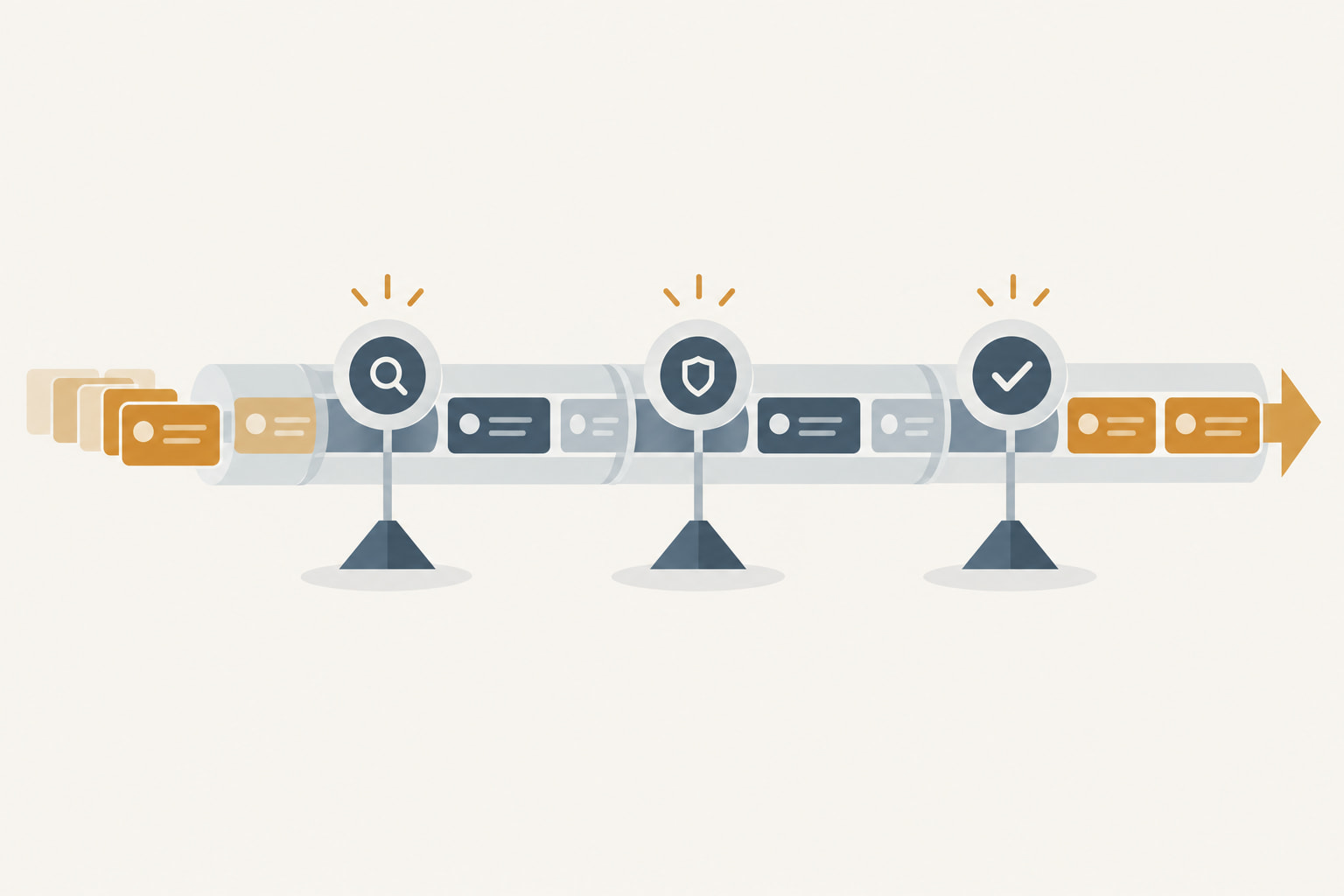
A funder that paid one of your peers is a lead, not a prospect, until it passes five checks: fit, currency, accuracy, reachability, and standing.
Fit starts with geography. The most-cited prospecting frustration across three Reddit threads was that "the biggest issue with finding new opportunities is geographic alignment" (Reddit threads 1r8eviy, 1vb5ctu and 1sewng0, read September 2026). Part VI-A line 8a of a 990-PF lists the states to which the foundation reports or with which it is registered, a geography signal independent of the mailing address (IRS, 2025 Form 990-PF).
Currency is the second check. Filings are old news by design. A Form 990-PF is due "by the 15th day of the 5th month after the end of your organization's accounting period" (IRS, Annual exempt organization return: due date, June 28, 2026), and Form 8868 requests "an automatic 6-month extension of time to file Form 990, 990-EZ, or 990-PF" (IRS, Annual exempt organization return: due date, June 28, 2026). Grantmakers.io warns that "'New' grants that appear in Grantee Search results were likely actually funded 9-18+ months before first appearing in results" (Grantmakers.io, The IRS 990 dataset, read September 2026).
Accuracy matters because a filing is not a clean database. Recipient names are whatever the funder typed, with no IRS requirement to distinguish between national HQ recipients and their local or regional organizations (Grantmakers.io, The IRS 990 dataset, read September 2026). Errors are effectively permanent: "the only way a foundation can adjust their filing content is to file a full amendment to their return" (Grantmakers.io, The IRS 990 dataset, read September 2026). Before you act on a match, look the peer up by EIN and compare its legal name and address with the grant row.
Standing checks prevent a costly miss. Pub. 78 Data is the IRS "list of organizations eligible to receive tax-deductible charitable contributions" (IRS, Tax Exempt Organization Search bulk data downloads, read September 2026). A name on the Auto-Revocation List is not proof of current status: the IRS states that presence on the list "doesn't necessarily reflect its current tax-exempt status" (IRS, Search for tax exempt organizations (TEOS FAQ), read September 2026). To confirm reinstatement, the IRS directs you to Pub. 78 data, the exempt organizations business master file extract, or the organization's determination letter posted on TEOS (IRS, TEOS FAQ, read September 2026). An organization that stops filing for three consecutive years loses exempt status automatically under Section 6033(j) of the Internal Revenue Code (IRS, Automatic revocation of exemption, read September 2026).
Keep the Qualified Shortlist in One Pipeline
Prospecting fails at the handoff: the funder list lives in one spreadsheet, the deadlines in another, and both go stale between research days. Keep each qualified name in a record that carries its EIN, the peer evidence that produced it, the application block notes, and the next action date. A grant pipeline dashboard keeps the handoff in one place.
GrantCue is organized around the same two identifiers. Its directory of more than 10,000 private foundations is built from IRS 990-PF public filings, each profile keyed by name and EIN, with a filter for foundations that indicate they accept applications, and its kanban-style pipeline tracks each opportunity you pursue through to its deadline (grantcue.com, September 2026). Match each funder to its GrantCue foundation profile first.
Filing season adds new grant rows every year, and the IRS bulk data files "are updated monthly" (IRS, Tax Exempt Organization Search bulk data downloads, read September 2026). A pipeline record tells you which peers to re-read next quarter.
FAQ
Can a Nonprofit's Own 990 Show Who Funds It?
Not reliably. "With the exception of private foundations, an exempt organization is not required to disclose the name and address of any contributor to the organization" (IRS, Public disclosure and availability of exempt organizations returns and applications, June 28, 2026). A peer charity's public return need not name its donors, so work from the other side: search foundations' Form 990-PF grant lists for the peer's name and read who paid it.
How Do I Use a 990 to See Who Funds Organizations Like Mine?
Use the funders' returns, not the peers'. A Form 990-PF shows whom a foundation paid in Part XIV line 3 on the 2021 through 2025 forms and in Part XV on the 2020 and earlier forms (IRS, 2019, 2020, 2021 and 2025 Forms 990-PF compared). Each row names a recipient, its foundation status, the purpose, and the amount, so a foundation whose rows name your peers becomes a candidate funder for you.
Who Funds Charities?
Private foundations report the charities they pay in the grant list of Form 990-PF, so reading foundations' filings in your field shows who funds which charities (IRS, 2025 Form 990-PF). Public charities that make grants report them on Schedule I of Form 990, but only for recipients that received more than $5,000 aggregate of grants or assistance during the tax year (IRS, Instructions for Schedule I (Form 990), Rev. December 2024). IRS Tax Exempt Organization Search, ProPublica Nonprofit Explorer and Grantmakers.io hold these filings free.
Who Funds a Specific Foundation?
That question is about money flowing into a foundation, a different record from its grant list. Private foundations are the exception to the rule that "an exempt organization is not required to disclose the name and address of any contributor" (IRS, Public disclosure and availability of exempt organizations returns and applications, June 28, 2026). On the 990-PF itself, Part XIV line 1a names managers who contributed more than 2% of total contributions, if they gave more than $5,000 (IRS, 2025 Form 990-PF).
Why Doesn't a Peer Show Up in Any Grant List?
Check three things. The funder may have typed a different name, since "There is no IRS requirement to use the actual legal name for the grantees" (Grantmakers.io, The IRS 990 dataset, read September 2026). A community foundation's grants sit on Schedule I, which lists only recipients above $5,000 aggregate (IRS, Instructions for Schedule I (Form 990), Rev. December 2024). And recent grants may not be posted yet: Grantmakers.io puts that lag at 9-18+ months (Grantmakers.io, The IRS 990 dataset, read September 2026).
Run the Method on Five Peers This Week
Pick five peer organizations and run the method on each: search foundations' grant lists for the peer's name, extract the matching rows, and log the funders that repeat across peers. The shortlist that comes out is grounded in grants that already happened.
Set a calendar reminder to redo the pass after filing season, when new Part XIV rows reach the free databases. For live federal and state deadlines that fit the same work, the federal and state listings open now show what you can apply for.