Keeping Grant Proposal Sections Consistent: Goals, Methods, Budget and Evaluation
A method for keeping grant proposal sections consistent while several people draft: one source sheet, a goal-to-budget-to-evaluation crosswalk, and a fixed read-through order.

In this article (9)
- Quick Answer: How Do You Keep Grant Proposal Sections Consistent?
- Why Grant Proposal Sections Drift Apart
- Start With One Proposal Source Sheet
- Build a Goal-to-Budget-to-Evaluation Crosswalk
- The Usual Drift Points: Names, Totals, Dates and Outcomes
- A Final Read-Through Order That Catches Contradictions
- Keeping Grant Proposal Sections Consistent After the Award
- FAQ
- Make the Source Sheet Before the First Draft
Keeping grant proposal sections consistent is the work of making the need statement, goals, methods, budget and evaluation plan describe the same project with the same numbers. It gets hard when several people draft different sections at the same time, and harder when the budget changes in the last week.
The drift is rarely visible on any single page. It shows up only when someone reads the budget narrative beside the methods, or the evaluation plan beside the objectives, and finds two versions of the same fact.
Quick Answer: How Do You Keep Grant Proposal Sections Consistent?
Put every shared fact, including names, numbers served, dates, totals and outcome targets, on one source sheet with a single owner. Map each goal to its activities, budget lines and evaluation measures in a crosswalk table. Then read the sections in a fixed order, checking each against the sheet, before anyone writes the summary.
Why Grant Proposal Sections Drift Apart
Grant proposal sections drift apart because each one is drafted from a different starting point by a different person, and the shared numbers change after some sections are finished. Nobody decides to contradict the budget; the methods writer simply drafted from last month's plan.
The usual pattern runs like this. A program lead writes the methods from the program as it runs today. A finance officer builds the budget from what the organization can afford. An evaluator writes measures from the data the organization already collects. A development lead writes the need statement and summary from the funder's priorities. Each draft is reasonable on its own. Put together, they describe four slightly different projects.
One thread on rejected proposals names the result. The person who started it wrote that a strong idea can lose clarity when "the activities, outcomes, and indicators don't connect well," and a commenter in the same thread pointed to "no crystal clear outcomes that are linked confidently to the org's capacity and track record" (Reddit thread 1vf8jxw, read September 2026).
Consistency matters to scoring because some funders score sections separately. HRSA notices of funding opportunity, for example, publish a table mapping each narrative section to the criterion it is scored under, such as the budget narrative to the "Support Requested" criterion (HRSA notices of funding opportunity, read September 2026). When the budget narrative funds less staff time than the methods describe, the two sections are scored by different criteria on different facts.
The fix is structural, not editorial. A final proofread catches typos. It rarely catches a methods section that promises weekly sessions while the budget pays for biweekly ones, because each page reads well alone.
Start With One Proposal Source Sheet
A proposal source sheet is a one-page table that holds every fact more than one section uses, with one owner who is the only person allowed to change it. Every writer copies numbers from the sheet and never from another section's draft.
Build it before the first draft, from the funder's guidelines and your program plan. Keep it short. If an item appears in only one section, it does not belong on the sheet.
Illustrative figures, not data from a real organization.
Keep the sheet where every writer can open it and nobody can quietly overwrite it: a shared file with edit rights limited to the owners, or a pinned table in the project workspace. Put the date of the last change at the top. A writer who sees that date has moved since they started drafting knows to check their section before handing it in.
Three rules keep the sheet useful. First, one owner per row, and changes go through that person. Second, every change gets a date and a one-line note, so writers can see what moved since they last looked. Third, the sheet wins: when a section disagrees with it, the section is wrong until the owner says otherwise.
The sheet also feeds reusable material. Facts that stay stable across proposals, such as legal name, history and service area, can move into a boilerplate library once they are checked; our guide to a grant proposal library covers how to keep that language current.
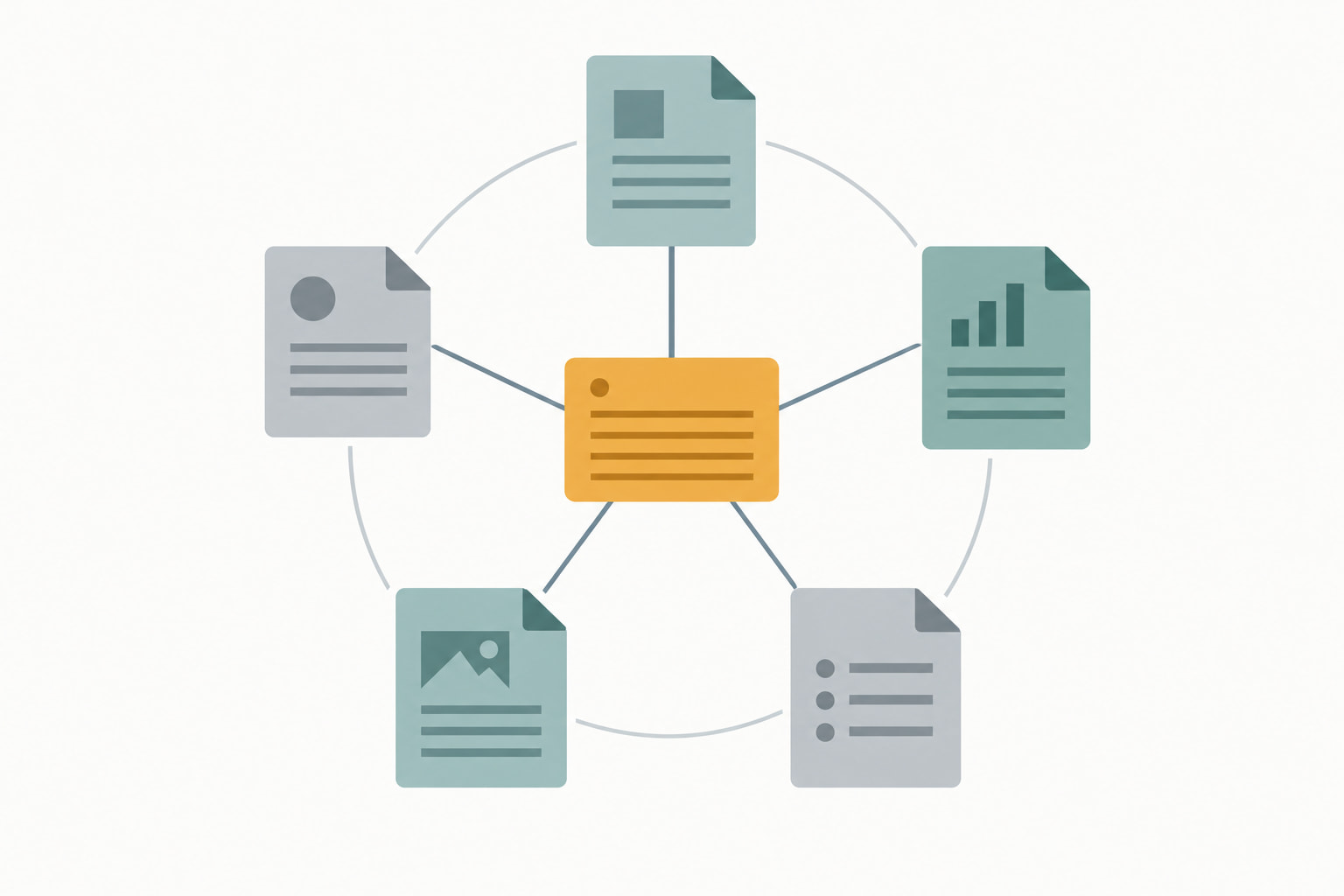
Build a Goal-to-Budget-to-Evaluation Crosswalk
A crosswalk is a table that runs each objective across the proposal: the activity that delivers it, the budget lines that pay for it, the output it produces, the outcome measure that tests it, and where it will be reported. If any cell in a row is empty, one section of the proposal is making a promise another section does not support.
Here is the crosswalk for the composite project on the source sheet.
Illustrative figures, not data from a real organization. Budget total: $150,000.
Read the table in both directions. Left to right, each objective should have an activity, money, an output and a measure. Top to bottom, every budget line should appear in at least one row; a line that supports no objective is either missing from the narrative or does not belong in the request.
The arithmetic belongs in the crosswalk too. The 20 groups come from 120 students in groups of 6, the 90 sessions from three a week for 30 weeks, and the 720 books from 6 per student. When the student count changes, every one of those cells changes with it, which is the point: the crosswalk shows you every place a single change lands.
For the outcomes column itself, a logic model does the deeper work of linking activities to results; our guide to the logic model for grant writing covers how to build one. The crosswalk is narrower. It only checks that the sections agree.
The Usual Drift Points: Names, Totals, Dates and Outcomes
Four groups of facts appear in nearly every section and so drift most easily: names, totals, dates and outcome targets, with staff time close behind. Check them against the source sheet and you catch the drift that ordinary proofreading misses.
Illustrative figures, not data from a real organization.
Staff time deserves its own line because it is where narrative and money meet. A methods writer describes the program as it should run; the budget pays for the program the organization can afford. When those differ, decide which is true and change the other, never both halves of the difference.
A before-and-after rewrite shows the fix. The first draft of the composite methods section read: "Two full-time reading coaches will provide daily tutoring to every student in the program." It contradicted the budget on staff time, on frequency and on group size. The revised sentence copies the sheet and the crosswalk: "Two reading coaches, each at 0.75 FTE, will lead groups of 6 students three times a week for 30 weeks, reaching all 120 students in grades 3 to 5."
Illustrative figures, not data from a real organization.
Outcome targets drift for a different reason: they get rounded and restated. "Seventy percent of participants" becomes "most participants" in the summary and "at least 80 students" in the evaluation. Pick one wording on the sheet and copy it exactly. If a funder's form asks for the same target in a different format, add that version to the sheet beside the first.
Letters of support drift too, because partners write them from whatever version of the plan you sent first. Send each partner the current numbers from the sheet with the request, and read the signed letter against the sheet when it comes back.

A Final Read-Through Order That Catches Contradictions
Read the sections in a fixed order that starts with the numbers and ends with the summary, so each section is checked against the source sheet and the crosswalk before the next one is read. Reading front to back, the way the funder will, hides contradictions because the summary sets expectations the later sections quietly break.
One order that works:
1. Budget and budget narrative against the source sheet: every total, line and FTE.
2. Objectives against the crosswalk: each objective has a row and every cell is filled.
3. Methods against the objectives and the personnel lines: activities, frequency, staff time.
4. Evaluation plan against the objectives: the same targets, the same population, the same measures.
5. Need statement against the population on the sheet: the same people, place and scale.
6. Organizational capacity against the staff on the budget.
7. Letters of support and attachments against the names and numbers on the sheet.
8. The summary and cover letter last, rewritten if any earlier step changed a fact.
A method, not a funder requirement; change the order to fit the funder's outline.
Use a different reader from the person who drafted each section where you can, and give that reader the source sheet and the crosswalk, not just the draft. A reader who has the sheet checks facts; a reader without it can only check style.
Some funders' review instructions make the case for structure plainly. The Office of Justice Programs tells its peer reviewers to award points if required information is found somewhere in the submission, because "applicants may not be experienced grant writers" (OJP peer reviewer guide, August 2024). That instruction is about information placed in the wrong section, which is a different problem from two sections that state different facts. The wider pre-submission pass, covering eligibility, compliance and formatting, is set out in our grant proposal review checklist.
Keeping Grant Proposal Sections Consistent After the Award
Consistency does not end at submission, because what the proposal promises becomes the standard the award is measured against. Federal awards must include, where applicable, "performance goals, indicators, targets, and baseline data" (2 CFR 200.211(a), eCFR, current as of September 2026).
Reporting then holds the sections together. When reporting performance, a federal recipient "must relate financial data and project or program accomplishments to the performance goals and objectives of the Federal award" (2 CFR 200.329(b), eCFR, current as of September 2026). A proposal whose budget, methods and evaluation disagree produces an award that is hard to report against, because there is no single version of what was promised.
Keep the source sheet and the crosswalk with the award file. When the award arrives, update both to the funded amount and any changes the funder negotiated, and hand them to whoever writes the reports. Our guide to the evaluation plan for a grant proposal covers how the measures in the crosswalk become the data you collect.
Tools can hold the shared record while several people write. On GrantCue's Team plan, at $109 a month for up to 8 users, each opportunity gets a shared document library and custom fields, so the source sheet, the crosswalk and each section's draft can sit with the opportunity they describe; comments come on every plan, so a writer can flag a changed fact where the others will see it (grantcue.com, September 2026). The GrantCue features page shows how drafting and deadlines fit together.

FAQ
How do you keep grant proposal sections consistent?
Keep one source sheet of every shared fact, such as names, numbers served, dates, totals and outcome targets, with one owner who approves changes. Map each objective to its activity, budget lines, output and measure in a crosswalk table. Then read the sections in a fixed order, starting with the budget and ending with the summary, checking each against the sheet.
What should match across a grant proposal?
The organization and project names, the population and number served, the project period and start date, the total request and each line item, staff roles and time, partner names, and every outcome target should match everywhere they appear. The budget narrative and the methods should describe the same staffing and the same frequency of activities.
What is a crosswalk in a grant proposal?
A crosswalk is a table that runs each objective across the proposal: the activity that delivers it, the budget lines that pay for it, the output it produces and the measure that tests it. An empty cell shows a promise one section makes that another section does not support. Some funders publish their own version: HRSA notices map each narrative section to the review criterion it is scored under.
Who should own the numbers in a grant proposal?
Give each shared number one owner. One workable split: the finance officer owns totals and line items, the program lead owns participants, activities and staff time, the evaluator owns outcome targets and measures, and the development lead owns names, dates and the funder's requirements. Writers copy from the source sheet; only the owner changes it.
How do you handle a budget change late in drafting?
Change the source sheet first, with the date and a one-line note, then use the crosswalk to find every cell the change touches: staff time in the methods, counts in the evaluation, totals in the summary and cover letter. Re-read those sections in the fixed order. A change made only in the budget leaves every other section stating the old fact.
Do reviewers check whether proposal sections agree?
Review processes differ by funder. HRSA notices map each narrative section to the criterion it is scored under, so the budget narrative and the methods are scored separately (HRSA notices of funding opportunity, read September 2026). OJP tells reviewers to credit required information found anywhere in an application (OJP peer reviewer guide, August 2024). Neither instruction is a reason to leave two sections stating different facts, so make them agree before you submit.
Make the Source Sheet Before the First Draft
Before anyone writes a paragraph, spend an hour with the program lead and the finance officer filling in the source sheet: names, population, period, total, staff time, outcome targets and partners. Then draft the crosswalk with one row per objective and leave the empty cells visible.
Send both to every writer with their assignment. When the drafts come back, run the read-through order once against the sheet, fix the sections that disagree, and write the summary last from the sheet itself.