Foundation Grant History Free Lookup: How to See Who a Funder Paid
How to assemble a funder's multi-year giving history from free public filings, how to read the 990-PF grant list, and which patterns show a real prospect.

In this article (9)
- Quick Answer: How Do You Find a Foundation's Grant History for Free?
- Where to Do a Foundation Grant History Free Lookup
- How to Read the Grant List in a Foundation's Annual Return
- How to Assemble a Multi-Year Giving History from Filings
- What the Patterns in a Funder's Grant History Mean
- When a Funder's Grant History Is Empty, Late, or Hard to Match
- Foundation Grant Budget vs Federal Grant Budget: What the Records Show
- FAQ
- Start With the Two Most Recent Filings
A foundation grant history free lookup shows who a funder has paid, how much, and for what purpose. The record is public. All private foundations, including nonexempt trusts treated as private foundations, must annually file Form 990-PF, Return of Private Foundation (IRS, Private foundations, June 28, 2026), and the grant list inside that return names the recipients, purposes, and amounts for the year.
The work has two halves: pull the filings from a free database, then read the rows as a pattern instead of a list. Several years of one funder's returns show its typical grant size, its repeat grantees, its geography, and whether it accepts proposals at all.
Quick Answer: How Do You Find a Foundation's Grant History for Free?
Pull a foundation's Form 990-PF grant lists for several recent years from IRS Tax Exempt Organization Search, ProPublica Nonprofit Explorer or Grantmakers.io, all free, and stack them in one sheet. The list is Part XIV on 2021 and later forms and Part XV on 2020 and earlier ones; each row names a recipient, purpose and amount.
Where to Do a Foundation Grant History Free Lookup
The free sources that publish a foundation's grant history are IRS Tax Exempt Organization Search (IRS, TEOS, June 28, 2026), ProPublica Nonprofit Explorer (ProPublica Nonprofit Explorer, read October 2026), and Grantmakers.io (Grantmakers.io, About, read September 2026). Each one reads the same public filings, so a gap in the filing itself shows up in all three. When you need one organization's return rather than a funder's run of years, the guide to where to find a Form 990 for an organization covers the quickest free routes.
Tax Exempt Organization Search is the source of record, and it is free (IRS, Tax Exempt Organization Search, June 28, 2026). It searches five separate data sets: Pub. 78 data, the Automatic Revocation of Exemption List, determination letters, Form 990 series returns, and the Form 990-N (e-Postcard) file (IRS, TEOS FAQ, read September 2026).
Search by legal name and drop filler words. Organizations are listed under the legal name or a doing business as name on file with the IRS, common or popular names are not on file, and the tool advises avoiding common words such as "the" or "foundation" (IRS, TEOS FAQ, read September 2026). A name on the Auto-Revocation List settles nothing on its own, because presence on that list "doesn't necessarily reflect its current tax-exempt status" (IRS, TEOS FAQ, read September 2026).
ProPublica Nonprofit Explorer lets you browse millions of annual returns filed by tax-exempt organizations and search the full text of filings (ProPublica Nonprofit Explorer, read October 2026). Taxable trusts and private foundations that are required to file a Form 990-PF are included (ProPublica Nonprofit Explorer, read October 2026). One commenter on Reddit put it simply: "Propublica website has every 990 for free" (Reddit thread 1wiivcd, read September 2026), and ProPublica was the free fallback named in four separate threads read that month.
Grantmakers.io covers one form only: Form 990-PF, the tax filing used by private foundations (Grantmakers.io, The IRS 990 dataset, read September 2026). It describes itself as a way to "Research any US foundation in seconds ... Built from public 990s. Forever free," and it requires no account (Grantmakers.io, About, read September 2026). Its search can return an "Hourly search limit reached" message, because it limits searches to keep a free community service open to more people (Grantmakers.io, Search Foundation Profiles, read September 2026).
One more free route runs through Candid's Funding Information Network of library and nonprofit resource centers, which offer free public access to its database tools. The 2019 announcement of Candid's formation put the network at more than 400 centers (Foundation Center press release via GlobeNewswire, February 5, 2019), so check what your nearest location still carries before you travel.
Sources: IRS TEOS FAQ and IRS Form 990 series downloads, read September 2026; ProPublica Nonprofit Explorer, read October 2026; Grantmakers.io, The IRS 990 dataset, read September 2026.
A comparison of the tools that index these filings for browsing is in our guide to free foundation directories compared.

How to Read the Grant List in a Foundation's Annual Return
The grant list sits in Part XIV of the 2021 through 2025 Form 990-PF, under the heading Grants and Contributions Paid During the Year or Approved for Future Payment (IRS, 2025 Form 990-PF). On the 2020 and earlier forms the same list is Part XV, and undistributed income was Part XIII instead of Part XII (IRS, 2019, 2020, 2021 and 2025 Forms 990-PF compared).
Line 3 of that part splits in two: a for Paid during the year and b for Approved for future payment (IRS, 2025 Form 990-PF). Amounts approved for future payment land on line 3b, so a funder's forward commitments appear separately from its cash grants (IRS, 2025 Form 990-PF).
Each row of the list carries five fields (IRS, 2025 Form 990-PF).
Fields as printed on the form (IRS, 2025 Form 990-PF).
Recipient names are whatever the funder typed. There is no IRS requirement to use the actual legal name for the grantees, and no requirement to distinguish between national headquarters recipients and their local or regional organizations (Grantmakers.io, The IRS 990 dataset, read September 2026). Match on address and city before you treat two rows as different groups.
Line 2 of the same part is the application-information block. It names the person to whom applications should be addressed, the form in which applications should be submitted, any submission deadlines, and any restrictions or limitations on awards (IRS, 2025 Form 990-PF). Read the opt-out box first, since a foundation can check a box stating that it "only makes contributions to preselected charitable organizations and does not accept unsolicited requests for funds" (IRS, 2025 Form 990-PF).
Line 1a lists managers who contributed more than 2% of the total contributions received by the foundation before the close of a tax year, and only if they contributed more than $5,000 (IRS, 2025 Form 990-PF). Part VII lists all officers, directors, trustees, and foundation managers and their compensation (IRS, 2025 Form 990-PF). Those two blocks name the decision-makers.
How to Assemble a Multi-Year Giving History from Filings
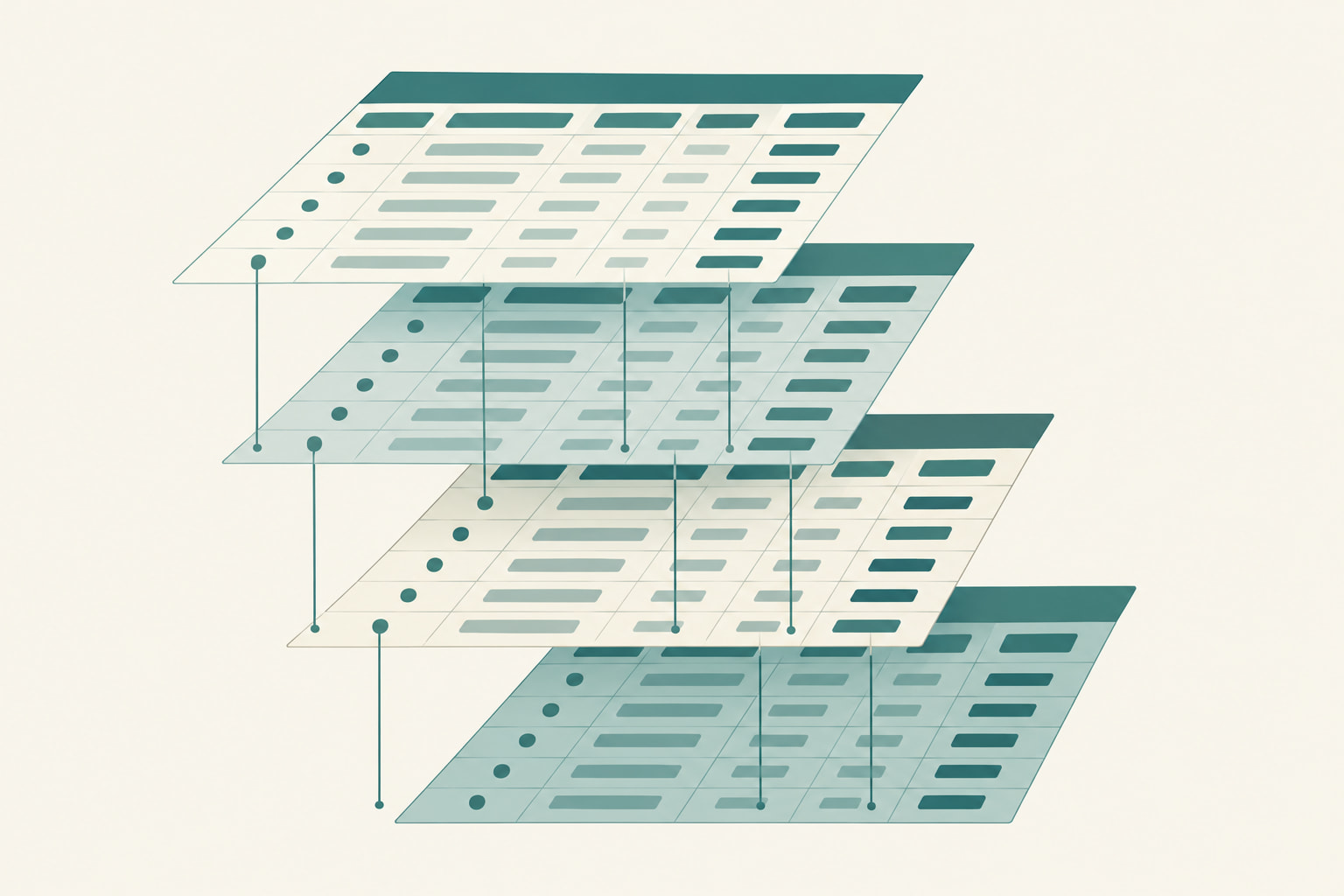
A giving history is one funder's grant list pulled from consecutive returns and stacked into a single sheet, with the filing year kept on every row. The rest is timing and format.
Timing has layers. The return is due "by the 15th day of the 5th month after the end of your organization's accounting period," so a calendar-year filer is due May 15 of the following year (IRS, Annual exempt organization return: due date, June 28, 2026). Form 8868 requests an automatic 6-month extension of time to file (IRS, Annual exempt organization return: due date, June 28, 2026). Publication adds its own delay.
Grantmakers.io warns that "'New' grants that appear in Grantee Search results were likely actually funded 9-18+ months before first appearing in results" (Grantmakers.io, The IRS 990 dataset, read September 2026). Treat the funder's latest months of giving as not yet visible, and read the trend from the returns already filed.
Format decides how far back you can go. The IRS releases returns in two formats, page images and raw data in XML, and "the raw data is more useful, especially to researchers, because it can be extracted and analyzed more easily" (ProPublica Nonprofit Explorer, Full Filing view, read September 2026). XML is "only available for electronically filed documents" (ProPublica Nonprofit Explorer, read October 2026).
Forms 990 and 990-PF for tax years ending July 31, 2020 and later must be filed electronically (IRS, E-file for charities and nonprofits, June 28, 2026), and the IRS started publishing foundation tax returns in machine-readable format for the first time in 2016 (Grantmakers.io, The IRS 990 dataset, read September 2026). Older returns come as page images unless they were filed electronically (ProPublica Nonprofit Explorer, read October 2026). A ProPublica Full Filing page is "a reconstruction of a tax document using raw data from the IRS" (ProPublica Nonprofit Explorer, Full Filing view, read September 2026), so confirm an amount against the page image before it goes into a request.
Part numbering per IRS, 2019, 2020, 2021 and 2025 Forms 990-PF compared. Format limits per ProPublica Nonprofit Explorer, read October 2026, and IRS, E-file for charities and nonprofits, June 28, 2026.
Stack the rows by year, keep amount and purpose intact, and sort by recipient. A repeat recipient then reads as a run down the sheet, and that run is the history.
What the Patterns in a Funder's Grant History Mean
The patterns worth reading are repeat grantees, the range of award sizes, the wording of the purpose column, the geography of the recipients, and whether the funder accepts unsolicited requests. Any one of them can end the research early.
Repeat grantees across consecutive years show established relationships and the program areas the funder returns to. Read the purpose column beside them: the funder's own words for its interests are the words to reuse in a letter.
The amount column gives the range. Line your request up against awards to organizations of your size and stay inside the range the record shows. Rows in the approved-for-future-payment column show what the funder has already promised, which is money you are not competing for (IRS, 2025 Form 990-PF).
Geography is read in two places: the addresses in the grant rows, and Part VI-A line 8a, which asks the foundation to "Enter the states to which the foundation reports or with which it is registered" (IRS, 2025 Form 990-PF). A mailing address alone can mislead. One commenter on Reddit put the prospecting problem plainly: "the biggest issue with finding new opportunities is geographic alignment" (Reddit thread 1r8eviy, read September 2026).
What the Payout Rules Say About Timing
A foundation moves money on a schedule the return records. Part IX line 6 of the 2025 form reads "Minimum investment return. Enter 5% (0.05) of line 5" (IRS, 2025 Form 990-PF).
The test is not limited to grants. Qualifying distributions in Part XI include "Amounts paid (including administrative expenses) to accomplish charitable, etc., purposes," plus program-related investments and certain set-asides (IRS, 2025 Form 990-PF). A foundation with no grants in a year can still be current.
Part XII line 6f of the 2025 form reads "Undistributed income for 2025. Subtract lines 4d and 5 from line 1. This amount must be distributed in 2026" (IRS, 2025 Form 990-PF). Section 4942 puts an "excise tax of 30 percent" on that income if it has not been distributed "before the first day of the second (or any succeeding) tax year following the year earned," and "an additional tax of 100 percent of the amount remaining undistributed" if it is still undistributed at the end of the taxable period (IRS, Taxes on private foundation failure to distribute income, June 28, 2026). A run of large undistributed amounts means the funder has to place money.
When a Funder's Grant History Is Empty, Late, or Hard to Match
An empty grant history has plain causes: a threshold, a different form, or a naming habit. None of them is a funder hiding its record.
Sources: IRS 2025 Form 990-PF; Grantmakers.io, The IRS 990 dataset, read September 2026; IRS Instructions for Schedule I (Form 990), Rev. December 2024.
An application block left blank behind the opt-out box is a signal, not an oversight. The funder has told the IRS it does not accept unsolicited requests, so do not send one.
Once the history is assembled, keep it beside the funder's profile. GrantCue generates its foundation pages from the same 990-PF public filings, covering more than 10,000 private foundations keyed by name and EIN (grantcue.com, September 2026). Look each funder up in the foundation profiles built from 990-PF returns and file your multi-year sheet under the same EIN.

Foundation Grant Budget vs Federal Grant Budget: What the Records Show
A foundation grant shows up in public as one awarded amount with a purpose line in the funder's grant list, and the budget behind it never appears (IRS, 2025 Form 990-PF). A federal grant budget is built line by line against the cost rules in the solicitation. The two records answer different questions.
For prospecting, the foundation record is the more useful of the two, because the amount column is a record of what the funder paid for work like yours. Size the request from those amounts and describe the work in the purpose language the funder used.
A giving history will not show line items such as fringe rates or indirect cost recovery. What it shows is scale and interest, and those are what a first approach has to match. A federal proposal and a foundation proposal differ the same way their budgets do: one is priced against cost rules in a solicitation, the other against a pattern of past awards.
FAQ
Where Can I Find a Foundation's Grant History for Free?
IRS Tax Exempt Organization Search publishes foundation returns free of charge (IRS Tax Exempt Organization Search, June 28, 2026). ProPublica Nonprofit Explorer lets you browse millions of annual returns filed by tax-exempt organizations and search their full text (ProPublica Nonprofit Explorer, read October 2026). Grantmakers.io covers Form 990-PF only and is free, with no account required (Grantmakers.io, About, read September 2026).
What Is a Foundation Grant History?
A foundation grant history is the run of grants a private foundation has reported on its annual returns over several years, listing each recipient, purpose, and amount (IRS, 2025 Form 990-PF). Private foundations must file Form 990-PF every year (IRS, Private foundations, June 28, 2026), so the history is a stack of consecutive filings instead of one document.
How Far Back Does Free Foundation Grant History Go?
Page images reach back further than machine-readable data. The IRS started publishing foundation tax returns in machine-readable format for the first time in 2016 (Grantmakers.io, The IRS 990 dataset, read September 2026), and raw XML is "only available for electronically filed documents" (ProPublica Nonprofit Explorer, read October 2026). Older years are readable as page images, and the part numbering changes across form years (IRS, 2019, 2020, 2021 and 2025 Forms 990-PF compared).
How Do I Spot a Funder's Repeat Grantees?
Stack the grant rows from several consecutive returns in one sheet, keep the filing year on each row, and sort by recipient. A name that shows up year after year is a repeat grantee. Match on address and city as well as name, because "There is no IRS requirement to use the actual legal name for the grantees" (Grantmakers.io, The IRS 990 dataset, read September 2026).
How Long Before a Grant Shows Up in Public Filings?
The return is due "by the 15th day of the 5th month after the end of your organization's accounting period," and Form 8868 requests an automatic 6-month extension (IRS, Annual exempt organization return: due date, June 28, 2026). Publication adds more delay. Grantmakers.io reports that grants in its search were "likely actually funded 9-18+ months before first appearing in results" (Grantmakers.io, The IRS 990 dataset, read September 2026).
What Is the Difference Between a Foundation Grant Budget and a Federal Grant Budget?
A foundation grant appears in public only as one award amount with a purpose line in the grant list of the funder's Form 990-PF, and the budget you submitted never appears there (IRS, 2025 Form 990-PF). A federal grant budget is built line by line against the cost rules in the solicitation. Size a foundation request from the funder's past amounts, and build a federal budget from the solicitation.
Start With the Two Most Recent Filings
Pull the two most recent returns for a funder and stack the grant rows. Mark the repeat grantees, note the range of amounts, and copy the purpose wording the funder uses. That work decides whether the funder is worth a letter.
Then write the opening paragraph of your approach from the record: name the grantees closest to your work and the award size your request fits. Our template for a foundation proposal carries the structure from there, and the open calls in the grant listings show what is available now. If you are still building the prospect list itself, start from our prospect-list building guide and qualify each name against its own filing history.