How to FOIA a Funded Grant Application: What You Can Request and How
How to request a funded federal grant application under the Freedom of Information Act: the faster routes to try first, how to word the request, what gets redacted and how long it takes.

In this article (10)
- Quick Answer: How Do You FOIA a Funded Grant Application?
- Can You FOIA a Funded Grant Application?
- Try the Faster Routes Before You File
- How to Write the FOIA Request for a Grant Application
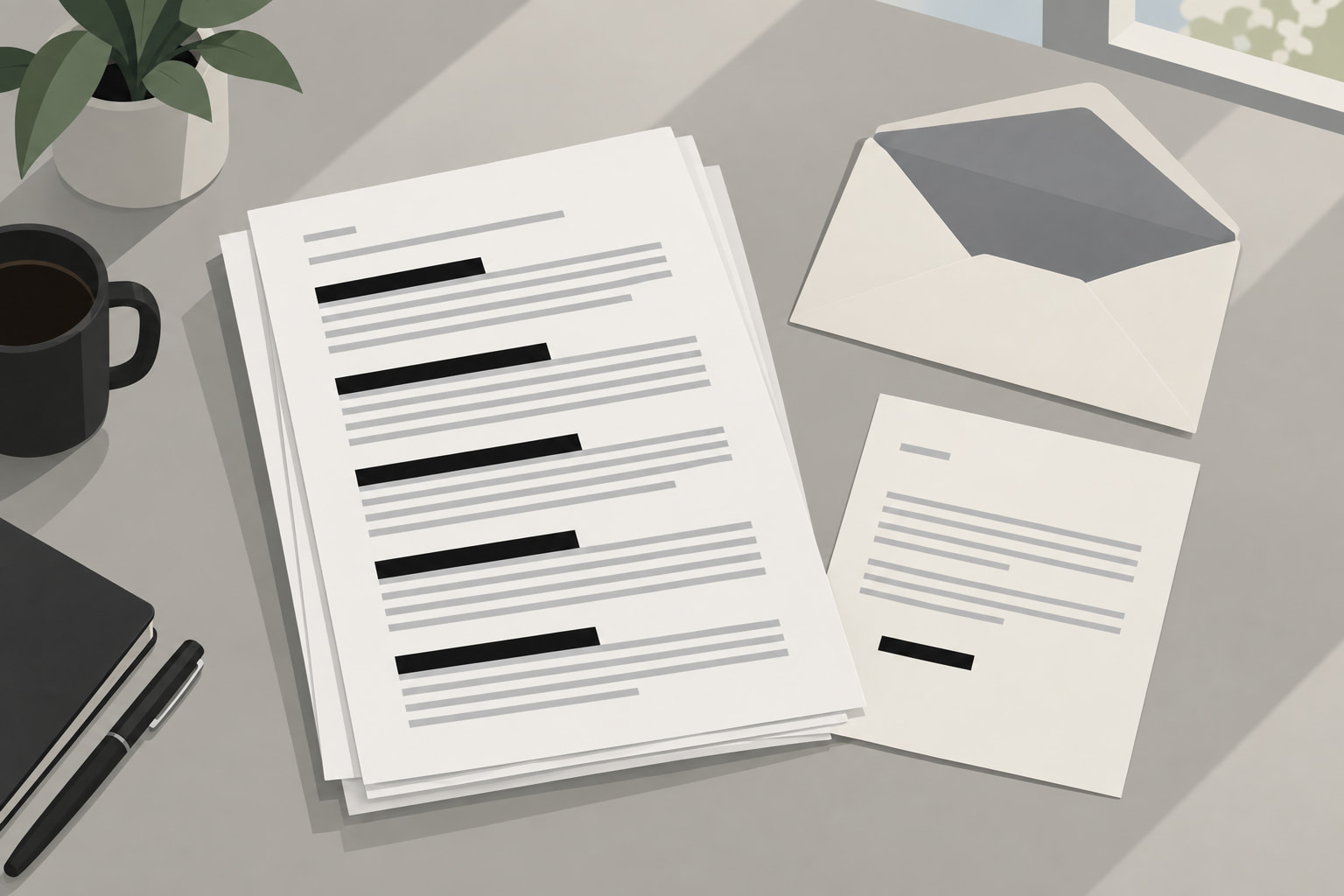
- What Agencies Redact From a Funded Application
- How Long a FOIA Request Takes and What It Costs
- When the Agency Withholds or Redacts Too Much
- How to Use a Funded Application Once You Have It
- FAQ
- Start With the Grant Number and a Narrow Request
To FOIA a funded grant application is to ask a federal agency, under the Freedom of Information Act, for a copy of an application it chose to fund. Grant writers do it to see how a successful applicant answered the same criteria they now face. One commenter, answering a researcher whose colleagues would not share funded proposals, said anything submitted to a government funder can be requested under FOIA (Reddit thread 1hu8m0x, read September 2026).
It works, with limits. Federal FOIA reaches federal agencies, not foundations or state governments. Agencies such as NIH generally release funded applications but not pending or declined ones, and they black out salaries, personal details and confidential commercial information before release. A request takes time, so try the faster routes first. This guide describes the federal process and is not legal advice.
Quick Answer: How Do You FOIA a Funded Grant Application?
Send a written request to the awarding federal agency's FOIA office, cite the Freedom of Information Act, and identify the award by grant number, project title and recipient. Federal law gives the agency 20 working days to decide. Agencies such as NIH generally release funded applications, with salaries, personal data and confidential commercial information redacted.
Can You FOIA a Funded Grant Application?
Yes, if a federal agency funded it. The Freedom of Information Act is a federal law that gives the public a right to request records from federal agencies, and FOIA.gov states that "Generally any person - United States citizen or not - can make a FOIA request" (FOIA.gov, FAQ, read October 2026). FOIA.gov adds that agencies must disclose requested information unless it falls under one of nine exemptions.
Agency policy decides which application records come out. The NIH Grants Policy Statement says NIH "generally will release" funded applications and funded progress reports, including award data, and "generally will withhold" pending competing applications and unfunded new, renewal and revision applications (NIH Grants Policy Statement 2.3.11, revised March 2026). NSF states that "A proposal that results in an NSF award will be made available to the public on request, consistent with the Freedom of Information Act," minus privileged, personal or proprietary material (NSF PAPPG 24-1, Chapter III, read October 2026).
Sources: NIH Grants Policy Statement, revised March 2026; NSF PAPPG 24-1, read October 2026.
The law stops at the federal line. The Justice Department's Office of Information Policy states that because FOIA applies only to records of the executive branch, "it does not provide access to records held by Congress, the federal courts, advisory offices of the President, state or local government agencies, or by private businesses or individuals" (DOJ Office of Information Policy, About the FOIA, read October 2026). A private foundation's files are outside FOIA. The same office says all states have their own statutes governing access to state and local records (DOJ Office of Information Policy, read October 2026).
Try the Faster Routes Before You File
A FOIA request is the slowest way to see a funded application, so check what the agency already publishes and whether the awardee will share. FOIA.gov advises: "Before making a request, first look to see if the information you are interested in is already publicly available" (FOIA.gov, How to Make a FOIA Request, read October 2026).
Sources: NIH, NSF, NIAID and BJA pages, read October 2026.
NIH places information about awarded grants, "including project title, the name of the PD/PI, and the project description, on the RePORT Web site" (NIH Grants Policy Statement 2.3.11, revised March 2026). NSF's Award Search provides award abstracts only, and its help page says "The easiest way to get a copy of a proposal is to contact the primary investigator for the award and ask that person if he or she will share it with you" (NSF Award Search FAQ, read October 2026). A BJA notice told applicants their abstracts "will be made publicly available on the OJP and USASpending.gov websites if the project is awarded" (BJA FY23 notice O-BJA-2023-171639).
NIAID posts sample applications and summary statements that investigators agreed to share, across research, small business, training and cooperative agreement awards, and warns that "The samples may not reflect the latest format or rules" (NIAID, Sample Applications and More, read October 2026).
Asking the awardee needs no form and no agency review, because the organization already holds a clean copy. A short email that names the award and explains why you want it is a reasonable way to ask. Asking the funder itself for a winning application is a separate tactic, covered with the rest of the post-decline conversation in how to ask a funder why you were rejected.

How to Write the FOIA Request for a Grant Application
A FOIA request for a grant application is a short written letter or web form that names the record precisely enough for the agency to find it. FOIA.gov says the request "simply must be in writing and reasonably describe the records you seek," and "There is no specific form that must be used to make a request" (FOIA.gov, read October 2026).
Step 1: Identify the Award
Find the grant number, project title, recipient organization and funding component before you write. NIH tells requesters to consult RePORTER first, because it identifies the grant number and the institute that funded the work, and notes that "Typically, a grant number and grant title are necessary to submit a FOIA request" (NIH FOIA Request Portal, read October 2026). For other agencies, look for the same identifiers in the agency's own award search or on USAspending.gov.
Step 2: Send It to the Right Office
Each agency handles its own records, and FOIA.gov says a request gets the quickest response "if it is addressed directly to the FOIA office of the agency or agency component that you believe has the records you are seeking" (FOIA.gov, FAQ, read October 2026). NIH asks requesters to use its online portal "rather than mail, fax, or courier, to ensure timely logging of your request" (NIH, Submitting FOIA Requests, August 13, 2026).
Step 3: Keep the Request Narrow
Ask for the application narrative and the attachments you need. FOIA.gov notes that "Simple requests are typically more targeted and seek fewer pages of records" (FOIA.gov, read October 2026). You can also cap what you will pay: FOIA.gov says you may include "a specific statement limiting the amount that you are willing to pay in fees" (FOIA.gov, read October 2026).
Under the Freedom of Information Act, I request a copy of the funded application for grant number [grant number], titled "[project title]," awarded to [recipient organization]. I am seeking the application narrative and its attachments, in electronic form. I am willing to pay fees up to [amount]; please contact me before incurring fees above that amount.
Fill the bracketed fields from the award record. You do not need to justify wanting the record: NIH's policy describes release to members of the public "regardless of the intended use of the information" (NIH Grants Policy Statement 2.3.11, revised March 2026).
What Agencies Redact From a Funded Application
Agencies remove information covered by FOIA's exemptions and release the rest, so a funded application arrives with blacked-out passages. The statute requires that "Any reasonably segregable portion of a record shall be provided" after exempt portions are deleted, with the amount deleted and the exemption used marked on the released record unless the marking itself would harm a protected interest (5 U.S.C. 552(b), read October 2026).
NIH's withhold list tracks the wording of two exemptions. Exemption 4 covers "trade secrets and commercial or financial information obtained from a person and privileged or confidential," and Exemption 6 covers "personnel and medical files and similar files the disclosure of which would constitute a clearly unwarranted invasion of personal privacy" (5 U.S.C. 552(b)(4) and (b)(6), read October 2026).
Source: NIH FOIA Office, Information for Requesters Who Ask for a Grant Application, page last reviewed September 11, 2015.
Peer review material is mostly closed. For summary statements, NIH's FOIA office says it routinely redacts the score the application received, the direct costs recommended, and "the evaluation and opinion of the experts who reviewed the grant application" (NIH FOIA Office, page last reviewed September 11, 2015). That page calls it the priority score, an older name. Reviewers now give an overall impact score, including under the simplified framework NIH applies to most research project grants for due dates of January 25, 2025 or later (NIH, Simplified Peer Review Framework, updated April 28, 2026). NIAID warns that FOIA releases of applications and summary statements "include substantial redactions" (NIAID, read October 2026).
You will be told what was removed. FOIA.gov says the agency "will inform you of the specific FOIA exemption that is being applied," and NIH says the information it removed "will be explained in our response letter to you" (FOIA.gov and NIH FOIA Office, read October 2026).
How Long a FOIA Request Takes and What It Costs
The statute gives an agency 20 working days to decide whether to comply, but backlogs and the notice to the grantee can stretch the wait past that. Federal law says each agency shall "determine within 20 days (excepting Saturdays, Sundays, and legal public holidays) after the receipt of any such request whether to comply" (5 U.S.C. 552(a)(6)(A)(i), read October 2026).
Sources: 5 U.S.C. 552 and NIH Grants Policy Statement, read October 2026.
Unusual circumstances include collecting records from separate field offices, examining a voluminous set of records, or consulting another agency, and when an agency cannot meet the extended limit it must offer you a chance to narrow the request or agree another time frame (5 U.S.C. 552(a)(6)(B), read October 2026). FOIA.gov adds that agencies "typically process requests in the order of receipt" and that time varies with complexity and backlog (FOIA.gov, read October 2026).
Grant applications carry an extra step. Under Executive Order 12600, NIH notifies the submitter of requested records so it can identify confidential commercial information (NIH, Submitting FOIA Requests, August 13, 2026), and NSF likewise notifies the recipient when someone requests a funded proposal (NSF PAPPG 24-1, Chapter III).
Cost is usually low for a narrow request. FOIA.gov says "There is no initial fee required to submit a FOIA request," and a typical requester usually pays nothing "for the first two hours of search time or for the first 100 pages of duplication" (FOIA.gov, read October 2026). An agency may require payment in advance only if you previously failed to pay fees on time or it has determined the fee will exceed $250 (5 U.S.C. 552(a)(4)(A)(v), read October 2026). Commercial-use requests can cost more: the statute allows "reasonable standard charges for document search, duplication, and review" for them (5 U.S.C. 552(a)(4)(A)(ii), read October 2026).
When the Agency Withholds or Redacts Too Much
A denial or a heavily redacted release can be appealed, and the appeal costs nothing. FOIA.gov says filing an appeal typically means sending "a letter or e-mail to the designated appeal authority of the agency stating that you are appealing the initial decision," and "There is no fee or cost involved" (FOIA.gov, read October 2026).
Before appealing, talk to the agency. FOIA.gov says the agency's FOIA Public Liaison "is there to explain the process to you, assist in reducing any delays, and help resolve any disputes," and the Office of Government Information Services at the National Archives "offers mediation services to resolve disputes between FOIA requesters and agencies" (FOIA.gov, read October 2026).
An appeal is worth filing when the agency withheld a whole funded narrative or redacted text that is plainly neither personal nor commercial. It is rarely worth filing to recover salaries or reviewer comments. Base any appeal on the exemptions the response letter names.

How to Use a Funded Application Once You Have It
A funded application is a model of how one applicant answered one notice, so read it against the criteria it was scored on and borrow its structure, never its text. NIAID notes that the samples it posts are copyrighted and may be used "for nonprofit educational purposes only, provided the material remains unchanged" and the investigators, organizations and NIAID are credited (NIAID, read October 2026).
Start with the notice the application answered. Map each section of the funded narrative to the review criteria and note how much space it gave each one, how it presented data and how it tied activities to outcomes. Then compare that notice with the current one for the same program, because requirements change between rounds. The annotated grant narrative example shows the same section-by-section reading on a composite proposal, and the federal grants guide covers registration and Grants.gov submission once you are ready to apply.
GrantCue helps with the second half of that comparison: finding the current notice. It lists live federal opportunities from Grants.gov alongside state and foundation listings, and its AI NOFO summaries condense a notice's requirements, with three summaries a month on the Free plan and unlimited summaries from the Essentials plan at $49 a month (grantcue.com, September 2026). Search open programs in GrantCue Discover, then read the funded application side by side with the summary of the notice you are answering.
For a full proposal written out end to end, the sample grant proposal offers a composite model to compare against what the agency sends you.
FAQ
Can You FOIA a Grant Application That Was Not Funded?
Generally no. NIH lists pending competing applications and unfunded new, renewal and revision applications among the records it generally withholds (NIH Grants Policy Statement 2.3.11, revised March 2026), and NSF's Award Search describes proposals as the confidential intellectual property of the submitting organizations (NSF, read October 2026). A third party should expect no access to another organization's unfunded application.
Can You FOIA a Foundation Grant Application?
No. FOIA applies only to records of the federal executive branch, and the Justice Department's FOIA office states it does not reach records held by private businesses or individuals or by state and local agencies (DOJ Office of Information Policy, read October 2026). A private foundation is not a federal agency. The routes that remain are asking the foundation or asking the organization it funded.
How Long Does It Take to Get a Funded Grant Application Through FOIA?
The statute gives an agency 20 working days to decide on a request, extendable by written notice by up to ten more working days in unusual circumstances (5 U.S.C. 552(a)(6), read October 2026). Actual delivery can take longer, because agencies work in order of receipt, backlogs vary, and agencies such as NIH notify the grantee before release. A narrow request naming one grant number is likely to move faster than a broad one.
Does a FOIA Request for a Grant Application Cost Money?
Often not. There is no fee to submit, and a typical requester usually pays nothing for the first two hours of search or the first 100 pages of copies (FOIA.gov, read October 2026). Include a fee limit in the request so the agency contacts you before exceeding it. An agency may ask for payment in advance only when it has determined fees will exceed $250 or you previously failed to pay fees on time (5 U.S.C. 552(a)(4)(A)(v)).
Will the Grantee Know Someone Requested Its Application?
At NIH and NSF, yes. NIH notifies submitters under Executive Order 12600 so they can identify confidential commercial information (NIH, Submitting FOIA Requests, August 13, 2026), and gives the principal investigator five working days to respond (NIH Grants Policy Statement 2.3.11, revised March 2026). NSF also notifies the recipient when a funded proposal is requested (NSF PAPPG 24-1). The pages cited here do not say whether the requester's name is shared with the grantee.
Can You Use FOIA for a State Grant Application?
No, federal FOIA does not cover state or local agency records. Each state has its own public-records statute, and the Justice Department's FOIA office points requesters to state agencies for those records (DOJ Office of Information Policy, read October 2026). Deadlines, fees and exemptions differ by state, so read the law of the state that holds the application before you write.
Start With the Grant Number and a Narrow Request
Look up the award in RePORTER, NSF Award Search or USAspending.gov, check for a posted abstract or sample, and email the awardee before you file anything. If you still need the full application, send the awarding agency's FOIA office a short written request that names the grant number, title and recipient, asks only for the narrative and attachments, and states a fee limit. Then read the exemptions named in the response letter before deciding whether to appeal.