Common Grant Application Form Template: When Funders Accept One Form
What a common grant application form is, which regional associations publish one, whether funders must accept it, and a copyable template of the sections these forms ask for.

In this article (9)
- Quick Answer: What Is a Common Grant Application Form?
- What a Common Grant Application Form Is
- Where to Find a Common Grant Application in Your Region
- Do Funders Have to Accept the Common Grant Application?
- Common Grant Application Form Template: The Sections to Fill In
- How to Adapt a Common Application for Each Funder
- When a Funder Does Not Accept the Common Form
- FAQ
- Check Acceptance Before You Fill In the Common Form
A common grant application form template is a standard application that several funders agree to accept, so a nonprofit can write one document and send it to more than one of them. Regional associations of grantmakers publish them, often for funders in one metro area or state, and some keep a list of the funders that accept their form.
The form saves time only where it is accepted. Many funders now take applications through their own online portals, and even those that accept a common form can ask for more. The practical use is narrower than the name suggests, and still worth knowing.
Quick Answer: What Is a Common Grant Application Form?
A common grant application form is a standard application, usually published by a regional association of grantmakers, that several funders in one area accept in place of their own. It asks for a cover summary, organizational and project narratives, and financials. Only funders that say they accept it will take it, and each may ask for more.
What a Common Grant Application Form Is
A common grant application is a shared application format that grantmakers in a region agree to accept so applicants do not rewrite the same answers for each one. The Council of Michigan Foundations states that a common grant application "is intended to be utilized by multiple foundations, minimizing the burden on nonprofit partners to complete numerous, divergent applications looking to obtain grants from multiple funders" (Council of Michigan Foundations, February 16, 2023).
The associations that write them are networks of grantmakers, and an association need not make grants itself. Grantmakers of Western Pennsylvania says requests based on its form go directly to a funding organization, "not to GWP, since GWP itself does not make grants" (Grantmakers of Western Pennsylvania, read October 2026). So the form is a format, and the decision still belongs to each foundation that receives it.
The forms are built by committee. The Minnesota Council on Foundations says its Minnesota Common Grant came from "a working group of eight foundations and eight nonprofits," with input from around 70 additional nonprofit and philanthropic leaders, and that much of it parallels the common grant language of Philanthropy Massachusetts (Minnesota Council on Foundations, read October 2026). Philanthropy Missouri describes its Version 2.0 as a way for grantmakers and grantseekers "to work from a common set of questions and definitions" (Philanthropy Missouri, page dated November 13, 2024).
Several forms come with companion pieces. The Washington Regional Association of Grantmakers publishes a Common Grant Application, a Common Letter of Inquiry and a Common Grant Report, and says "A number of WRAG member organizations use these templates as the basis for their own applications" (WRAG, read October 2026). Philanthropy Missouri adds a Short Form "that can also be used as a Letter of Intent," budget templates and a user guide (Philanthropy Missouri, November 13, 2024).
Where to Find a Common Grant Application in Your Region
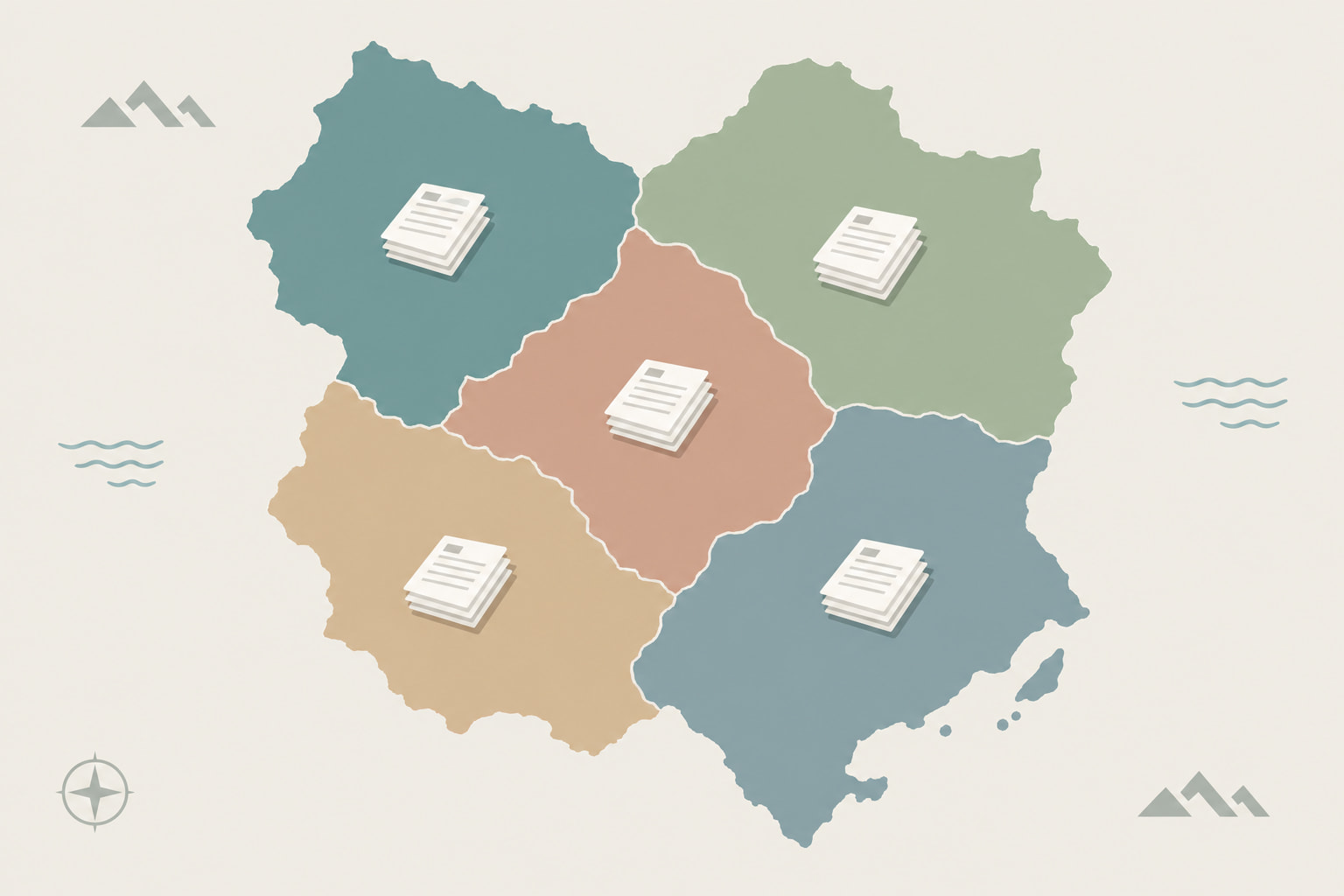
Look on the website of the regional association of grantmakers that covers your area; that is where these forms and any acceptance lists are posted. The table shows the forms read for this guide.
Sources: each publisher's own page, read October 2026.
Forum advice points the same way. In a thread about proposal templates, one commenter pointed to the general application that Grantmakers of Western Pennsylvania offers for download as a structured way to describe a project (Reddit thread 18pk2ad, read October 2026).
The national example found for this guide is older. The National Network of Grantmakers published a common grant application that tells applicants "This is not a fill-n-the-blank application" and to contact funders before submitting (National Network of Grantmakers, undated copy read October 2026). One name causes confusion: commongrantapplication.com describes itself as grant and scholarship management software for foundations and other grantmaking organizations (vendor home page, read October 2026). It is a system funders buy, not a form applicants share.
Do Funders Have to Accept the Common Grant Application?
No. A funder accepts a common grant application only if it says so, and acceptance is limited. Grantmakers of Western Pennsylvania states that "Many funders now have online portals where they accept applications for grants and only a handful of funders accept the actual form" (Grantmakers of Western Pennsylvania, read October 2026).
Acceptance also comes with conditions. WRAG says "each funder who accepts the forms uses them in a different way, and may require additional information," and that "some funders have online applications and do not accept paper or email submissions" (WRAG, read October 2026). Philanthropy Missouri tells grantseekers that "Any funder that has agreed to accept a CGA form may request additional information at any stage in the proposal process" (Philanthropy Missouri, November 13, 2024).
Some funders want a letter first. Grantmakers of Western Pennsylvania notes that "many funders request an initial letter of inquiry (LOI) prior to submitting a full proposal" (read October 2026). Sending a full common application to a funder that asked for a letter of inquiry skips its first step.
The safest check is the funder's own instruction, and a private foundation's tax return gives you one. A foundation that does not check the Form 990-PF box saying it gives only to preselected organizations must list the person to whom applications should be addressed, the form applications should take, any deadlines and any restrictions (IRS Form 990-PF, Part XIV, 2025 revision). If that block names the foundation's own form or portal, use that.
Philanthropy MA puts the rule in one line: "To determine if a funder accepts these materials, please connect directly with that funder" (Philanthropy MA, read October 2026).
Common Grant Application Form Template: The Sections to Fill In
This template has five parts: a one-page summary, an organizational narrative, a project narrative, financials and attachments. It is modeled on the Washington Regional Association of Grantmakers' form (revised 2012), which asks for a one-page executive summary and limits the organizational section to five double-spaced pages for general support or four for project, capital or capacity requests (WRAG Common Grant Application, revised 2012). Use it as a working draft, then move the answers into whichever form or portal the funder names.
Section 1: Summary Sheet
- Application date
- Organization name, mailing address, phone and website
- Federal tax-exempt number (EIN); if you are not a 501(c)(3), your fiscal sponsor's name, contact and EIN
- Chief executive's name, title, phone and email
- Contact person for this request, if different
- Amount requested and the period it covers
- Total current organizational budget, and total project budget for a project request
- Fiscal year start and end dates
- Purpose of the request in two or three sentences, including the population, the number of people served and the area that benefits
- Signature of the executive director or another authorized official
Section 2: Organization
- History, mission and goals
- The board's role in financial and program oversight and in fundraising
- Current activities, recent accomplishments and plans
- How the people you serve take part in the organization's work
- Your most significant collaborations and partnerships
Section 3: Project (Project Requests Only)
- The problem or need the project addresses
- The proposed solution and the plan to carry it out
- Whether the project is new, and what it has achieved so far if not
- Partners and their roles
- The results you commit to during the grant period, the timeline, and the evidence that will show success
Section 4: Financials and Attachments
- Organizational budget versus actual for the last and current fiscal years
- Year-to-date balance sheet and income statement
- Project budget versus actual for a project request
- Other funding requested or committed, with amounts and status
- The attachments the funder lists, such as the IRS determination letter, recent Form 990, audit or financial review and board list
The section lists are adapted from WRAG's 2012 form; the attachment examples follow GrantStation's Grant Readiness Checklist, which lists the IRS designation letter, Form 990, audit or financial review and board list among the documents to keep ready (GrantStation, December 2023). For a full narrative written out section by section, the nonprofit grant proposal template goes further.

How to Adapt a Common Application for Each Funder
Adapting a common application means keeping the shared facts and rewriting the parts that connect your work to one funder. The regional forms assume you will do this: Philanthropy Southwest describes its North Texas form as a way for grantseekers to work from a common set of questions "while still aligning requests to each foundation's own guidelines" (Philanthropy Southwest, page dated September 5, 2013).
Start with the cover letter. The National Network of Grantmakers advised applicants to "Include a brief cover letter that outlines the link between your proposal and the funder's interests" and to "Follow the attached format and any specific instructions from the funder" (National Network of Grantmakers, undated). The common form carries the facts; the letter carries the fit.
Then check limits. Philanthropy Missouri invites grantmakers to "download the CGA template, modify it to suit your needs, and host it on your organization's website" (Philanthropy Missouri, November 13, 2024). A funder's version can look identical to the regional original and still change a question or cap each answer differently.
Clean every copy. WRAG's own advice: "If your proposal has been adapted for multiple funders, make sure you omit other funders' names, as well as references to previous requests" (WRAG, read October 2026). Search each copy for the names of other funders and for earlier request amounts before it goes out.
Keep the master version somewhere your team can find it. Reusing past answers across funders is its own practice, covered in the guide to building a grant proposal library.
When a Funder Does Not Accept the Common Form
When a funder uses its own application, the common form still works as a gathering tool: fill it once, then copy each answer into the funder's fields. That is how Grantmakers of Western Pennsylvania recommends using its form today: "as a guide to help you collect the needed information" for online grant portals (Grantmakers of Western Pennsylvania, read October 2026).
The questions may look familiar inside the portal. The Minnesota Council on Foundations says its common grant sections and questions "can be added to applications in grants management platforms such as akoyaGo, Foundant and others" (Minnesota Council on Foundations, read October 2026), and Philanthropy MA says individual questions can be adopted by funders within their existing applications. A funder can be using common language without ever saying so.
Some funders want neither a common form nor a full proposal at first. A letter of inquiry is the usual first step for those, and the letter of intent example and template shows its structure. Foundation-specific expectations for a full proposal are covered in the foundation proposal template.
Before any of this, confirm the funder takes applications at all. GrantCue's foundation directory covers more than 10,000 private foundations built from IRS 990-PF public filings, and its accepting-applications filter narrows the list to foundations that indicate they accept applications (grantcue.com, September 2026). Start from GrantCue's foundation profiles, then read the funder's own instructions before deciding whether the common form, a letter or its portal comes first.
FAQ
Is There a National Common Grant Application?
The common grant applications read for this guide are regional, published by associations of grantmakers for funders in one state or metro area. The National Network of Grantmakers published a national common application, but the copy read for this guide is undated and tells applicants to contact funders before submitting (National Network of Grantmakers, undated copy read October 2026). Check your regional association first, then each funder's own instructions.
Can You Send the Same Grant Application to Multiple Funders?
You can send a common application only to funders that say they accept it, and each copy still needs adapting. Rewrite the cover letter for each funder's interests, respect any word limits the funder adds, and remove other funders' names and earlier request amounts, as the Washington Regional Association of Grantmakers advises (WRAG, read October 2026). Sending the same unchanged proposal everywhere ignores each funder's guidelines.
What Is the Difference Between a Common Grant Application and a Letter of Inquiry?
A letter of inquiry is a short first contact that asks whether a funder wants a full proposal; a common grant application is the full proposal in a shared format. Some associations publish both: WRAG has a Common Letter of Inquiry beside its application, and Philanthropy Missouri offers a Short Form that can also be used as a Letter of Intent (Philanthropy Missouri, November 13, 2024).
Does a Common Grant Application Include a Budget?
Yes, in the forms read for this guide. WRAG's form asks for organizational budget versus actual for the previous and current fiscal years, year-to-date financial statements and, for project requests, a project budget versus actual, and lets applicants use the format most convenient to them (WRAG Common Grant Application, revised 2012). Philanthropy Missouri provides project and organizational budget templates with its form.
How Long Is a Common Grant Application?
Length depends on the form and the request. WRAG's 2012 form asks for a one-page, single-spaced executive summary and an organizational section of no more than five double-spaced pages for general support, or four for project, capital or capacity building requests (WRAG Common Grant Application, revised 2012). A funder that adopts a form may add its own word or character limits.
Do Online Grant Portals Use Common Application Questions?
Some do. The Minnesota Council on Foundations says its common grant sections and questions can be added to applications in grants management platforms, and Philanthropy MA says funders can adopt individual questions within their existing applications (read October 2026). A portal question that matches a common form's wording can take the answer you already wrote, adjusted to the portal's limits.
Check Acceptance Before You Fill In the Common Form
Find the regional association of grantmakers for your area and download its current common application and acceptance list. For each funder on your prospect list, confirm on its own website or Form 990-PF whether it accepts the common form, wants a letter of inquiry first, or uses a portal. Fill the common template once as your master, then adapt a copy for each funder that accepts it and paste the same answers into the portals of those that do not. For the full proposal process around these steps, see how to write a grant proposal.