Nonprofit Project Proposal Template: Complete Sample and Examples
A nonprofit project proposal template for board, donor, and sponsor approval, with a section by section outline, a worked example, and a budget table.
Last updated: September 2026
A nonprofit project proposal template gives you a repeatable way to ask a board, a donor, a corporate sponsor, or your own leadership to approve one specific piece of work. There is no application portal and no scoring rubric. A handful of people read the document, ask a few questions, and decide. Below is the full template, a worked example with a budget, and a program proposal sample.
Quick Answer: What Goes in a Nonprofit Project Proposal?
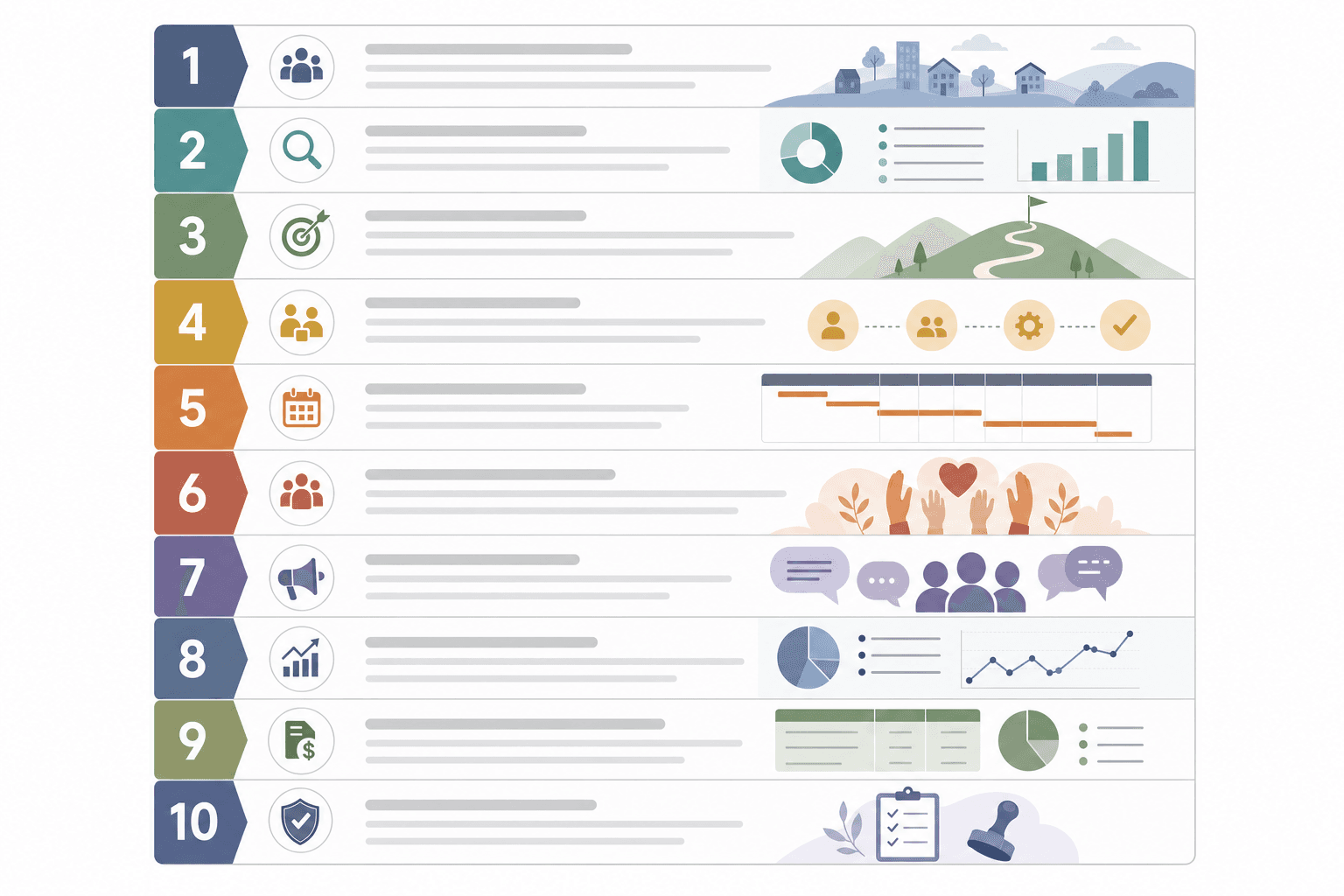
A nonprofit project proposal is a short internal document that asks a decision maker to approve a specific project, its budget, and its timeline. A complete one has ten sections:
- Title and cover information.
- Summary.
- Statement of need.
- Project description.
- Goals and measurable outcomes.
- Activities and timeline.
- Budget summary.
- Organization background.
- Evaluation.
- The ask and approval requested.
Aim for two to five pages and close with a clear approval request.
Project Proposal vs Grant Proposal vs Donation Proposal
A project proposal asks a known audience to approve work. A grant proposal answers a funder's published application form. A donation proposal asks one supporter for a gift toward a defined need. The three documents share content but not shape, and a proposal built in the wrong shape asks its reader for a decision they cannot make.
| Project proposal | Grant proposal | Donation proposal | |
|---|---|---|---|
| Who reads it | Board, executive director, sponsor, partner | Program officer or review panel | Individual donor, business, civic club |
| Format | Yours | The funder's form and page limits | Short letter or one page leave behind |
| Scored against a rubric | No | Usually yes | No |
| Length to aim for | 2 to 5 pages | Whatever the funder's page limit allows | 1 to 3 pages |
| Rules that apply | Internal policy | Funder rules, sometimes federal requirements | Gift acceptance policy |
| What you are asking for | Approval, budget authority, staff time | A specific award amount | A specific gift amount |
| Deadline | When you need the decision | Fixed submission date | Flexible |
If you are filling in a funder's application form, start from a grant proposal template instead. If you are asking one supporter for a gift, the donation proposal template fits better.
The practical difference is authority: a funder can only fund, while a board can approve, reduce, delay, or redirect.

Nonprofit Project Proposal Template
The nonprofit project proposal template below works for a board vote, a sponsor conversation, or an internal budget request. Adjust the length, not the order.
| Section | Question it answers | Typical length |
|---|---|---|
| 1. Title and cover information | What is this and who wrote it | 5 lines |
| 2. Summary | Why should I say yes | 100 to 150 words |
| 3. Statement of need | Is this a real problem | 200 to 300 words |
| 4. Project description | What exactly will happen | 300 to 500 words |
| 5. Goals and measurable outcomes | How will we know it worked | 150 to 250 words |
| 6. Activities and timeline | When does each part happen | Table or list |
| 7. Budget summary | What does it cost | Table |
| 8. Organization background | Can we deliver this | 150 to 200 words |
| 9. Evaluation | Who checks, and when | 150 to 200 words |
| 10. The ask | What am I approving today | 3 to 5 sentences |
1. Title and cover information
Give the reader the basics before the argument starts: project title, who is proposing it, the date, the amount requested, and the date a decision is needed. Add the decision date even when nobody asked for one. It turns a document that can sit in an inbox into one with a clock on it.
2. Summary
Write this last and put it first. In three or four sentences, say what the project is, who it serves, what it costs, and what you want approved. A reader who stops here should still be able to describe the project accurately. The same discipline applies to an executive summary written for a funder, so the two can share language.
3. Statement of need
A statement of need is the section that proves the problem exists before you propose a solution. Name who is affected, how many, and how you know. Reach for your own service data first: waitlist counts, missed appointments, referrals you turned away. A board can trace a waitlist count back to the system it came from, which a national statistic does not let them do. Close by saying what happens if nothing changes.
4. Project description
Describe the work in enough detail that a skeptical reader can picture a normal week: what happens, who does it, where, how participants are reached, and what is out of scope. The out of scope line stops the project from absorbing every adjacent request between approval and launch. If the project depends on a partner, a vehicle, or a facility, say so here rather than in the budget.
5. Goals and measurable outcomes
Split goals from outcomes. A goal is the direction. An outcome is a number with a date and a source attached. "Improve food access for homebound clients" is a goal. "Deliver to 30 households per weekend by month three, tracked in the delivery log" is an outcome. Two or three outcomes are plenty. Every outcome you list is one you have to measure and report on, so a proposal promising eight is promising eight tracking systems. Writing them as SMART goals and objectives keeps each one checkable.
6. Activities and timeline
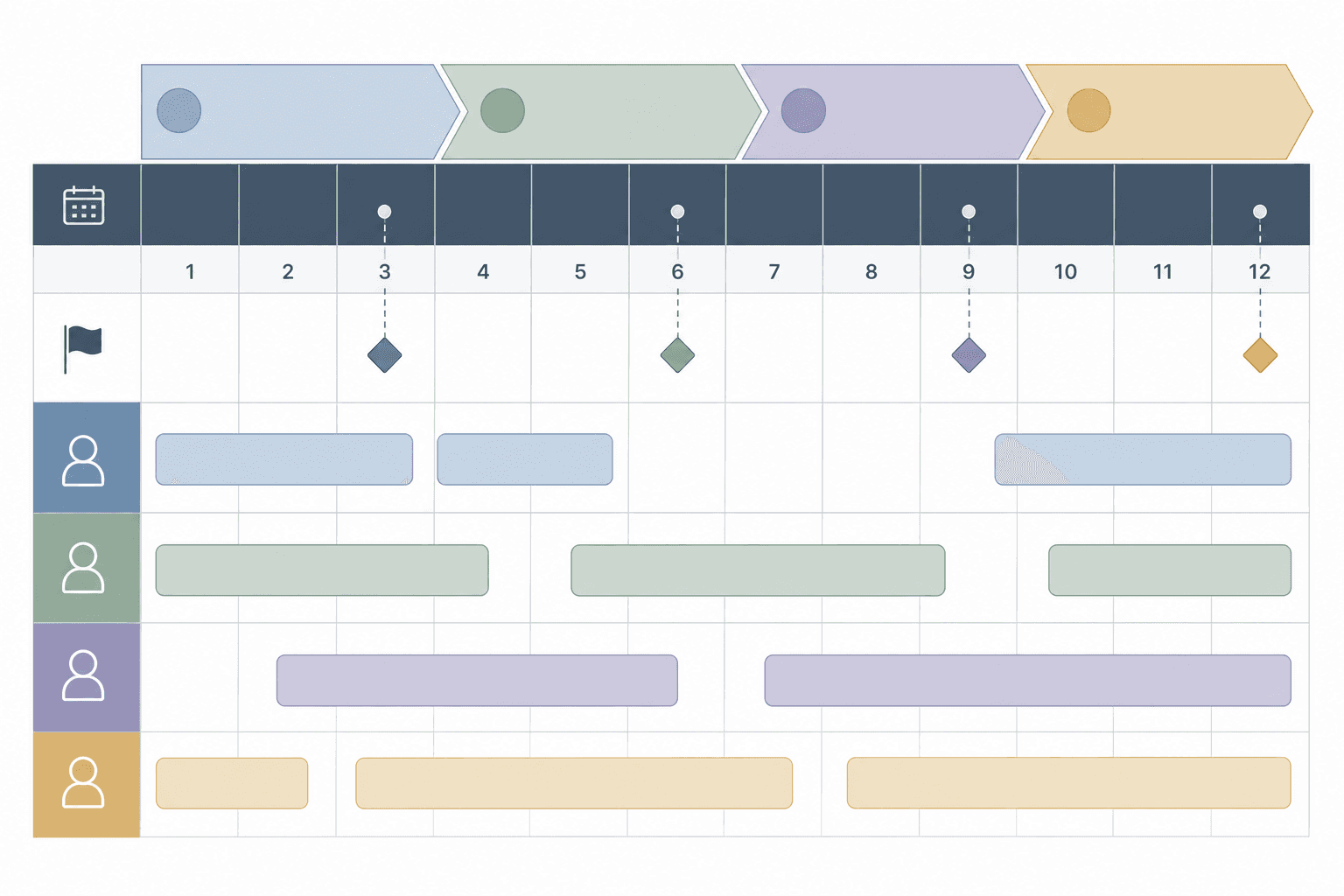
List the activities in the order they happen, group them into phases, and give each phase an owner. Months work better than dates, since dates slip the moment approval takes an extra week. Mark the milestones that require a decision or a payment, because those are where a project stalls.
7. Budget summary
Show arithmetic, not totals. Every line needs a quantity, a rate, and a result, so the reader can test one assumption without asking you to rebuild the spreadsheet. Separate what you are requesting from what the organization already contributes in staff time, space, or equipment. A grant proposal budget template covers the same structure in more depth if the project later goes to a funder.
8. Organization background
Keep this short. The reader usually knows the organization. What they do not know is why this team can run this project, so name the track record, the staff who will do the work, and the capacity you have. Skip the mission statement recital. Two or three sentences of evidence beat a page of history: a similar route you already run, the coordinator who would run this one. If the team is missing a skill the project needs, name it and say how you plan to cover it. A reader who finds that gap on their own stops trusting the rest of the document.
9. Evaluation
An evaluation plan is the part of the proposal that says who checks the outcomes, using what data, and how often. Name the person, the source, and the reporting rhythm. A monthly count pulled from a log you already keep beats a survey nobody has time to run. For longer projects, an evaluation plan template gives you a fuller structure.
10. The ask and approval requested
The ask is the sentence that names the decision. Write it as a motion the reader can vote on: the amount, the source of funds, the action it authorizes, and the check in date. In the worked example below, "We request approval of $17,460 from the program reserve to launch weekend delivery, with authority to hire two part time drivers" is a decision. "We hope the board will consider supporting this initiative" is not.
Copy and Paste Proposal Outline
A copy and paste proposal outline is a blank version of the ten sections, written so you can fill in your own project details. Paste it into a document and replace everything in brackets.
PROJECT PROPOSAL

1. TITLE AND COVER INFORMATION
Project title / Prepared by / Date / Amount requested / Decision needed by

2. SUMMARY
[What the project is, who it serves, what it costs, what you want approved.]

3. STATEMENT OF NEED
[The problem. Who it affects and how many. How you know. What happens if
nothing changes.]

4. PROJECT DESCRIPTION
[What happens. Who does it. Where. How participants are reached. Out of scope.]

5. GOALS AND MEASURABLE OUTCOMES
Goal 1: [direction]
  Outcome: [number] [unit] by [date], measured by [source]
Goal 2: [direction]
  Outcome: [number] [unit] by [date], measured by [source]

6. ACTIVITIES AND TIMELINE
Months 1 to 2: [activity] / owner: [role]
Months 3 to 12: [activity] / owner: [role]
Milestones requiring a decision or payment: [list]

7. BUDGET SUMMARY
[item] | [qty x rate x periods] | [$]
Total requested: [$]
Contributed by the organization: [$ and in kind]

8. ORGANIZATION BACKGROUND
[Track record. Staff who will run this. Existing capacity.]

9. EVALUATION
[What is measured. Who collects it. How often. When you report back.]

10. THE ASK AND APPROVAL REQUESTED
We request approval of [amount] from [source] to [action], with authority
to [hire, contract, or sign], and a progress report on [date].

ATTACHMENTS
[Detailed budget, letters of support, staffing plan, supporting data.]
Nonprofit Project Proposal Example
The example below is a composite written for this article, not a real organization. A community food pantry wants its board to approve a weekend home delivery route for clients who cannot reach the pantry during weekday hours.
Summary. The pantry proposes a Saturday delivery route serving up to 30 homebound households per week for 40 weeks, using two part time drivers and existing volunteer packers. Total new cost is $17,460 from the program reserve.
Need. Over the past year the pantry rescheduled or turned away a growing number of clients who could not travel to the site during open hours. Intake notes and the referral log show the same barriers repeatedly: no vehicle, limited mobility, weekday work conflicts.
Description. Volunteers pack orders on Friday. Two paid drivers run a fixed Saturday route using the pantry's van and a personal vehicle reimbursed by mile. The coordinator confirms addresses, handles reschedules, and updates the delivery log. Deliveries outside the county line are out of scope for year one.
Outcomes. Reach 30 households per weekend by month three. Complete 40 weeks of continuous service. Keep missed deliveries under one in twenty, tracked in the delivery log.
Budget summary.
| Line item | Calculation | Total |
|---|---|---|
| Driver stipends | 2 drivers x 6 hours x 40 weeks x $20 per hour | $9,600 |
| Mileage reimbursement | 40 weeks x 120 miles x $0.60 per mile | $2,880 |
| Insulated delivery bags | 30 bags x $22 | $660 |
| Route materials and labels | 40 weeks x $8 | $320 |
| Coordinator time | 4 hours x 40 weeks x $25 per hour | $4,000 |
| Total requested | $17,460 |
The van, the packing volunteers, and the existing intake system are contributed by the pantry and are not charged to the project, which is why the request is $17,460 rather than the full operating cost of the route.
The ask. Approve $17,460 from the program reserve, authorize two part time driver positions through the 40 week period, and schedule a progress review at month six.
That is a complete proposal in about a page. Every number in it is checkable, and the same content maps onto a nonprofit grant proposal sample if the project later needs outside funding.
Program Proposal Sample
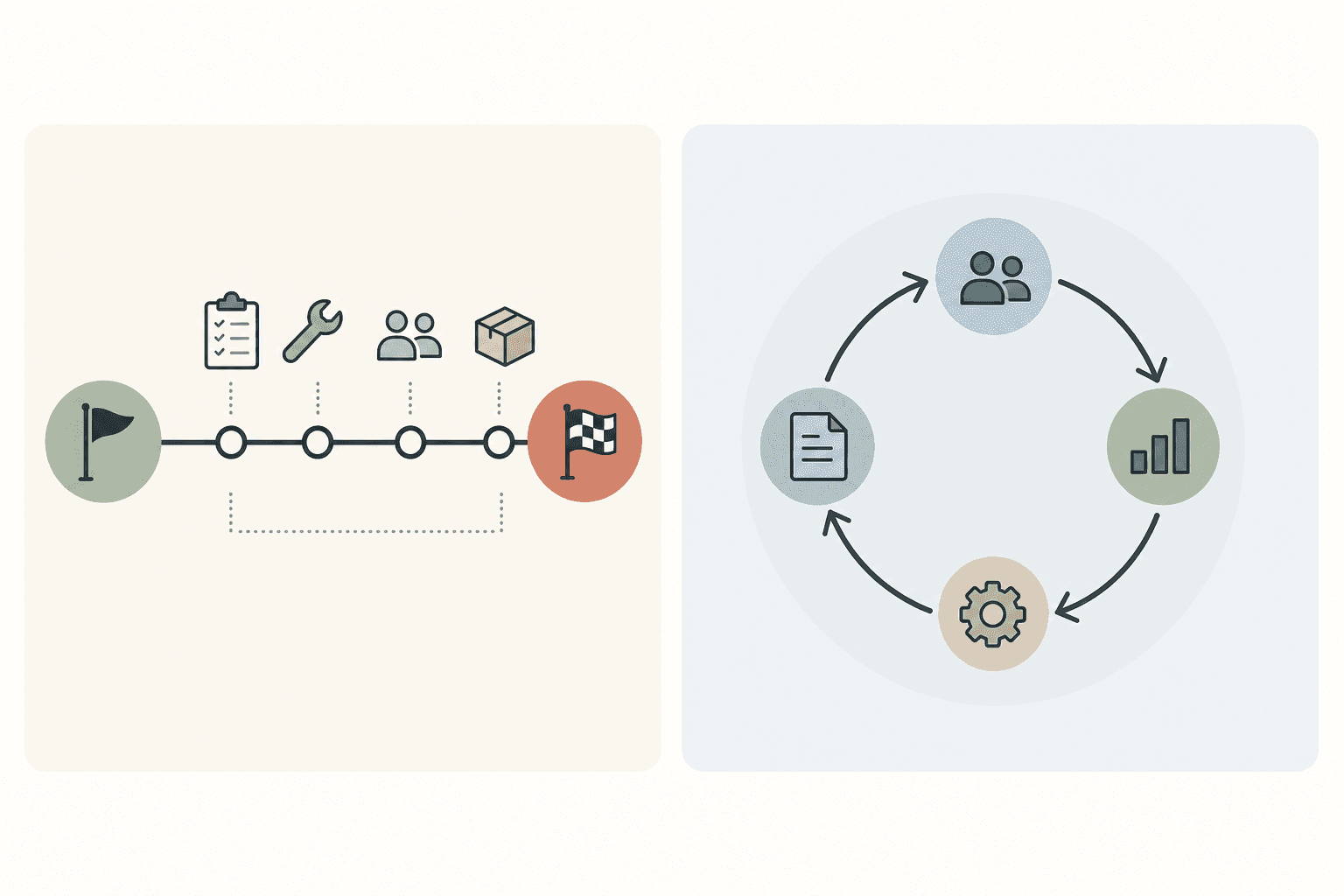
A program proposal describes ongoing work with no fixed end date, while a project proposal describes bounded work with a start and a finish. The template is the same. The time horizon, the budget frame, and the meaning of approval all change.
Program proposal vs project proposal
- A project ends. A program renews, so the proposal has to address next year too.
- A project budget is a total. A program budget is an annual figure plus what sustains it after year one.
- A project outcome is a target hit once. A program outcome is a rate held steady, such as households served per month.
The distinction matters most at the budget line. A project that overruns has an end date to absorb the damage, while a program that overruns carries the overrun into every year that follows. That is why a program proposal states an annual figure the reader tests as a recurring cost.
How to write a program proposal
Start from the same ten sections, then adjust four. In the summary, state the annual cost rather than the total. In the description, describe a typical month instead of a sequence of phases. In the timeline, replace phases with a recurring cycle and an annual review point. In the ask, name the first year amount, the renewal date, and the condition under which the program continues.
Add one section a project proposal does not need: a short sustainability paragraph saying how the program is funded after year one, whether from earned revenue, a renewing grant, the operating budget, or a mix. A board reviewing a program proposal is committing beyond one budget cycle, which is why the sustainability paragraph belongs in the proposal rather than in the discussion after it.
Example of a program proposal
Using the pantry composite, the project version asks for 40 weeks of weekend delivery at $17,460. The program version asks the board to add weekend delivery to the standing service model at roughly $17,000 per year, half from the operating budget and half from a renewing local grant, reviewed each March. Same work. Different decision.
What Makes a Board Approve a Project Proposal
Approval comes down to six questions. A proposal that answers all six leaves the reader nothing to go find out before deciding.
| What the reader is asking | Where the proposal answers it |
|---|---|
| Is this a real problem for the people we serve | Statement of need |
| What exactly will we do | Project description and activities |
| How will we know it worked | Goals, outcomes, evaluation |
| What does it cost and where does the money come from | Budget summary |
| Can this team actually deliver it | Organization background and timeline |
| What am I being asked to decide today | The ask |
Some approved projects still arrive with a funding gap. When the board says yes to the work but not the full cost, this content becomes the base of a grant proposal built around a funder's form, and the job shifts from writing to tracking. GrantCue searches federal and state grant portals and keeps every deadline on one pipeline the whole team can see.
Review Before You Send It
A final review checks five things before a proposal goes out: the summary, the outcomes, the budget arithmetic, the contributed resources, and the ask. Read it once as the person who has to approve it.
- The summary alone explains the project.
- Every outcome has a number, a date, and a source.
- Every budget line shows its arithmetic.
- Contributed resources are separated from the request.
- The ask names an amount, a source, and a date.
FAQ
How do you write a project proposal for a nonprofit?
Write the ten sections in order: title and cover information, summary, statement of need, project description, goals and measurable outcomes, activities and timeline, budget summary, organization background, evaluation, and the ask. Draft the summary last, once the budget and outcomes are settled.
What is the difference between a project proposal and a grant proposal?
A project proposal is your own document asking a board, sponsor, or partner to approve work, with no application form and no scoring rubric. A grant proposal answers a funder's published requirements, follows their format and page limits, and is usually scored by reviewers who do not know you.
How long should a nonprofit project proposal be?
Aim for two to five pages, plus attachments such as a detailed budget or letters of support. A small internal request can fit on one page. Length should follow the size of the decision.
What should a program proposal include?
Everything a project proposal includes, plus an annual cost rather than a one time total, a recurring service cycle instead of a phased timeline, a renewal or review date, and a sustainability paragraph naming how the program is funded after year one.
Does a nonprofit project proposal need a budget?
Yes, even for projects with no cash cost. If the project uses staff time, space, or equipment, show that as a contributed value so the reader sees the true cost of the work.
Next Step
Pick the project your team keeps discussing without deciding. Write the summary and the ask first, then fill in the eight sections between them. If the finished proposal shows a funding gap, treat that gap as the start of a grant search rather than a reason to shrink the project. GrantCue helps nonprofits search federal and state grant portals, track deadlines, and keep reporting tasks assigned after an award.