How to Read a 990-PF Grant List
A field-by-field guide to reading a private foundation grant list: which part holds it, what each column means, and how to turn past grants into a prospect list.

In this article (9)
- Quick Answer: How Do You Read a 990-PF Grant List?
- Find the Grant Schedule for the Right Tax Year
- Read Each Row Across Five Columns
- Separate Paid Grants From Approved Future Payments
- Read the Application Block Directly Above the List
- Check the People and Places Named Elsewhere on the Return
- Turn the Grant List Into a Prospect List
- FAQ
- Read Three Filings Before You Shortlist a Funder
Learning how to read a 990-PF grant list changes foundation research from guessing to reading. The list sits inside a public tax return, and it names real grantees, real purposes, and real dollar figures. Once you can decode its columns, a foundation's filing history shows you who it actually pays.
A grant list is a schedule that names each grantee, states the purpose of the payment, and gives the amount. The schedule sits at the back of the return, paid grants sit apart from approved ones, and the application block above the list states contacts and limits. Readers new to foundation funding may also want the broader finding foundation grants walkthrough before going deep on a single form.
Quick Answer: How Do You Read a 990-PF Grant List?
The 990-PF grant list is Part XIV on 2021 through 2025 forms and Part XV on 2019 and 2020 forms. Each row gives five fields: recipient and address, relationship to insiders, foundation status, purpose and amount. Keep grants paid during the year apart from grants approved for future payment, and read the application block above the list first.
Find the Grant Schedule for the Right Tax Year
The grant list is Part XIV on 2021 through 2025 forms and Part XV on 2019 and 2020 forms, so always match the part label to the tax year printed on the return. Undistributed income moved from Part XIII to Part XII at the same time (IRS, 2019, 2020, 2021 and 2025 Forms 990-PF compared).
The schedule heading on the 2025 form reads "Part XIV Supplementary Information (continued) 3 Grants and Contributions Paid During the Year or Approved for Future Payment" (IRS, 2025 Form 990-PF). That heading confirms you are in the supplementary section at the back of the return, where cash paid and commitments approved share one schedule and must be read apart.
The form's full title is "Form 990-PF, Return of Private Foundation or Section 4947(a)(1) Trust Treated as Private Foundation" (IRS, 2025 Form 990-PF), and "All private foundations, including nonexempt trusts treated as private foundations, must annually file" it (IRS, Private foundations, June 28, 2026). That includes private operating foundations, which the IRS describes, in general, as private foundations that devote most of their resources to the active conduct of their exempt activities (IRS, Private operating foundations, March 5, 2026).
A few boundary facts keep beginners out of trouble. Community foundations file Form 990, not Form 990-PF, so they never appear in a 990-PF-only database (Grantmakers.io, The IRS 990 dataset, read September 2026). A foundation that held less than $5,000 in assets at all times during the year does not complete Part XIV at all (IRS, 2025 Form 990-PF). And page 1 of the form carries the legend "Open to Public Inspection" (IRS, 2025 Form 990-PF).
Timing explains why the list always looks late. A return is due by the 15th day of the 5th month after the end of the accounting period, so a calendar-year filer is due May 15 of the following year (IRS, Annual exempt organization return: due date, June 28, 2026). The foundation can take an automatic 6-month extension on Form 8868 (IRS, Annual exempt organization return: due date, June 28, 2026).
For the actual reading, free viewers rebuild recent filings from IRS data. Form 990-PF returns for tax years ending July 31, 2020 and later "MUST be filed electronically" (IRS, E-file for charities and nonprofits, June 28, 2026), and a ProPublica Full Filing page is explicitly a reconstruction from that raw data, not a scan (ProPublica Nonprofit Explorer, Full Filing view, read September 2026). Grantmakers.io covers Form 990-PF filings only (Grantmakers.io, The IRS 990 dataset, read September 2026). Pull the foundation by name, and confirm the tax year printed on the return before reading a single row.
Read Each Row Across Five Columns
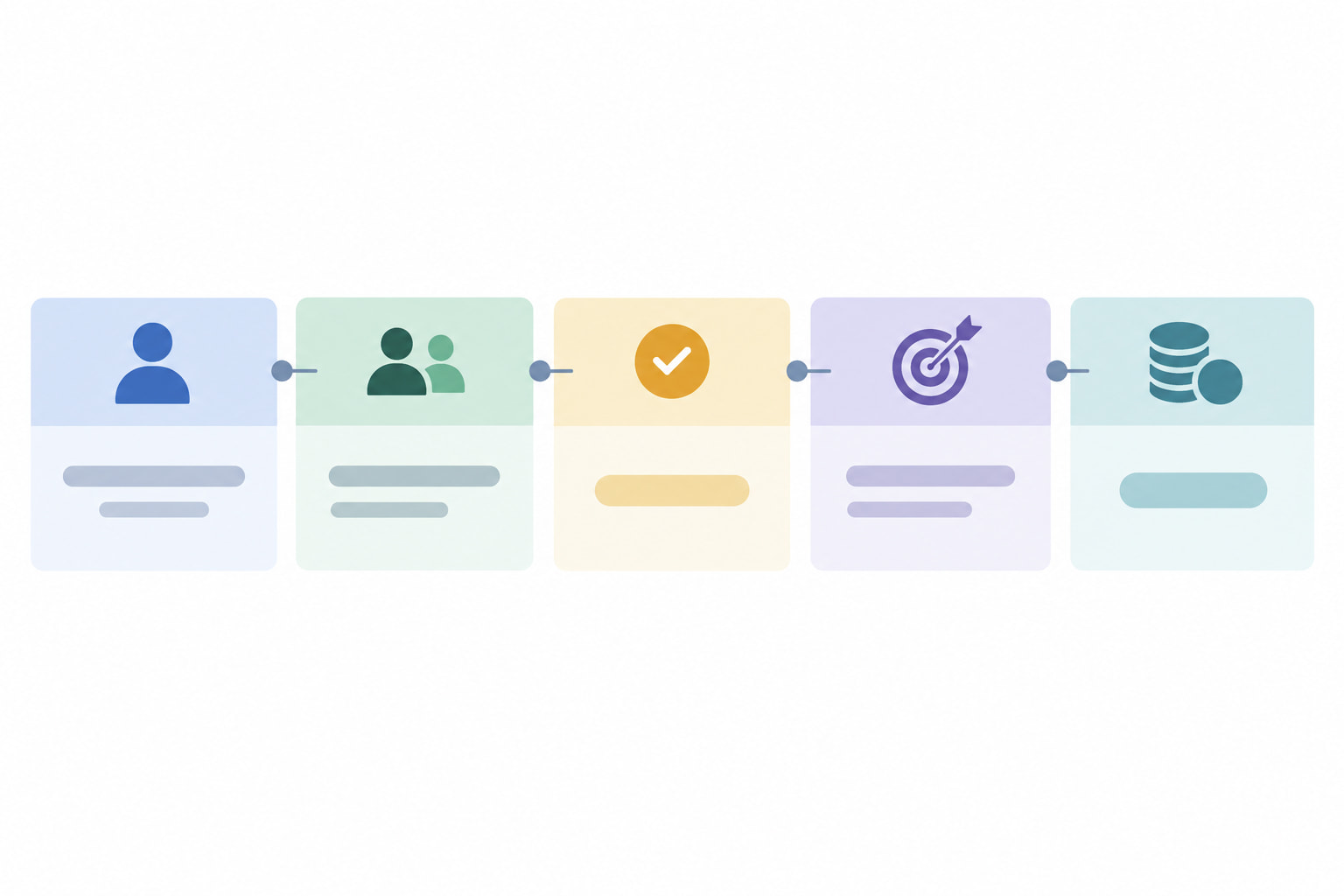
Every grant row carries the same five fields in the same order: recipient name and address, relationship of an individual recipient to insiders, foundation status of the recipient, purpose of the grant, and amount. The form's own column labels are "Recipient Name and address (home or business)," "If recipient is an individual, show any relationship to any foundation manager or substantial contributor," "Foundation status of recipient," "Purpose of grant or contribution," and "Amount" (IRS, 2025 Form 990-PF).
Column labels paraphrased from IRS, 2025 Form 990-PF.
Start with the recipient column. Names in a grant list are whatever the funder typed, since there is no IRS requirement to use the actual legal name of a grantee and no requirement to distinguish a national headquarters from its local chapters (Grantmakers.io, The IRS 990 dataset, read September 2026). Expect abbreviations and variant spellings of the same grantee across years. Search a fragment of an unfamiliar name instead of the full string, and compare addresses across rows to merge duplicates before counting.
The relationship column matters for individual grants. A row that names a person with a stated tie to a manager or major contributor describes insider giving. An outside organization should not treat that row as evidence the door is open.
Foundation status tells you which kinds of recipients the funder actually pays. A list dominated by one recipient class, year after year, states a preference.
The purpose column is short by design. Funders write phrases like general support, youth tutoring, or clinic equipment. Copy these phrases into your notes verbatim, because funders repeat their own phrases across years and those phrases become the vocabulary of a future application.
The amount column needs the least interpretation and the most discipline. Read each paid amount as one payment in one year. Medians across three or more years describe the funder better than any single row.
Separate Paid Grants From Approved Future Payments
Paid rows record cash that moved during the filing year, while approved rows record commitments authorized but not yet disbursed, so never total the two blocks together. Part XIV line 3 is split into "a Paid during the year" and "b Approved for future payment," so forward commitments appear apart from cash grants (IRS, 2025 Form 990-PF).
Paid rows answer what the foundation did. Approved rows answer what it has promised. Treat an approved row as intent, then verify in the next available filing whether the money moved.
New grants also reach public view late. Grantmakers.io warns that "'New' grants that appear in Grantee Search results were likely actually funded 9-18+ months before first appearing in results" (Grantmakers.io, The IRS 990 dataset, read September 2026). Read the tax year on every filing you open. Date your notes to that year instead of to the day you found the file.
Block definitions paraphrased from the schedule headings on the current form (IRS, 2025 Form 990-PF).
Errors in a filing are effectively permanent, since the only way a foundation can adjust filing content is to file a full amendment to the return (Grantmakers.io, The IRS 990 dataset, read September 2026). When a row contradicts everything else you know about a funder, check whether an amended return exists before quoting the odd figure.

Read the Application Block Directly Above the List
The application block above the grant rows tells you whether an application from you would even be read, so read it before you study a single grant. Part XIV line 2, directly above the list, asks for the contact name and address for applications, the required form of applications, any deadlines, and any limits by place, field, institution type, or other factors (IRS, 2025 Form 990-PF).
Check the opt-out box first. The form lets a foundation state that it only makes contributions to preselected charitable organizations and does not accept unsolicited requests for funds (IRS, 2025 Form 990-PF). A checked box ends the inquiry for cold applicants. That foundation gives through relationships it already holds, and your time is better spent elsewhere.
When the box is unchecked, the four items that follow are your application brief. Copy the contact exactly as printed. Note the required format and calendar every stated deadline. Highlight geographic or field limits, because applying outside them wastes a cycle.
A grant professional on Reddit said that long prospect lists collapse at the contact step, describing the problem as having a long list of prospects you cannot actually get in touch with because they do not want you to contact them (Reddit thread 1pzk4ub, read September 2026). The application block is where you catch that problem early. A foundation whose block lists no contact path, or whose box declines unsolicited requests, should leave your active list.
Where the block invites applications, your next job is a proposal that fits the stated limits. The first-time proposal guide covers structure for teams writing their first application. Keep the proposal inside the limits you just copied, and use the purpose phrases from the grant rows as program vocabulary.
Check the People and Places Named Elsewhere on the Return
Decision makers, contacts, and geography signals sit in Part VII and Part VI-A, earlier in the return, and they turn a list of payments into a map of who decides. Part VII lists all officers, directors, trustees, and foundation managers with their compensation, which is where a foundation's decision makers are named (IRS, 2025 Form 990-PF).
Part VI-A line 13 asks the foundation to enter its website address, which for a small family foundation is often its only web presence (IRS, 2025 Form 990-PF). A live site that restates the application block suggests the guidance still stands. A dead link tells you to rely on the filing alone.
Geography hides in a separate line. Part VI-A line 8a asks for the states where the foundation reports or registers, a signal independent of its mailing address (IRS, 2025 Form 990-PF). A foundation mailing from one state while registering in two others may fund in all three. Cross-check recipient addresses against these states before assuming a funder is local or distant.
The same supplementary part names certain insiders, since Part XIV line 1a asks the foundation to "List any managers of the foundation who have contributed more than 2% of the total contributions received by the foundation before the close of any tax year (but only if they have contributed more than $5,000)" (IRS, 2025 Form 990-PF). A foundation funded and run by one family reads differently from one with an independent board, and its repeat grantees may reflect that difference.
Staff names carry a fixed cutoff. Part VII line 2 asks for "each employee paid more than $50,000" and line 3 for "each person paid more than $50,000" for professional services (IRS, 2025 Form 990-PF). Line 2 names paid staff who may handle inquiries at larger foundations, and line 3 names outside contractors. Where line 2 lists no one, the trustees named in Part VII may read the mail themselves.
Turn the Grant List Into a Prospect List
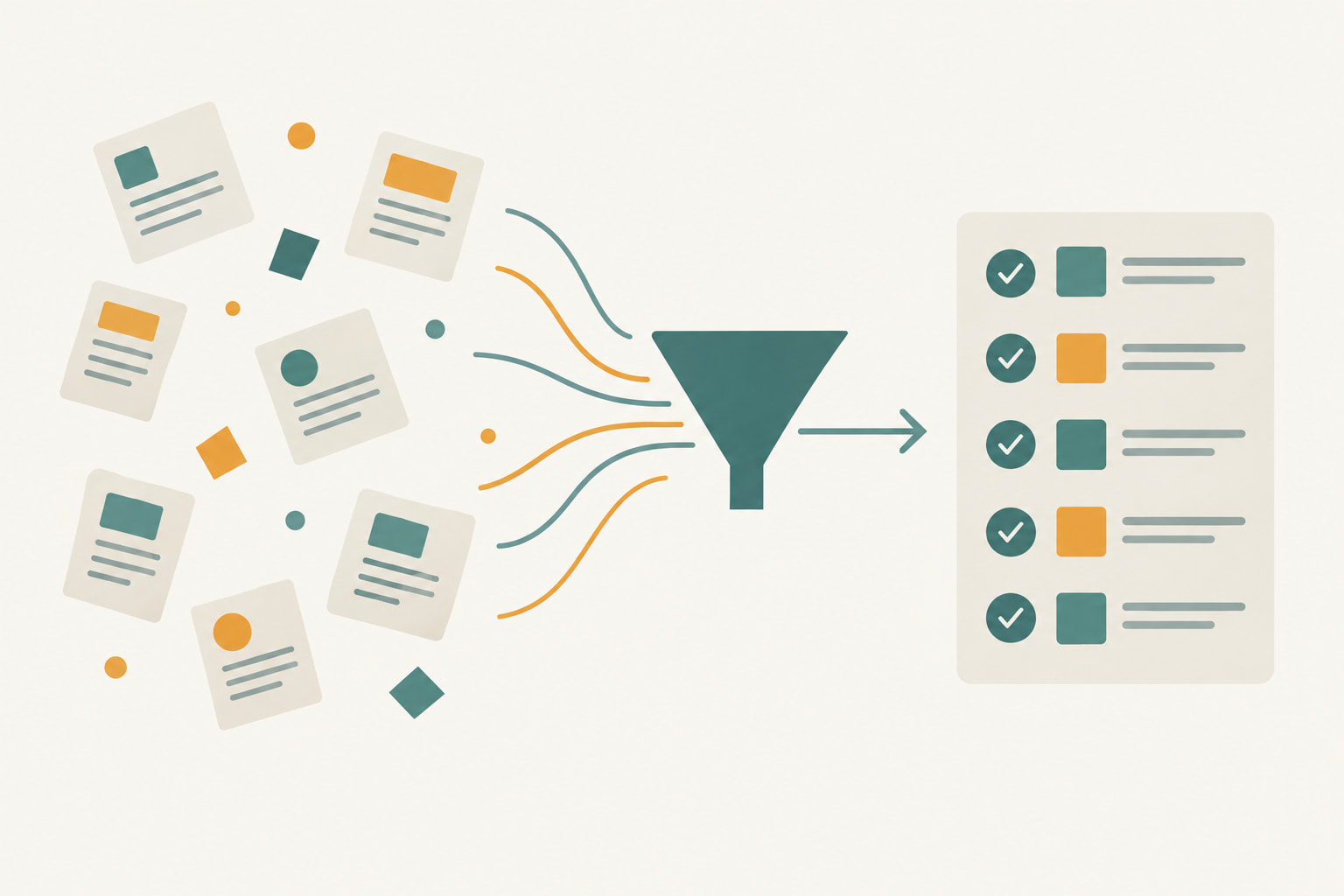
A prospect list is three filings merged into one sheet and scored on recipient fit, purpose overlap, invite status, and award size. Pull three consecutive filings, extract every grant row into a single sheet, merge variant spellings of repeat grantees, and mark each row paid or approved. Three years reveal the standard award band, favored program areas, and returning grantees.
Score each funder against your organization with four questions. Do its recipients resemble you in size and type? Do its purposes overlap your programs in the funder's own words? Does its application block invite requests like yours? Do its amounts fit the request you need to make? A funder that passes all four earns cultivation time. One that fails two or more stays on a watch list.
A grant professional on Reddit said they did not need AI to write a letter of inquiry but did need "to be able to download an excel of past relevant grants" (Reddit thread 1vb5ctu, read September 2026). Build your own sheet on that model. Columns for funder, years reviewed, median award, repeat grantees, stated limits, contact, and next action carry further than any narrative summary.
Illustrative figures, not data from a real organization.
The three-filing routine needs a starting set of names. GrantCue keeps a profile page for each of more than 10,000 private foundations, built from IRS 990-PF public filings and keyed by name and EIN, and its directory can be filtered to foundations that indicate they accept applications (grantcue.com, September 2026). Pull the first candidates from those 990-PF foundation profiles, then confirm every grant row on the return itself before a funder reaches the sheet.
FAQ
How Do You Read a 990-PF Grant List?
Open the filing for a known tax year and go to the grants schedule at the back, Part XIV on the 2021 through 2025 forms (IRS, 2019, 2020, 2021 and 2025 Forms 990-PF compared). Read each row left to right across recipient, relationship, status, purpose, and amount. Keep paid grants apart from approved future payments, then read the application block above the list for contacts, deadlines, and limits.
Which Part of the Form Holds the Grant List?
The grants-paid schedule sits in the supplementary section at the back of the return. On the 2021 through 2025 forms it is Part XIV, headed with grants and contributions paid during the year or approved for future payment (IRS, 2025 Form 990-PF). On the 2019 and 2020 forms the same schedule was Part XV (IRS, 2019, 2020, 2021 and 2025 Forms 990-PF compared). Always match the part label to the tax year printed on the return.
What Does Approved for Future Payment Mean?
It means the foundation authorized a commitment that had not been disbursed by year end. Approved rows signal multi-year pledges or conditional awards instead of cash out the door. Record them apart from paid grants, and check the next available filing to see whether the money moved. A prospect list built only on approved figures overstates annual volume.
Why Do Recipient Names Look Misspelled or Inconsistent?
Recipient names are whatever the funder typed, with no rule requiring true legal names and no rule separating headquarters from local chapters (Grantmakers.io, The IRS 990 dataset, read September 2026). Filings can only be corrected by full amendment, so an error stays in the public record unless the foundation files one (Grantmakers.io, The IRS 990 dataset, read September 2026). Search name fragments, compare addresses, and merge variants before counting grantees.
How Many Years of Grant Lists Should You Review?
Three consecutive filings make a sound minimum. One year can reflect a special project or an unusual gift, while three reveal the repeating award band, the stable program areas, and the grantees that return. Date every note to the filing tax year, since new grants surface in public search well after the checks were written. Keep paid and approved rows in separate columns.
Read Three Filings Before You Shortlist a Funder
A single grant list is a snapshot, and one filing can catch a special initiative that never repeats, so read three consecutive filings before a funder goes on your shortlist.
Make the routine fixed. Confirm the tax year on each return, read the application block first, extract paid rows apart from approved rows, merge name variants, and record the contact exactly as printed. For timing context, Part XII line 6f of the 2025 form reads "Undistributed income for 2025. Subtract lines 4d and 5 from line 1. This amount must be distributed in 2026" (IRS, 2025 Form 990-PF).
Then act on what the rows support. Where the pattern fits, send the inquiry the application block invites. Where it does not, keep the funder on a watch list and spend the cycle on closer matches, starting from current grant listings for live work and pairing them with deadline and scoring tools to hold the follow-up dates.