Grant Lifecycle Health Check: 25 Questions for Nonprofit Grant Teams
A checklist that helps nonprofit teams assess weaknesses across the grant lifecycle, from discovery and proposal development to reporting and closeout.
In this article (23)
- Quick Answer: What Is a Grant Lifecycle Health Check?
- Discovery and Qualification
- Pipeline and Calendar
- Proposal Development
- Award Setup and Post-Award
- Closeout and Renewal
- Score Interpretation
- How To Use the Score
- Priority Fixes by Score Area
- How To Prioritize Fixes
- 30-Day Improvement Plan
- Health Check Meeting Agenda
- Health Check by Role
- Health Check Questions by Maturity Level
- Common Findings
- Health Check Red Flags
- Evidence-Based Health Check
- Sample Health Check Result
- Health Check Output
- Signs the Lifecycle Is Improving
- FAQ
- Next Step
- Sources and Further Reading
A grant lifecycle health check helps nonprofit teams find process gaps before they become missed deadlines, rushed proposals, reporting problems, or lost renewal opportunities. Use this checklist as a quick audit of your grants lifecycle management process.
Quick Answer: What Is a Grant Lifecycle Health Check?
A grant lifecycle health check is a structured review of how well your nonprofit manages each stage of the grant process: discovery, qualification, proposal development, award setup, post-award management, reporting, closeout, and renewal.
Score each question:
- 2 = yes, consistently.
- 1 = partially or inconsistently.
- 0 = no or unknown.
Discovery and Qualification
- Do you have a repeatable way to find new grant opportunities?
- Does every opportunity get checked for eligibility before writing begins?
- Do you score fit, deadline, request size, and staff capacity?
- Do rejected opportunities stay visible for future review?
- Do program staff have a way to suggest funders or project ideas?
Pipeline and Calendar
- Is every active opportunity in one pipeline?
- Does each grant have an owner?
- Are application deadlines, report dates, and closeout dates in one grant calendar?
- Can leadership see what is pending, submitted, awarded, and declined?
- Are deadlines updated when funders change instructions?

Proposal Development
- Do you use a standard proposal template?
- Are source documents easy to find?
- Is the budget created with finance before final review?
- Does someone check the proposal against funder requirements?
- Is final submitted language saved for reuse?
Award Setup and Post-Award
- Is every award entered into a tracking system immediately?
- Are reporting dates assigned to owners?
- Are spending restrictions documented?
- Are outcomes and data collection methods clear?
- Are funder communications stored with the grant record?
Use the post-award grant management checklist if this section scores low.
Closeout and Renewal
- Do you reconcile final expenses before closeout?
- Are final reports submitted and archived?
- Do you capture lessons learned after each grant?
- Do you decide whether to renew or reapply?
- Do you keep funder relationship notes for future applications?
Use the grant closeout checklist if closeout is informal or inconsistent.
Score Interpretation
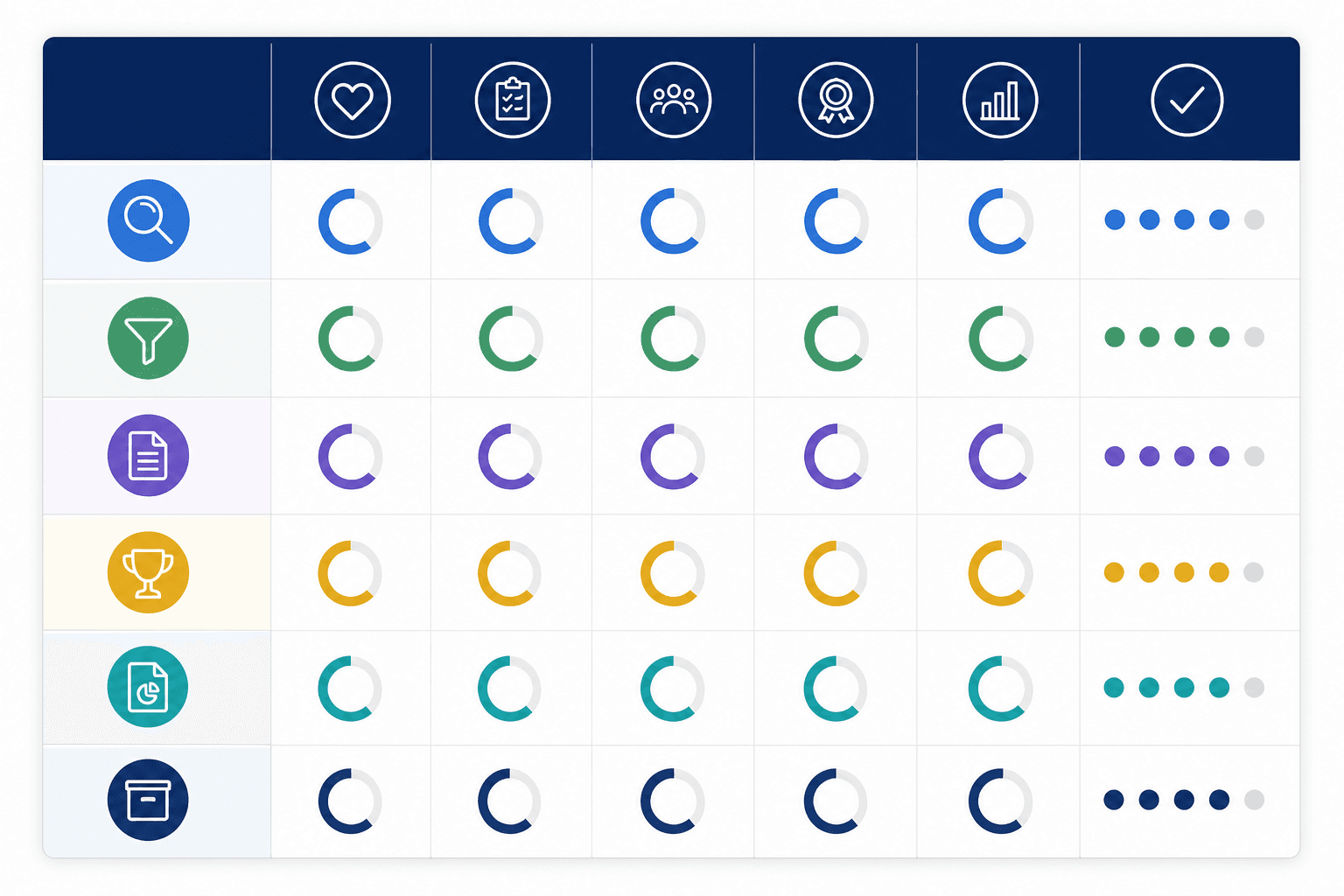
How To Use the Score
Do not treat the score as a judgment of the team. Treat it as a map. A low score in discovery means the team needs a better search routine. A low score in post-award means the team may be winning grants without enough reporting structure. A low score in closeout means final reports, records, or renewals may be at risk. If you want the full model behind each stage, work through the grants lifecycle management guide alongside your results.
Priority Fixes by Score Area
Start with the highest-risk area, not the easiest one.
How To Prioritize Fixes
Not every low score deserves equal attention. Prioritize issues that create deadline risk, compliance risk, or wasted writing time.
Deadline risk comes first. If the team misses applications or reports, fix the calendar and ownership model immediately. A simple shared calendar with reminders can prevent obvious failures while the organization improves the larger workflow.
Compliance risk comes second. If award terms, restricted costs, reporting requirements, or closeout records are unclear, fix post-award tracking. This matters because a strong proposal does not protect the organization if the award is poorly managed after approval.
Wasted writing time comes third. If the team repeatedly rewrites organizational background, program descriptions, needs statements, budgets, or evaluation plans from scratch, build a proposal library. This can improve speed and consistency without lowering quality.
Strategic risk comes fourth. If the team applies for grants that do not fit, create a qualification scorecard. Applying for every opportunity can look productive, but it often produces weak proposals and distracts staff from better-fit funders.
30-Day Improvement Plan
Week 1: identify active applications, awarded grants, and report dates.
Week 2: assign owners and clean the grant calendar.
Week 3: create a standard proposal review checklist.
Week 4: review awarded grants and closeout needs.
This small plan improves the lifecycle without requiring a full software rollout.
Health Check Meeting Agenda
- Review score by category.
- Identify top three risks.
- Choose one process improvement.
- Assign owner.
- Set due date.
- Review progress in 30 days.
The health check should lead to action. If it only produces discussion, it will not change the lifecycle.
Health Check by Role
Ask each role:
Grant writer:
- Are deadlines clear?
- Are proposal files organized?
- Are funder notes easy to find?
Program lead:
- Are project commitments visible?
- Are outcome measures realistic?
- Are report data needs clear?
Finance:
- Are budgets reviewed early?
- Are awarded amounts recorded?
- Are restrictions visible?
Leadership:
- Can we see pending and awarded grant revenue?
- Do we know which grants are at risk?
- Are renewals planned?
Health Check Questions by Maturity Level
Beginner teams should focus on visibility:
- Can we see every active opportunity in one place?
- Does each opportunity have an owner?
- Do we know the next deadline?
- Do we know why we are applying?
- Can finance see budget needs before the final week?
Intermediate teams should focus on consistency:
- Do we use the same qualification criteria each time?
- Do program and finance review the application before submission?
- Are proposal sections saved for reuse?
- Are award terms translated into internal tasks?
- Are reports prepared before the due date?
Advanced teams should focus on learning:
- Which sources produce the strongest fit?
- Which proposal sections cause delays?
- Which funders renew or expand support?
- Which awards create the highest reporting burden?
- Which lifecycle improvements would increase win rate or reduce risk?
A first-time grant writer may only need a tracker and a calendar. A larger nonprofit may need governance, dashboards, and reporting controls.
Common Findings
Health Check Red Flags
Red flags include:
- No one knows all active deadlines.
- Awarded grants are not in the same tracker as applications.
- Reports are remembered by one person.
- Finance sees budgets too late.
- Program staff do not know promised outcomes.
- Final reports are hard to find.
- Leadership asks for manual updates every month.
If several red flags are present, prioritize lifecycle management before pursuing more grants.
Evidence-Based Health Check
A useful grant lifecycle health check should not rely only on opinion. Ask participants to bring evidence from the last three to five grant opportunities. The review should include at least one declined opportunity, one submitted application, and one active or recently closed award if the organization has one.
Look for evidence such as:
- Saved source URLs.
- Apply/no-apply notes.
- Calendar deadlines.
- Draft and final proposal files.
- Budget approval notes.
- Award agreements.
- Reporting reminders.
- Submitted reports.
- Closeout files.
If the team cannot find these documents quickly, that is a finding. The issue may not be the quality of writing. The issue may be that the grant lifecycle is living in email, memory, and disconnected folders.
Sample Health Check Result
Example:
- Discovery: 2
- Qualification: 0
- Calendar: 1
- Proposal review: 1
- Award setup: 0
- Reporting: 1
- Closeout: 0
Interpretation: the team can find opportunities but lacks decision gates and post-award structure. The first fix should be qualification and award setup, not more discovery.
Health Check Output
The final output should be short enough that the team will use it:
Save the result in the same grant management system or shared workspace used for active opportunities. A health check is only valuable if it leads to a visible change.
Signs the Lifecycle Is Improving
- Fewer last-minute submissions.
- More declined low-fit grants before drafting.
- Cleaner proposal files.
- Report dates visible earlier.
- Finance and program staff involved sooner.
- Leadership sees pipeline status.
- Closeout happens before renewal planning.
FAQ
How often should we run a grant lifecycle health check?
Run it quarterly if grants are a major revenue source. Smaller teams can run it twice a year. It also helps to repeat it after a major deadline cycle, after staff turnover, or after a missed deadline or report.
Who should participate?
Include grant writing, program, finance, and leadership. Grant lifecycle problems usually cross departments.
What should we fix first?
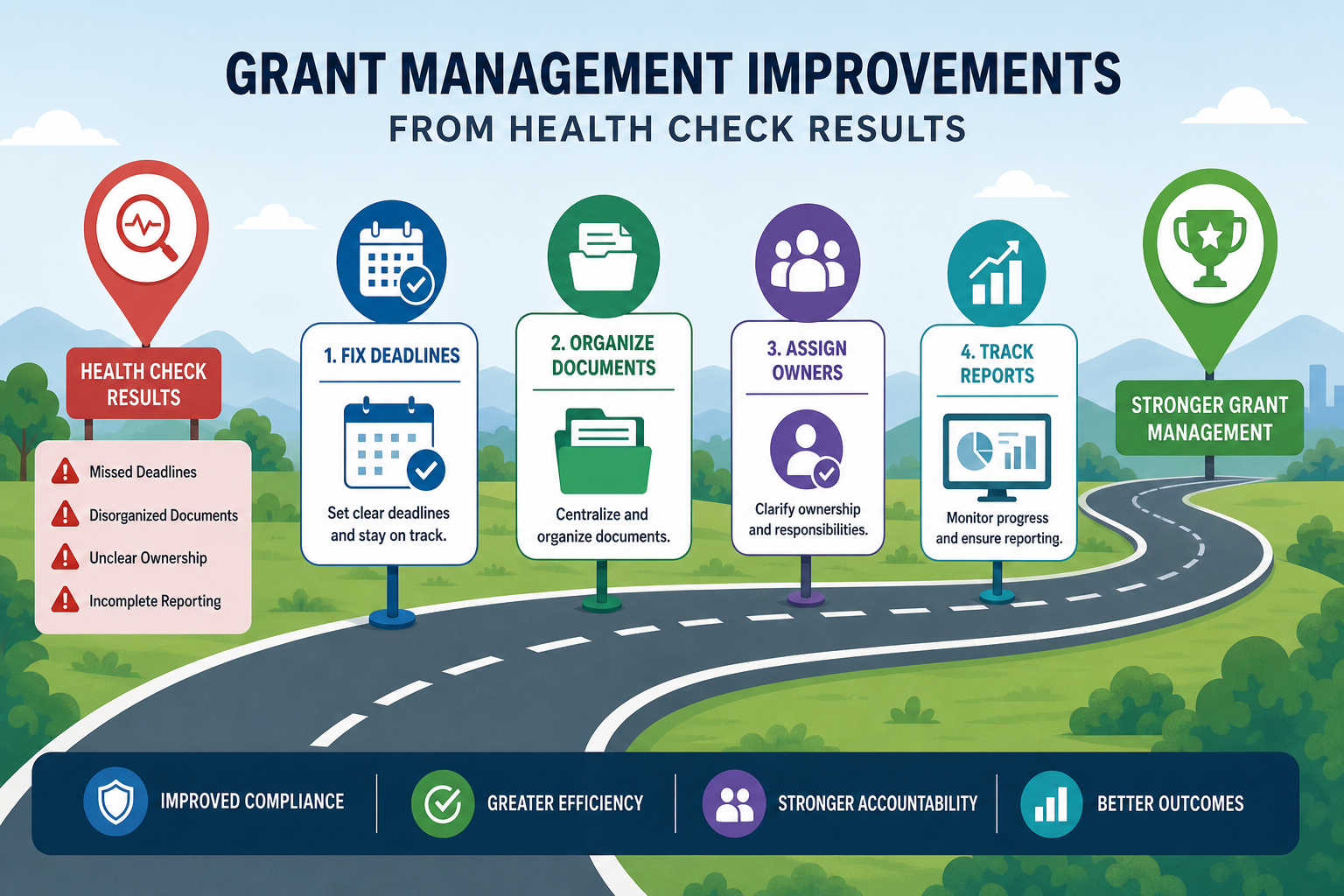
Fix deadlines and ownership first. Then organize documents, reporting dates, and reusable proposal language.
Next Step
The goal is not a perfect score, it is fewer surprises and better grant decisions. Pick the lowest-scoring stage, assign one owner, and set a review date 30 days out. Then work through the grants lifecycle management guide to turn your weakest stage into a documented, repeatable process.
Sources and Further Reading
2 CFR Part 200 (Uniform Guidance) — the federal regulation governing award management, allowable costs, and reporting.
Grants.gov Learn Grants — the federal government's own primer on how grants work, eligibility, and the application process.