Formula Grants Examples vs Discretionary Grants: How Each One Is Awarded
Verified formula grants examples from Title I, IDEA, CDBG and Byrne JAG, how discretionary awards differ, who is eligible, and how nonprofits reach formula money.
In this article (11)
- Quick Answer: What Is the Difference Between a Formula Grant and a Discretionary Grant?
- What Is a Formula Grant?
- Formula Grants Examples: Federal Programs That Use a Formula
- What Is a Discretionary Grant?
- Formula Grants vs Discretionary Grants: Key Differences
- Who Can Apply for a Formula Grant
- How Nonprofits Reach Formula Dollars Through Pass-Through Funding
- How to Tell Which Type of Grant You Are Looking At
- What Each Type Changes in Your Grant Calendar
- FAQ
- Sorting Your Prospect List by Award Type
A federal grant program either picks winners or it does not. That distinction decides whether you write a persuasive proposal or file a compliance package, and it decides whether your organization can apply at all. The best-known formula grants examples are also the largest: Title I education money, IDEA special education funding, and the community development block grants that cities receive every year. None of those programs runs a competition. Discretionary programs do, and they take up most of the grant writing time in a nonprofit office.
The split also decides who may apply. Formula money is written into statute for states, territories, and units of local government, so a nonprofit that wants a share of it usually reaches it through a subaward rather than a direct application.
Quick Answer: What Is the Difference Between a Formula Grant and a Discretionary Grant?
A formula grant is allocated to states, territories, or local governments by a distribution formula written into the authorizing statute, with no competition. A discretionary grant is awarded by a federal agency that selects recipients from among eligible applicants and decides the amount. Title I is a formula grant. An NIH research project award is discretionary.
Free download: Formula vs discretionary grants one-page comparison as Word .docx. No email address required.
What Is a Formula Grant?
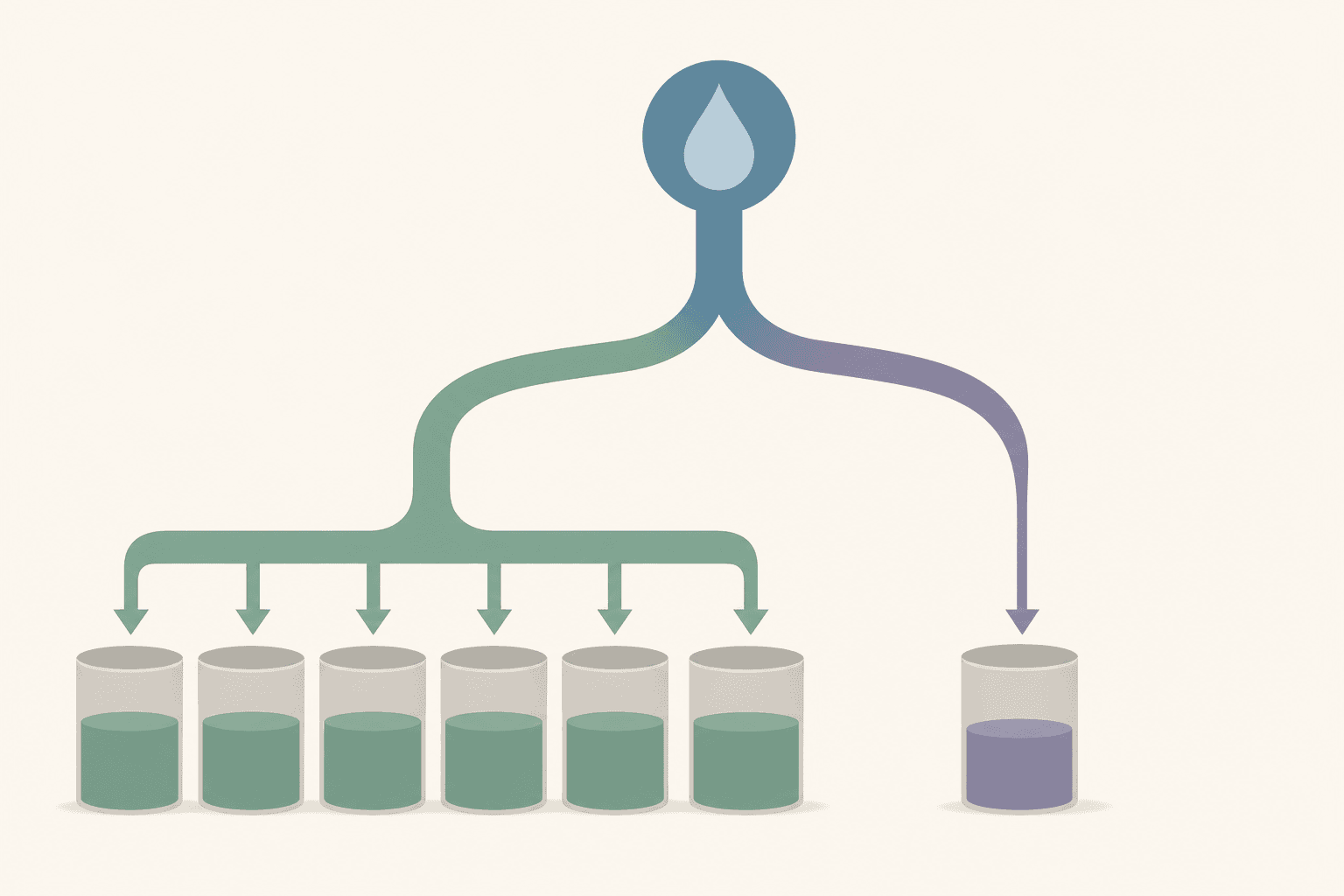
A formula grant is a federal award that allocates funding to states, territories, or units of local government according to distribution formulas set in the authorizing legislation and regulations. That is the definition in the Grants.gov grant terminology glossary, verified September 2026.
Formula grants fund activities of a continuing nature rather than one defined project. The inputs are census counts and statutory weights, so an award changes only when the underlying data changes.
Agencies also call this category mandatory funding. The same glossary defines a mandatory grant as one where the authorizing statute requires the agency head to make an award to each eligible entity in the amount, or based on the formula, the statute specifies. Formula describes how the amount is computed. Mandatory describes the agency's obligation to pay it.
A formula award is still an award with terms attached. Recipients sign an agreement, follow federal cost rules, report on a set schedule, and sit for audits. Formula recipients carry the same compliance obligations as competitive grantees; they just skip the competition. That is why they need the same grants lifecycle management discipline as any team chasing competitive awards.
Formula Grants Examples: Federal Programs That Use a Formula
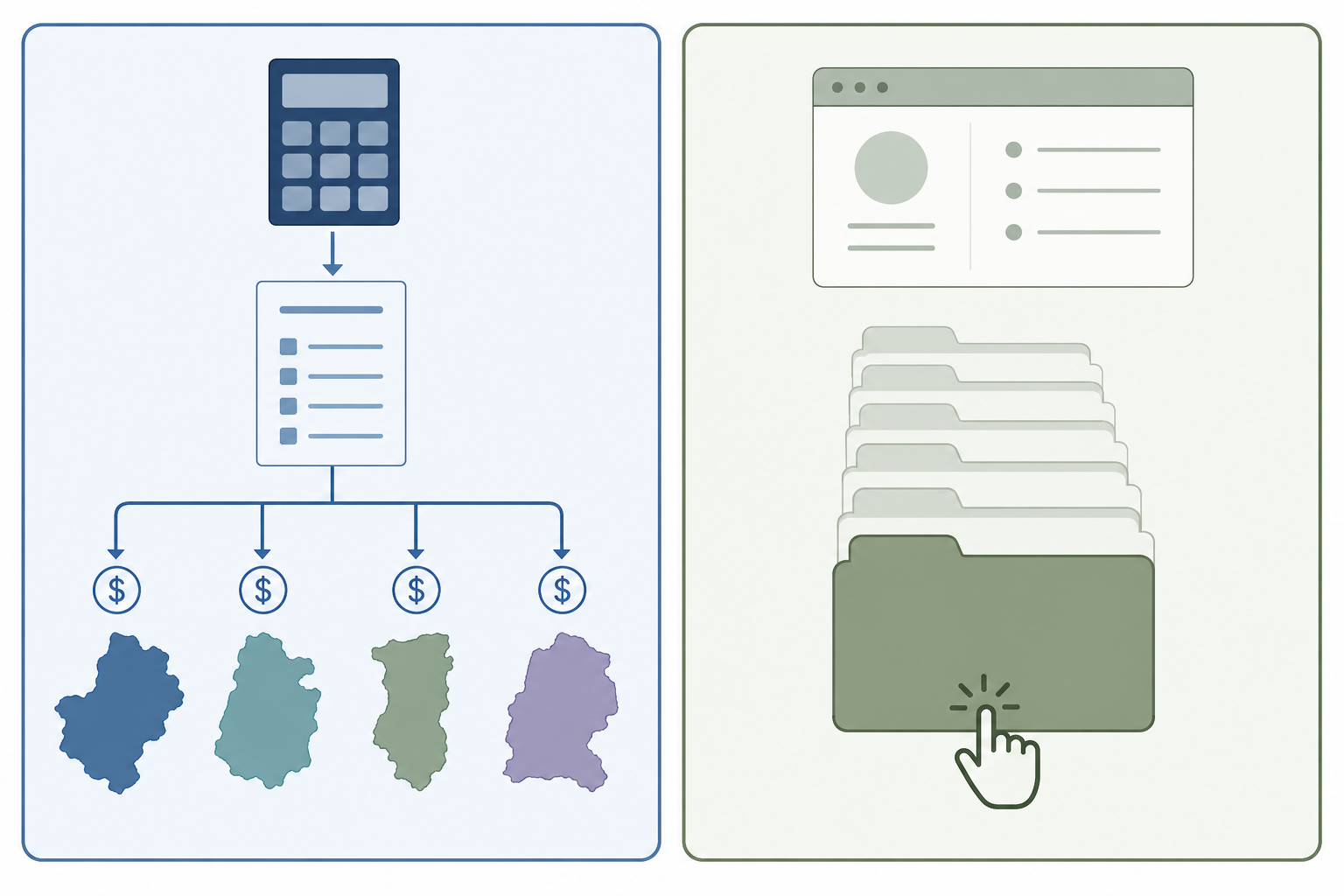
Formula grants examples include Title I education funding, IDEA special education grants to states, the Community Development Block Grant, and the Byrne Justice Assistance Grant. Each one is documented on the administering agency's own site.
Title I is not one formula. The U.S. Department of Education allocates Title I funds to state educational agencies through four statutory formulas, Basic Grants, Concentration Grants, Targeted Grants, and Education Finance Incentive Grants, based primarily on annually updated census poverty data for each local educational agency and adjusted for the cost of education in each state. A district's award is the sum of what it earns under each formula it qualifies for.
IDEA Part B starts from history. Under section 611(d), each state first receives an amount equal to what it received for fiscal year 1999. When the appropriation grows, the Department of Education splits the remainder: 85 percent by the number of children in the age range for which the state guarantees a free appropriate public education, and 15 percent by the number of children living in poverty in that age range.
HUD runs several formula programs side by side. HUD's Office of Community Planning and Development publishes FY 2026 formula allocations covering the Community Development Block Grant, HOME, Emergency Solutions Grants, Housing Opportunities for Persons With AIDS, the Housing Trust Fund, and the Recovery Housing Program. A single city can appear on several of those lines in the same year.
A Formula Grant Example, Start to Finish
The Edward Byrne Memorial Justice Assistance Grant is a formula award that still requires an application, which makes it a useful walkthrough. A city or county applies under the Local Formula solicitation, and states apply under a separate State Formula solicitation.
The Bureau of Justice Assistance publishes each jurisdiction's allocation on its JAG allocations page before the application opens, with one document for state allocations and separate local allocation documents for each of the 50 states. A unit of local government checks whether it appears on the local list for its state. Eligibility for units of local government and tribes changes year to year because the formula is recalculated annually, per the BJA JAG program overview. If a jurisdiction is not listed, no proposal changes that. If it is listed, the dollar amount is already set.
The application window is still real, and the two solicitations close on different dates. The BJA FY 2026 JAG Local Formula solicitation, open to specified units of local government and tribes, carries a Grants.gov deadline of October 9, 2026 and a JustGrants deadline of October 16, 2026, as posted on the BJA opportunity page and verified September 2026. The FY 2026 State Formula solicitation closes earlier, with a Grants.gov deadline of September 18, 2026 and a JustGrants deadline of September 25, 2026, and only the designated state administering agencies for the 56 states, territories, and the District of Columbia may apply under it. Both solicitations sit under Assistance Listing Number 16.738 on SAM.gov.
BJA publishes the allocation, the jurisdiction confirms it is on the list, the jurisdiction submits its application by its own deadline, and BJA makes the award in the published amount. There is no score and no competitor, but there is a due date a jurisdiction can miss.

What Is a Discretionary Grant?
A discretionary grant is an award for which the federal awarding agency generally may select the recipient from among all eligible recipients, may decide whether to make an award based on the programmatic, technical, or scientific content of an application, and can decide the amount of funding. That definition comes from the Grants.gov grant terminology glossary, verified September 2026.
You can tell a discretionary program from its funding notice. The same glossary defines a funding opportunity announcement as a publicly available document by which a federal agency makes known its intentions to award discretionary grants or cooperative agreements, usually as a result of competition for funds. A notice of funding opportunity that carries review criteria and a scoring rubric is discretionary money.
Nonprofits, universities, tribes, and small businesses apply directly for discretionary awards. NIH research project awards, agency demonstration programs, and most of what surfaces in a Grants.gov keyword search fall here. The application is a persuasion document, so the work sits before the award rather than after it. Our guide on how to write a grant proposal covers what those reviewers score.
Grants.gov also records an Opportunity Category on each posted opportunity. Its glossary lists the values as Discretionary, Mandatory, Earmark, and Continuation, and formula programs sit on the mandatory side. Continuation covers renewal of an existing multi-year discretionary project, and earmarks are awards Congress writes directly into legislation with the recipient named.
Formula Grants vs Discretionary Grants: Key Differences
Formula and discretionary grants differ in who chooses the recipient, who is eligible, what an applicant submits, and where the workload lands in the year.
Scheduling is the practical consequence. A discretionary program hands you a hard external deadline months before any money exists. A formula program hands the recipient money first and a reporting calendar second, and the second calendar is the one teams forget. Both belong in a single grant lifecycle view rather than in two separate systems.
Who Can Apply for a Formula Grant
Formula grants go to states, territories, and units of local government. A community nonprofit almost never receives one directly, because the statute names the eligible entity type and the formula computes an amount for named jurisdictions rather than for applicants.
The eligibility section is where this goes wrong. A nonprofit searching for Title I or CDBG funding finds the program, recognizes its own work in the purpose statement, then reaches an eligibility list containing only public agencies. The money is real and the fit may be genuine, but the application route runs through the jurisdiction that received the allocation.
How Nonprofits Reach Formula Dollars Through Pass-Through Funding
Pass-through funding is federal money issued to a state agency or institution that is then transferred to other state agencies, units of local government, or other eligible groups under the award eligibility terms. That is the Grants.gov glossary definition, verified September 2026. A nonprofit does not apply to the federal agency for a formula program; it applies as a subrecipient to whichever agency received the formula allocation.
The relevant funder is the state or county agency, not the federal department. Watch the state education agency, the state criminal justice planning office, or the city community development department that administers the money locally.
The subaward competition sits downstream of the federal appropriation, so the timing is inherited. When Congress is late, state solicitations are late. Allocation tables are usually published before subaward opportunities open. Reading them early tells you whether local money grew or shrank.
Most subaward competitions never appear on Grants.gov. They surface on state and municipal portals, each running its own software and its own account system. That fragmentation is why a single federal search misses so much, and why grant search across federal and state portals has to cover both layers. Nonprofit teams working this route can see how the pieces fit in our solutions for nonprofits.
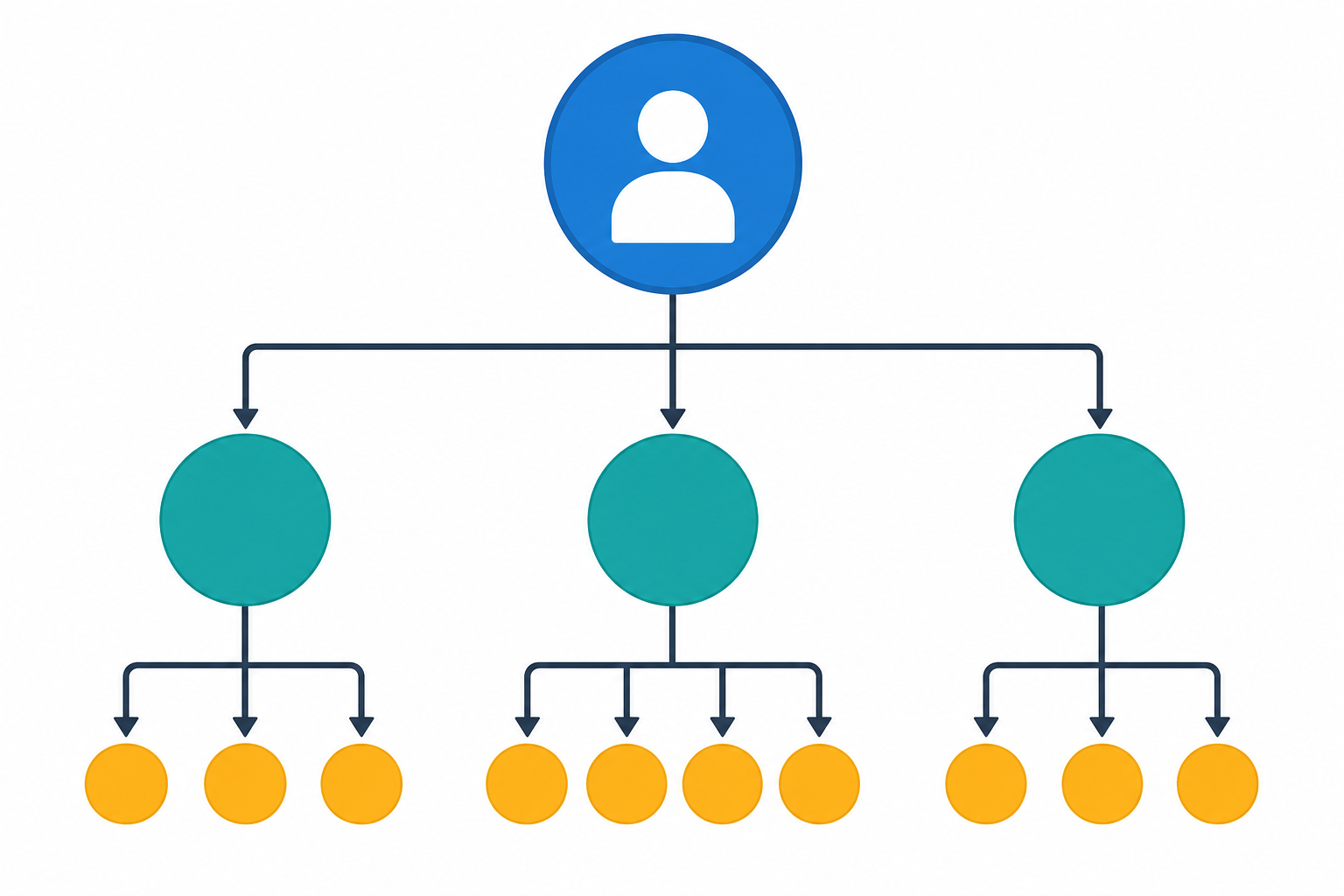
The agency passing the money down answers for how the subrecipient spends it, and our guide to pass-through grant management explains what that agency must check, write into the subaward and monitor.
How to Tell Which Type of Grant You Are Looking At
You can classify a federal opportunity by checking three things: the Grants.gov opportunity category, the program's Assistance Listing on SAM.gov, and the eligible applicants section of the notice.
Start with the opportunity category. Grants.gov records one on each posted opportunity, and its glossary lists the values as Discretionary, Mandatory, Earmark, and Continuation. Mandatory means a formula program.
If the category does not settle it, look up the program's Assistance Listing on SAM.gov. Most federal assistance programs have one, identified by an Assistance Listing Number, formerly the CFDA number. The listing states the types of assistance the program offers and who is eligible, which is faster than reading a full notice to find out you cannot apply.
Then read the eligible applicants section of the notice itself. A list containing only states, territories, and units of local government means the program is formula or passed through. A list that also includes nonprofits, higher education institutions, or small businesses means a competition.
If you are new to reading federal notices, the first-time grant writing guide walks through the rest of the structure.
What Each Type Changes in Your Grant Calendar
Formula awards load your calendar after the money arrives, and discretionary awards load it before. For formula and pass-through money, the recurring dates are financial and performance reports, spend-down checkpoints against the approved budget, any maintenance of effort requirement, and the audit window. A missed report can cost a jurisdiction its next allocation.
For discretionary money, the dates cluster before submission: the internal draft deadline, the finance review of the budget, letters and attachments, registration renewals, and the portal cutoff. Federal notices routinely set separate deadlines for different systems, the way each Byrne JAG formula solicitation carries one date for Grants.gov and a later one for JustGrants.
Both sets belong on one calendar with one owner per date, which is the argument for running the whole thing as one process. Our guide to managing the grant lifecycle covers that operating model.
FAQ
What is a formula grant example?
Title I, Part A is a formula grant example. The U.S. Department of Education allocates Title I funds to state educational agencies through four statutory formulas built on annually updated census poverty data, and states pass funds to local educational agencies under Title I rules. Other examples include IDEA Grants to States, the Community Development Block Grant, and the Byrne Justice Assistance Grant.
Are formula grants competitive?
No. The Grants.gov glossary defines a formula grant as an allocation of federal funding determined by distribution formulas in the authorizing legislation and regulations, so there is no review panel and no score. An eligible jurisdiction receives its computed amount. Many formula programs still require an application by a published deadline, so noncompetitive does not mean automatic.
Can a nonprofit apply for a formula grant?
Usually not directly. Formula allocations go to states, territories, and units of local government. Nonprofits typically access the same funding as subrecipients, through subawards the prime recipient issues after it receives its allocation. Some of those subawards are competed and some are not, depending on the prime award terms and the authorizing legislation.
What is the difference between a formula grant and a block grant?
Block grant is a common label for a formula grant that gives the recipient wide latitude over how funds are used inside a broad purpose area. HUD describes the Community Development Block Grant as providing annual grants on a formula basis to states, cities, and counties, which makes it both.
How do I find formula grants on Grants.gov?
Filter by opportunity category. Grants.gov records an Opportunity Category on each posted opportunity, and its glossary lists the values as Discretionary, Mandatory, Earmark, and Continuation. Formula programs sit under Mandatory. To research a program before any notice is posted, look up its Assistance Listing on SAM.gov, which states the types of assistance offered and who is eligible.
Do formula grants have deadlines?
Yes. The amount may be predetermined, but the application window is not open forever. The FY 2026 Byrne JAG Local Formula solicitation, open to specified units of local government and tribes, lists a Grants.gov deadline of October 9, 2026 and a JustGrants deadline of October 16, 2026 on the Bureau of Justice Assistance opportunity page. The separate State Formula solicitation, open only to designated state administering agencies, closes September 18, 2026 in Grants.gov and September 25, 2026 in JustGrants. A jurisdiction that misses a formula deadline can lose an allocation it was already entitled to.
Sorting Your Prospect List by Award Type
Sort your prospect list into two columns before you write anything: programs where you compete for the award, and programs where another entity already received the money and may re-grant part of it.
The classification tells you which job you are doing. If the program is discretionary, you are writing to be chosen. If it is formula, you are either the named recipient managing an obligation, or you are hunting for the state agency that received the allocation and the subaward competition it will run.