Does a Funder Fund Admin and Indirect Costs?
Does a funder fund admin and indirect costs? A look at federal de minimis and negotiated rates, dated foundation policies on indirect cost recovery, and how to budget for both.

In this article (9)
- Quick Answer: Does a Funder Fund Admin and Indirect Costs?
- What Counts as Admin and Indirect Costs on a Grant?
- Do Federal Funders Fund Admin and Indirect Costs?
- Do Foundation Funders Fund Admin and Indirect Costs?
- Why Funders Disagree About Admin and Overhead
- How to Ask for Admin and Indirect Costs in a Budget
- What to Do When a Funder Caps or Refuses Indirect Costs
- FAQ
- Put the Rate and the Base in the Next Budget You Submit
Does a funder fund admin and indirect costs? On a federal award, yes, unless a statute or regulation limits it. The cost principles allow indirect cost recovery at a negotiated rate, and an organization without one can elect a de minimis rate. On a private grant, the answer sits in the funder's own published policy, and published policies set different percentages; one ties its minimum to the size of the grantee's budget.
Two things decide what you can charge: the cost principles that govern the money, and the base the funder computes recovery on. Federal awards run on the cost principles in 2 CFR part 200 (eCFR, current as of September 2026). Private grants run on the grant agreement and whatever policy the funder posts publicly, with a date on it.
Quick Answer: Does a Funder Fund Admin and Indirect Costs?
Federal awards pay indirect costs at a federally negotiated rate or, without one, a de minimis rate of up to 15 percent of modified total direct costs (eCFR 2 CFR 200.414(f), current as of September 2026). Foundations set their own policies; MacArthur pays 29 percent of project costs on project grants (MacArthur Foundation Indirect Cost Policy, updated October 3, 2024).
What Counts as Admin and Indirect Costs on a Grant?
An indirect cost is a cost incurred for a common or joint purpose that benefits more than one cost objective and cannot be assigned to one without effort disproportionate to the results achieved (eCFR 2 CFR 200.1, current as of September 2026). A direct cost is the kind you can trace to one award: "Direct costs are those costs that can be identified specifically with a particular final cost objective" (eCFR 2 CFR 200.413(a), current as of September 2026).
For a nonprofit, the indirect pool typically holds "depreciation on buildings and equipment, the costs of operating and maintaining facilities, and general administration and general expenses, such as the salaries and expenses of executive officers, personnel administration, and accounting" (eCFR 2 CFR 200.414(b), current as of September 2026).
Admin and Clerical Salaries
"Administrative and clerical staff salaries should normally be treated as indirect costs" (eCFR 2 CFR 200.413(c), current as of September 2026). Direct charging is allowed only when the services are integral to the award, the individuals can be specifically identified with the award, and the same costs are not also recovered as indirect (eCFR 2 CFR 200.413(c), current as of September 2026). A coordinator hired for one project is a direct cost. The payroll clerk who processes everyone's pay is not.
Costs That Usually Land on Each Side
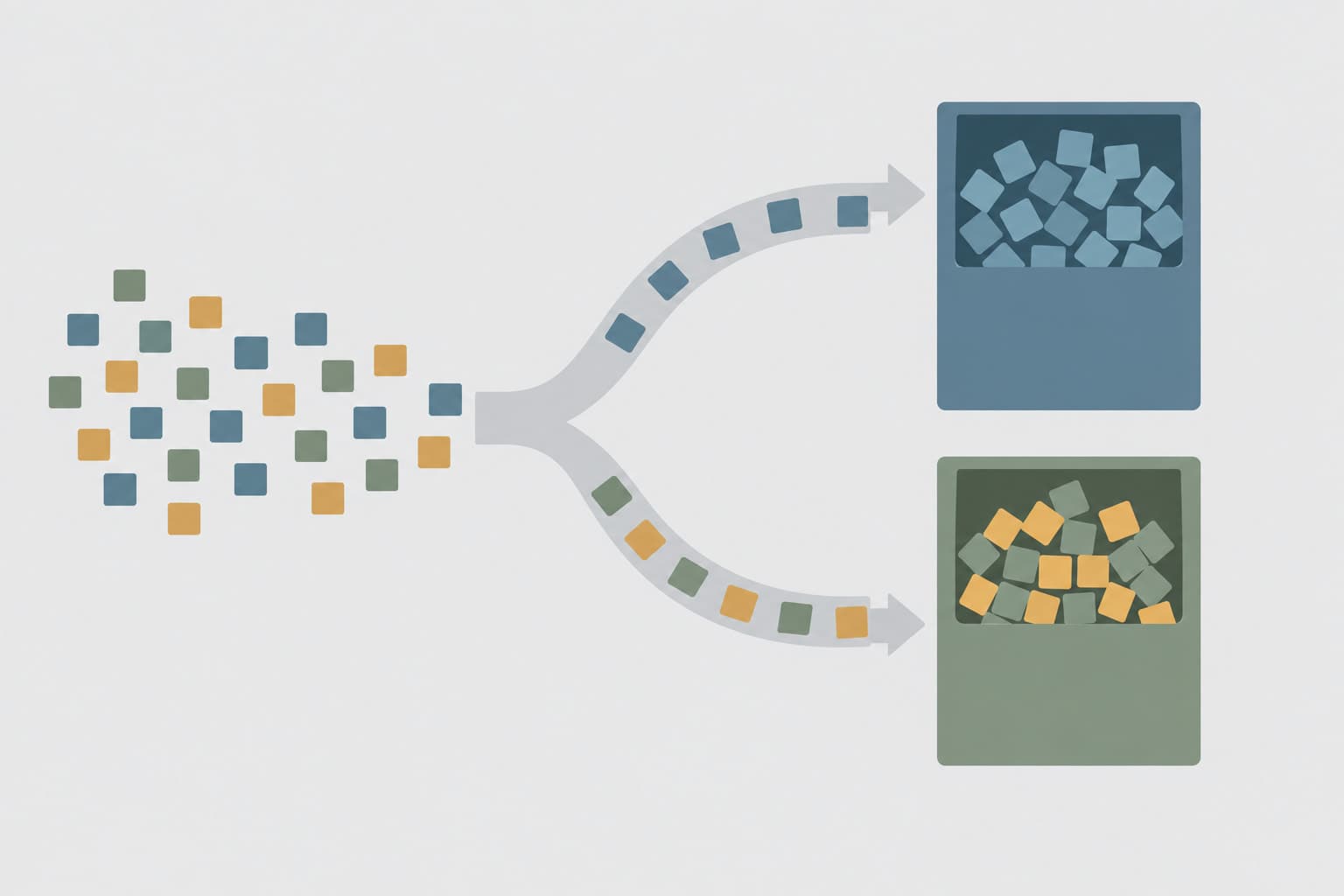
Appendix IV names which costs normally land on each side (eCFR 2 CFR part 200, current as of September 2026).
Source: eCFR, 2 CFR part 200 and Appendix IV to Part 200, current as of September 2026.
Where a cost lands is a decision your organization makes once and then applies everywhere (eCFR 2 CFR 200.403(d), current as of September 2026). The Uniform Guidance grant management guide covers the recordkeeping behind it.
Do Federal Funders Fund Admin and Indirect Costs?
Yes. Federal cost principles allow a recipient to charge indirect costs to an award at a negotiated rate, or, when there is no current negotiated rate, at an elected de minimis rate (eCFR 2 CFR 200.414(f), current as of September 2026).
The De Minimis Rate
The de minimis rate is "up to 15 percent of modified total direct costs (MTDC)" (eCFR 2 CFR 200.414(f), current as of September 2026), a base that leaves out equipment, participant support costs and the part of each subaward above $50,000, among other items (eCFR 2 CFR 200.1, current as of September 2026).
The rate is easy to take and easy to misuse. It "does not require documentation to justify its use and may be used indefinitely," and no organization is required to use it (eCFR 2 CFR 200.414(f), current as of September 2026). When you apply it, "costs must be consistently charged as either direct or indirect costs and may not be double charged or inconsistently charged as both" (eCFR 2 CFR 200.414(f), current as of September 2026).
Negotiated Rates and What a Funder Must Accept
A negotiated indirect cost rate agreement is the written product of a rate negotiation: "The results of each negotiation must be formalized in a written agreement between the cognizant agency for indirect costs and the nonprofit organization." The cognizant agency is "the Federal agency with the largest dollar value of Federal awards directly funded to an organization," and a nonprofit that receives no funding directly from any Federal agency negotiates with its pass-through entity instead (eCFR 2 CFR part 200, Appendix IV, current as of September 2026). An existing agreement may be extended once "for up to four years" with cognizant-agency approval (eCFR 2 CFR 200.414(g), current as of September 2026).
The acceptance rules are blunt. "Negotiated indirect cost rates must be accepted by all Federal agencies," with deviation only "when required by Federal statute or regulation, or when approved by the awarding Federal agency" (eCFR 2 CFR 200.414(c)(1), current as of September 2026), and pass-through entities "must accept all federally negotiated indirect costs rates for subrecipients" (eCFR 2 CFR 200.414(d), current as of September 2026). When the money arrives through a state or a city, the pass-through entity "must determine the appropriate rate in collaboration with the subrecipient" if no approved rate exists, and "must not require the use of the de minimis indirect cost rate if the subrecipient has an approved indirect cost rate negotiated with the Federal Government" (eCFR 2 CFR 200.332(b)(4), current as of September 2026). The indirect cost rate on federal grants walkthrough covers the negotiation steps themselves.
Do Foundation Funders Fund Admin and Indirect Costs?
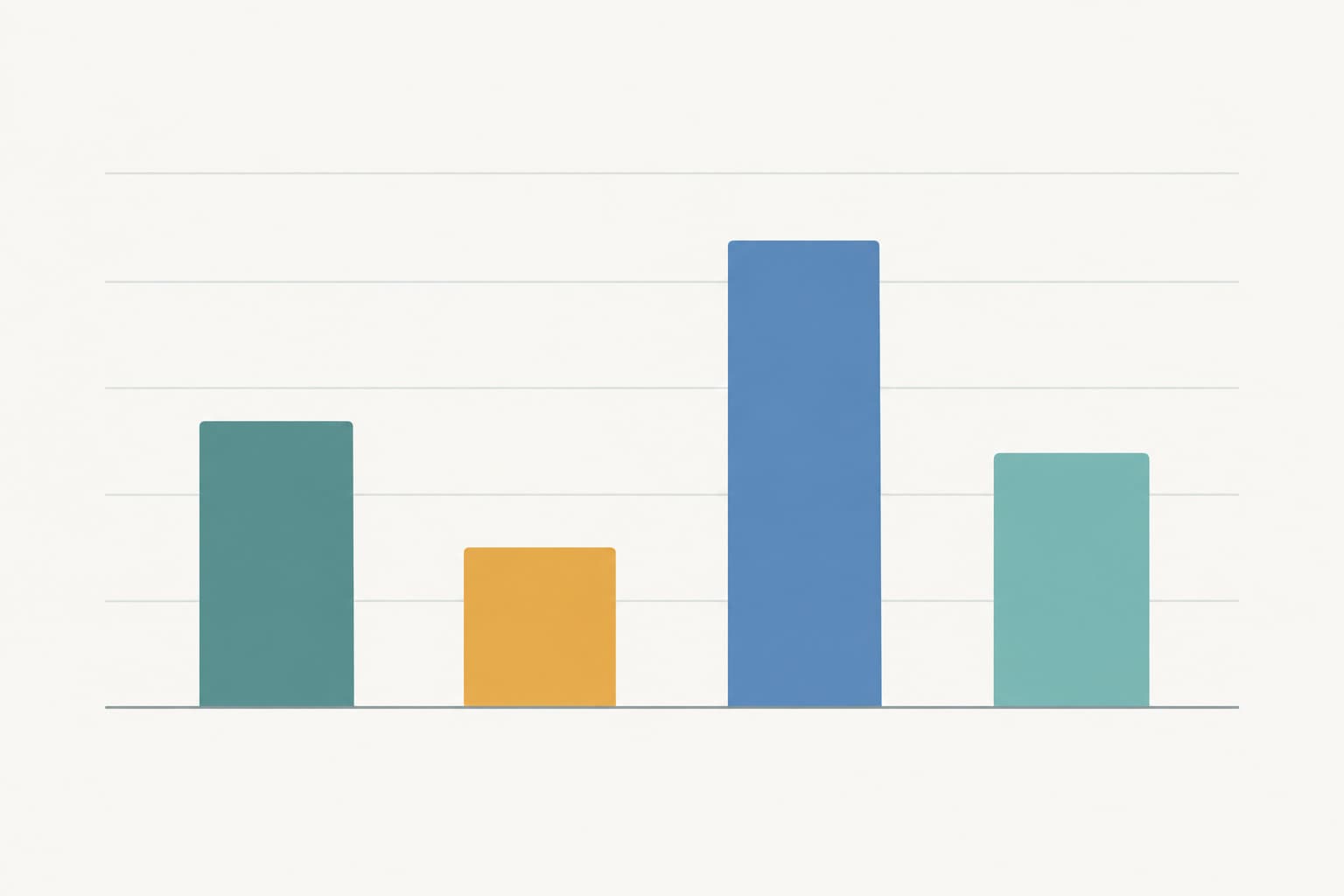
Several large foundations publish indirect cost policies with dated rates, and the published rates differ by funder and, in one case, by the size of the grantee's budget (David and Lucile Packard Foundation, published January 18, 2024).
Sources: MacArthur Foundation Indirect Cost Policy (updated October 3, 2024); Ford Foundation, FAQs: Increasing our indirect cost commitment (November 1, 2022); David and Lucile Packard Foundation (January 18, 2024); BDO FMA / BDO Nonprofit Advisory, Indirect Cost Rate Guide 2022 for FRC (February 11, 2022).
Three details from those policies change how you read the numbers. MacArthur's rate "does not apply to … General operating support grant[s]" because those are not project grants (MacArthur Foundation, Indirect Cost Policy, read September 2026). Ford's previous policy, in force "through the end of 2022," was a minimum of 20 percent, raised for "new grants made in 2023 and beyond" (Ford Foundation, FAQs: Increasing our indirect cost commitment, published November 1, 2022). Packard moved to tiered minimums because "grantees continued to downplay their indirect costs rates" after the foundation "removed the cap on indirect cost rates" in September 2019 (David and Lucile Packard Foundation, published January 18, 2024).
The MacArthur figure is not a sector average. It is a benchmark drawn from a commissioned study of "IRS Form 990 data from over 130,000 U.S.-based nonprofit organizations" (MacArthur Foundation Indirect Cost Policy, updated October 3, 2024).
Funders for Real Cost, Real Change "was a collaborative of 12 member funders that explored ways to improve indirect cost recovery in project grants from 2019 - 2021," and its guide aims at one organization-wide rate a grantee can apply across the participating funders' grants instead of recalculating per grant (BDO FMA / BDO Nonprofit Advisory, Indirect Cost Rate Guide 2022, February 11, 2022). Before you build any of this into a proposal, look the funder up in a foundations directory, then read the indirect cost policy on its own website and note the date.
Why Funders Disagree About Admin and Overhead
Funders disagree about admin and overhead because each one sets its own policy, on a base of its own choosing. The overhead share itself has been contested since July 2013, when three charity raters called the percentage of expenses going to administrative and fundraising costs "a poor measure of a charity's performance" (The Overhead Myth open letter, July 2013).
The letter goes further. Judging charities on overhead "without considering other critical dimensions of a charity's financial and organizational performance does more damage than good," and "many charities should spend more on overhead" because those costs include investments in training, planning, evaluation and internal systems (The Overhead Myth open letter, July 2013).
Rates resist comparison across organizations. The FRC guide states that "indirect cost rate percentages may not be strictly comparable across organizations" because cost classification "depends on an organization's own unique circumstances and business model" (BDO FMA / BDO Nonprofit Advisory, Indirect Cost Rate Guide 2022, February 11, 2022). MacArthur's 29 percent is stated as a share of project costs (MacArthur Foundation Indirect Cost Policy, updated October 3, 2024), while Ford's published sentence states a minimum indirect cost rate without naming its base (Ford Foundation, FAQs: Increasing our indirect cost commitment, published November 1, 2022). Two percentages are not comparable until you know what each one is a percentage of. Ask what base applies before you measure either against your own rate.
How to Ask for Admin and Indirect Costs in a Budget
Ask for admin and indirect costs as their own budget line, computed on the base the funder names, and treat identical costs the same way in every budget you submit.
The first rule is consistency. A cost "must not be assigned to a Federal award as a direct cost if any other cost incurred for the same purpose in like circumstances has been allocated to the Federal award as an indirect cost" (eCFR 2 CFR 200.403(d), current as of September 2026). The FRC guide makes the same point for private money: "The same cost must not be treated as indirect for purposes of calculating an indirect cost rate and then budgeted as a direct cost within a grant (or vice versa)," because that "could result in double-charging of costs to funders" (BDO FMA / BDO Nonprofit Advisory, Indirect Cost Rate Guide 2022, February 11, 2022).
Two bases are in play, so name yours. The federal de minimis rate runs on modified total direct costs (eCFR 2 CFR 200.414(f), current as of September 2026). The FRC method runs on total direct cost: "IDC Rate (%) = Total Indirect Cost / Total Direct Cost" (BDO FMA / BDO Nonprofit Advisory, Indirect Cost Rate Guide 2022, February 11, 2022).
In the budget notes, name the rate, its type and the base it applies to. Appendix IV names four rate types: "Predetermined rate," "Fixed rate," "Final rate," and "Provisional rate or billing rate" (eCFR 2 CFR part 200, Appendix IV, current as of September 2026). What goes on each line of the notes depends on where the money comes from.
Sources: eCFR, 2 CFR 200.414(c)(1), (d) and (f), current as of September 2026.
Carry the same entries onto the indirect line of your grant proposal budget template, so the notes and the numbers agree line for line.

What to Do When a Funder Caps or Refuses Indirect Costs
A private funder may set its own cap or decline indirect recovery, but on federal money an agency or pass-through entity may not force your rate down unless a Federal statute or regulation requires it, or, for a negotiated rate, the awarding agency approves a deviation (eCFR 2 CFR 200.414(c)(1) and (f), current as of September 2026).
The protective sentence is specific: agencies and pass-through entities "may not require recipients and subrecipients to use a de minimis rate lower than the negotiated indirect cost rate or the rate elected pursuant to this subsection unless required by Federal statute or regulation" (eCFR 2 CFR 200.414(f), current as of September 2026). If a state pass-through tells you to take a rate below the one you hold, and no statute or regulation requires it, that instruction conflicts with the cost principles.
On a private grant, two moves keep the budget defensible: ask the program officer to state the base and the ceiling in writing, and show the capped recovery on its own line so the shortfall is visible. On a federal award that pays less than your approved rate, the shortfall has a defined name and a use. "Unrecovered indirect cost means the difference between the amount charged to the Federal award and the amount which could have been charged to the Federal award under the recipient's or subrecipient's approved indirect cost rate," and it may "be included as part of cost sharing with the prior approval of the Federal agency or pass-through entity" (eCFR 2 CFR 200.306(c), current as of September 2026). Ask for that approval early, and run the request against our federal award compliance checklist before you send it.
A capped line is easier to defend when the shortfall stays visible after the award. Every GrantCue plan, Free included, holds post-award budgets line by line, indirect line included, and the Organization plan, at $229 a month, adds a read-only QuickBooks Online spend import mapped to grant budgets (grantcue.com pricing, October 2026). GrantCue's post-award budget tracking keeps the approved indirect figure beside what was actually recovered.
FAQ
Do Funders Pay Indirect Costs on Grants?
Federal awards do: they allow recovery at a negotiated rate or an elected de minimis rate of up to 15 percent of modified total direct costs (eCFR 2 CFR 200.414(f), current as of September 2026). Private foundations set their own policies, and some publish a minimum rate they pay on project grants. Read the funder's policy page and the grant agreement before you build the budget.
Do Foundations Pay Indirect Costs on General Operating Support Grants?
That depends on the funder's policy, so read it before you add an indirect line. MacArthur's 29 percent indirect cost policy does not apply to general operating support grants, because those are not project grants (MacArthur Foundation, Indirect Cost Policy, read September 2026). Ford's published minimum is likewise stated for eligible project grants (Ford Foundation, FAQs: Increasing our indirect cost commitment, published November 1, 2022).
Can a Funder Refuse to Pay Indirect Costs?
A private funder sets its own policy and may cap or decline indirect recovery on its own grants. On federal money, agencies and pass-through entities "may not require recipients and subrecipients to use a de minimis rate lower than the negotiated indirect cost rate or the rate elected pursuant to this subsection unless required by Federal statute or regulation" (eCFR 2 CFR 200.414(f), current as of September 2026).
What Counts as an Administrative Cost on a Grant?
An administrative cost is a cost of running the organization that serves more than one project, such as accounting, personnel administration, and the salaries and expenses of executive officers (eCFR 2 CFR 200.414(b), current as of September 2026). Administrative and clerical staff salaries should normally be treated as indirect costs, with direct charging allowed only when the services are integral to the award, the individuals can be specifically identified with it, and the costs are not also recovered as indirect (eCFR 2 CFR 200.413(c), current as of September 2026).
Do Foundations Pay Overhead on Grants?
Several large foundations publish rates. One policy sets indirect cost recovery of 29 percent of project costs on all project grants (MacArthur Foundation Indirect Cost Policy, updated October 3, 2024). Another sets a minimum rate of 25 percent for eligible project grants (Ford Foundation, FAQs: Increasing our indirect cost commitment, published November 1, 2022). A third uses tiered minimums based on grantee budget size (David and Lucile Packard Foundation, published January 18, 2024).
How Do You Budget Admin and Indirect Costs?
Put indirect costs on their own line, computed on the base the funder names, and state the rate and the base in the budget notes. Treat the same cost the same way everywhere: a cost treated as indirect when you calculated your rate cannot also sit as a direct line inside the same grant (BDO FMA / BDO Nonprofit Advisory, Indirect Cost Rate Guide 2022, February 11, 2022).
Put the Rate and the Base in the Next Budget You Submit
Three items belong beside every budget you send out: the rate, the base, and the date of the policy the rate came from. The federal de minimis rate runs on modified total direct costs (eCFR 2 CFR 200.414(f), current as of September 2026), a foundation policy may name a different base, and a reviewer who finds both can check your arithmetic without calling you.
Before the next deadline, write the rate and base into the budget notes of your current template, then ask any silent funder in writing which base and which ceiling apply.