Grant Boilerplate Document Template: Build a Reusable Language Bank
A free grant boilerplate document template in Word: eleven standard blocks with fill-in fields, short and long versions, an update schedule and the content that never belongs in boilerplate.

In this article (10)
- Quick Answer: What Goes in a Grant Boilerplate Document?
- What a Grant Boilerplate Document Is and Is Not
- What Is Inside the Grant Boilerplate Document Template
- How to Write Each Boilerplate Block
- Short and Long Versions of Each Block
- How Often to Update Each Block
- What Never Goes in Boilerplate
- Keeping Boilerplate in Sync With Live Applications
- FAQ
- Fill the Identifiers Block Before the Next Deadline
A grant boilerplate document template is one file that holds the facts and paragraphs every application asks for again: your legal identifiers, mission, history, programs, the people you serve, your staff and board, your financial controls, your evaluation approach and your partners. Filled in once and kept current, it turns the first hour of every application into assembly.
The file only works if it stays accurate. Boilerplate that quotes last year's numbers, a departed director or an expired registration does more harm than a blank page, because it gets pasted without a second look. The free template gives every block an as-of date and a review schedule, and gives the whole file one owner.
Quick Answer: What Goes in a Grant Boilerplate Document?
A grant boilerplate document is a master file of the paragraphs and facts every application repeats: identifiers, mission, history, programs, population served, staffing, board, financial controls, funding history, evaluation approach and partners. Narrative blocks come in short and long versions, every figure carries an as-of date, one owner keeps the file current, and nothing funder-specific goes in it.
Free download: Grant boilerplate document template as Word .docx. No email address required.
What a Grant Boilerplate Document Is and Is Not
Grant boilerplate is standard language about an organization that stays the same from one application to the next, kept in one master document so every writer starts from the same current version. It describes who you are and what you have done. It never describes a specific request.
The same questions recur from one application to the next. One commenter described keeping boilerplate language on the organization's mission, history and demographics to revise for each grant (Reddit thread 1ubd86x, read September 2026). Readiness checklists show why the questions repeat: GrantStation's Grant Readiness Checklist lists the mission statement, IRS designation letter, EIN, Form 990, audit or financial review, board list and annual report among the organizational documents to keep ready (GrantStation, Grant Readiness Checklist, December 2023). The documents themselves are covered in the grant readiness checklist; the boilerplate file holds the words you write from them.
Boilerplate is easy to confuse with two neighboring tools.
A proposal library is the archive; the guide to building a grant proposal library covers how to file and reuse past submissions. A proposal template is the skeleton of one application, which the nonprofit grant proposal template lays out section by section. The boilerplate document feeds both: it is the one place where the facts are kept right.
What Is Inside the Grant Boilerplate Document Template
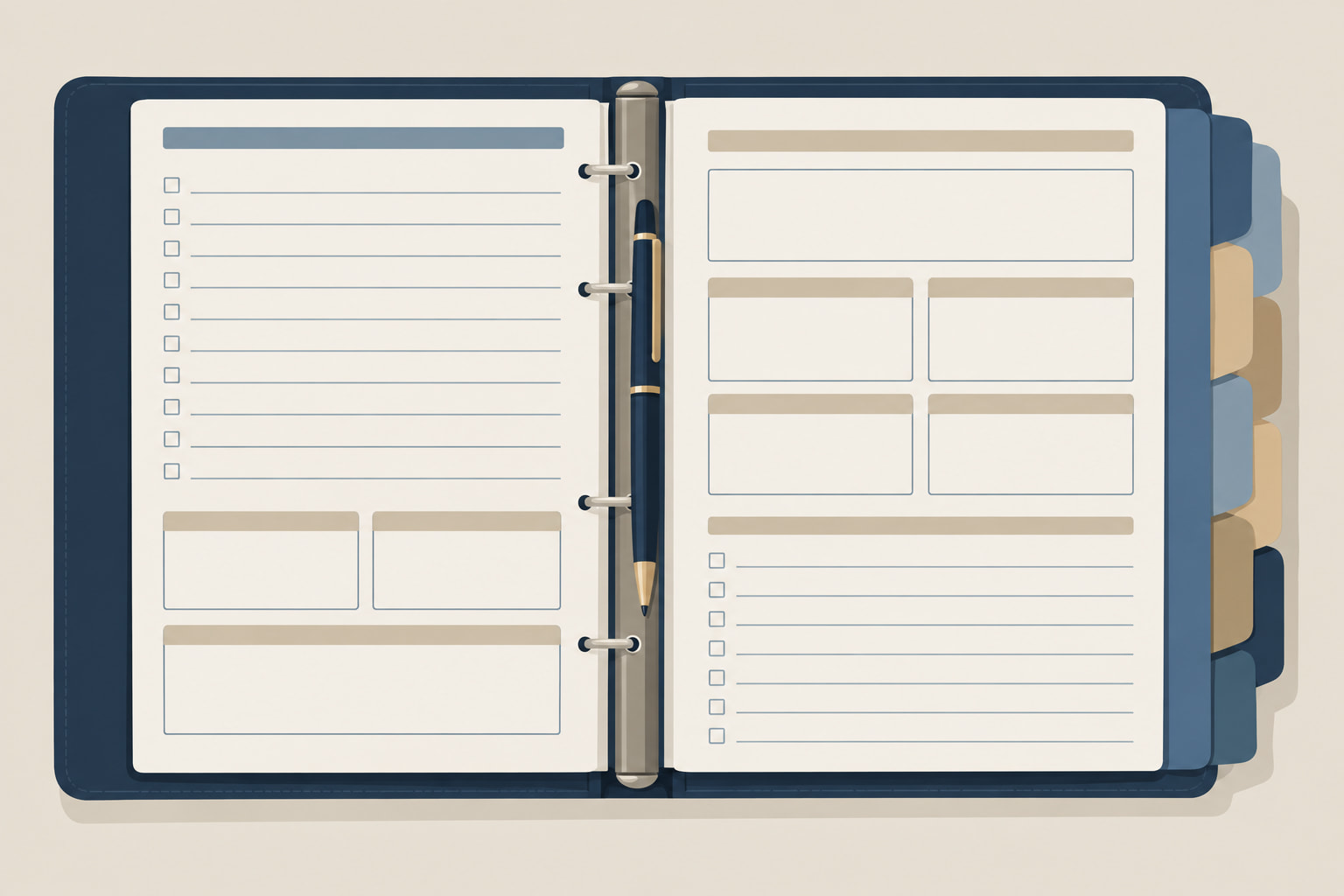
The free Word template opens with a short how-to-use page and an update log, then gives eleven numbered blocks with fill-in tables and writing prompts, and ends with a checklist of content that stays out of boilerplate. Every narrative block has a field for a short version and a long version, and every figure has an as-of field beside it.
The update log at the front lists all eleven blocks with columns for last updated, updated by, next review and source document. The file ships with one composite sample: block 3 filled in for an invented adult education organization, so you can see the short and long versions side by side before writing your own.
The template uses two conventions throughout. Square brackets mark text to replace, such as [legal name as shown on the IRS determination letter], so a search for an opening bracket finds every gap you have not filled. And every number sits next to an as-of field, so a figure never enters the file without the date and source that make it safe to reuse.
Fill it in the order the blocks appear. Identifiers come first because they are copied from documents and take minutes. Mission and history follow because the program and population blocks build on them. Leave the funding history and partners blocks for last, since they need records that may sit with the finance lead or the executive director.
How to Write Each Boilerplate Block
Each block should read as finished prose a reviewer could accept as written, while staying neutral enough to sit under any funder's heading. The guidance follows the template's order.
Organization Identifiers
Copy every identifier from its source document, never from memory or an old application. The Ahmanson Foundation's letter of inquiry instructions, for example, require the organization's IRS-recognized name, EIN, current-year operating budget and its top five recent foundation or corporate grants received in the last two fiscal years (The Ahmanson Foundation, letter of inquiry instructions, read September 2026). Federal applicants need SAM.gov details too: Grants.gov states that an organization must register as an entity with SAM.gov before anyone can start applying in Grants.gov (Grants.gov, Applicant Registration, read September 2026).
Mission, History and Programs
Use the board-approved mission word for word, with the date it was approved. Write history as a short chain of milestones that leads to current programs, not a founding story. For each program, state what it does, for whom, where, since when, and one result with its measure and period.
Population Served, Staffing and Board
Describe the population with a named data source and date for every figure. List staff by role with the experience that matters for grant-funded work. Keep the board table current, because GrantStation's checklist lists the board of directors list among the organizational documents to keep ready (GrantStation, Grant Readiness Checklist, December 2023).
Financial Controls, Funding History, Evaluation and Partners
State the accounting system, who approves spending, and the most recent audit or financial review with its fiscal year and result. Funding For Good's readiness checklist groups required material into organizational background, tax documents, financial information, governance, program or project information, and other (Funding For Good, June 6, 2025), and the template likewise keeps financial facts in their own block. List grants received with year, amount, purpose and status. Describe evaluation as the data you collect and how you use it, and list partners only with a defined role.
Short and Long Versions of Each Block
Every narrative block needs two lengths because applications ask the same question with different limits. One funder's capacity-building program, for example, capped concept papers at 10,000 characters including spaces, about two pages (Michigan Health Endowment Fund, 2026 RFP), while the Ahmanson Foundation asks for a letter of inquiry narrative of 1 to 3 pages maximum (The Ahmanson Foundation, read September 2026). A form field and a full narrative section can ask for the same history.
Write the short version as two or three sentences that work in a form field. Write the long version as one or two paragraphs for a narrative section. Write the long one first, then cut it down, so both carry the same facts.
Illustrative figures, not data from a real organization.
The two versions in the example carry the same facts at different depths. The short one keeps the start year, what the center does and one current figure. The long one adds the path from a single site to three, the change in legal status and a result with its measurement source, which is what an organizational background section asks a reviewer to weigh.
Record the character count of each version in the template's notes field. When a form gives a character limit, you will know at once which version fits and how much to trim.
How Often to Update Each Block
Every block has a trigger for review: a date on the calendar or an event inside the organization. The update log in the template records when each block was last checked, by which role, and from which source document, so a writer can tell at a glance whether a paragraph is safe to paste.
SAM.gov states that registration must be renewed every 365 days to stay active (SAM.gov, Entity Registration, read September 2026), so the identifiers block should carry the expiration date and a reminder ahead of it. Candid adds that many potential funders will consult your Candid profile during due diligence (Candid, March 25, 2024), so update that public profile in the same sitting as the boilerplate to keep the two consistent.
A Word document cannot warn you when a block is overdue, so the update log does that job by hand. Before copying any block, check its next-review date in the log. If the date has passed, confirm the figures against the source document first, then update the log. The habit takes a minute and stops a stale budget figure from reaching a reviewer.

What Never Goes in Boilerplate
Anything that is true for one application and false for the next stays out of the boilerplate document. Pasting it forward is how a proposal ends up thanking the wrong funder or citing last year's budget.
The rule underneath the table is simple. Boilerplate holds facts about the organization that a reviewer could verify on any day of the year. Everything about the request is written for the request.
Tailoring a pasted block is a separate step from pasting it. Read the funder's guidelines and scoring language first, then choose which program or result to lead with, cut whatever the funder will not care about, and use the funder's own terms for the population and the outcome where they differ from yours. A history block for a workforce funder might open with the job-readiness track; the same block for an education funder might open with the credential results. The facts stay identical. Only the order and emphasis change, and that edit happens in the application, never in the master.
Keeping Boilerplate in Sync With Live Applications
A boilerplate document stays reliable with one owner, one master copy and a habit of copying out, never editing in place. Name a single role as owner, keep the master in a shared folder with edit rights limited to that role, and have writers copy blocks into each application and tailor them there.
When a writer improves a paragraph inside an application, the owner decides whether the improvement belongs in the master. That review is easy to skip, and skipping it is how boilerplate drifts: the best version of the history ends up buried in last spring's proposal while the master keeps the old one. A short monthly check of recent submissions against the master catches it.
Date the master file by version, not by name. A file called boilerplate final v3 tells nobody which numbers are current; the update log does.
GrantCue can hold the application side of this routine. From the Team plan ($109 a month, or $89 a month billed annually), each opportunity has a shared document library, so the version of the boilerplate used in an application stays attached to that opportunity, and tasks and deadlines on every plan, Free included, can carry the reminder for each review in the update log (grantcue.com, September 2026). The features page lists what each plan includes.
For the full sequence of a proposal around these blocks, see the guide to writing a grant proposal.

FAQ
What Should Be Included in Grant Boilerplate?
Grant boilerplate should include the organization's identifiers, mission and vision, history, program descriptions, population served, staffing, board and governance, financial controls and audit history, funding history, evaluation approach and partners. Each narrative block works best in a short and a long version, with every figure dated and sourced. Anything specific to one funder or one request stays out of it and is written fresh for each application.
How Often Should Grant Boilerplate Be Updated?
Update each block when its trigger occurs: after the fiscal year closes for programs and history, after each audit for financial facts, after board elections for governance, and before each SAM.gov renewal for identifiers, since registration must be renewed every 365 days (SAM.gov, read September 2026). Record each review in an update log with the date, the role that checked it and the source document.
Is It Acceptable to Reuse Boilerplate in Different Grant Applications?
Yes, for facts about the organization, as long as each pasted block is current and then tailored. Mission, history, programs, staffing and financial controls describe the same organization for every funder. What cannot be reused unchanged is anything that connects the organization to a specific funder or request, such as fit with priorities, the amount requested and project outcomes.
What Is the Difference Between Boilerplate and a Grant Proposal Template?
Boilerplate is content: the current facts and standard paragraphs about your organization. A proposal template is structure: the sections a full application contains and the order they appear in. Writers fill a proposal template once per application, pasting boilerplate into the sections that describe the organization and writing the request-specific sections from scratch.
Can the Same Boilerplate Work for Federal and Foundation Grants?
The same facts work for both, at different lengths and with extra identifiers for federal applications. Federal applicants need an active SAM.gov registration, and SAM.gov states that a Unique Entity ID alone, without a completed registration, does not allow an organization to apply directly for federal awards (SAM.gov, read September 2026). Keep the identifiers block complete, and use the long versions where federal narratives ask for capacity in detail.
Who Should Own a Grant Boilerplate Document?
One named role should own it, usually the person who manages grant applications or development operations. The owner keeps the master copy, approves changes, runs the reviews in the update log and confirms figures against source documents. Other writers copy blocks out and suggest improvements, but only the owner edits the master, so there is always one current version.
Fill the Identifiers Block Before the Next Deadline
Download the template, fill block 1 from the IRS determination letter and the SAM.gov record, and enter today's date in the update log. Then write the long history and one program table, cut each to a short version, and note the character counts. With those three blocks done, the next application starts from current facts, and the rest of the file can be filled one block a week.