Grant Budget Template: How to Build a Spreadsheet That Adds Up
A grant budget template with live formulas for personnel, fringe, travel, equipment, supplies, and indirect costs, plus how to adapt it to any funder's form.
In this article (10)
- Quick Answer: What Is a Grant Budget Template?
- What a Grant Budget Template Includes
- Columns and Formulas That Make the Spreadsheet Work
- How to Fill In a Grant Proposal Budget Template, Category by Category
- How to Calculate Indirect Costs in a Grant Budget
- Your Budget Template vs. the Funder's Own Form
- What Reviewers Check in a Grant Budget
- Using the Budget After the Award
- FAQ
- Next Steps
A grant budget template saves you from rebuilding the same spreadsheet for every application. Funders want the same underlying cost categories, personnel through indirect costs, arranged in their own order on their own form. Keep one master grant budget template with working formulas and each new application becomes a copy and an edit instead of a blank sheet the night before a deadline.
Build it once against the federal object class categories, the longest version of the list, and it collapses cleanly into the shorter forms that states and foundations use. A grant proposal budget template that carries every category with live formulas will survive a funder who wants four rows and a funder who wants twelve.
Quick Answer: What Is a Grant Budget Template?
A grant budget template is a spreadsheet that organizes a project's costs into the categories funders expect: personnel, fringe benefits, travel, equipment, supplies, contractual, other, and indirect costs. Each line shows a unit, a quantity, and a rate, so totals recalculate when any assumption changes and the request always adds up.
Free download: Grant budget spreadsheet with live formulas as Excel .xlsx. No email address required.
What a Grant Budget Template Includes
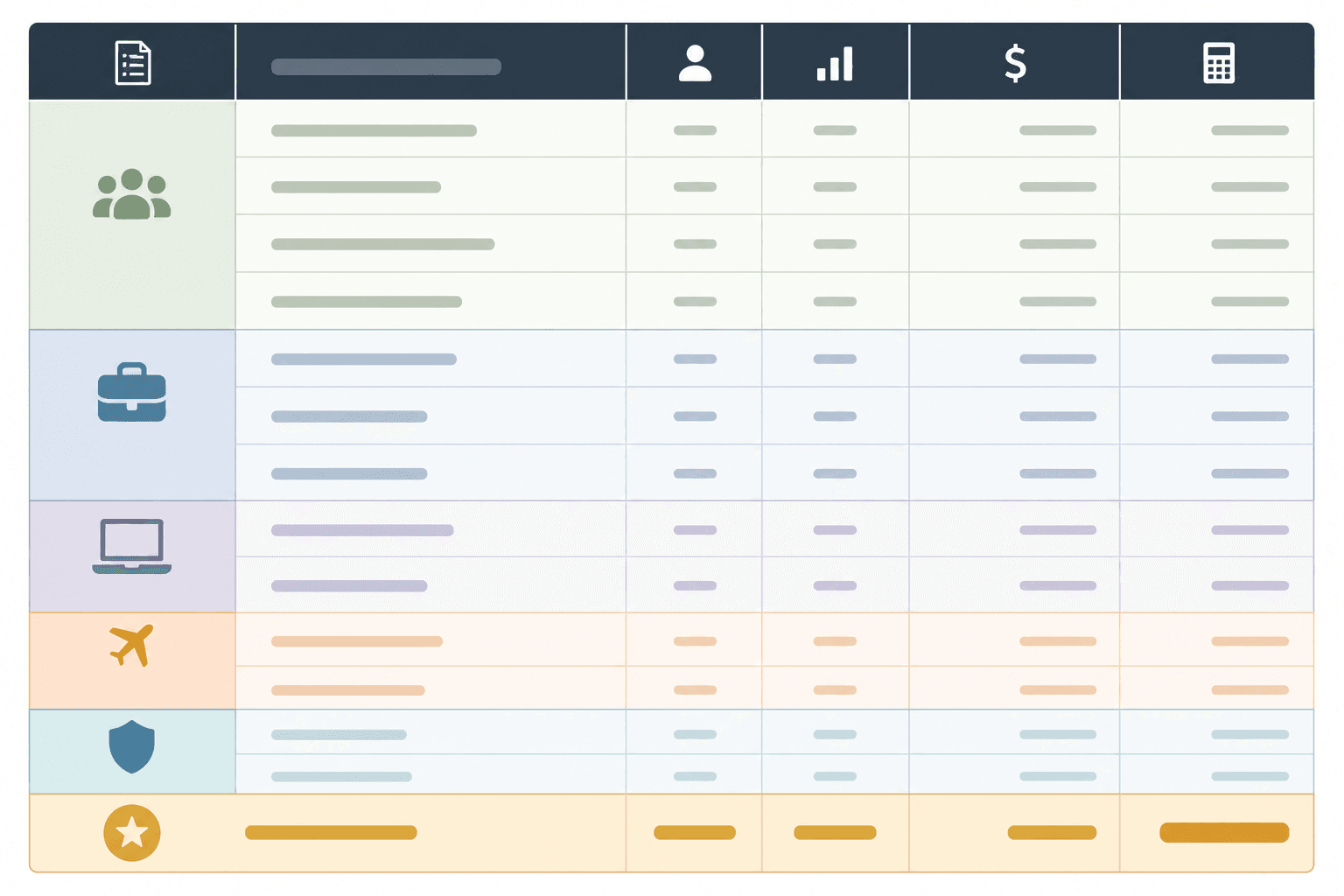
A grant budget template includes ten rows that mirror the federal object class categories, running from personnel through indirect charges. State and foundation forms typically group the same underlying costs into fewer rows.
Federal applicants know the list from SF-424A, the Budget Information form for non-construction programs. Its Section B runs Personnel, Fringe Benefits, Travel, Equipment, Supplies, Contractual, Construction, Other, Total Direct Charges, Indirect Charges, and Totals.

Select to enlarge (opens in a new tab).
Two of those rows carry dollar definitions that changed with the 2024 revision of the Uniform Guidance. Under 2 CFR 200.1, equipment means tangible personal property with a useful life over one year and a per-unit acquisition cost at or above the lesser of your own capitalization level or $10,000. Anything below that is a supply. The threshold was $5,000 before the April 2024 revision (89 FR 30136, April 22, 2024), so older form instructions and internal policies may still quote that figure. Check the notice of funding opportunity, and ask the program officer when the two disagree.
Columns and Formulas That Make the Spreadsheet Work
What makes a grant proposal budget template useful is the columns. Every cost should be a quantity times a rate, so a reviewer can follow the arithmetic and you can change one assumption without retyping the sheet.
Each line names the item, the basis it is priced on (annual salary, month, mile, kit, contract), the quantity, and the rate. A percent-allocated column handles split positions, where a staff member spends part of the year on this project and the rest elsewhere. Two more columns split each line into what you are asking this funder to pay and what another source covers, which is what a match or cost-share requirement needs to see.
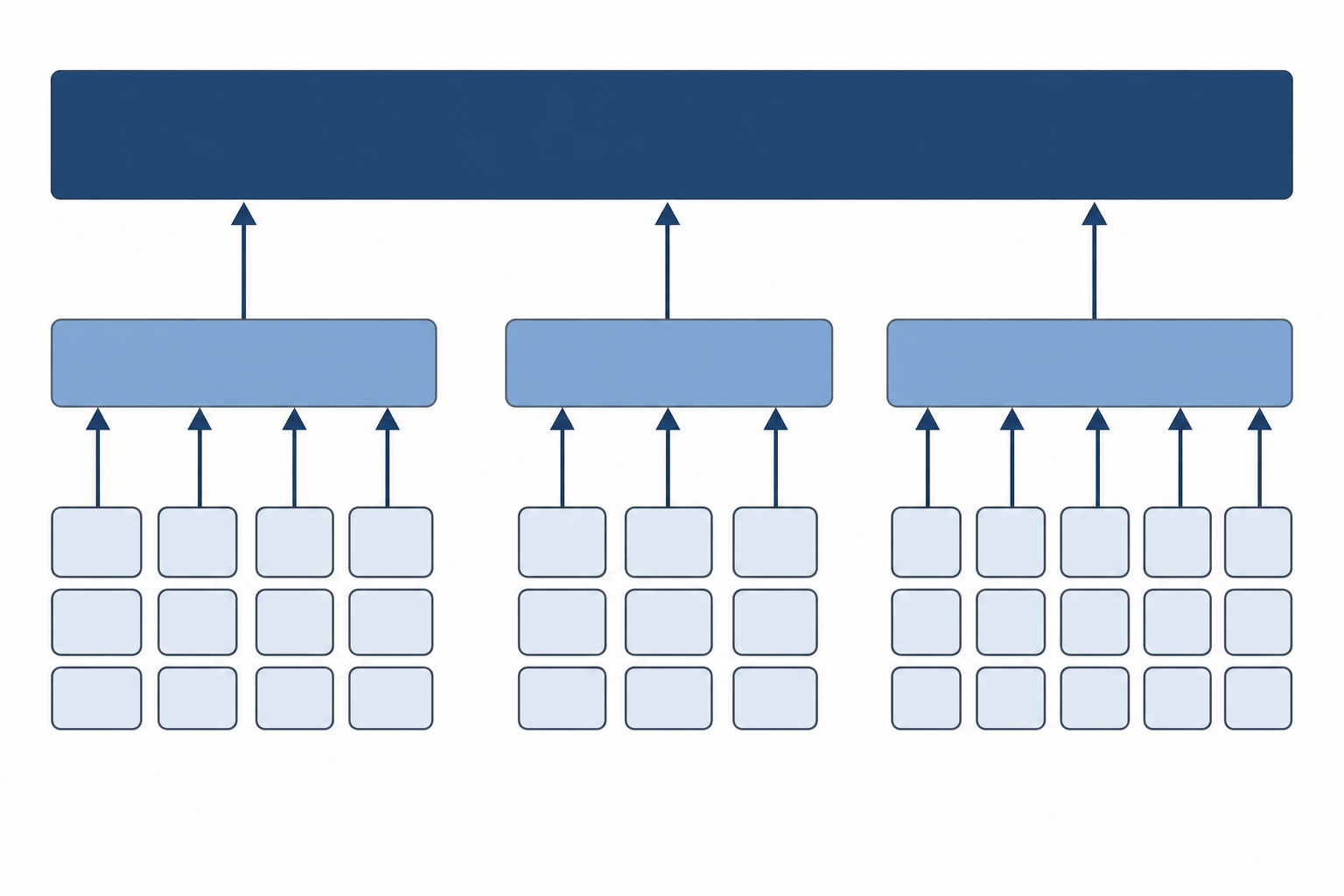
Line total is quantity times rate times percent allocated. Category subtotals sum their own block. Total direct charges sums the subtotals. Indirect charges multiply the indirect base by your rate. The grand total adds direct and indirect. You never type a number into the totals column. When a funder caps the request and you have to cut, you change one salary percentage and every downstream number moves with it.
Select to enlarge (opens in a new tab).
A notes column to the right of the money never prints, and it is where you record why a rate is what it is. Six months later, when a program officer asks how you arrived at a per-unit cost, the answer is already sitting in the file. That column is also where the budget narrative comes from, since the narrative is mostly those justifications written out in sentences.
How to Fill In a Grant Proposal Budget Template, Category by Category
Work the template from the top down, because fringe benefits and indirect costs both calculate off earlier lines. Getting personnel right first means the two derived categories land correctly without a second pass.
Personnel
List each position separately with its annual salary, the percent of effort devoted to the project, and the number of months. A position at $72,000 salary and 25 percent effort for twelve months charges $18,000. Name the role rather than the person, and use the same role names in the budget and the narrative so a reviewer can match them. Positions you have not filled yet go on the line too, with the title you intend to hire and the salary you intend to pay.
Fringe benefits
Apply your organization's fringe rate to the personnel subtotal, not to the whole budget. If your rate differs by employee class, split personnel into full-time and part-time blocks, apply each rate to its own subtotal, and put the rate itself in a visible cell.
Travel
Travel is easiest to defend trip by trip. Each trip gets a purpose, a number of travelers, and a per-traveler cost built from airfare, lodging, ground transport, and per diem. Consultant and contractor travel goes under Contractual. Travel paid to or on behalf of participants is a participant support cost and belongs under Other.
Equipment and supplies
The $10,000 per-unit test in 2 CFR 200.1 decides which row an item lands on, and the answer matters beyond tidiness, because equipment drops out of the indirect cost base. Supplies should still be itemized. "Program supplies, $10,800" tells a reviewer nothing. "600 screening kits at $18" tells them the number of people you plan to serve.
Contractual
Every contract needs a scope, a deliverable, and a basis for the price behind it. A contract line without those gives a reviewer nothing to price-check. An external evaluator at $9,000 needs the evaluation design behind it, which is the same design you describe in your evaluation plan. Subawards sit in this category too, and they carry a rule of their own: only the first $50,000 of each subaward stays in the modified total direct cost base, so a large subaward changes what you can recover in indirect costs.
Other
Other is for real costs that fit nowhere else: facility use fees, participant stipends, printing, publication charges. If Other is your biggest direct line, the categories above are wrong.
How to Calculate Indirect Costs in a Grant Budget
You calculate indirect costs by multiplying an approved rate by a defined base, and the base is almost never total direct costs. Recipients without a current federally negotiated rate may elect a de minimis rate of up to 15 percent of modified total direct costs under 2 CFR 200.414(f), a figure raised from 10 percent by the April 2024 revision of the Uniform Guidance (89 FR 30136, April 22, 2024).
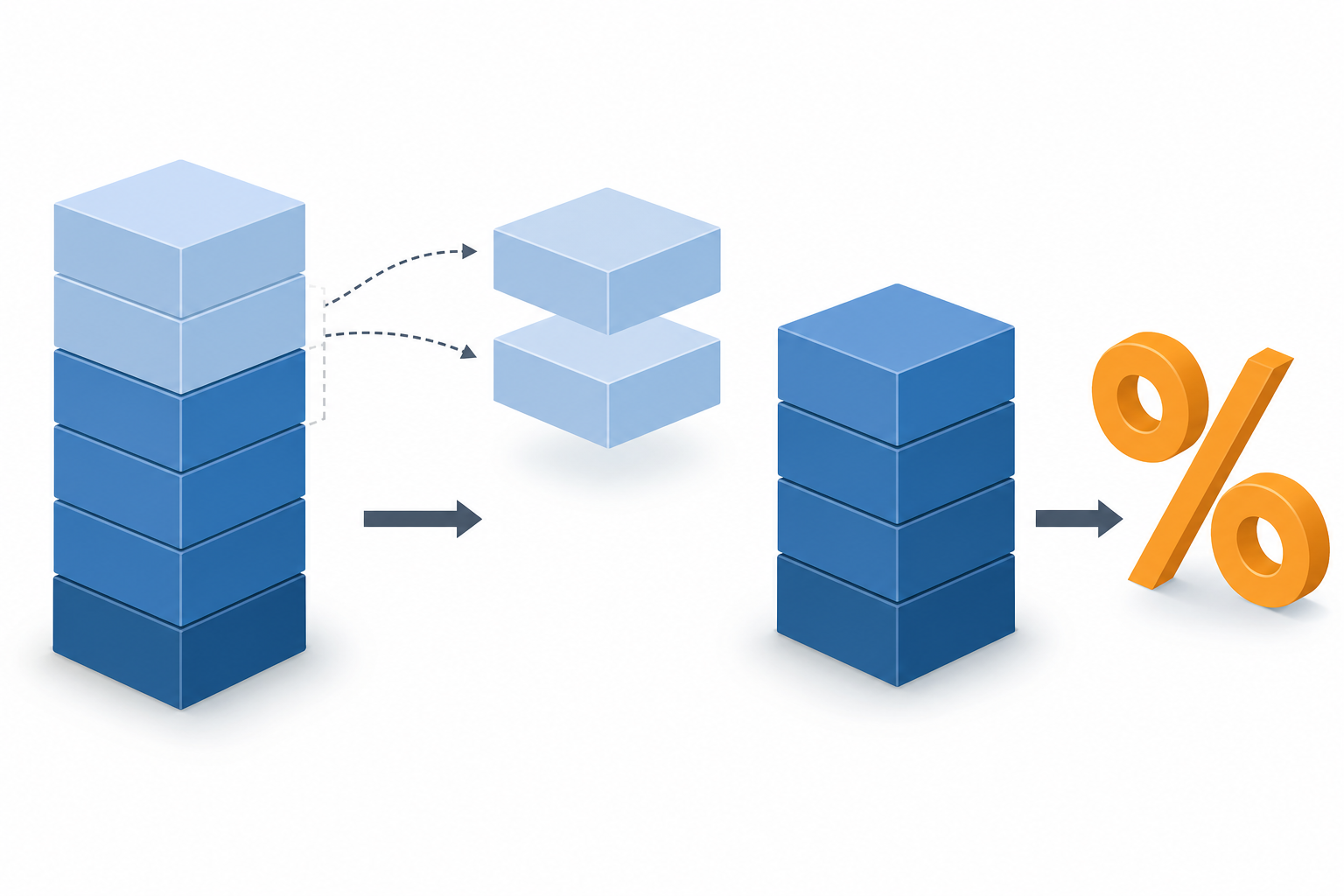
Modified total direct cost, defined at 2 CFR 200.1, means direct salaries and wages, applicable fringe benefits, materials and supplies, services, travel, and the first $50,000 of each subaward. It excludes equipment, capital expenditures, charges for patient care, rental costs, tuition remission, scholarships and fellowships, participant support costs, and the portion of each subaward above $50,000.
Select to enlarge (opens in a new tab).
Here is the arithmetic on an example budget, a one-year community health screening project at a small nonprofit. The organization has no negotiated rate and elects the de minimis rate.
Two lines come out of the base. The screening unit is equipment. The transit stipends are paid to or on behalf of participants, which is what makes them participant support costs under 2 CFR 200.1; stipends and allowances paid to your own employees do not qualify, and they stay in the base.
Excluding equipment and participant support moves real money. Applying 15 percent to total direct charges would have produced $18,574 and overstated the request by $2,400. That is the kind of error a federal reviewer catches. Build a separate indirect base row into the template so the rate always lands on the right number.
Once you elect the de minimis rate, 2 CFR 200.414(f) requires you to use it for all federal awards until you choose to negotiate a rate. The same section requires each cost to be charged consistently, either as a direct cost or as an indirect cost, and never double charged. The same base-and-rate structure appears at every award size in these nonprofit budget examples.
Your Budget Template vs. the Funder's Own Form
Your budget template is the working file. The funder's form is the output.
Build every number in the spreadsheet, then transcribe the totals onto the portal form or the PDF the funder requires. Typing figures straight into a portal loses the arithmetic behind them, and most portals will not show you two categories at once, so an error in one field is hard to see from any other field.
Funders group categories differently, but one master template feeds all of them:
One tab per funder format, each pulling from the master line-item tab, keeps every version in sync. Change a salary once and every format updates. Rebuilding the budget separately for each funder is how the narrative and the spreadsheet drift apart, which is one of the failure modes covered in the guide to how to write a grant proposal.
What Reviewers Check in a Grant Budget
Reviewers check whether the totals add up, whether every line traces to something the narrative describes, and whether the costs look reasonable for the work. Arithmetic errors are the easiest to catch; the narrative-match and reasonableness checks are where budgets lose money.
Run this pass before you submit:
- Confirm every column total recalculates and matches what you typed on the funder's form.
- Check that every personnel line appears in the project narrative with the same title and role.
- Delete any line item the narrative never mentions, and add a line for any activity that has none.
- State a unit cost on every line so a reviewer can price-check it.
- Name the indirect rate and the base, and confirm the exclusions came out of the base.
- Document your match commitments and check they meet what the notice of funding opportunity requires.
- Round consistently, and make the grand total in the budget equal the amount on the cover form.
Matching the grand total to the cover form sounds trivial. The requested amount appears in several places across a single application, and every one of them has to agree before the package clears an administrative screen.
Using the Budget After the Award
Once the award lands, the budget template is your financial reporting baseline. Keep the working file; do not archive it with the proposal. Add two columns to the awarded version: actual spend to date and variance by category. That comparison is what a financial report asks for, and it tells you early whether a category is drifting toward a budget revision request.
The awarded budget belongs next to the deadlines and deliverables it pays for. Budget variance is a program signal as much as a finance one, which puts it inside grants lifecycle management rather than off in an accounting folder: a category running hot usually means the program is running differently than proposed.
FAQ
What is a grant budget template?
A grant budget template is a spreadsheet that organizes project costs into funder-recognized categories with formulas that calculate subtotals, indirect costs, and a grand total. It lets one master file feed multiple application formats without rebuilding the numbers each time.
What should be included in a grant budget?
A grant budget should include personnel, fringe benefits, travel, equipment, supplies, contractual costs, other direct costs, total direct charges, and indirect charges. Each line needs a quantity and a rate so reviewers can verify the arithmetic and judge whether the cost is reasonable.
What are indirect costs?
Indirect costs are shared organizational costs that support a project without being traceable to it, such as accounting, human resources, information technology, and occupancy. Multiply your approved indirect rate by the correct base to recover them. Organizations without a federally negotiated rate may elect a de minimis rate of up to 15 percent of modified total direct costs under 2 CFR 200.414(f). Subtract equipment, participant support costs, and the other MTDC exclusions before applying the rate.
What is the difference between a grant budget and a budget narrative?
The grant budget is the spreadsheet of numbers. The budget narrative is the written justification explaining how each figure was calculated and why the cost is necessary for the project. Funders usually require both, and the two must agree line for line.
Can I use the same grant budget template for every funder?
Yes, if you keep the line-item detail in one master tab and add a separate output tab per funder format. Funders differ in how they group categories and how much detail they want, but the underlying cost calculations rarely change.
What is the equipment threshold on a federal grant budget?
Under 2 CFR 200.1, equipment means tangible personal property with a useful life over one year and a per-unit acquisition cost at or above the lesser of your organization's own capitalization level or $10,000. Items below that threshold are supplies.
Next Steps
The budget usually changes what the project can promise, so build it before the narrative is final. Then compare your structure against the figures in these budget template examples to see the same shape at different award sizes.
When the template is ready, the constraint moves to finding the right funders. GrantCue searches federal and state grant portals together and tracks each opportunity's deadline and stage, so the budget you just built goes to applications worth the effort. Search open grants to see what is currently accepting applications in your area of work.